Search Results
This Janus Henderson SMID-Cap ETF is Creeping Up on $1 Billion

Industry discussions on Janus Henderson’s ETF lineup are typically centered around its fixed income funds given the firm’s history in this asset class. However, the issuer also has equity ETFs that are garnering attention, which include a fund that’s close to crossing the $1 billion assets under management (AUM) threshold: the Janus Henderson Small-Mid Cap Growth Alpha ETF (JSMD).
Nvidia Cements Its Quality Characteristics After Q1 Earnings Beat

Nvidia is now a textbook fit for quality-focused indexes in ETFs given its strong underlying business fundamentals. The company has become the smartest kid in the quality classroom, scoring exceptionally high on metrics like high return on equity (ROE), strong return on invested capital (ROIC), stable earnings growth, and low balance sheet leverage.
Matt Bartolini Talks Inflation-Resilient Portfolios & More

Recently, Matthew Bartolini, global head of research strategists at State Street Investment Management, sat down with VettaFi to discuss where inflation stands, opportunities within portfolio construction, and much more.
The AI Economy: A Look Beyond the Facade

We separate this article into two parts. Part one is the optimistic case: an AI-induced, productivity-led economic boom in which the benefits spread quickly to society. Part two will address a more bearish outlook: the possibility of a large gap in the distribution of AI's productivity benefits, accruing to corporations much more quickly than to employees.
Are Climbing Bond Yields a Signal to the Fed to Raise Interest Rates?

Global bond yields are reaching frightening levels due to the continued war in Iran and the effective closure of the Strait of Hormuz. Continued high oil prices and the threat of reverberating inflation are causing investors to demand higher yields on government bonds.
It’s Nvidia’s World: How Advisors See the Next Phase of AI

With mega tech AI capital expenditure projected to cross a staggering $660 billion to $750 billion, according to estimates from firms like Goldman Sachs, CreditSights and Bloomberg, saying the stakes are high for Nvidia and the AI ecosystem is an understatement. It’s no wonder we can focus on little else this week.
What Barbarians Like to Take Private

While most institutional investors recognize that private equity and public equity share similar economic risks, they often seem to ignore how their aggregate equity portfolio is affected by their substantial allocation to private equity.
Kansas City Fed Manufacturing Index: Activity Continued to Increase in May
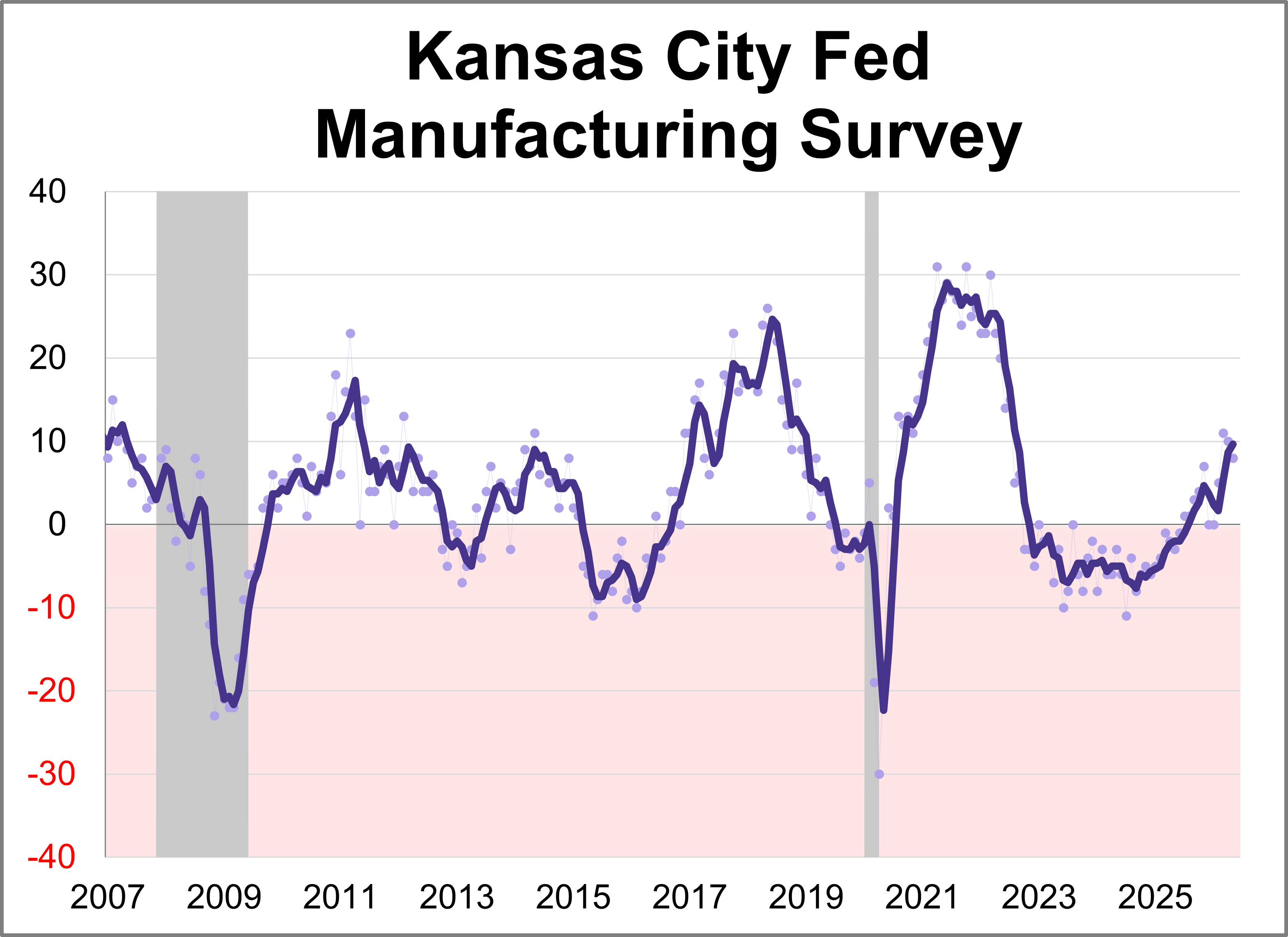
The Kansas City Fed Manufacturing Survey revealed regional activity continued to increase in May. The composite index came in at 8 this month, down slightly from 10 in April but still indicating continued expansion.
High Bond Yields Are What America Needs in the AI Era

There’s a whiff of panic among investors these days. US Treasury yields have climbed to levels unseen in more than a year at the same time as a furious rally has left stocks near all-time highs. Surely, both moves can’t coexist for long, goes the narrative.
The ETF Universe Keeps Expanding. So Does the Complexity of Tracking It.

The exchange-traded fund marketplace continues to expand. Now with more than $20 trillion in assets under management ($14 trillion in the U.S., growing at an 18% five-year annualized clip), 2026’s volatility and emerging investment themes have taken the universe to new heights.
AI-Driven ETF Close to Hitting $100M in Just 3 Months

The rapid deployment of artificial intelligence (AI) is evident; 99% of CEOs say their companies are investing in the technology. Apparently, AI is also quick at garnering assets. Launched less than three months ago, the Pictet AI Enhanced US Equity ETF (PQUS) is already approaching the $100 million mark in assets under management (AUM).

Buffett Cash Hoard: Why $397 Billion Sits On The Sidelines
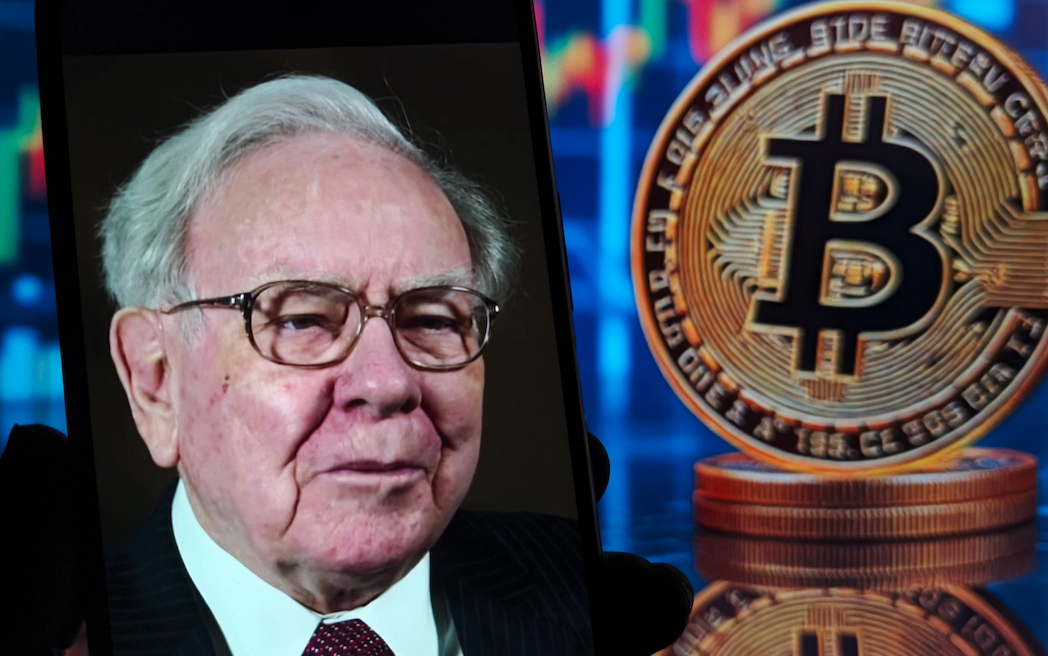
That Buffett cash hoard has also created a lot of speculation, innuendo, and assumptions, which is what I want to walk through in today’s discussion. Primarily, what that cash hoard actually represents, the popular theories explaining it, and what it really costs shareholders to hold.
What ‘Smart Defense’ Actually Means in Practice

Investors need to understand what they own, how it may perform in different environments, and why it is structured the way it is. When advisors build this education into their work, it gives clients the discipline and expectations they need to stay the course when volatility rears its head.
Is Education As Unaffordable As It Seems?

Student loan debt is a legitimate concern, and the return on a college degree varies enormously by field, institution, and student. The key is to look realistically and specifically at each student’s needs and interests, each family’s finances, and all the sources of funding and support that might be available.
Retailers and Nvidia Close Out a Season Marked by Robust Growth

Against this challenging macro backdrop, a stark divergence is expected as major retailers report earnings next week. Discounters are projected to perform well, with Walmart (WMT) expected to outpace Target (TGT) by gaining market share from high-income households trading down for groceries, while Target remains more vulnerable due to its heavier mix of discretionary goods.

The Ex-China Files: ETFs to Watch Amid Trump’s High-Stakes Visit

Investing in emerging markets (EM) used to be synonymous with getting exposure to China. It’s an ideal notion, given that it’s the second largest economy and thus commands a heavy weight in standard EM benchmarks. Challenging that narrative today is a changing geopolitical landscape, which continues as U.S. president Donald Trump visits China in a high-stakes meeting between the two economic superpowers.

Wall Street Puts Blockchain to Work in $13 Trillion Repo Market

The nearly $13 trillion market isn’t the flashiest outpost on Wall Street, but it’s the vital plumbing that keeps the money flowing. Through repurchase agreements, or repos, firms exchange Treasuries for cash — typically overnight — providing the short‑term funding that underpins trading, settlement and market‑making across the financial system.
Gold Bugs' Faulty Thesis: M2 & Inflation

Gold bugs often claim that when more dollars are in circulation, each dollar buys less; prices rise, and gold, as a store of value, helps protect purchasing power from that decline. As a result, they believe that a rising money supply, in and of itself, is inherently inflationary.
Iran War Fallout: The Real Market Risks Aren’t Just Oil

With the war in Iran dragging past the original ceasefire deadline, how might the situation impact global energy markets—and other sectors—from here? To cut through the noise, we asked Luke Pryor, Security of the Future Portfolio Manager and Co-Portfolio Manager of Strategic Equities, to share his oil and gas industry expertise.
Three Strategic Options for Adjusting your Social Security Claim

Claiming Social Security is one of the most critical financial decisions you will make, serving as a significant factor in determining your financial success in retirement. You must consider several variables: Does it make sense to claim benefits early to improve current cash flow and avoid tapping into other accounts?



Why Global, Why Active, Why Now

Global equity markets entered 2025 with a familiar narrative. U.S. leadership remained firm, supported by strong earnings, AI-driven optimism, and a market structure increasingly dominated by a narrow group of large-cap companies. For many investors, the path forward seemed clear: stay anchored to what worked.

Strong Fundamentals Poised to Offset Oil Price Headwinds

While oil prices are likely to remain elevated in the near term, we do not view the current disruption as a lasting supply shock. A diplomatic resolution, or even progress toward one, should help bring prices lower by year-end. Although higher oil prices are a headwind, we believe both the economy and equity markets can absorb the impact with limited damage, as underlying fundamentals remain strong.
Wars, Markets and Economic Growth

Despite repeated wars, equity markets have delivered strong long-term returns, and in some stretches, market performance appears to have coincided with wartime episodes rather neatly. Viewed through the lens of financial markets, the implication seems almost intuitive: wars have not been bad for investors and may even have been supportive.
A Robot Economy: Who Gets Rich, Who Gets Left Behind

Robots are coming to the economy. It is inevitable, really, and there is nothing that will stop it. At some point in the not-so-distant future, robots will infiltrate every aspect of our lives, from office work and manufacturing to service work and trade skills, and even your home. Here are some numbers for you.
WWWD?

We’re going to explore what happened at the Fed, and what changes we can expect. Let’s just say it’s not what some are predicting, at least in my humble opinion. Inflation is sadly a growing problem. And that complicates Kevin Warsh’s coming tenure as Fed chair.
Earnings Strength Takes Center Stage as the Busiest Week of the Q1 Season Arrives

This week marks the busiest of the Q1 2026 earnings season with 3,213 companies expected to report. The S&P 500® is projected to deliver its sixth consecutive quarter of double-digit earnings growth at 15.1%, fueled largely by a powerhouse 46% expansion in the Information Technology sector.
Jamie Dimon Is Competing With Everyone. He’s Not Alone

When Jamie Dimon turned to competitive threats in his shareholder letter this year, the chief executive officer of JPMorgan Chase & Co. did something unusual: He named some. Citadel Securities LLC and Revolut Ltd. were two of the firms Dimon picked out.
How A “Big Bet” Remains Poised for Future Outperformance

International deep value stocks are a high-conviction, active position across all GMO Asset Allocation portfolios. We define the deep value group of securities as the cheapest 20% of the market, a broad opportunity set that allows us to construct portfolios that are cheaper than traditional value indexes but still high in quality.
Carbon Emissions Compliance May Redefine Corporate Strength

The European Union (EU), pursuing ambitious decarbonization goals, is significantly recalibrating its emissions compliance regime with the Carbon Border Adjustment Mechanism (CBAM). This new border tax intends to promote fair competition amid varying emissions rules and costs. Our research suggests it could also offer insight into profitability as the rising costs to meet carbon limits weigh on corporate financial health, creating winners and losers.

Are Markets Complacent?

In a recent (unscientific) Franklin Templeton social media poll, we asked investors what they felt was the biggest risk to the global economy over the next 12 months. Nearly half (45%) of respondents highlighted high oil prices as their greatest fear factor.

How to Effectively Navigate Your Team’s Diverging Work Styles

If you read my column, you know I am a proponent of following the SHIFT format. First, get the team together to identify who you want to be as a team and what success looks like to you. Make sure everyone is headed toward the same outcome and cares about the same goals.
Causes and Conditions

The defining feature of a Ponzi scheme is that it persuades investors to pay for future cash flows that, at least in part, don’t actually exist, while creating the impression that those cash flows imply an attractive return on the price investors pay. If we look carefully at the record valuation extremes in the equity market, and the wildly elevated profit margins that investors appear to view as permanent, we can already see the potential for difficult, even tragic outcomes for investors.
This Chip Supercycle Has One Collective Blind Spot

The chip industry seems to be the only game in town lately. The Philadelphia Semiconductor Index, known as the SOX, has risen 48% this year. Bourses in Taiwan, South Korea and Japan are riding the wave and hitting record highs, brushing away potential energy shocks from the military conflict over Iran.
American Industrial Renaissance: Fact or Fiction?

The “American Industrial Renaissance” is an investment theme investors and allocators alike have probably been pitched several times, or at the very least heard about. Supply chains for manufactured goods have evolved to become more complex, while U.S. manufacturing employment as a share of total employment has steadily declined, leaving policy makers to grapple with the ramifications of a shrinking manufacturing base.
Middle East Conflict Underscores Delicate Economic Balance

Economic data released last week continued to highlight the same tension investors have been grappling with for months: moderating growth, inflation that remains “stuck” near 3 percent, and interest rates that remain the key swing factor for markets.
Rising Volatility Reveals Opportunities in Corporate Bonds

It’s the big story so far in 2026. Alongside AI, geopolitical market volatility is creating dislocations for investors to target. While some are more immediate and some are longer term, the ETF wrapper offers strategies that can attack all kinds of sectors. In corporate bonds, for example, growing volatility could create opportunities.
Mag 7 Earnings on Deck: AI Monetization and Leadership Transitions Take Center Stage this Week

As the Q1 2026 earnings season enters its most frantic stretch, the market stands at a critical crossroads between resilient corporate fundamentals and macro-driven anxiety. While the high percentage of early beats suggests that American business remains surprisingly nimble, the coming days will determine if that momentum can withstand the Mag 7’s massive spending requirements.
Critical Updates Could Provide Near-Term Market Insights

The index is on the verge of doubling for the first time in this bull market – currently up ~99% – a move that would take just under 3.5 years, slightly faster than the historical average of 3.9 years. While all sectors are in positive territory over this period, leadership has been narrow with only three – technology, communication services and industrials – posting gains above 100%.
10 Smart Questions Financial Advisors Should Ask Before Making a Move

Volatility, tighter margins, and rising client expectations are prompting many Advisors to reassess whether their current broker-dealer or firm is still the best long-term fit. If you’re considering a transition, in this article we will discuss 10 essential questions to help guide your decision.
Interest Rates, Inflation, and Growth

The U.S. market story this year has been a tug-of-war between sticky inflation, slower growth, and resilient risk appetite. For fixed-income investors, that mix has produced more narrative movement than the 10-year Treasury itself.