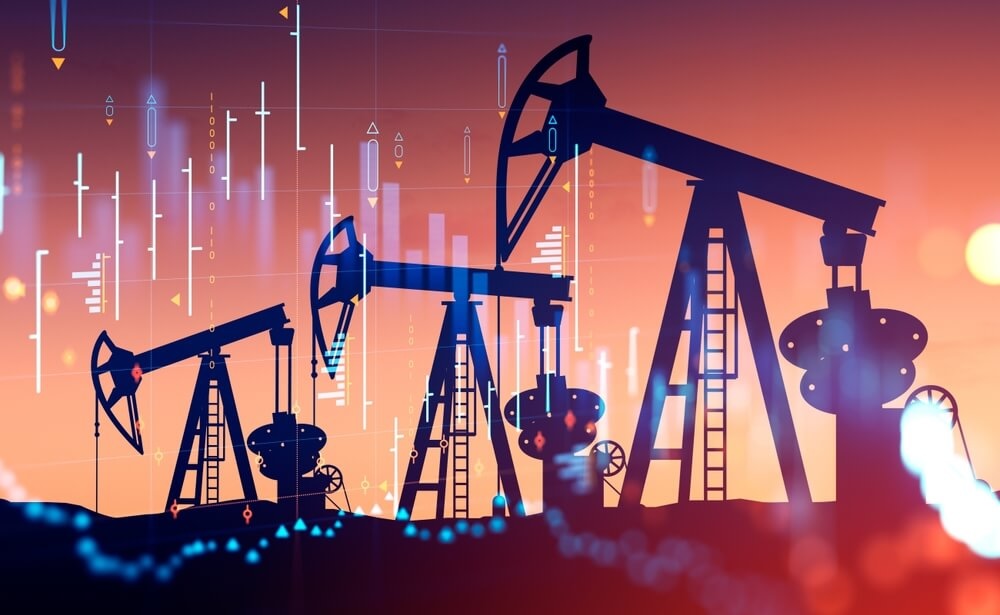
Last week, the refining margin on European gasoil, the benchmark that sets the price of diesel and heating oil across much of the world, closed at roughly $94 a barrel over Brent crude, according to Bloomberg data. That figure is normally somewhere between $12 and $18.
In Part III, the focus will center on practical applications of this discipline. In particular, how advisors can integrate the methodology into modern asset allocation, and why it offers an evolutionary leap for passive investing that’s available through exchange-traded funds (ETFs).
As I go through the strengths and weaknesses of each model, my goals are to point out where the models are strong and to point out potential weaknesses such as conflicts of interest, which are important to be aware of in working with clients. Although we are all fiduciaries, financial incentives matter because we are all human. I know great advisors across all fee models.
Heading into the September 16 FOMC meeting, the debate over whether the Fed should raise rates or hold is heated. To help you appreciate the range of views, I present this article as a courtroom exercise. I will let the prosecution make its case for a rate hike, and the defense for a hold.
ETF share classes represent a structural innovation that combines the benefits of mutual funds and exchange-traded funds (ETFs) within a single pooled portfolio. This evolution expands investor choice, offering both ETF and mutual fund shares under a unified investment strategy.
Many market participants have highlighted how value investing is back as the equity market rally broadened out beyond high-flying growth names. However, taking an index-based approach to the value style requires looking under the hood. Not all value ETFs are created equally.
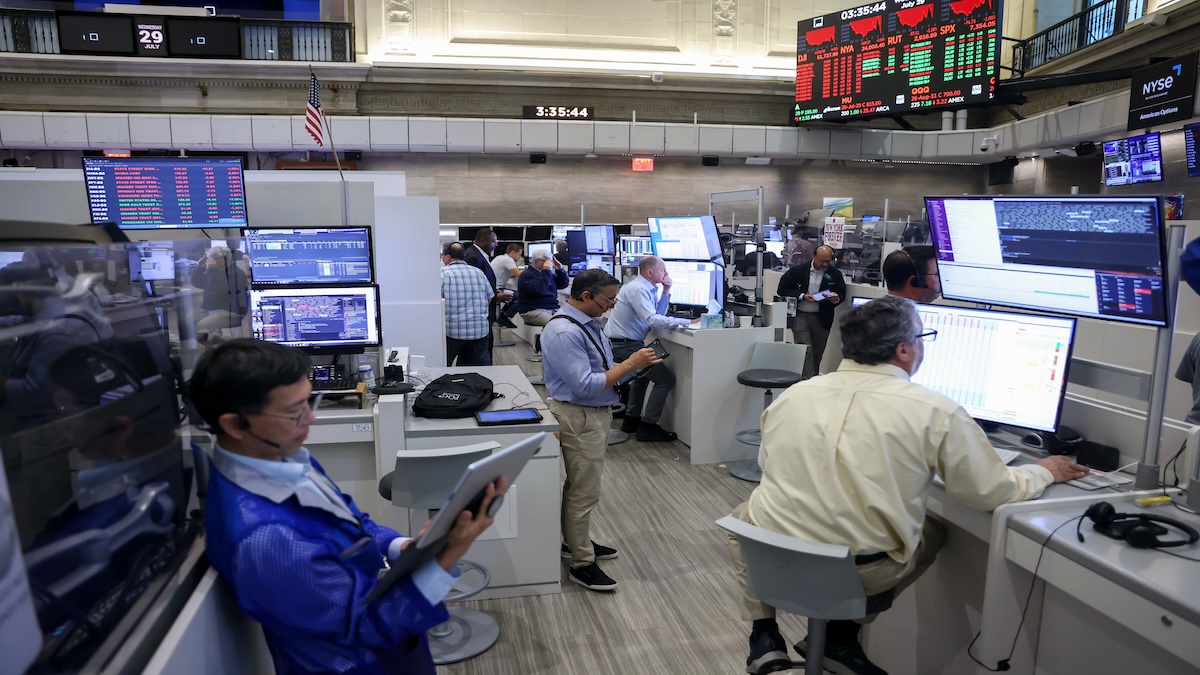
The list of challenges confronting Wall Street piled up this week. Oil firmly above $100. Inflation refusing to disappear. A defiant bond market that all but dared Scott Bessent to bring more policy firepower.
The bond selloff has driven a key Treasury yield to the verge of 5%, worsening angst from Wall Street to Washington about higher borrowing costs hitting the US economy.
Every few months, a new essay declares that the US debt trap has finally sprung. The latest one making the rounds from The Economist is well written and genuinely unsettling. It argues that Washington has borrowed so recklessly that the Federal Reserve no longer dares to raise interest rates. Doing so, the piece warns, would detonate the whole structure and send financing costs spiraling out of control.
Occasionally, we are confronted with decisions where there are no easy options. The prevailing circumstances bound our choices, and we may face criticism no matter what we do. Collectively, the Federal Open Market Committee (FOMC) finds itself in just such a situation as it prepares for its upcoming meeting.
Investors can’t get enough of ultrashort bonds. Driven by concerns over high equity valuations and rate volatility as the U.S. Federal Reserve mulls over the direction of interest rates, capital preservation strategies appear to be the elixir to help ease uncertainty. As such, ultrashort bonds have been seeing greater demand as traditional safe havens fall short on yield or carry unwanted duration risk.
One or a few high-performing stocks can provide a big boost to portfolio values. But they’re hard to come by and often struggle to maintain their momentum over time. Because these stocks increase portfolio concentration, investors must balance the risk of overexposure against the tax cost of diversifying. A thoughtful, tax-aware plan may help bring portfolios back in line.
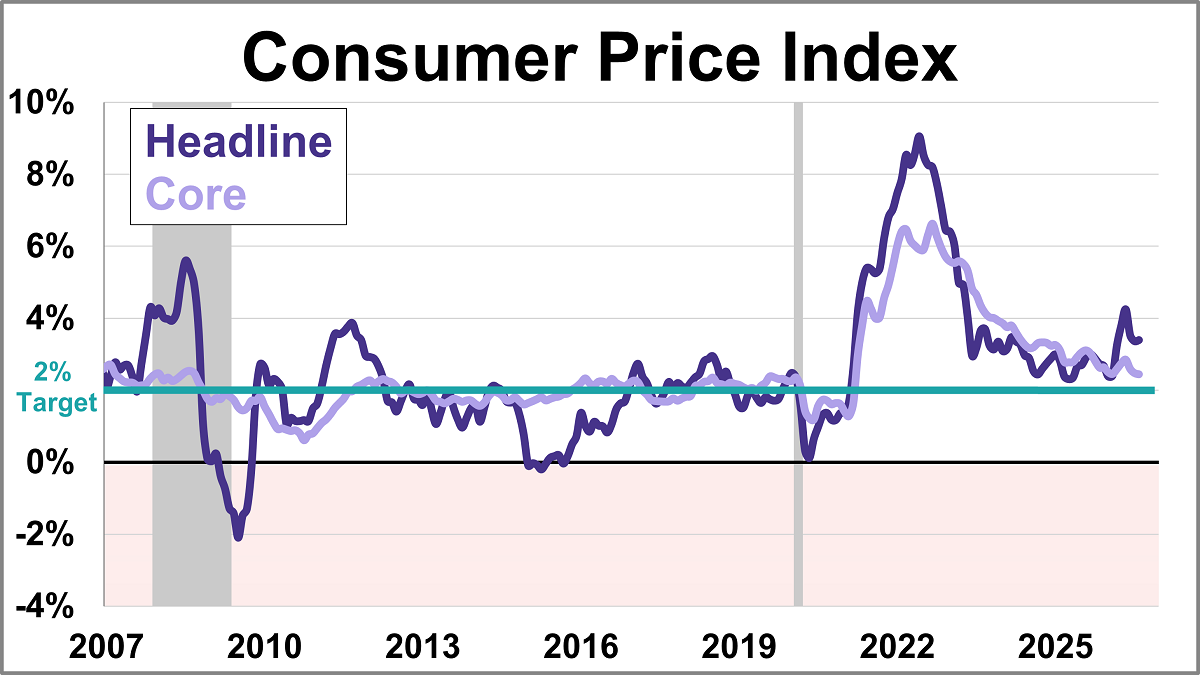
Inflation rose 3.4% year-over-year in August, as it did for the 12 months ending July. The headline figure for the Consumer Price Index (CPI) was in line with economist estimates.
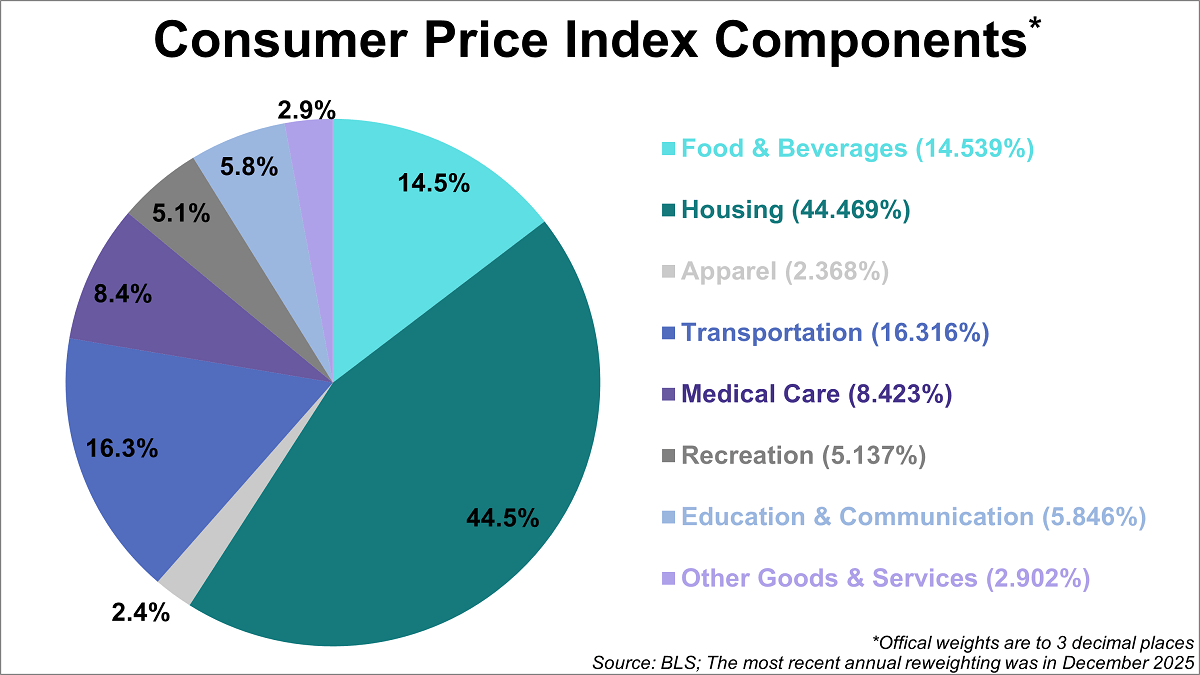
Inflation affects everything from grocery bills to rent, making the Consumer Price Index (CPI) one of the most closely watched economic indicators. The Bureau of Labor Statistics (BLS) tracks this by categorizing spending into eight categories, each weighted by its relative importance.
With a handful of stocks attracting most of the recent headlines, it’s easy to forget that investors continue to find opportunities across a broad range of sectors.
US stocks fell for a fourth straight day, their longest slide since June, as the relentless climb in oil prices and fresh evidence of sticky inflation boosted Treasury yields and bets the Federal Reserve will lift interest rates.
As wealth management firms scale, sustained organic growth increasingly depends on strong business leadership. Firms that build scalable client acquisition strategies, develop talent and create operational infrastructure can position themselves to grow beyond founder-led models and capitalize on the industry’s long-term opportunities.
In this article, Russ Koesterich argues that momentum remains supported by strong earnings growth, making the factor attractive despite market risks.
2026 began with 10-year Treasuries right around 4%, which many viewed as a comfortable place. The comfort came from some simple math—2 plus 2 equals 4. The long-term real yield on the 10-year Treasury was around 2% and the Fed’s inflation target is 2%.
Benchmark-Free has been a flagship strategy for half of GMO's history. As we approach our 50th anniversary in 2027, Ben Inker reflects on our first 25 years of Benchmark-Free investing.
Elevated interest rates have investors scrambling for yield, and munis have been ready to answer the call with tax-exempt income.
The Producer Price Index (PPI) was up 0.4% in August, better than expectations.
The midterm election season has entered its final stretch, and Wall Street is busy drawing up game plans for a range of scenarios. Yet, in a fortuitous turn of events, the best outcome for markets is also looking like the likeliest one.
Brent oil spiked to $105 a barrel as rising tensions in the Middle East heightened concerns over global supplies.
Brent crude oil rose above $100 a barrel for the first time since July, while the U.S. benchmark West Texas Intermediate (WTI) crossed $95, with varying impacts on energy ETFs. The price surge followed escalation in the Middle East conflict, including U.S. military strikes on five Iranian oil tankers and Houthi attacks on Saudi energy facilities.
From an earnings perspective, this summer proved to be a largely fruitful one for many companies within the S&P 500.
As clients come to advisory shops more informed, due to the plethora of financial advice available online, firms will need to be able to “stress test the information or bias” they arrive with. A comprehensive team, with training across advisory areas, can offer clients more depth of service.
Defiance ETFs has submitted paperwork to the US Securities and Exchange Commission for a series of leveraged funds that would seek to double the moves of some individual stocks — over periods measured in just hours, rather than days.
Chapter 3 of this series ended with a simple question. If the math so plainly says avoid big losses, respect valuations, and mind your timing, why does so much of the industry preach the opposite?
If you’re planning on driving anywhere this Labor Day weekend, be prepared to pay the highest gas prices ever for this time of year. The national average hit $4.14 per gallon on Thursday, an approximately 30% increase from last year, according to AAA.
Bond markets around the world have trembled in the last week, as uncertainty continues to rise. A mix of geopolitical, trade, debt, and currency pressures have put immense pressure on yields. The Yen carry trade situation alone has soaked bond markets, but when combined with U.S. debt fears and Hormuz concerns, the picture has shifted.
The Federal Reserve has spent the past four years trying to cool price increases through higher interest rates. The federal funds rate is still well above its pre-pandemic average, mortgage rates remain elevated, and borrowing costs for households and businesses are considerably higher than they were in the era of ultra-low interest rates.
Oil prices climbed further Tuesday, with Brent crude rising 1% to $97.95 a barrel and briefly touching $99.46, according to the Associated Press. The benchmark has climbed from around $72 over the past two months. Fighting tied to the war with Iran has clouded hopes for reopening the Strait of Hormuz to tankers.
The U.S. ETF market reached $16.4 trillion in AUM in August 2026, driven by record product launches and a defensive shift to Treasuries.
Chris Galipeau discusses high-conviction insights that go beyond media headlines.
Stock investors are caught between the pull of strong earnings and mounting macroeconomic risks, with key events carrying binary outcomes that argue for some protection.
I love ETF milestones and round numbers almost as much as I love watching football. There is something deeply satisfying about watching a fund hit a clean asset threshold. Crossing $500 million, $1 billion, or $2 billion in assets under management (AUM) is more than just a psychological victory. It signals real validation from financial advisors, provides greater liquidity, and lowers the risk of fund closure. Plus, as a fun bonus this week, our three featured funds all start with the letter B!
SpaceX’s stock has been stuck in a tight trading range recently, but a wave of new buying may soon arrive when the Nasdaq 100 Index goes through its quarterly rebalancing later this month.
A sudden reversal in momentum for previously high-flying shares of industrial companies over the past three weeks has some investors bracing for more pain ahead.
Before I discuss why I disagree with the “AI bears,” I want to state that I respect their opinions, have evaluated their concerns, and have simply derived a different set of conclusions. That is an important statement, because this particular group of “AI bears” includes some of the sharpest risk minds in the business, and they have been early to almost every warning that later mattered.
It's been 40 years since I began my career on Wall Street and the lessons I learned along the way from some all-time investment greats always hold true.
After a week of traveling abroad to meet with clients and discuss our outlook for the US economy and financial markets, we returned feeling the need to address a growing misconception, both in the United States and overseas, regarding the differences between the US and Chinese economies.
Cerulli projects a $2 trillion surge in advisor-held alternatives over five years, as interval funds reshape how RIAs access private markets.
By combining a demographic framework with a value-driven investment approach, the Pictet Emerging Markets Rising Economies ETF (RISE) seeks to identify companies that are attractively valued and positioned to benefit from long-term structural growth. Join the experts at Pictet for a product due diligence session to learn more.
Apple Inc. has spent much of the past 15 years refining existing product lines and launching services to generate more recurring revenue. There have been a few fresh device categories, like the Apple Watch and AirPods, but no steady stream of new concepts.
Sift through the filings of pension funds and insurers around the world and one thing stands out: some of the biggest holders of US assets have little protection against a weaker dollar, leaving the currency at risk of steeper declines if sentiment suddenly turns.
True diversification means gaining exposure to different drivers of performance rather than simply holding a larger count of securities. For many retail investors, this exposure is available through listed infrastructure funds, utility strategies, and ETFs focused on energy storage and industrial innovation.
The National Football League is holding off on making any alliances with prediction market companies even as many other top leagues and events embrace the new form of sports betting.
US stock futures erased early gains to briefly touch session lows on Friday after the US added 162,000 jobs in August, raising concerns that the Federal Reserve may hike interest rates soon.
Famous market bubbles share some characteristics, but it's nearly impossible to predict how big a bubble might get and when one is about to burst.