We were in the camp that the Federal Reserve (Fed) should have reduced interest rates during the first half of the year, taking advantage of the underlying disinflationary path during that period.
Bankruptcies are a routine event for companies relying on large amounts of high-yield debt for their capital. Investors reserve much of the high income they receive in good times for the inevitable losses in bad times.
My first experience with a major economic/stock market bubble was the dot-com bubble of 1998-2000. Many investors forget that the Nasdaq and S&P 500 Index bubble that ended March 10, 2000, was the first bubble in a series of three bubbles.
This year, Americans will give more than $500 billion to charity, according to the National Philanthropic Trust. While meeting philanthropic goals is important for donors, these gifts may also provide valuable tax benefits.
Corporate bonds typically appeal to those seeking higher yield potential relative to safer government debt, but current market uncertainty may keep fixed income investors from making the move. However, strong fundamentals are also underpinning corporate bonds, which only add to their appeal despite ongoing risks.
Chinese equities have performed strongly this year amid a general re-rating driven by easing geopolitical tensions, continued government stimulus and the global AI-related buildout. Portfolio Managers Andrew Mattock, CFA, and Winnie Chwang explain the drivers of the rally and the opportunities and challenges ahead.
As global labor arbitrage becomes less viable and access to cheap labor in emerging markets continues to narrow, businesses are increasingly turning to AI as a domestic solution for cost control and productivity gains.
As the final quarter of 2025 begins, it's a critical moment to look back at the preceding three quarters. Each year carries its own narrative, and 2025 was no exception. Markets trended downward early in the year owing to trade-talk-driven uncertainty, reaching a crescendo in volatility following the unexpected announcement of significant tariffs in April.
Consumers are in a sour mood over inflation and jobs as major retailers prepare to report earnings and offer their outlooks for the holiday shopping period.
Now that government workers are back in the office, the data flood is coming. Here are the four reports we’re most excited for, why they matter, and what we last heard from them.
Though we are getting limited amounts of economic data during the federal government shutdown, the official and private sector data we are receiving generally paints a positive picture for U.S. economic activity.
Many may look at a headline performance figure like “the bond market is up 7%” and understandably feel encouraged. On paper, that appears to be a solid result. But nominal returns alone rarely tell the full story.
Markets don’t sleep over the holidays, but they do slow down. Historical trading patterns show consistent liquidity shifts from late November through early January.
Bitcoin fell below $95,000 for the first time in about six months as a bout of risk aversion sweeping across markets saw investors pull nearly $900 million from funds investing in the token.
To be sure, it’s not a point for investors to get carried away with. But it is noteworthy in the current environment. RSPF has exposure to the booming prediction markets space. That’s likely an underappreciated factor. And that’s because of the ETF’s status as a home to a slew of old-guard bank st
Blackstone Inc. has appointed former Morgan Stanley rainmaker Franck Petitgas to a top role in Europe as it prepares to invest $500 billion there over the next 10 years.
Imagine I get extremely rich like Michael Burry on a contrarian short position. I’d immediately cash in my chips (but I wouldn’t tell anyone I was “semi-retiring” from the game).
Looking ahead, markets are likely to remain on edge as investors weigh the fallout from the shutdown, mounting layoffs, and signs of waning consumer confidence against hopes for continued monetary policy support.
We discuss Figure’s $1 billion fundraise, XPENG’s (XPEV) humanoid launch, the humanoid market, and how Elon’s $1 trillion pay package fits into this.
Join the experts at Eaton Vance for an educational webcast exploring the overall macro picture and why an active approach to global fixed income that goes beyond the Agg could diversify portfolios and drive results.
China’s collapsing investment is as unprecedented as it is hard to explain. A plunge estimated at more than 11% in October from a year earlier was the worst single-month performance since the initial Covid lockdowns at the start of 2020, official data showed on Friday.
Investors are pouring money into active ETFs, but a closer look reveals a migration of assets into the wrapper instead of a resurgence in alpha-chasing bets.
The retirement landscape in America is undergoing a quiet revolution, according to Vanguard’s inaugural "How America Retires" report.
As the year winds down, many investors focus on year-end charitable giving and tax planning. Finding a charity and donating money is the easy part. Taking slightly different approaches to gifting can yield dramatically different results from a tax perspective.
Doug Drabik discusses fixed income market conditions and offers insight for bond investors.
A bipartisan group of senators struck a deal on November 9th to re-open the government, with seven Democrats and one independent joining 52 of the 53 Republicans to reach the elusive 60-vote supermajority needed to move forward.
Taiwan-based insurers are gearing up for a big overhaul in their regulatory framework. The transition to the Taiwan Insurance Capital Standard (TW-ICS) is slated for January 2026, though some provisions will have a lengthy phase-in period.
Are U.S. stocks approaching bubble territory or is the bull run able to press on? Active investor Tony DeSpirito is optimistic but says pockets of bubble-like exuberance could create mispricings ― making it “an exciting time for stock selection.” He suggests three areas that may be ripe for the picking.
Hints of reforms to ease foreign-ownership limits in Saudi Arabia set off the sharpest rally for its equity market in years this autumn, reigniting investor curiosity.
The Fed can turn QE back on like they did in the latter part of 2019, most likely by buying T-bills. It is important to note that this would be purely a technical mechanism for the funding markets and not a dual mandate monetary policy consideration.
Despite these successes, many finance executives struggle to quantify the actual return on AI, as the required spending on development, data clean-up, and rigorous testing is immense and mostly paid upfront.
When we look at broader multi-asset portfolios that tap into real assets, including digital assets, as well as inflation fighters like income securities and real return strategies, we find that they have delivered strong results to the debasement-trade crowd.
This technology is moving quickly, with most businesses only in the early stages of understanding its capabilities. Whether and how fast AI can unlock new, transformative, lucrative idea generation or unleash a force in the U.S. economy similar to the “China shock” – the period in the early 2000s when outsourcing shrunk the U.S. manufacturing base and structurally changed the U.S. labor market – is yet to be seen.
According to a survey conducted by BlackRock and YouGov, ETF adoption continues to expand while also seeing a shift demographically.
The Federal Reserve cut its Fed Funds rate by 25 bps, the 10-year Treasury yield went up 10 bps, and the S&P 500 ended the month of October up over 2%. Let’s unpack those results.
Following a 9-month hiatus in its rate-cutting cycle, the Federal Reserve (Fed) recently resumed monetary easing, with cuts in September and October 2025 in response to signs of a softening labor market.
Nashville’s airport authority plans to sell $1.3 billion of debt in January to meet unprecedented growth — an offering that also bodes well for the broader market to see large deals next year.
Investors have poured into gold – but they may also see compelling benefits from a broad-based commodity allocation.
Stocks in the US seem unstoppable but investors shouldn’t be complacent because there are a number of markers suggesting the rally is more fragile than it seems.
The equity arena is certainly booming with cheers following the Fed’s second rate cut. But the reaction from the fixed income crowd might be more mixed.
The real issue comes when these investments are held in tax-advantaged accounts like a 401(k) or traditional IRA. Since the income is generated by a partnership, it will be considered Unrelated Business Taxable Income (UBTI) in these types of accounts.
Anecdotes such as these are helpful reminders that long-term investors need not chase the hottest fads in the market and can at times get ahead of the crowds by simply paying attention to the world around you.
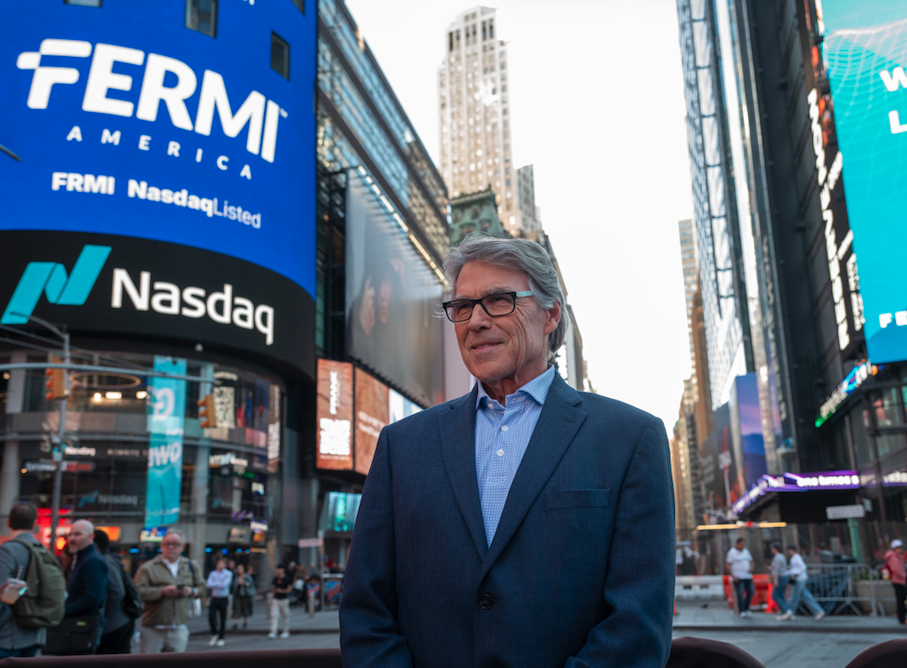
US efforts to develop artificial intelligence systems and the nuclear-energy infrastructure needed to power them are comparable to the World War II initiative to build the first atomic bomb, according to Fermi Inc., a power-plant developer planning a massive data-center campus in Texas.
It’s been one year since President Trump secured his second term, and we’re taking stock of how the economy and financial markets have performed during that time, highlighting both the wins and the challenges.
Investors are increasingly viewing bonds from large corporations like Microsoft and Siemens as safer than the sovereign debt of their home governments, a conclusion driven by a sharp contrast in fiscal management.
Publishing in the right places helps you showcase your expertise, demonstrate your authority, and differentiate yourself from other advisors. Here are a few of our best tips for getting published and growing your visibility in front of the right audiences.
Part of growing into a lead advisor role is learning how to coach and develop team members. It involves showing respect and gaining support through influence. Moving from peer to leader is not an easy transition for most people to make.
While we wait for federal data to come back online, private sector gauges continue to underscore still-weak manufacturing, resilient services, and mediocre job growth.
Looking back to the 1990s need not be just a matter of nostalgia. Those too young to have lived it envy the fortunes made as technology firms grew. Seasoned investors who worked through the cycle can warn us of the pain of a correction. Along the way, the cycle taught useful lessons.
LPL Research explores how AI-driven investments and intellectual property are reshaping U.S. economic growth, capital flows, and market dynamics.