Allan Roth’s recent article, The 4% Rule Just Became a Whole Lot Easier, promises too much, makes inaccurate comparisons and blurs the notion of risk.
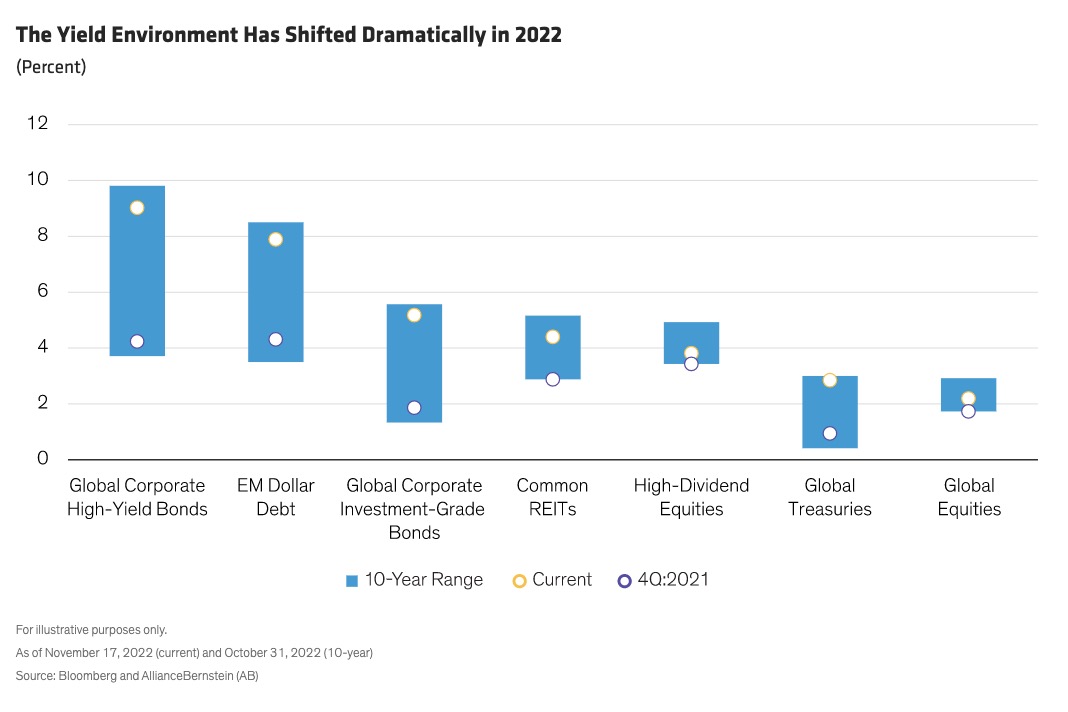
The economic tea leaves suggest that 2023 could be another challenging year for both stocks and bonds. However, the outlook is more balanced given that equity valuations are much lower and bond yields much higher.
Stephen Dover, Head of Franklin Templeton Institute, shares his scorecard on some market prognostications for 2022, and what his team is watching in 2023—from blockchain to balanced portfolios.
In our 2023 outlook, we outline three key themes for the new year and highlight several implementation solutions investors can use to navigate potential challenges and grow client portfolios in the new year.
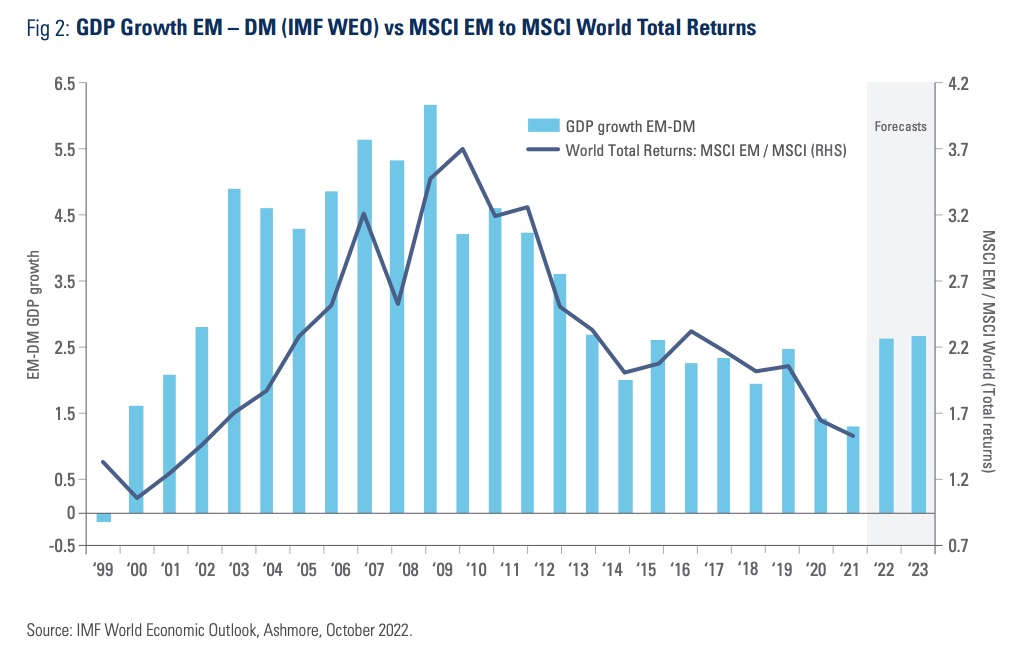
Emerging Markets (EM) assets were subject to three strong headwinds in 2022, namely, China’s zero Covid-19 and real estate crisis, aggressive interest rate tightening from the US Federal Reserve (Fed), and the Russia invasion of Ukraine.
U.S. stocks are soaring in pre-market trading amid a softer-than-expected November consumer price inflation report.
On his first visit to Japan since the pandemic, portfolio manager Shuntaro Takeuchi found new opportunities as well as familiar ones intact.
We’ve broken down nine of the best 529 plans.
Economic news—and market reactions to it—increasingly resemble a tennis game. Spectators follow the ball back and forth, thinking something will happen but usually it doesn’t.
As the debate heats up over ESG investing, fixed-income professionals say they need more data than what’s currently out there.
An alpha-oriented approach.
Weaker economic trends will likely form heading into 2023 as the Fed battles inflation, but a (hopefully) mild recession may help set stocks up for a better second half of the year.
After years of uncertainty around how U.S. retirement plans could consider ESG factors, the dust is finally settling. It’s official: A Nov. 22 rule issued by the Department of Labor (DOL) allows retirement plans to consider financially material ESG factors when selecting investments and exercising shareholder rights.
Value equities are still priced for significant outperformance, globally.
David Dali, head of portfolio strategy, explains how emerging markets can give investors ballast to navigate macro headwinds and position portfolios for growth.
The question most asked by investors late last year, as Treasury bill yields hovered just above zero was “Where can I go for yield?” followed soon after by “What can I do to protect myself from inflation?”
U.S. stocks are choppy in pre-market trading on the heels of yesterday's drop ahead of tomorrow's comments from Fed Chairman Jerome Powell.
In this year’s global economic crisis, no two regions are having identical experiences. While inflation rages across much of the world, price rises have been more moderate in some countries than others. Similarly, the scale of rate hikes and the degree of recession fears aren’t uniform.
With the year winding down, investors might think they’ve seen it all. But one element of market dysfunction that’s largely flown under the radar is increased friction within the US Treasury market. Treasuries are experiencing a liquidity decline on the back of economic uncertainty and higher volatility, with large blocks of government debt increasingly hard to trade.
This week, around my trip to a far-too-cold Denver, then to Dallas, and ultimately Tulsa to spend the Thanksgiving holiday with family, Keith and I did a 45-minute "interview" via Zoom. Less an interview, perhaps, than the two old friends catching up. I was surprised how many topics Keith and I aligned on perfectly, though our few disagreements about what comes next made for a great debate.
Americans who work remotely, either full-time or part-time, can save between $2,000 and $7,000 in transportation and work-related costs. They can also gain back the equivalent of two to three weeks per year in commuting time.
U.S. equities are mixed in pre-market trading, but the markets are on track to post weekly gains for the holiday-shortened week.
In one of the most challenging years for markets, 2022 brought persistently high inflation, aggressive central bank tightening and heightened geopolitical risks, leaving investors with few places to hide.
Historically, soaring oil prices have been bad for the US economy because they squeeze US consumers and producers, and often are happening when the Federal Reserve is raising interest rates to rein in inflation.
U.S. equities are rising, although no notable directional drivers seem to be in play amid the holiday-shortened week, with the markets closed on Thursday for Thanksgiving and trading in a half day on Friday.
The “wall of capital” that was supposedly coming to finance the global energy transition has proven to be more of a dam, holding back most of the cash that was promised.
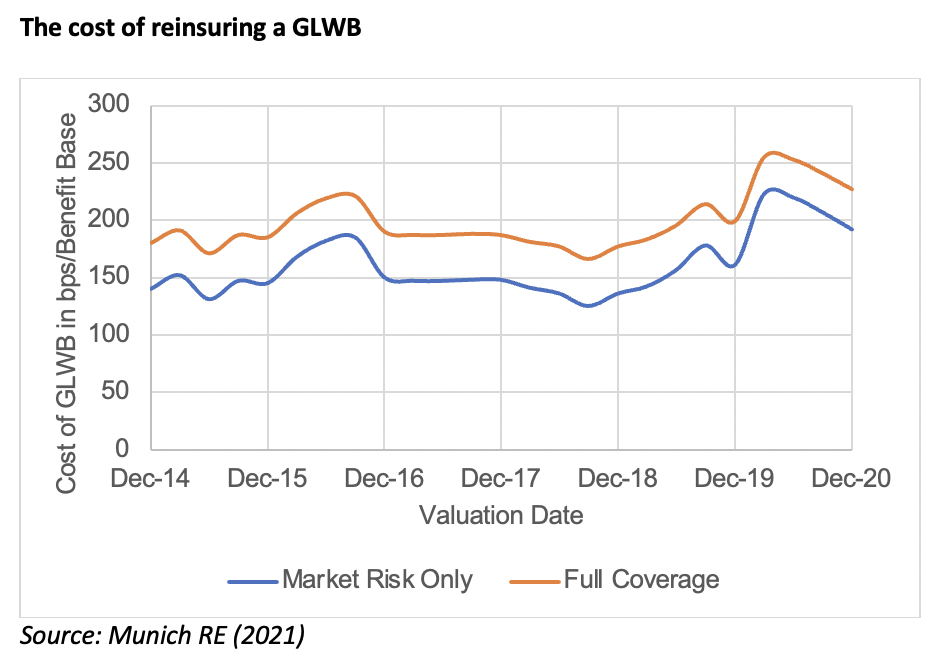
This piece introduces the protected lifetime income benefit (PLIB) to describe an emerging category of longevity-protected solutions.
Being glued to crypto news this week meant missing adventures in regular markets that while lacking the same high drama, made up for it in terms of money at stake.
The amount of time between aircraft as they land at Toronto Pearson International Airport might seem prosaic to the untrained eye, but there’s a lot more going on than pilots negotiating the gentle return to earth of hundreds of tons of metal.
As we approach Thanksgiving, it’s the perfect time to reflect on all we are grateful for. From an investor’s perspective, this year’s bear market will certainly not make this list. But even though it has been a challenging year performance-wise, we still believe that investors have a cornucopia of economic and financial market blessings to count!
Is globalization truly dead? Stephen Dover, head of Franklin Templeton Institute, explores what drives globalization, whether we are currently in a “de-globalization” wave—and what it means for investors.
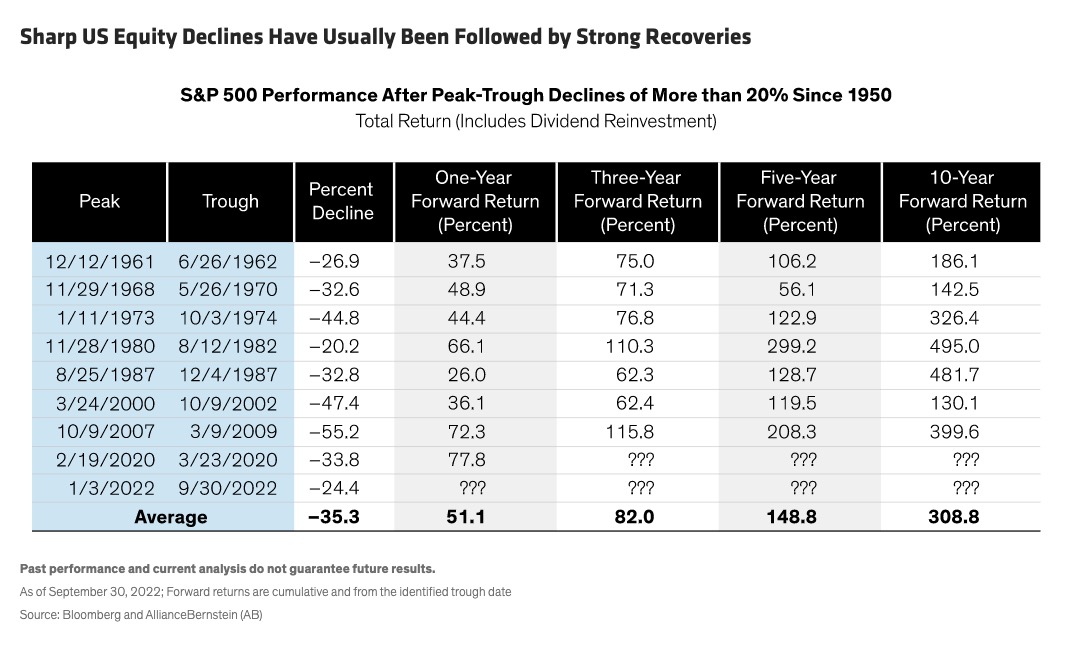
After a tough year for equities, is a recovery imminent?
U.S. equities are mixed in restrained trading, with investors awaiting the next two pieces to complete the October inflation picture.
While many investors think that IPOs are exciting, they are risky investments. Academic research shows overwhelmingly that the returns to investors are not commensurate with the risk.
A matter that can have large impacts on the marginal tax rates faced by individuals who obtain health insurance coverage through the ACA exchanges is the reduction of the tax credits (or subsidies) for health insurance coverage as incomes increase.
Early this week, with the severe inverted yield curve and other signals flashing recession, I planned to use this letter to delve into the data. Then Thursday’s CPI data convinced markets to blow the all-clear whistle.
Launched in 1994, the S&P 600 is designed to track the performance of small-cap U.S. equities and has outperformed the Russell 2000 by an average of 1.6% per year over the past 25 years. This outperformance highlights the importance of index construction. Unlike the Russell 2000, the S&P 600 uses an earnings screen—companies must have a track record of positive earnings before they are eligible to be added to the index. This quality factor exposure has played a significant role in explaining the S&P 600’s relative returns and its status as a harder benchmark for active managers to beat.
While a divided US government may look appealing, there are long-term risks amid resulting gridlock, according to Head of Franklin Templeton Institute Stephen Dover.
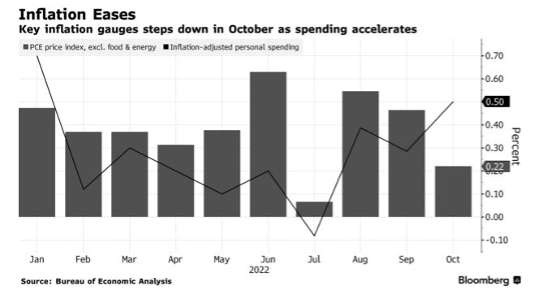
A cooling in US consumer prices offered cheer to households, investors and Federal Reserve officials, but there’s still a long way before high inflation becomes history.
For much of the past year, interest rate doves have been eager to make excuses for inflation, blaming obscure methodological quirks in the US’s consumer price index for a stretch of concerning reports.
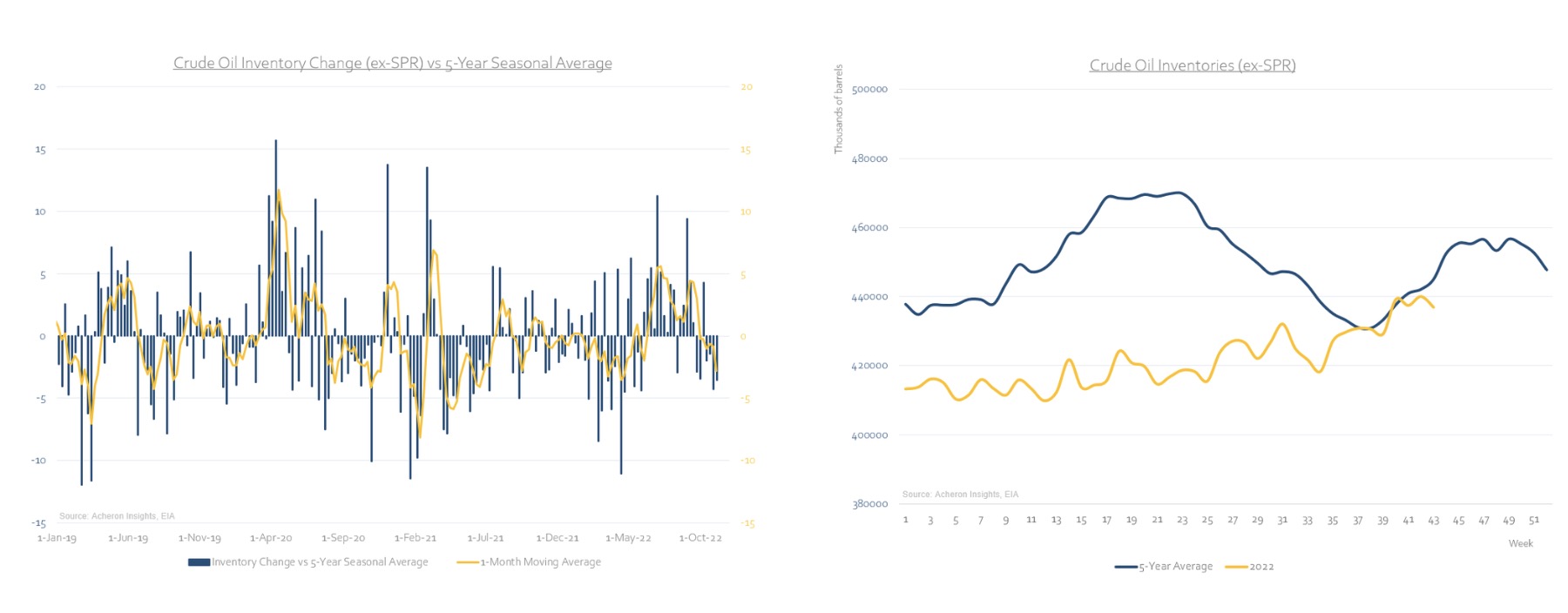
The physical market for energy continues to be tight, signally demand continues to outpace supply.
US inflation probably moderated just slightly in October data due Thursday, and yet another above-forecast reading may dash expectations for the Federal Reserve to downshift from steep interest-rate hikes.
It’s not as if volatility markets have needed extra juice this year.
The instruction manual for surviving a zombie apocalypse is pretty straightforward.
As I see it, decentralized assets have never looked more attractive than they do now.
I’d like to share an example of what happened when one of my clients chose the wrong provider.
Here are five actionable areas for IT protection in 2022-2023.
About 90% of this year’s S&P 500 loss was attributable to higher interest rates.
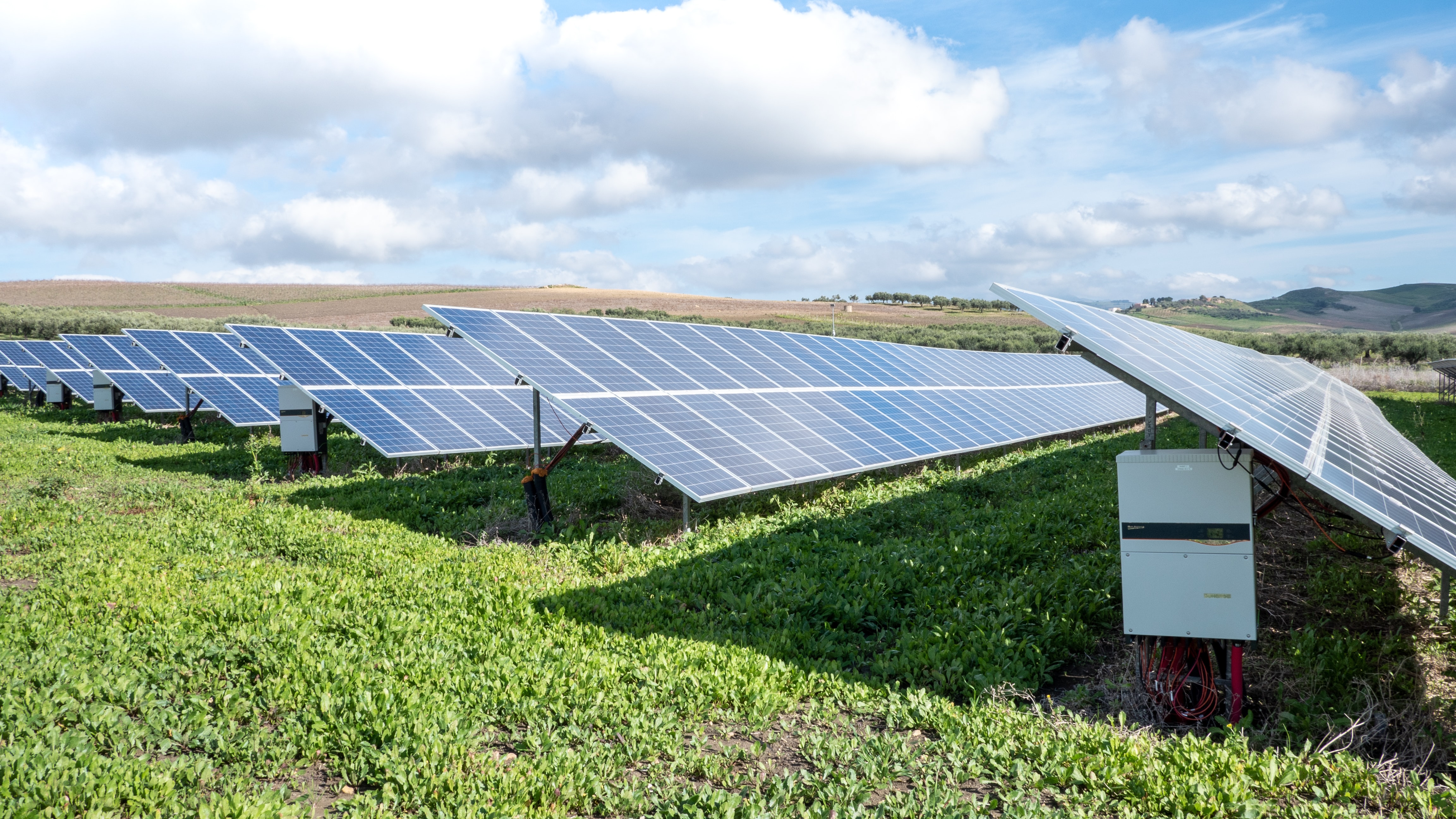
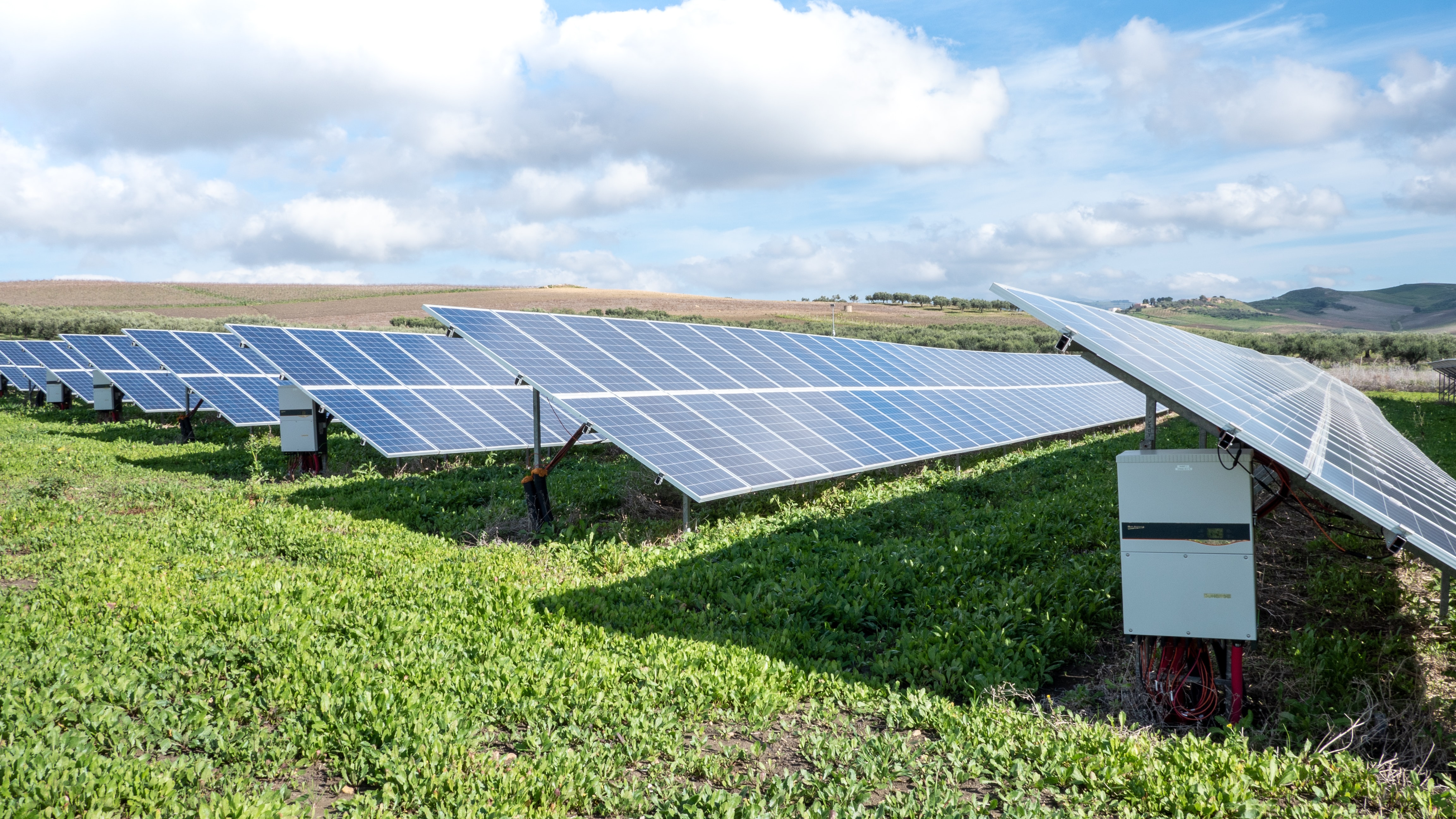
Construction of solar and wind farms needed to purge planet-warming fossil fuels from the grid slowed sharply this year as trade issues, tax uncertainty and supply-chain disruptions stifled development.
I will share some insights for leaders in large and small firms to make change happen, manage results and continue to grow your businesses.