This has been a year like no other. Hammered by an unprecedented health crisis, global stocks tumbled into a bear market at record speed, and then rallied to new highs thanks to a flood of central bank money.
A nascent global recovery presents both risks and opportunities for fixed income investors. Portfolio Manager Teresa Kong, CFA, discusses why China dominates the universe for EM debt and why Asia may outperform the rest of EM for the foreseeable future.
And then there’s Bitcoin. The world’s biggest cryptocurrency has surged nearly 220% this year, touching an all-time high of $23,717 in intraday trading on Thursday.
While COVID-19 rendered many 2020 forecasts obsolete within the first few months of the year, several of BMO Global Asset Management’s key calls proved accurate. Though 2020 was a year of many challenges, we are optimistic for 2021 and expect improved economic conditions and better times ahead.
Several former world leaders, a Hong Kong media tycoon, the CEO of Theranos and Jeffrey Epstein’s confidante — all are scheduled to have their day in court next year.
Science is winning the battle against the covid-19 coronavirus. The advance in therapies has already contributed to a significant reduction in hospitalisation and fatality rates vis-à-vis the number of cases, while the multiple of approved and soon to be approved vaccines puts the livelihoods of billions of people on track to normalise in 2021.
On December 21, Tesla will be the largest company ever to enter the S&P 500 Index. Tesla’s skyhigh valuation, which meets our real-time definition of a bubble, conforms to the observation that market-cap-weighted indices buy high and sell low—the antithesis of prudent investing.
Investors frequently ask us for opinions on specific countries within emerging markets. Depending on what’s in the headlines, the country might be China, India, Thailand or Mexico. Conversations that start top-down and focus on country allocation include many natural questions for those considering emerging markets.
Recent SOE bond defaults signal Beijing’s willingness to let markets price risk more accurately.
As an unusually extraordinary year comes to a close, investors may still have many lingering questions about where the global economy may be headed. Even as the world continues to fight the pandemic, there is reason for optimism in 2021. The strength of Asia’s economies—and China in particular—are recovering and are well-positioned to set the stage for future growth.
Encouraging news about COVID-19 vaccines has boosted hope for stronger economic growth, kicking off a rotation in stocks and equity sectors as investors look to a brighter future. However, near-term volatility is possible, as we’re not yet out of the coronavirus tunnel.
Tailwinds for emerging markets include strong potential for earnings recovery, as well as a weaker U.S. dollar and reasonable equity valuations. Chief Investment Officer Robert Horrocks, PhD, considers the investment landscape in his annual review and outlook.
Industrial metals are well on their way to being among the top performers of 2020, supported by red hot demand from China and global supply concerns.
Volatility, low rates, and rising risks supported gold’s price and investment demand in 2020, driving it to reach a new all-time high during the year. Despite some moderation on the volatility front post-election, the new year is looking poised to serve up more uncertainty for investors. See how George Milling-Stanley sees the gold market reacting, and what it may mean for gold’s price in 2021.
More than most years, it’s hard to look ahead to the next year, to 2021, without looking back at 2020. A global pandemic, a massive economic collapse, a bear market, a surprisingly sharp reversal, a hotly contested election where passions ran high, the impact of lockdowns—it was an unusual year of extraordinary challenges.
The widening economic gulf between China and other emerging markets is prompting some of the world’s largest investors to change how they allocate money to the asset class.
Key Points
A COVID-19 vaccine could start being administered globally this week.
The planned rollout is good news that has lifted the stock markets around the world. But the reality of the rollout faces risks that could extend the time frame for mass immunizations.
We expect markets to be volatile in coming months while the threat of new lockdowns weighs against the hope of recovery, although we believe we may be on the verge of a period of international stock market outperformance.
For all the risks of a year-end cooling-off period, emerging-market backers can’t complain about the lie of the land right now.
Zhi Wei Feng discusses why we believe the market reaction to recent onshore debt defaults in China was based on market fears instead of a real surge in credit events.
Yellen is a good candidate for a tough job, and we review the outlooks for U.S. holiday spending and trade in Asia.
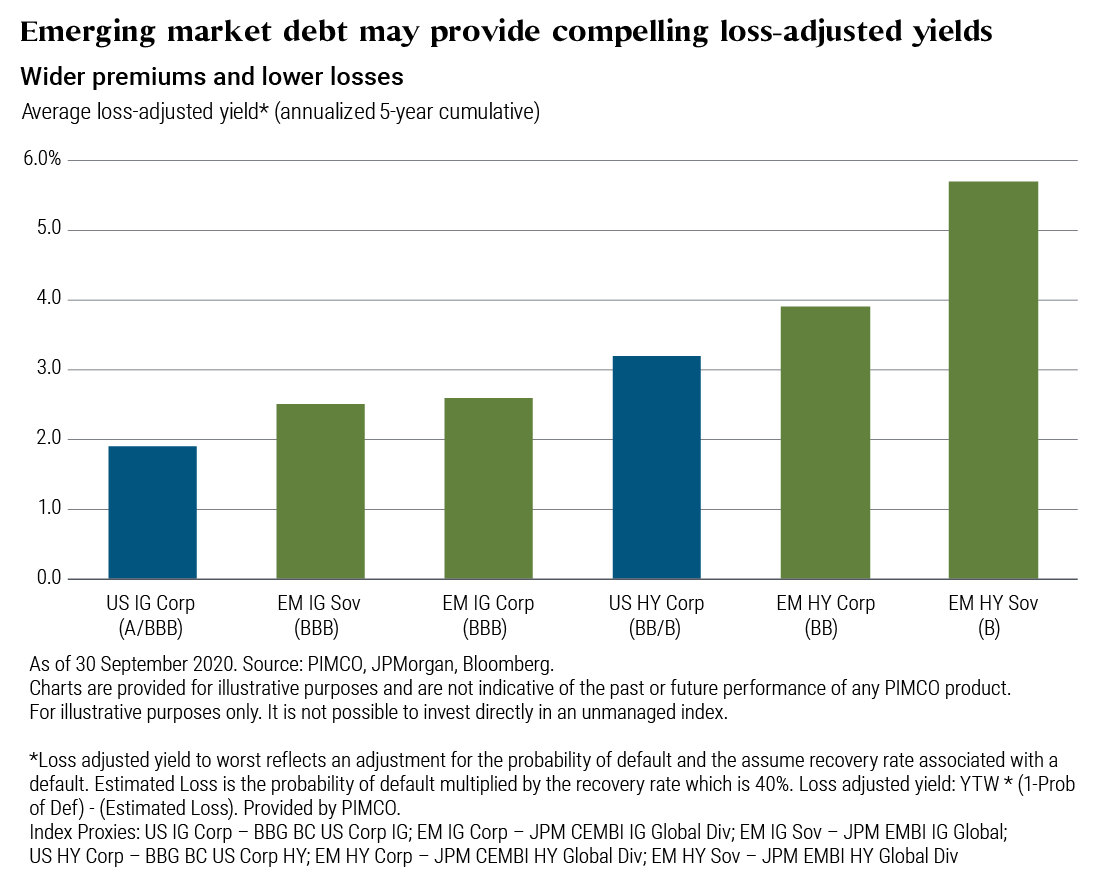
Debt of many emerging market countries can offer robust yields and enhance portfolio diversification, provided the asset manager has the resources and sophistication to avoid potential pitfalls.
“Dr. Copper,” so named for the metal’s ubiquitous use in many different applications, has been ripping higher since its 52-week low in March, thanks to a number of factors including promising economic data.
For global fixed income investors, diversification is key. In our latest Q&A, Portfolio Manager Teresa Kong, CFA, discusses where she's finding opportunities across Asia today.
Each market milestone passed in 2020 is a reminder of the Federal Reserve’s extraordinary efforts to hold things aloft -- and a belief that it’ll continue.
A familiar scenario may be about to play out in the world’s biggest debt market, with a major breakout in long-term Treasury yields at risk of faltering after a banner couple of days for bond bears.
The Covid-19 pandemic was supposed to put the final nail in the coffin of globalization and prompt a retreat into a new era of protectionism. Instead, some are now calling the crisis the Great Accelerator.
Within the broader Asia Pacific universe, Portfolio Managers Yu Zhang and Joyce Li see attractive total return potential among dividend paying stocks.
The institutional investor’s role in the effort to combat climate change is misplaced.
Equity price gains in Japan may be driven by innovation over the long term. Portfolio manager Shuntaro Takeuchi discusses the opportunity set.
After a difficult winter, we expect the global economy to rebound strongly next year. But structural headwinds remain. Will the post-pandemic bounce trigger a durable and broad-based global reflation?
So far this year, shares of HIVE Blockchain Technologies have soared an incredible 715%, well past Ethereum’s gain of 273%. 2020 has been marked by healthy expansion in mining capacity, the most recent example being HIVE’s acquisition of additional access to low-cost green energy.
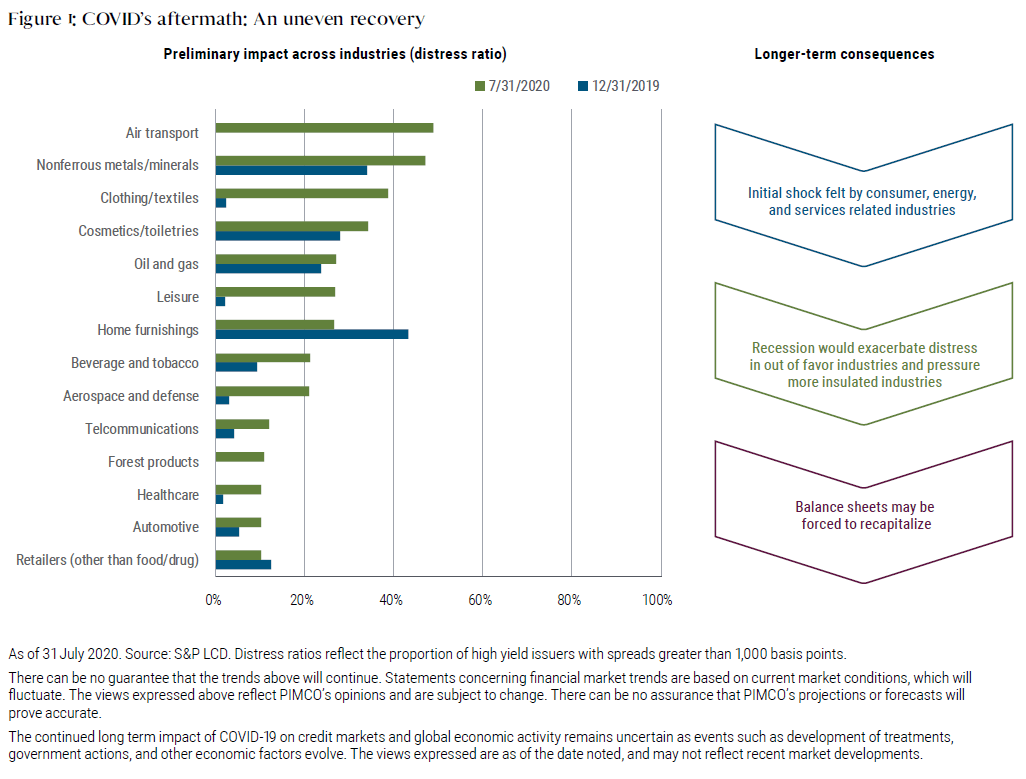
Liquidity issues and other business risks could prompt a wave of defaults and restructurings, in turn creating fertile ground for opportunistic investing in distressed credit.
Gold “is a hedge on policymakers screwing up, and there has been a lot of screwing up in the last 20 years.”
Trading over the holidays? You’ll want to check this list—errr, article—twice.
By now you may have heard that President Donald Trump signed an executive order banning Americans from investing in a select number of Chinese firms that have ties to China’s military.
Sinology explores how U.S.–China relations can develop under President-elect Biden administration in three key phases.
With yields near zero, many investors may question the value of fixed income within a portfolio. Western Asset’s Head of Product Management, Doug Hulsey, joins our Head of Equities, Stephen Dover, to discuss fixed income investing with an active-management lens. He makes a case for the asset class for investors in light of market uncertainties and outlines where he sees opportunities today.
The US elections have implications for emerging markets in the area of global trade relations in particular, but for investors, it’s important to look at countries and companies individually within the asset class, according to Portfolio Manager Andrew Ness. He joins our Head of Equities Stephen Dover to discuss how emerging markets are navigating today’s challenges—including the COVID-19 pandemic—and note they are home to some of the most innovative and resilient companies in the world.
America, and the world, received a huge shot of hope this week. The $210 billion drugmaker Pfizer announced on Monday that its coronavirus vaccine is 90% effective at preventing COVID-19.
Actual third-quarter earnings may be less important than what business leaders say about their expectations.
Before the coronavirus, a decades-long aviation boom spawned a network of nearly 50,000 air routes that traversed the world. In less than a year, the pandemic has wiped almost a third of them off the map.
The new political landscape offers opportunities for investors who adapt their strategy.
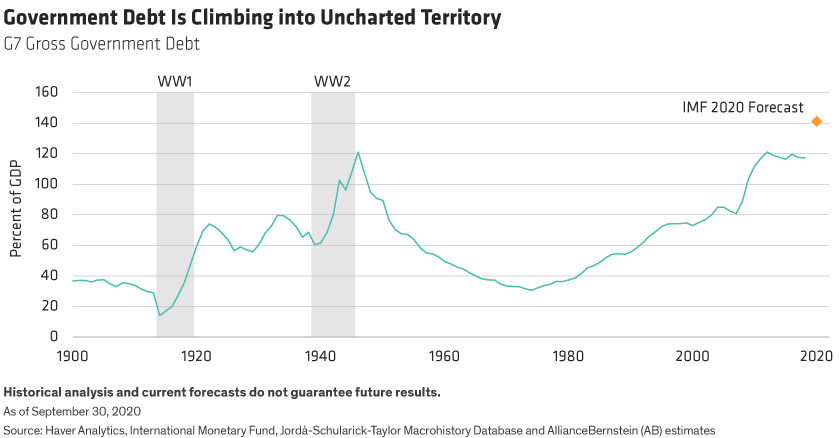
We’ve seen aggressive government and central bank support to stimulate economies sickened from COVID-19 slowdowns, but will the global economy right itself in 2021?
Despite the COVID-19 pandemic, emerging markets have shown a continued appetite for structural reforms that could lay the foundation for lasting economic recoveries, according to our Emerging Markets Equity team.
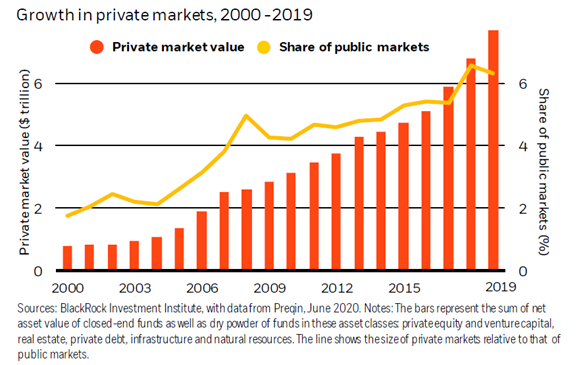
Amid the ongoing COVID-19 crisis, we believe that investing in private markets may offer a raft of potential opportunities. Here's why.
A Joe Biden presidency, checked by a Republican-controlled Senate, may be just what emerging-market investors are looking for.
Advisor Perspectives, a leading publisher serving financial advisors and the financial advisory community, has announced its Venerated Voices™ awards for commentaries published in Q3 2020.
Businesses love Congressional gridlock. Tech stocks had been trending down for days before the election as they faced antitrust scrutiny, but now that it appears certain Congress will remain divided, they’ve recovered most of their losses. The tech-heavy Nasdaq 100 jumped close to 10% for the week.
Global equity markets remain enamored with technology giants despite seismic disruptions from the coronavirus. So far this year, market valuations for some industry titans have soared, albeit with some recent volatility. The same holds for a select few of Asia’s e-commerce and tech giants.