The idea that power is inherently corrupting has been repeatedly proven throughout history. From politics to business to religion, there are countless examples of individuals who succumb to corruption and abuse their authority.
Investors’ hopes for rate cuts this year have faded. The past quarter’s economic data showed that the inflation battle is not over; whether the Fed eases now depends on the data, a point Jerome Powell and the Federal Reserve have repeated ad nauseam.
As of last week, the total return of the S&P 500 was even with 3-month Treasury bill returns since the valuation peak of January 2022, more than two years ago. In our view, investors continue to “grasp at the suds of yesterday’s bubble,” ignoring extreme valuations, lopsided bullish sentiment, emerging pressure on profit margins, economic conditions at the border of recession...
If you’re not sure what direct indexing means, you’re not alone. Even after the recent growth, direct indexing remains relatively unknown. As our compliance team never fails to remind us, you can’t invest directly in an index. So what exactly is direct indexing?
Two years after Wall Street’s love affair with fast-twitch stock options began, Bloomberg’s latest Markets Live Pulse survey suggests the unprecedented boom still has room to run — even as almost half of respondents fear an eventual blowup.
There are attractive investment opportunities in private credit against a backdrop of a U.S. economy that continues to outpace the eurozone and the U.K.
I’m entering my annual post-SIC decompression period. I say that only half-jokingly. The last two weeks were my version of a dive deep into the sea, where you see shocking things and endure crushing pressure. The weeks of preparation are fun, but the sheer volume of information creates its own kind of pressure. You don’t just shift back into normal life after that.
I had the opportunity this week to speak at the London AIM Summit, where presenters and attendees were cautiously optimistic about the economy.
Apple Inc. shares jumped the most in almost a year-and-a-half after the company posted stronger-than-expected sales last quarter and predicted a return to growth in the current period, sparking optimism that a slowdown is easing.
Wall Street analysts see a double-digit upside potential for the S&P 500’s biggest losers this year: real estate stocks.
Having played sports my whole life, there is hardly an outdoor activity which I haven’t tried. I have been known to skip irksome social gatherings just to get out on to the fields.
VettaFi examines the growth in data centers as a demand driver for natural gas and potential benefits for midstream.
Last year, the demand for loans from fossil-fuel companies fell 6% year-on-year and that followed a decline of 1% in 2022.
It’s not just about the balances in the accounts; it’s about helping our clients have a healthy relationship with money.
Most platforms for alternative investments are just concerned with getting advisors access to those investments. But advisors need education on the role alternatives can play in asset allocation and how creating portfolios that complement traditional assets drive business growth. My guest today will discuss:
Message to bond underwriters: Some big customers are sizing up your ESG credentials.
In case you missed it, a $5 trillion tax hike looms over American households and businesses in President Joe Biden’s latest budget proposal, which would include a 25% annual minimum tax on unrealized capital gains for individuals with incomes and assets exceeding $100 million.
While climate-related disasters and record temperatures intensify around the world, commitments to decarbonization initiatives from governments and businesses seek to address the most pressing challenges.
Another strong quarter in markets led to another stellar performance for the Momentum and Growth factors.
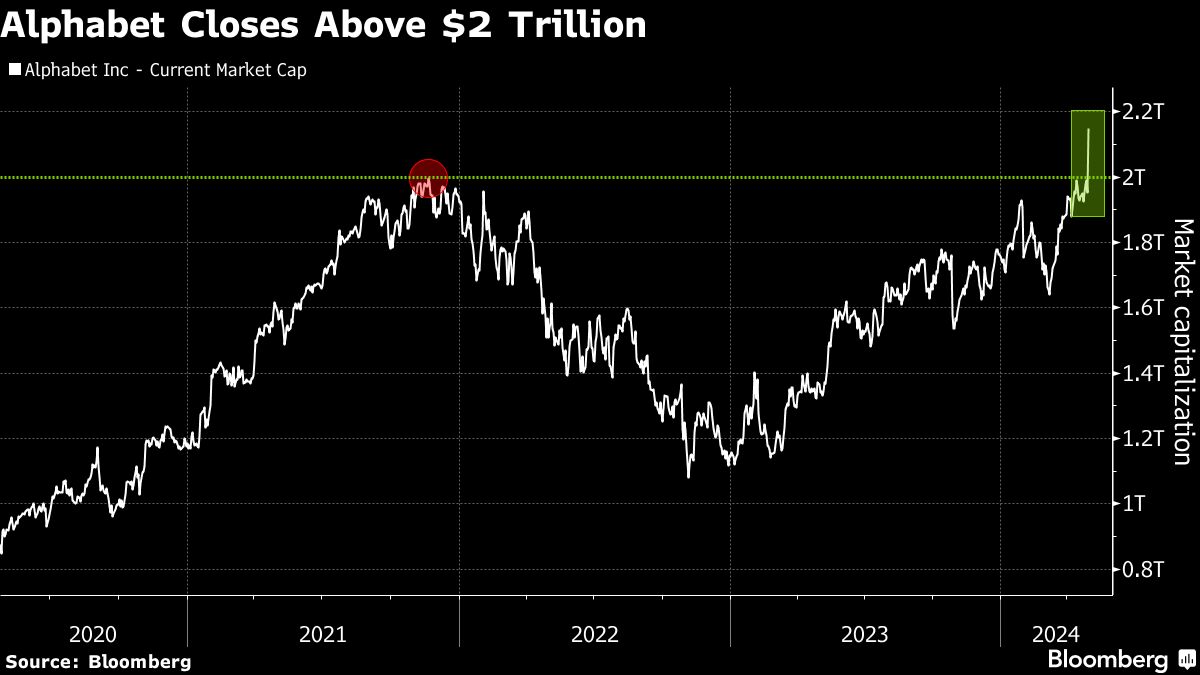
Alphabet Inc. closed decisively above a $2 trillion market capitalization for the first time on Friday, as a powerhouse earnings report reassured investors that the Google parent would be a major player in artificial intelligence.
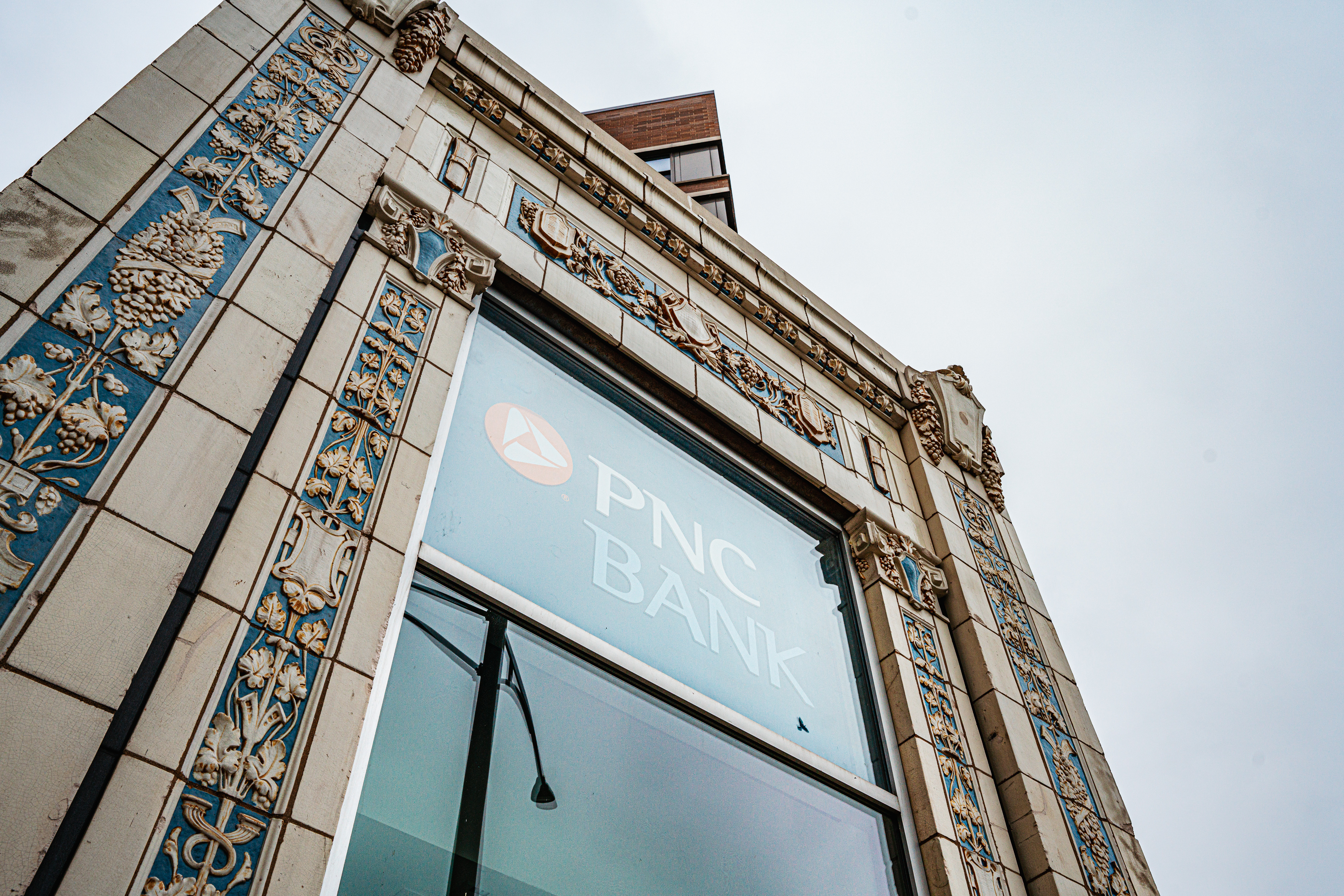
Although big by absolute standards, PNC and its closest peers haven’t reached the optimal size to extract such economies of scale and, without acquisitions, they risk falling short of the requisite tipping point.
Over recent decades, the hot tech trends (from search to cellphones to social media to the digital economy and now to AI) have been a predominantly American story.
The AI-driven cloud and chip industries come into focus in the next month as Microsoft, Meta Platforms, and others prepare to report earnings.
The Northern Trust Economics team shares its outlook for growth, employment, inflation and interest rates in major markets.
Why should anyone be allocating to investment-grade corporate bonds right now?
You’ve just had a promising initial meeting with a high net worth prospect, the chemistry between the both of you felt right, and they agree to the next step in your process.
Since Silicon Valley Bank became the second-biggest failure in US history a year ago, other lenders have been trying to take its place in banking the fast-moving, entrepreneurial world of startups and tech companies.
Demand for copper is on the rise. Can its supply keep pace?
At February's Exchange conference, New Frontier Advisors Chief Investment Officers was interviewed about his firm and the coming markets.
The path to responsible investing is complicated by individual differences in personality traits and decision-making processes.
The dynamics of fiscal and monetary policy are now entering a new phase. Due to the emergence of negative Net National Saving (NNS), the law of diminishing returns can no longer fully capture the harmful effect of debt on economic growth.
Timing has never been a crucial undertaking for fixed income allocations dedicated to asset preservation largely because this is a long-term endeavor dedicated to keeping an investor’s wealth intact.
Large international index funds do not account for geopolitical risk. Corruption has costs, and in this age of conflict with rising tensions in the Middle East, Russia, Ukraine and elsewhere, investors are faced with a daunting landscape while US markets are near highs. Should investors ride the momentum or transition and rotate to sectors that represent greater value and higher forward expected returns? The traditional international funds are attractively valued relative to the US but are fraught with risk. Today we will hear from Julie Cane and Chris Browne from Democracy Investments to discuss democracy as a factor in international investing.
Stronger economic growth is allowing the Fed to stay patient. That means a likely delayed start for expected interest-rate cuts.
Economic “reflation” is becoming the next bullish narrative as equity valuation increases continue to outpace earnings gains, at least according to Gold Sachs and Tony Pasquariello.
The world’s financial markets are encountering a force they didn’t bet on for 2024: A strong dollar is back and looks set to stay.
Imagine you were running for king of the world on a platform of slashing economic growth by 20% forever. You’d be lucky to get your own family to vote for you. And yet humanity insists on running the global economy on fossil fuels that are doing exactly that sort of damage.
Copper is trading at a 52-week high, oil is above $90 a barrel and the S&P 500 Energy Index just hit a fresh all-time high.
Reviewing the basics can keep you from being caught off guard if your investment is returned to you before the stated maturity date.
Inflation, one of many inputs to multi-asset decision-making, cooled substantially last year, but upside surprises in early 2024 for the US and Europe have many investors concerned that the path back to normal has hit a roadblock.
The Northern Trust Economics team shares its outlook for key APAC markets.
A staggering 75% of advisory clients left or considered leaving their advisors in 2023, according to a recent YCharts survey. This alarming trend highlights the shift in the financial advisory landscape, with clients increasingly seeking better communication, service, and guidance from their advisors.
The Northern Trust Economics team shares its outlook for U.S. growth, employment, interest rates and inflation.
For the last several years, world leaders have made big promises and laid out bold plans to mitigate the climate crisis and help the neediest countries adapt. At this year's World Bank/IMF Spring Meetings, they must demonstrate that they can fulfill these promises, rather than simply touting new ones.
Federal Reserve Chair Jerome Powell is making life tougher for his peers around the world as the prospect of higher-for-longer US interest rates reduces room for easier policy elsewhere.
With Taiwan Semiconductor Manufacturing Co. still trading at pedestrian valuations even after surging to a record high, there is potential for its upcoming results to drive the stock even higher.
With the end of great inflation scare in sight, it's time the central bank hive mind contemplated what it might learn from the failure of its economic models.
While immigration has positively impacted economic growth and disinflation, this story has a dark side.
Using a scheduling tool eliminates back-and-forth communication, streamlines operations, and can unlock a range of valuable benefits you might not have considered.
Are you creating videos, yet? Many financial advisors are.