A “boatload” of news this week suggests that the shipping industry continues to look very attractive from an investing point of view. Global cargo carriers are estimated to have recorded $150 billion in profits in 2021, the first time they’ve collectively reached that figure in a single year.
Walk into a U.S. supermarket, and chances are you’ll see some empty shelves once more. It’s an unwelcome throwback to earlier stages of the pandemic.
Few inventions have touched so many lives as the container.
In an economy where the Fed has lost every systematic tether to common sense, empirical evidence, and concern for financial stability, it’s worth beginning this first market comment of 2022 by recalling the ways we’ve adapted in order to navigate that environment.
Loomis Sayles' Emerging Markets Debt Sector Team share their views on key themes in 2022.
The year ended on a highly upbeat tone for investors as equities rose to new heights against a backdrop of inflation and a prolonged pandemic
The global macro environment is ripe for EM assets outperformance as a combination of stronger growth in China, the end of exceptionalism in the US and less uncertainty on US interest rates, lead to a strong backdrop for EM assets.
Covid-19 flare-ups, diminished policy support, and lingering supply-chain bottlenecks will see the global economic recovery cool more than previously estimated in 2022, after last year’s expansion clocked the fastest post-recession pace in eight decades, the World Bank said.
Some of the most exciting growth areas pertain to strong secular trends, many of which are agnostic to the growth potential of any geographic region.
New research shows that some funds that use a factor-based construction process may have over- or under-exposure to industries, sectors, countries and other attributes relative to a market-cap-weighted index.
Every year around this time, we update our always-popular Periodic Table of Commodities Returns.
When Swedish bank SEB AB announced recently that it wanted to buy into the market for carbon credits, what it got was a pile of duds.
In this issue of Sinology, Andy Rothman explains why China’s 2022 investment environment will be defined by two competing weather patterns.
Don’t pay big bucks to “branding experts,” using manipulative sales techniques, or rely on the questionable advice offered by “referral experts” or those who tell you to sell differently based on the personality type of the prospect.
Wall Street seers expect the benchmark S&P 500 Index to generate earnings per share that are up 46% this year from 2020’s depressed level, with growth decelerating to 8% in 2022, according to data compiled by Bloomberg. Even that lower number for the coming year may be too rosy.
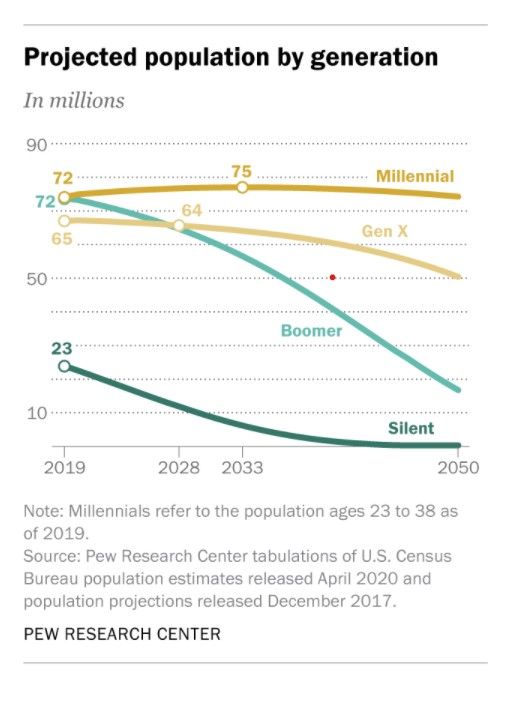
Millennials are growing up. After spending years splashing out on everything from skydiving excursions to Instagrammable vacations in Peru, 30-somethings with decent-paying jobs are making lasting purchases, buying cars, houses and everything inside them.
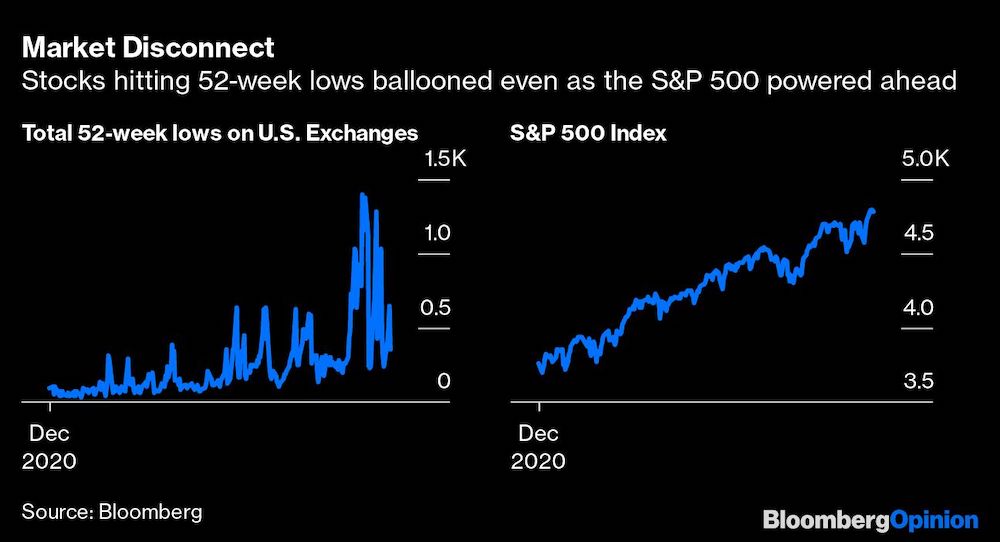
The breadth of the stock market is a measure of its health, and the wider the better. So, a narrowing of its focus, as we’ve seen recently, is often a red flag, both for the overall market and the darlings of the moment.
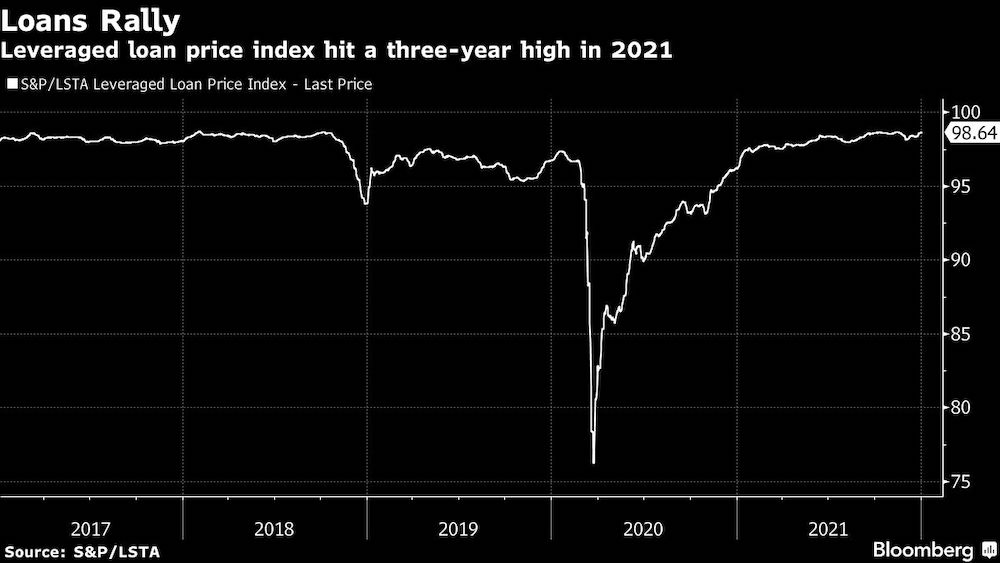
Sales of U.S. leveraged loans are likely to stay strong for at least the next few months thanks to private equity buyout activity that is showing few signs of abating.
A change in fundamentals could make international bonds more attractive.
In 2021, readers of the Investor Alert and Frank Talk were most interested in stories on gold mining, precious metals, natural resources and emerging markets (no surprise). But there was also interest in macroeconomic topics (inflation, mostly) as well as Bitcoin and cryptocurrencies.
Supply-chain issues are often cited in the current debate about inflation—and aren’t going away as quickly as consumers and businesses would like. Our Franklin Templeton Investment Solutions team explores how supply chains became stuck, whether they will loosen up in 2022, and the implications for multi-asset investors.
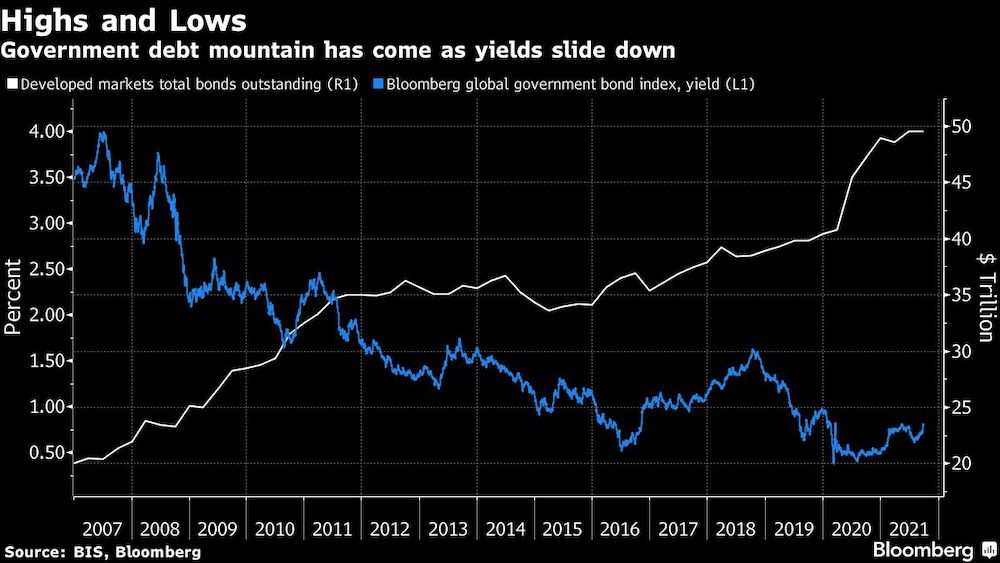
Anyone gearing up for bond yields to surge in 2022 should think again. A global glut of saved cash has the potential to restrain an increase in rates, even as central banks dial back their pandemic stimulus.
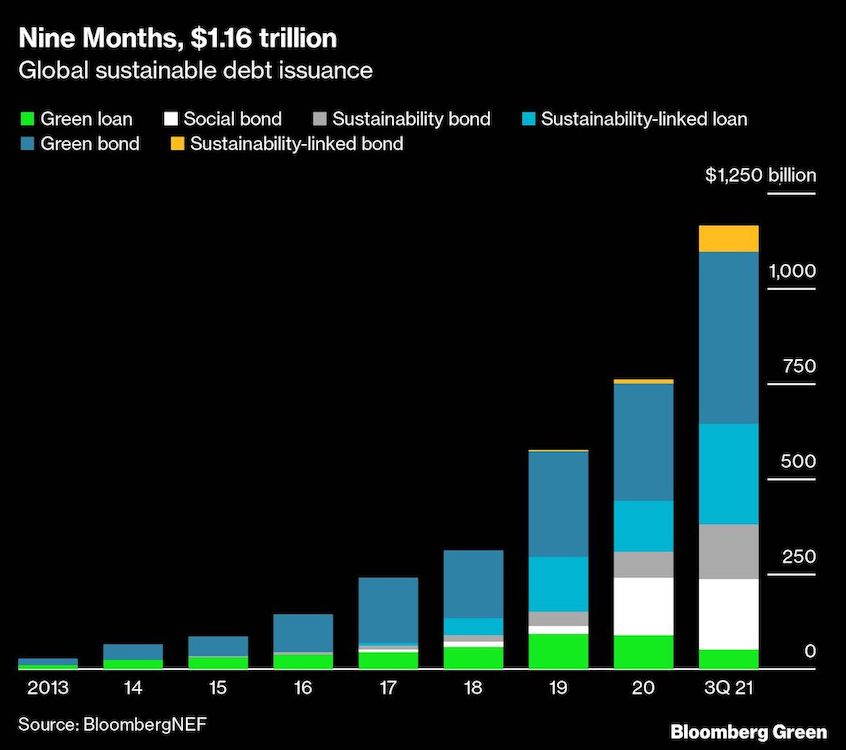
Despite a drop in clean-energy stocks and intensifying concerns about widespread greenwashing, the market for investment products sold as being ESG-related had another record year by most yardsticks.
The S&P 500 will probably end next year with a gain, while yields on 10-year Treasuries and the price of oil will climb as well. That’s according to nearly 900 Bloomberg Terminal clients who responded to a survey conducted by our Markets Live blog in the first two weeks of December.
Rick Rieder and team identify 11 themes that could drive returns in 2022, as the greatest monetary experiment since the advent of flat currency enters its next phase.
The semiconductor shortage and its impact on everything from autos to smartphone production has been much in the news. The shortage has been a boon for semiconductor stock prices. But it likely will resolve itself in the coming months—or years, depending on whom you talk to—raising the specter of a bust.
CIO Robert Horrocks, PhD, sees fascinating and surprising investment opportunities arising in the emerging markets and China next year. Fed actions to manage inflation and the ongoing challenges of the pandemic will be important factors but the performance of markets may ultimately depend on the success of well-managed companies in key sectors.
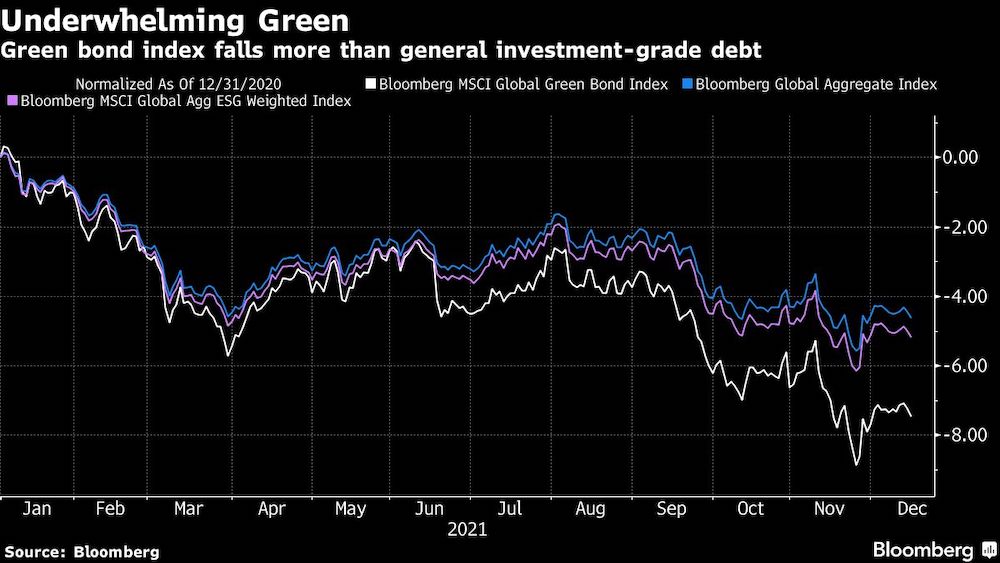
Investors in the booming ethical bond market are having to swallow short term losses on the road to improving their green credentials.
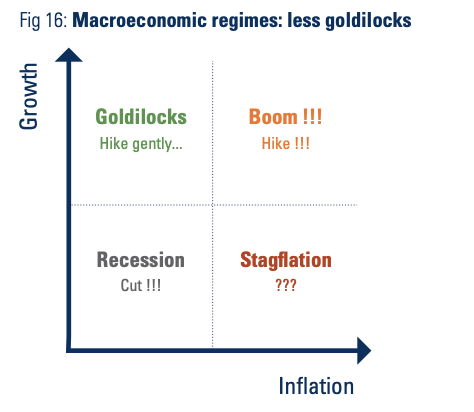
The Federal Reserve pulls forward rate hike expectations and doubles the pace of tapering in an effort to provide more flexibility to react in 2022.
The metaverse is part of the next iteration of the internet some are calling Web 3.0—and it promises to upend everything as we know it.
At the end of every year, I like to look back on my work and see which themes and findings are as striking now as they were months ago. I’ve chosen ten ideas – and the ten charts to go with them...
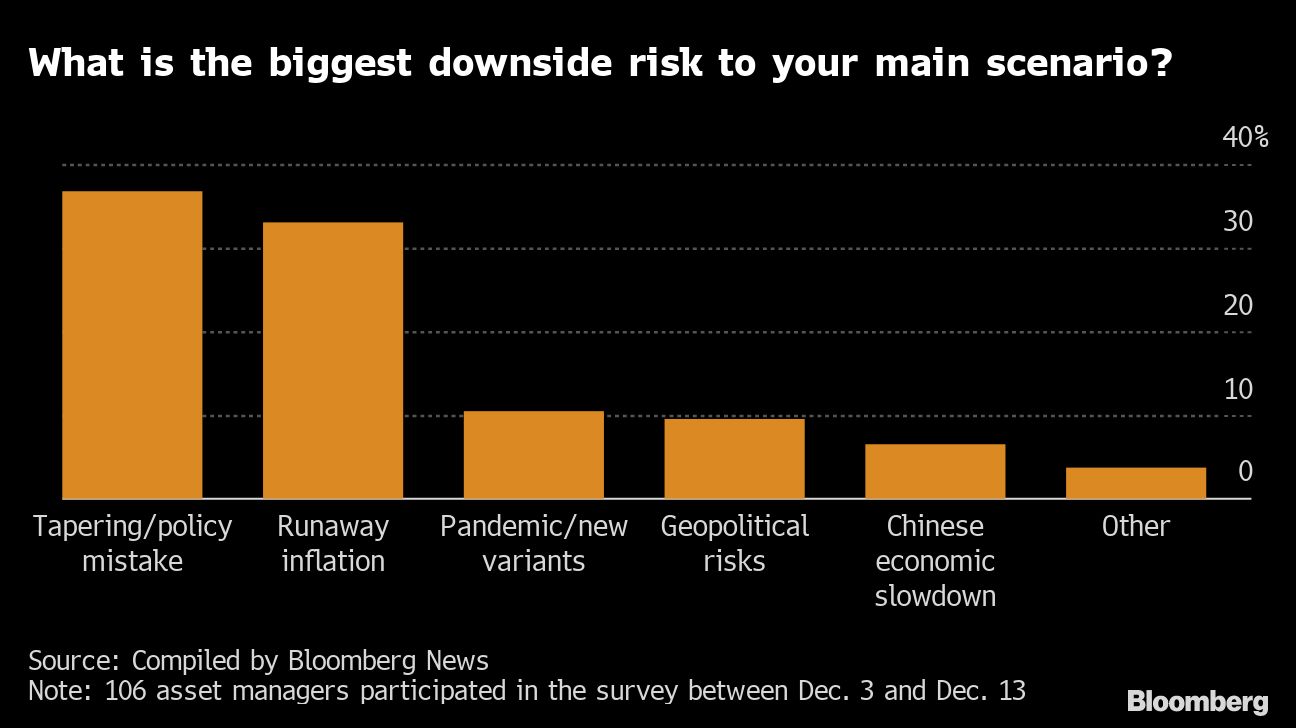
A hasty policy shift by central banks anxious to tame surging inflation is the biggest downside risk for global stocks next year, according to an informal Bloomberg News survey of fund managers.
There are a number of key investment themes for 2022 I feel most people would agree on. Below are just a handful.
Disruptive trends and fatter tail risks highlight the importance of selection within asset classes and regions.
The latest climate pledges are encouraging, but fulfilling them will be a challenge.
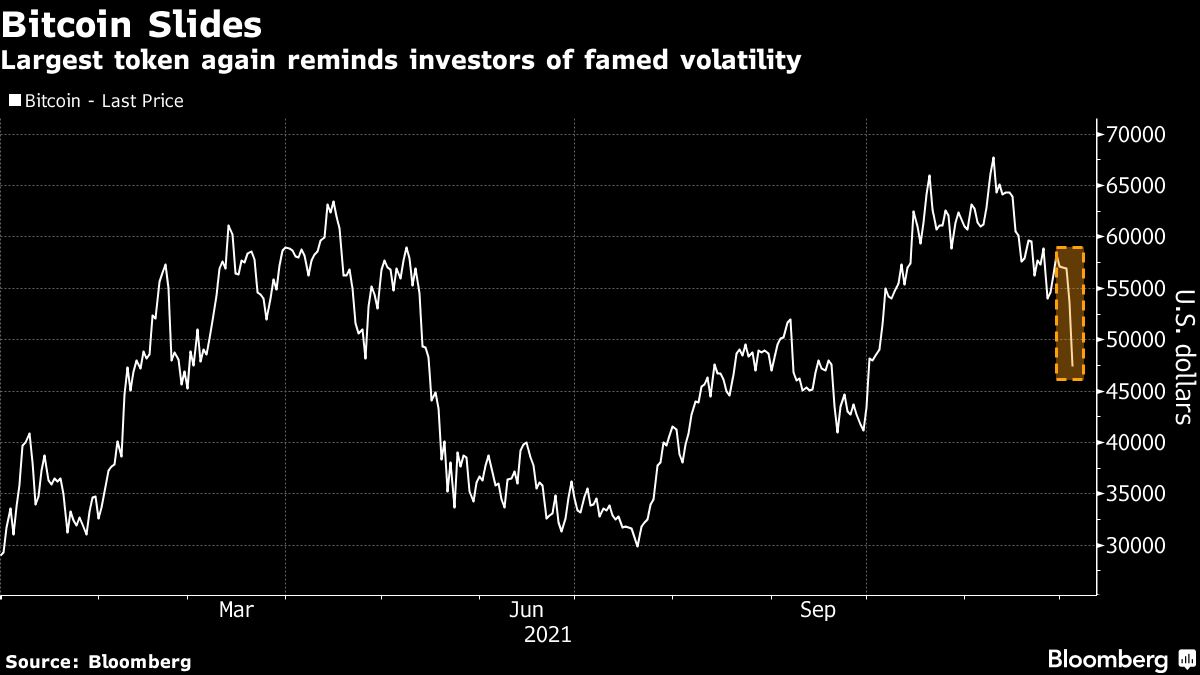
Bitcoin plunged along with other cryptocurrencies on Saturday, in another indication of the risk aversion sweeping across financial markets.
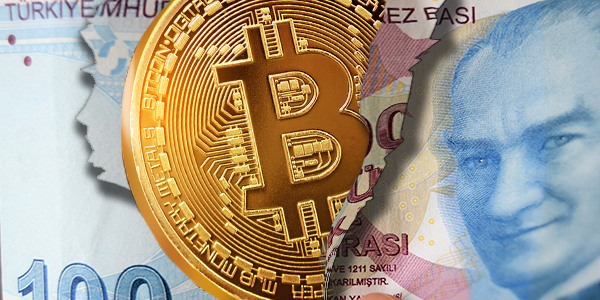
Like many others, I believe Bitcoin could fix Turkey’s lira problem. And to understand why, it might be helpful to dust off a book written 45 years ago by Austrian economist Friedrich Hayek.
Unexpected regulatory actions in China, concerns over Evergrande’s debt restructuring and the lingering effects of COVID are just a few reasons for the volatile year in Asian markets. While growth in most of Asia and emerging markets dipped this year, there are reasons for optimism in 2022. Even with moderate growth projections, the region remains resilient and is still expected to lead the global recovery and exceed those of advanced economies.
This third quarter update of Global Investment Report’s 18th annual global hedge fund survey highlights some of the remarkable distortions revealed across markets, while reporting on the current sentiment of leading investors and tracking how the top 50 funds have performed through the first three quarters of 2021.
What once looked overzealous now appears prudent. Central banks that moved early to pare back stimulus and hike interest rates may have made the right call after all.
For the first time in four years, venture investors are backing more crypto and blockchain startups in the U.S. than they are in Asia—a sign that China’s crackdown on alternative currencies has chilled the country’s upstart industry.
Though the equity markets likely will experience some volatility, the outlook for economic growth remains positive: above-average growth should lead to above-average earnings growth for companies in 2022.
Oil in New York slid more than 5% after Federal Reserve Chair Jerome Powell said the strong U.S. economy may warrant ending the central bank’s asset purchases sooner than planned next year.
Bear with us as (no pun intended) you read this longer-than-usual outlook!
I hope everyone had a wonderful Thanksgiving full of family, love and laughter! Even if that wasn’t your experience, there’s still much to be grateful for.
Bankers are repackaging everything from fast food franchises to fitness-center fees into bonds at the fastest clip since the global financial crisis as investors chase yield and inflation protection.
Global initial public offerings have smashed their previous record this year, propelled by a blank-check boom and companies cashing in on high valuations.
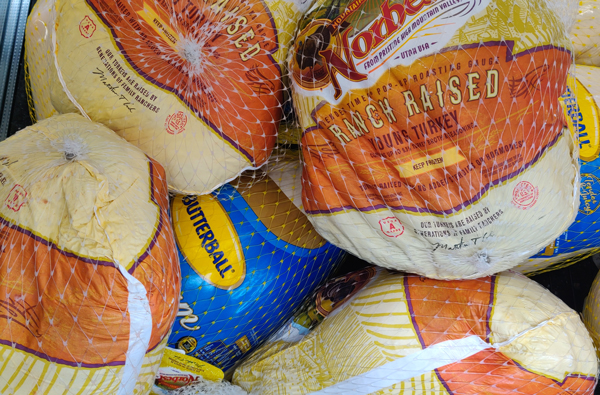
The average cost of a typical holiday feast has increased 14% compared to Thanksgiving last. The price of the turkey alone is up 24%, which is nearly four times the official inflation rate.
With a new Prime Minister taking the helm in Japan, what does the future hold? Franklin Templeton Investment Solutions’ Gene Podkaminer and members of the research team take a look at both local and global trends influencing Japan—and why investors should pay more attention to the country.
Increasing regulation and stress in the property sector have led to lowering expectations for Chinese economic growth in 2022. Could the global economy be impacted as well?