For financial advisors, tax season should not be the only time to talk to clients about municipal bonds. However, with April 15 arriving this week, the timing is ideal to examine how muni bond ETFs are rapidly becoming a cornerstone of fixed-income allocations in 2026.
New ETF launches address concentration and liquidity risks exposed by volatile markets through active and passive strategies.
In this episode of ETF of the Week, Todd Rosenbluth, and Chuck Jaffe discuss why the Goldman Sachs Municipal Income ETF (GMUB) is a timely addition to portfolios. With tax season in full swing, Rosenbluth explains the unique appeal of municipal bonds, highlighting the historical tendency for these assets to perform well following the April 15th deadline
It goes without explaining at this point, that advisors and investors are keeping an extremely close eye on the trajectory of the Federal Reserve’s ongoing fight against inflation. As of now, the battle certainly seems far from over. Fortunately, tools such as bond ladder ETFs can help portfolios maintain their course and mitigate the brunt of inflation.
That article digs into the plumbing behind oil shocks and recession, and exposes why, over the years, I’ve learned to distrust the loudest voices in the room.
Wall Street strategists expect the Federal Reserve to take a slow and careful approach to winding down a program meant to help ease pressure in funding markets.
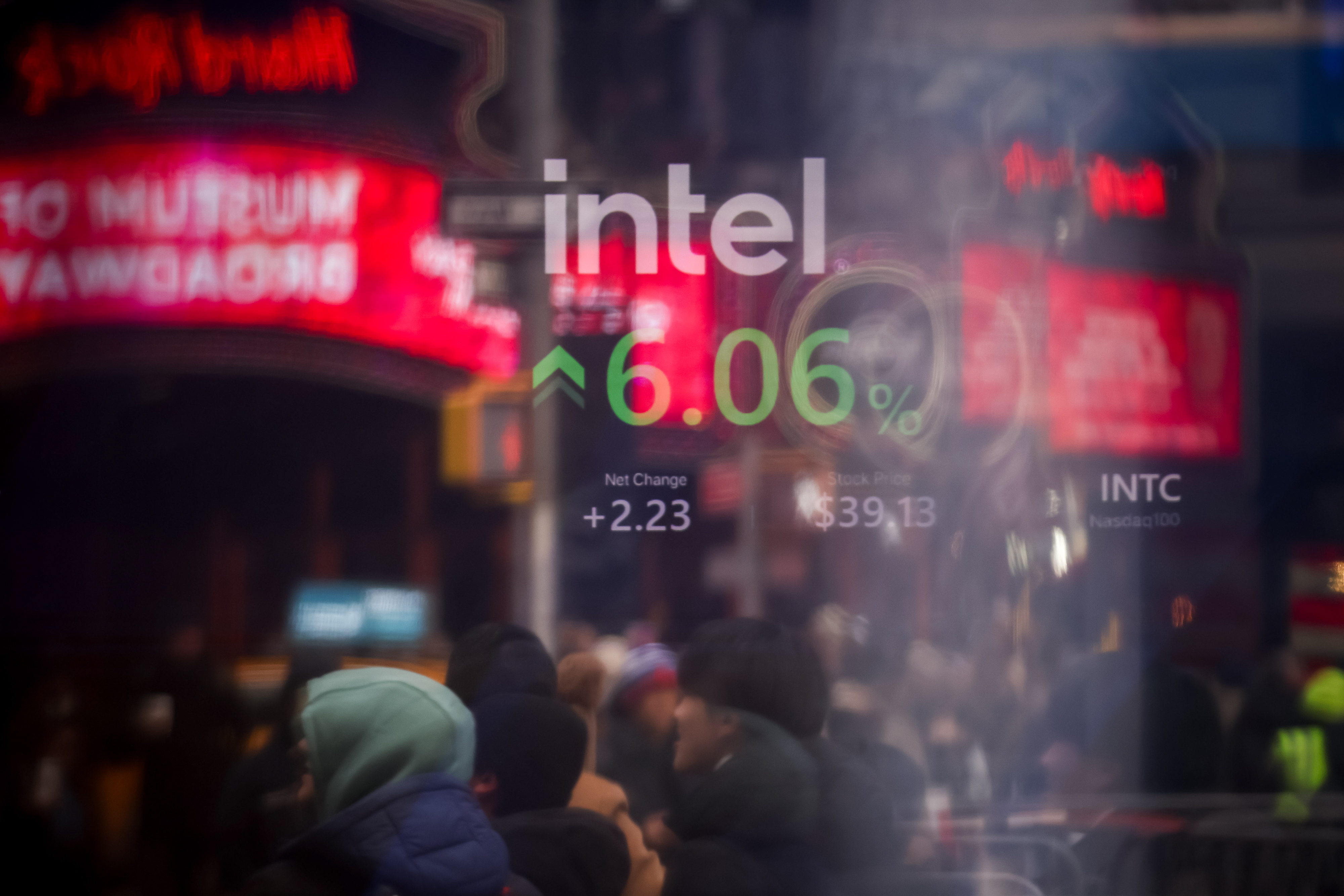
Intel Corp. has quickly become one of the hottest stocks in the S&P 500 Index thanks to a nine-day surge that has added more than $100 billion in market value.
Dividend-paying stocks offer an effective hedge against inflation—as well as solid long-term return potential in other environments when actively sourced from the right parts of the market.
Over the past year, markets have been shaped by rapid advances in AI, elevated geopolitical tensions – especially involving Iran – and persistent uncertainty around global trade. In environments like this, successful investing rarely comes from chasing headlines or reacting emotionally. It’s about discipline, staying anchored to fundamentals and executing a clear long‑term game plan.
Benefit Street Partners believes private credit has faced scrutiny recently and there are four horsemen of the apocalypse charging toward private credit investors, but three are phantoms. One, however, is real.
During Exchange 2026, experts and thought leaders from firms across the country gathered. They shared different approaches and ideas for tackling the market’s biggest challenges.
A ceasefire in the Middle East is the latest twist for investors who have grown increasingly reactive to each new headline. Volatility has surged: prior to the ceasefire, the VIX had roughly doubled this year and averaged 25 in March—about 67% above year-end levels—underscoring just how uncertain the path forward has been.
While recent market performance reflects optimism over potential geopolitical de-escalation, underlying economic data reveals a complex landscape of intensifying price pressures and cooling growth.
Franklin Templeton Institute examines the evolution of private credit, its risk/return characteristics, and why commercial real estate debt represents a viable alternative to traditional fixed income options.
In environments of geopolitical stress, diversification* is tested, and investors may need to think more wholistically about the assets included in their portfolio.
The traditional 60/40 portfolio is undergoing a structural renovation, but the fixed income sleeve is proving difficult to stabilize.
Bond traders held onto wagers that the Federal Reserve will lower interest rates once this year after data confirmed that US inflation quickened in March as the Iran war led to higher gasoline prices.
Private markets benefited enormously from the post-Great Financial Crisis era of ultralow interest rates that stretched through much of the 2010s and into the early 2020s. Amid regulatory change and muted returns in traditional fixed income during this time, investors were increasingly pushed into alternative areas of capital markets in search of yield.
The One Big Beautiful Bill Act introduces enhanced tax benefits but adds significant complexity. Our Bill Cass explains why strategic planning around key income thresholds is critical to maximize deductions and ensure tax-efficient financial outcomes.
The first quarter of the year has offered an early reminder that markets rarely move in straight lines. After the extraordinary enthusiasm that carried investors through 2025, much of it centered on the promise of artificial intelligence, the new year has quickly reintroduced elements of uncertainty.
U.S. headline employment rebounded strongly in March, posting the largest monthly gain since late 2024. The jobs rebound, which was broad-based across industries, was a welcome sign after February’s data showed a sharp decline not usually seen outside of recessions.
Energy-driven inflation and geopolitical risk increase the likelihood of higher-for-longer interest rates, which listed infrastructure has several mechanisms for passing through to earnings.
AI’s rapid growth is driving demand not only for electricity but also for the clean water needed to run its physical infrastructure. As data centers expand, rising water intensity is straining supplies and testing long-term sustainability. In our analysis, these pressures create both risks and opportunities for active investors.
VettaFi sat down with Innovator ETFs CIO Graham Day to discuss the move as well as the future of those defined outcome ETFs. Day, who joined the firm in 2017, has been part of many of the shop’s launches in the defined outcome space, one of the more popular options ETF segments.
Learn how advisors can optimize late-start 529 plans using superfunding, SECURE 2.0 Roth rollovers, and multi-scenario modeling.
As AI continues to reduce software development costs, investors need to reconsider what makes a competitive moat durable, particularly for technology companies.
Gambling is rising in popularity, blurring lines between betting vs. investing. Misunderstanding the key differences can endanger financial security.
Given the combined weight of these markets within EM portfolios, Templeton Global Investments believe incremental improvements in capital discipline could have a meaningful impact on aggregate index-level earnings quality.
Geopolitical tensions and disruptions to global energy supply often lead to higher gas prices at the pump. Amid the current conflict in Iran, oil prices have surged to above $100 per barrel for the first time since 2022.
While families have limited control over rising tuition, certain college tuition tax deductions may help ease the overall cost of higher education.
Investors are starting to understand that robotics and AI each represent an industry of industries. Not a sector. Not a theme. The foundational technology stack that every other industry increasingly depends on. In Q1, the market decided to stress-test that thesis, and the results tell a more nuanced story than the headline numbers suggest.
Cinthia Murphy, investment strategist at VettaFi, joined Nate Geraci on this week’s ETF Prime to discuss record ETF flows in the first quarter despite challenging market conditions. The industry exceeded $460 billion in total flows, a 50% year-over-year increase from Q1 2025, according to Murphy.
Global bonds surged Wednesday on news that the US and Iran had agreed to a ceasefire, pausing a war that roiled markets for weeks by delivering the worst oil shock in years.
Last month at the Exchange conference in Las Vegas, Anna Paglia, State Street Investment Management’s chief business officer, discussed how the firm’s private credit lineup came to be and how the firm sets about developing some of its products.
At Exchange 2026, key thought leaders from firms across the country gathered in Las Vegas to share their ideas for navigating today’s macroeconomic uncertainty and the future of ETFs.
In this video, Chuck Carnevale (“Mr. Valuation”), co-founder of FAST Graphs, explains a simple and effective way to find high-quality stocks, even in an overvalued bull market.
Despite West Texas Intermediate crude climbing to $111.54, U.S. stocks ended last week higher for the first time since February 20.
Fixed income markets have faced a challenging stretch following the escalation of conflict in the Middle East. Sharply rising oil prices and renewed inflation concerns have pushed US Treasury yields higher, and municipal bonds have moved in tandem.
As strikes on Iran continue and the Strait of Hormuz remains effectively closed, it’s clearly too early for market watchers to stop thinking about geopolitical risk.
Developments in the Middle East continue to be, without a doubt, taking center stage for the financial markets. However, it’s important to keep tabs on the U.S. macro-outlook, especially the labor market and inflation aspects.
In the competitive and client-centric world of wealth management advisory services, a strong business development strategy is more than a growth tool; it’s a necessity. While digital marketing, webinars and in-house events have their place, two of the most effective and scalable channels for high-quality lead generation remain referrals and centers of influence (COIs).
The defining statistic of the so-called K-shaped economy is a little hard to define.
The US-Iran conflict has altered Iran’s regional influence and, more broadly, has many other consequences. It pressures government relations as well as global and financial market trading.
With the conclusion of a volatile first quarter in 2026, the Amplify Energy & Natural Resources Covered Call ETF (NDIV) demonstrated the resilience of its underlying index (VettaFi Energy and Natural Resources Covered Call Index).
Gold’s recent drop from $5,600 to $4,400 is a classic liquidity story where investors are selling their most liquid winners to raise cash.
The middle is typically not where you want to be. In American sports, teams in the middle of the standings aren’t contenders for either a championship or a high draft choice. The middle seat on an airplane, subject to incursions from either side, is not very comfortable. The middle manager is accountable in every direction, empowered in none.
It was a rough first quarter for the Broadleaf Growth Equity Portfolio and the markets in general as investors tried to identify market leadership buffeted by AI spending concerns, talk of escalating private credit market risks, and ultimately, the emergence of War in Iran.
Join the experts at Goldman Sachs Asset Management as they explore the current state of the fixed income market and discuss why a "set-it-and-forget-it" approach to fixed income may no longer be sufficient as investors consider actively managed fixed income ETFs to help navigate today’s environment.
With oil prices spiking and inflation concerns remaining elevated, many investors are looking for ways to diversify beyond the S&P 500. This week, Chuck Jaffe and Todd Rosenbluth, dive into the FlexShares Morningstar Global Upstream Natural Resources Index Fund (GUNR).
Breakeven real rates can inform us how much of a total return portfolio’s realized risk premium would be required merely to catch up to the benefits of delayed claiming, arguably an inefficient use of the equity risk premium.