Income investors face a promising landscape today. But we think income investing should be more than simply combining the highest yielders in each asset class, which could create unintended risks. In our view, an efficient multi-asset approach can help find the right balance between income, growth and diversification.
Kevin Warsh’s nomination for Fed Chairman initially reassured bond markets by offering a known, crisis-tested Fed veteran with a reputation as an inflation hawk, reducing uncertainty at a critical juncture for monetary policy.
In recent months, the cost of living has consistently polled as the top issue for American voters, with housing affordability standing out as one of the biggest pressure points.
Gold’s stomach churning volatility – up some 30% in less than a month since the start of the year, only to subsequently lose 20% in a matter of days – has, unsurprisingly, left some investors doubting its role as a hedging asset.
As Trump and Powell argue over rates, the Taylor rule uses data to suggest where rates should be. But some argue this is an outdated way to set policy.
The recent decline in cryptocurrency prices has unsettled parts of the market. I talked with Christopher Jensen, Director of Digital Asset Research and a Portfolio Manager in the Digal Asset Investment Strategies group for his views which I share below.
Private assets are gaining traction in many portfolios, as investors seek new frontiers given a more challenging market landscape. Returns of traditional asset classes in the years ahead are likely to be lower on an inflation-adjusted basis, and public markets offer fewer options for diversification today, at a time when managing risk is becoming increasingly important.
The mid-term elections are still more than eight months away, but that hasn’t stopped stories and headlines being posted about possible outcomes and what are perhaps the main drivers come voting day. Without a doubt, the number one issue appears to be the notion of affordability, and of course, what plans do the Republicans and Democrats have in store to address this issue.
As the economy struggled in the wake of the crisis, Warsh was primarily concerned about the risk of inflation—even as unemployment pushed near 10%—and indeed, over the next decade the primary policy concern turned out to be inflation consistently running below target.
LPL Research highlights five reasons emerging markets look attractive in 2026, from dollar weakness to accelerating earnings, and AI-driven growth.
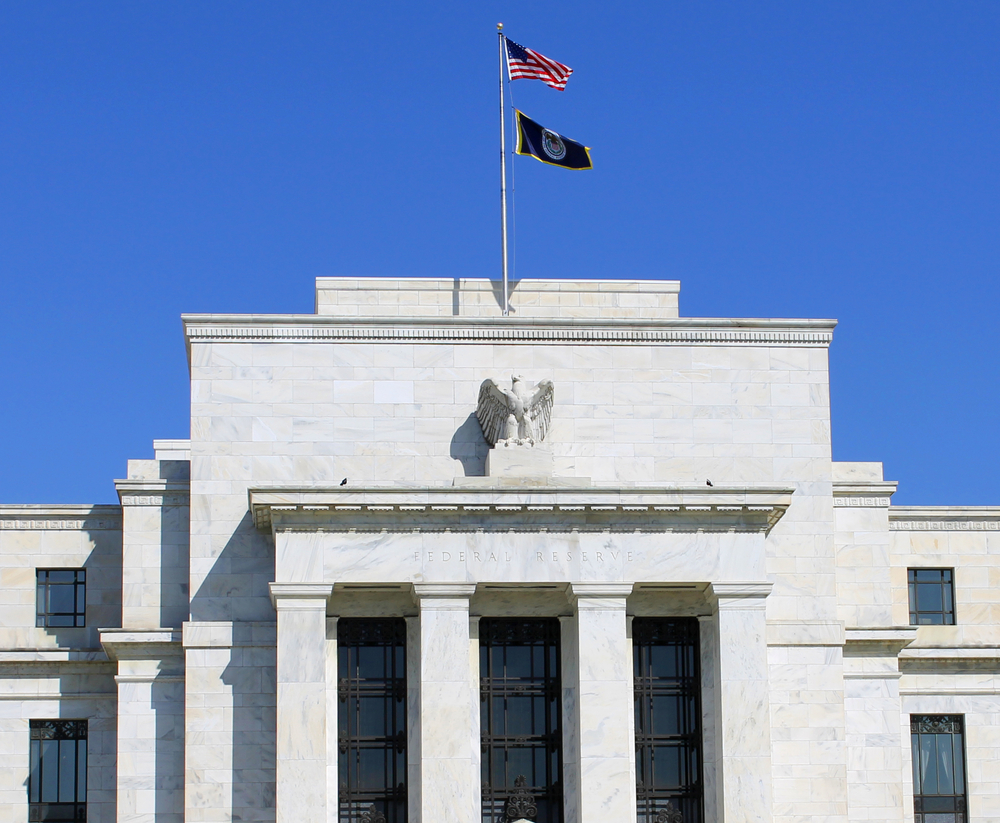
At the start of my career, the Federal Reserve was content to operate in the shadows. Today, by contrast, the Fed is a much more public entity. And so the fact that the derby to become the next Chairman played out so vividly in the media was not surprising.
Weakening global ties may lead to economic disruption and lasting investment implications. Here's what investors should know about navigating the changing landscape.
The market got off to a strong start in 2026, with investors chasing industrials, materials, and commodity-related stocks as the reflation narrative gained traction. The “reflation narrative” is the belief that a range of policies will boost the rate of economic growth in the U.S. without triggering inflation.
A picture is worth a thousand words. What follows, instead of 7,000 words, are seven illustrated examples of what could go wrong with the U.S. stock market or the economy.
Unfortunately, most people still don’t start thinking about their retirement until they are in their forties. Better late than never, but I believe there is a massive missed opportunity here.
US stocks were muted on Tuesday as investors examined the first of several key economic data releases this week in an attempt to find clues on the Federal Reserve’s interest-rate path.
Markets may appear orderly heading into 2026 — but beneath the surface, risk and opportunity are becoming increasingly uneven.
Just eight years ago we were celebrating 25,000, which means equities have doubled in less than a decade. By the Rule of 72, that’s roughly a 9% annual return including dividends—nominal, yes, but still a powerful reminder that equities continue to reward patience even through extraordinary volatility, policy shocks, and repeated predictions of recession.
Equity valuations are top of mind among investors as we move into February, amid stretched sentiment and positioning and challenging corporate earnings expectations.
2025 turned out to be a year for the ages for agency mortgage-backed securities (MBS), as the Bloomberg U.S. MBS Index registered its best calendar year of returns since 2002. The benchmark index’s 8.58% total return outperformed every major fixed income sector other than high yield (+8.62%) in 2025.
This past week, I had the privilege of attending the 2026 Harvard Presidents’ Seminar alongside some of the nation’s top executives and thought leaders. One of the most compelling speakers was Ambassador Kevin Rudd, former prime minister of Australia.
Dollar positives include relatively high U.S. interest rates and robust growth. But dollar negatives are building. The political will for a stronger dollar isn't there and valuations aren't helping.
Whether you follow Japan or not, its situation is incredibly important for investors because it is a major provider of global liquidity. Instead of being overly dramatic about the slim chance of a near-term Japanese crisis, we prefer to focus on how Japan normalizes policy after years of artificially suppressed interest rates and how that process will impact the yen carry trade.
After several years dominated by macro shocks, markets are transitioning into a phase where dispersion, selectivity, and disciplined portfolio construction matter more than broad directional bets.
Markets are efficient after all. This does not mean that prices are always “correct,” just that they generally reflect the available information. When investors learn that software firms’ products may be displaced by AI, their prices fall, as they did last week.
The Federal Reserve System has a critically important role in the economy, but it is designed to act slowly. The modern economy isn’t slow at all. Things change before Fed officials even notice them, much less understand them. That’s why Kevin Warsh’s nomination as Federal Reserve chair is so important.
For nearly two years, markets were driven by the same speculative narrative that “this time is different.” Speculative narratives are not only seductive but also contribute to investment behaviors that obscure reality. Speculation disguised as investing is a losing proposition.
The U.S. labor market showed further signs of cooling last week as private sector hiring slowed and job openings reached their lowest levels in over five years.
Buildout of blockchain-based infrastructure is entering a new phase. The focus in 2025 was on stablecoins and their emergence as the cross-over use case that captured interest from both crypto-native and traditional financial participants.
Barely a month into 2026, markets have already weathered multiple bouts of rolling, event‑driven volatility. Geopolitical surprises and policy pivots have triggered sharp price moves from the U.S. to Japan to Europe, from sovereign bonds to currencies to mortgages.
After more than a decade of U.S. dominance, the tone has shifted, and investors understandably want to know whether this is a brief rebound—or the start of a new leadership cycle. While we do not time markets or make predictions, we believe long-term investors can benefit from maintaining international exposure by understanding the broader structural forces that have historically shaped these cycles.
Monetary policy stayed front and center this week as major central banks kept rates unchanged. What stood out was not the decisions themselves, but how economic momentum is diverging across regions.
Another signal of earnings strength is the ISM Index. Historically, the Institute for Supply Management (ISM) Manufacturing Index has correlated well with S&P 500 earnings growth because earnings are more manufacturing-driven than the more consumer-oriented economy measured by gross domestic product (GDP).
Carrie King, Global CIO of BlackRock Fundamental Equities, offers her perspective on these questions and more as viewed through the lens of an active stock picker.
ETF industry and State Street Investment Management leader Matt Bartolini joined VettaFi's Todd Rosenbluth to talk diversification.
Kevin Warsh began his April 2025 lecture to the International Monetary Fund (IMF) by comparing today’s economic environment in a period of extraordinary consequence, arguing that the greatest risks to prosperity originate not from external forces but from decisions made within leading economic institutions.
Our underlying theme for 2026 is that investors should focus on Process Over Predictions. The instinct of many investors is to chase the "winners" of the previous cycle or expect spectacular growth to continue indefinitely.
Investors seeking protection from geopolitical volatility and stubborn inflation in 2026 may find opportunity in short-term bonds, where active management has historically delivered returns 25% higher than passive strategies, according to Vontobel Asset Management.
We believe we’re entering a new era of dispersion in the performance of financial assets. Behind buoyant index averages are sharply bifurcated cohorts of winners and losers.
Federal Reserve Chairman Jerome Powell stuck to the script by announcing on Wednesday that the Fed would keep interest rates unchanged. Powell has historically telegraphed interest rate moves, and this time was no exception: the financial markets expected the Fed to stand pat.
Despite an aging credit cycle, private credit still plays a starring role.
The US Treasury refrained from any major shift in its debt-issuance strategy, meeting dealers’ expectations in the face of speculation that officials might take steps to bring down longer-term borrowing costs.
Last week began with a quiet Fed meeting, but markets quickly received a new catalyst with Trump announcing Kevin Warsh was Trump’s choice to be the next Federal Reserve chair. Warsh was always my first choice. I expect the Senate to confirm him.
So, President Trump has announced his pick for Federal Reserve Chairman, and the markets are not pleased. Everybody seems convinced that Kevin Warsh is a “hawkish” pick, and markets are throwing a temper tantrum because they think he might take the easy money punch bowl away.
After much speculation and wild swings in market expectations, President Trump has nominated Kevin Warsh as his Fed chairman. If confirmed, he is expected to replace current Chair Jerome Powell in May at the end of his term.
Market cycles are once again at the center of the investment narrative as we head into 2026. The optimism is familiar as earnings held up in 2025, the economy avoided recession, and big tech lifted the indexes. However, those victories are already reflected in the price.
Get ready each week with high-conviction insights that go beyond media headlines.
Affordability and the cost of living have become frequent topics of conversation. Costs rose, but incomes did not immediately keep pace. The rate of inflation has moderated, but consumers remain sensitive to high prices, worried they are falling behind.
President Trump has announced his intention to nominate Kevin Warsh to become the next chair of the Federal Reserve Board of Governors. We believe Warsh will be confirmed by the Senate and serve as an effective, thoughtful Fed chair. He brings intriguing ideas on ways to change and ideally improve how the Fed operates.
LPL Research examines how the Fed is entering 2026 amid constrained conditions and as growth and inflation meet an unsustainable fiscal trajectory.