The mood in the stock market by the end of last week was the type of stuff that contrarian investors dream about.
As advisors explore 2026 ETF Trends, Exchange presented a session covering top-of-mind stories. The session featured members from Women in ETFs, that inlcuded J.P. Morgan’s Julie Abbett, American Century Investments’ Cleo Chang, Fidelity Investments’ Lubna Lundy, and moderator Roxanna Islam from VettaFi, who unpacked the state of ETF markets in 2026.
As artificial intelligence (AI) infrastructure debt floods bond markets, investors face a new risk landscape shaped by complex financing structures and potential overbuilding across the data center ecosystem.
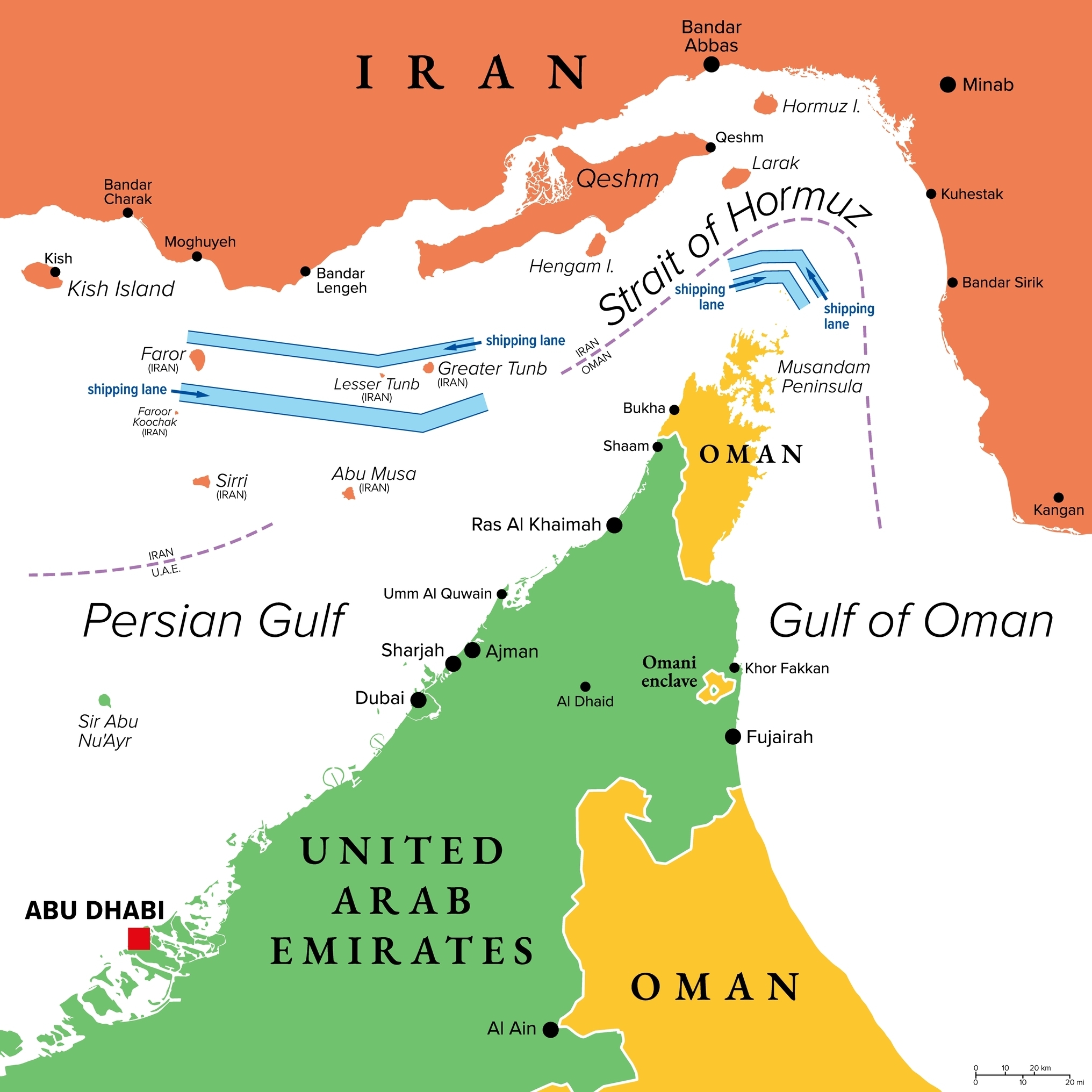
We covered a lot of ground, but one image stuck with me: He called the Strait of Hormuz the sword of Damocles hanging over the global economy. For decades, the world’s most critical energy chokepoint has dangled there.
A surprise 92k decline in February nonfarm payrolls and a rise in the unemployment rate to 4.4% signal some labor market softening, though stronger ISM manufacturing and services readings and still-low jobless claims suggest the broader U.S. growth backdrop remains intact.
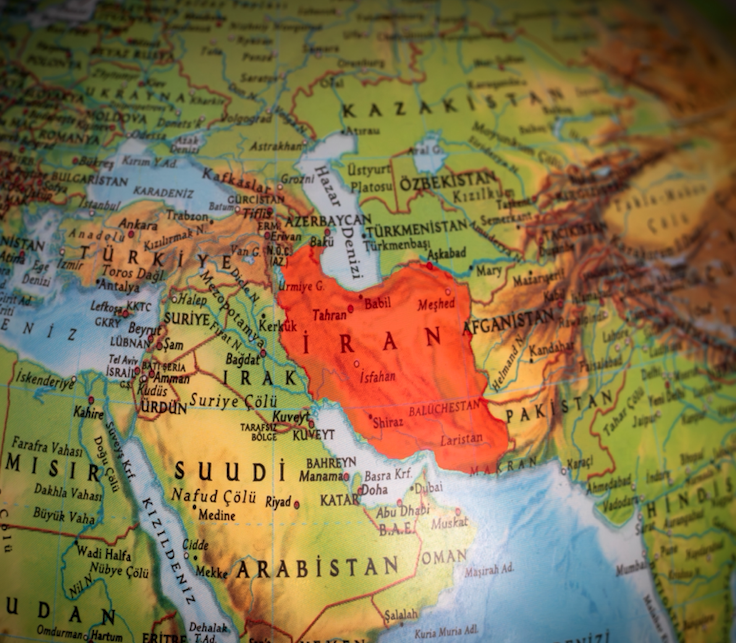
The worsening energy shock from the Iran War has raised risks of a more severe crisis. It may resolve quickly, but the longer it persists, the larger the possible economic damage. Asia and Europe are most vulnerable.
Back in 2008, executives at Goldman Sachs Group Inc. were zealots for valuing their assets at exactly the prices where they could be sold. Critics said this fervor for fair value inflamed the financial crisis, while supporters argued it helped investors and lenders at least know where they stood.
Volatility in US Treasuries jumped to a nine-month high as the Iran war fanned inflation concerns and upended traders’ expectations on the Federal Reserve’s policy path.
Americans will legally wager $3.3 billion on the NCAA men’s and women’s basketball tournaments this year, the American Gaming Association said.
Supported in part by a growing U.S. defense budget, legacy aerospace and defense ETFs are performing admirably. A trio of those funds each have more than doubled over the past three years.
Deep value stocks remain our highest conviction long-only investment idea. Globally, they trade at abnormally wide discounts and offer attractive expected returns in an environment where many equities trade at elevated valuation levels.
In this article, Russ Koesterich notes the year-to-date strength of both cyclical and defensive stocks, a pairing that seems too strange to last.
For the second time in less than a year, the United States is engaged in military conflict in the Middle East. And once again, investors must assess how escalating tensions could affect markets.
Investing is an exercise in decision making under uncertainty. No single signal—no matter how intuitive or well supported by history—captures the full complexity of markets.
The OBBBA expands Section 1202 benefits, allowing certain C-corp business owners to exclude significant capital gains. This complex provision requires specific holding periods and asset tests, making professional guidance essential to maximizing these tax savings.
Volatility spiked as investors questioned the Federal Reserve's next move, adding to existing concerns about private credit markets. Here's why investors shouldn't overreact.
State Street Investment Management is continuing its push into the intersection of public and private credit with the launch of a new ETF.
Please join us to explore key insights from a robust analysis of 2025 ETF market data and trends.
Join Simplify to learn all about the Simplify VettaFi Private Credit Strategy ETF (PCR). Learn where it fits in your portfolio and how you can use it to get unadulterated exposure to private credit.
The military conflict in Iran and the Middle East is curtailing the global flow of oil and natural gas. This adds notable pressure to energy prices and the near-term inflation outlook, while also raising questions about countries’ reliance on energy imports and their economic resilience.
Apollo Global Management Inc. is ramping up efforts to give investors more regular insight into the value of its opaque private credit holdings, just as a spate of redemption requests from such funds rattles the wider market.
At these levels, valuations are stretched, leaving investors with little potential upside and increased vulnerability to spread widening. In our view, such an environment warrants a shift toward high-quality assets.
His time horizon is infinite. His capital is permanent. And the rewards, he argues, should be enormous.
Kitty Hawk, North Carolina is known as the birthplace of aviation. Success did not come overnight. The Wright Brothers spent three years on the Outer Banks experimenting. While they ultimately took flight, the potential downsides of their endeavor were of constant concern.
Have no fear—ETFs tracking crude oil, natural gas, and even wholesale gasoline futures are at the ready.
Selling pressure for leveraged buyout loans has been high all year, amid fears that artificial intelligence will damage or even bankrupt the software companies that account for a fair chunk of the market.
Soaring oil prices and the military conflict in Iran are among the primary reasons the MSCI EAFE Index is off nearly 6% over the past month.
Chris Tessin, Founder and Portfolio Manager at Acuitas Investments, discusses the firm’s multi-manager approach to global small- and micro-cap investing, as well as the launch of its first ETF, the Acuitas Small Cap Active ETF (AIMS). Bill Mann, Chief Investment Strategist at Motley Fool Asset Management, breaks down three recently launched factor-based ETFs and how they bring The Motley Fool’s “Foolish” investment philosophy to life through systematic stock selection.
Amazon.com Inc. has blown the primary market for new debt wide open just days after market volatility, sparked by soaring-then-plummeting oil prices, all but halted issuance. Its mega offering is priced cheaply, for a reason: Too much of a good thing is still too much.
Hedge fund positioning across US equities has created a setup for stocks to rip higher after their recent wobble, according to Goldman Sachs Group Inc.’s trading desk.
After months of heavy selling on fears of artificial-intelligence disruption, software stocks appear to have found a bottom — at least for now.
Adam Hetts and Oliver Blackbourn discuss where they assess the market implications of sustained conflict with Iran, examining energy shocks, inflation pressures, and what prolonged instability could mean for investors.
LPL Research reviews how the Iran conflict is affecting markets, highlighting energy risks, market resilience, and what investors should watch in the weeks ahead.
If tensions de-escalate soon, there could be relatively little impact on international markets. However, risks will rise if global energy supplies face a prolonged disruption.
Ongoing military actions in the Middle East have increased investor uncertainty. Of course, geopolitical risk has always existed, and this time is no different.
Japan is a major oil importer. That explains the vulnerabilities of the country’s equity market to conflict in Iran. Over the past month, the MSCI Japan Index is off about 2%.
2026 has kicked off with investors on the lookout for opportunities in a broadening market. While tech remains an important part of countless investor portfolios, it’s not the only category offering opportunities.
Prediction markets aren't going away. They're designed to be fun and exciting for bettors, intellectually engaging, and culturally resonant. The question isn't whether your clients will participate, but whether you'll have a productive framework ready when they do.
Join the experts at GraniteShares as they explore the autocallable market, unpack how it works, and provide strategic solutions to today’s market challenges.
Global conflict has erupted in 2026, from South America to the Middle East. With energy at the center of the picture, markets face potentially serious volatility.
Data center developers plan to reduce their reliance on utility grids by investing in onsite power for rapidly scaling facilities. The shift creates opportunities for electrification infrastructure providers as energy independence takes on new urgency.
For months, Wall Street’s panoply of risk-hedging strategies did little but lose money. Now, as uncertainty sparked by the war with Iran hits the market’s most popular trades, investors that loaded up on portfolio protection are being rewarded.
The European Central Bank can be forgiven for feeling nauseous as a massive global deleveraging of risk since the Iran war started has hit the euro area’s currency and interest-rate markets particularly hard.
Big Tech’s consolidation of power seemed a foregone conclusion even as Sam Altman’s OpenAI sparked an artificial intelligence boom with ChatGPT.
We have repeatedly highlighted the delicate balance that the U.S. economy and markets remain suspended in as the Federal Reserve treads a thin line between a softening labor market and stubborn inflation that continues to hover above its 2 percent target.
Markets hate uncertainty, and right now there’s plenty to go around. The outbreak of the U.S.-Iran conflict, following by Iranian retaliation against oil infrastructure across the Persian Gulf, has sent crude prices surging and shipping rates soaring to record levels.
Markets face a complicated mix of signals. The payroll report came in dramatically weaker than expected, several standard deviations below forecasts, and prior months were revised downward. Taken together, the last two months essentially show zero payroll growth.
With its airspace closed and many flights grounded, gold stuck in Dubai is being sold at a discount.
In this article, we explore how this speculative environment and the aggressive trading in passive ETFs are playing out. We also examine how to identify and capitalize on sector and factor rotations, turning passive investors' aggressive behavior into an opportunity.
Today’s letter will look at something even more important: recent developments in artificial intelligence. The models are advancing at an accelerating pace, with major new capabilities revealed just in the last 2-3 months.