The fourth quarter of 2023 was a more favorable environment for active managers in the UK, Europe, Emerging Markets, U.S. Small Cap and Listed Infrastructure, while being more challenging for U.S. Large Cap, Global, Global ex-U.S., Japan, Australia, Canada, Long/Short and Global Real Estate managers.
In thinking about the 2020s, I often find myself looking back to the 1920s. That decade began with a deep recession/depression and ended with a stock market crash. While we now see the 1920s as a kind of “in between” period, people at the time didn’t know another depression and war were coming.
Investors will literally beg Jamie Dimon not to retire: One did so at JPMorgan Chase & Co.’s investor day last year. But the chairman and chief executive officer of America’s biggest bank can’t do his job forever.
The BlackRock U.S. Equity Factor Rotation ETF (DYNF) is approaching its fourth birthday. The active ETF outperformed the S&P 500 over the past one- and three-year periods.
Wall Street is turning to its biggest brains as the battle for supremacy in the world of private assets heats up.
The US 30-year yield climbed to its highest level so far this year Wednesday after poor demand for an auction of five-year notes, a week before the Treasury is expected to announce a heavier borrowing schedule for the February-to-April period.
Implications for credit investors.
Gold has long been known as a safe haven and diversifying asset that investors turn to in times of economic and geopolitical distress. Last year was just such a year, with gold drawing the attention of investors of all stripes.
Institutional investors may want to consider an allocation to Quality equities as well as a sufficient allocation to government bonds.
An emerging-market money manager who is outperforming 99% of his peers says equity investors can make money in 2024 whether the Federal Reserve cuts interest rates or not, by focusing on countries undergoing economic transformations.
The surge in small-cap stock performance in the final weeks of 2023 may signal a long-awaited turnaround for smaller companies that have lagged large-cap peers for a decade, according to Head of Global Index Portfolio Management Dina Ting.
Initiate the year with direct indexing, encompassing tax planning, personalized investing strategies, rejuvenating sidelined cash, and navigating concentrated stock positions or financial windfalls.
Factors are long run drivers of portfolio risk and returns. Having strategic allocations to factors may increase a portfolio’s expected return.
In 2023, the Federal budget deficit exceeded private and foreign saving, resulting in only the eighth year since 1929 with negative net national saving (to be referred to as NNNS).
Economic data has provided encouragement for both stock market bulls and bears.
Bitwise’s Matt Hougan answers all of the key questions surrounding how spot bitcoin ETFs actually work. VettaFi’s Todd Rosenbluth offers perspective on the launch of spot bitcoin ETFs and highlights the latest VettaFi polling data on advisor crypto usage. Calamos’ Matt Kaufman explains the brand new Calamos CEF Income & Arbitrage ETF (CCEF).
If your solutions are becoming commoditized, then your sales process (not your solutions) need to change to be seen as a “category of one.”
An initial lull ahead of a so-called “January Effect” is stifling the U.S. equities rally investors saw in 2023 and small caps haven’t been immune. Nonetheless, active strategies can help mute the short-term downside by adding flexibility when markets fluctuate.
Beware of investing in cash with a plan to extend maturities when the yield curve is no longer inverted. My research shows that this decision is historically difficult to time.
In this article, Russ Koesterich discusses why equity performance in 2024 may be more muted and warrant more focused positioning across segments of the market.
The Federal Reserve won’t want a repeat of 2023 where 10-year Treasury yields soared from a low of 3.3% in April to peak at 5% in October — only to plummet back to 3.8% by year-end.
China’s exchange-traded funds attracted record inflows in last year’s equity rout just as actively-managed products fell out of favor, a sign that investor preference is shifting.
Roaring inflation and rapid rate hikes have brought a welcome return of the kind of big swings and dislocations beloved by investing’s smart set, but it hasn’t been a blessing for every breed of quant.
A friend of our stock picking discipline reminded us of a very important force in the stock market. It was called the 70/20/10 rule, and it was promoted by Roger Edelman, Richard Evans and Gregory Kadlec in an early 2013 Financial Analysts Journal article.
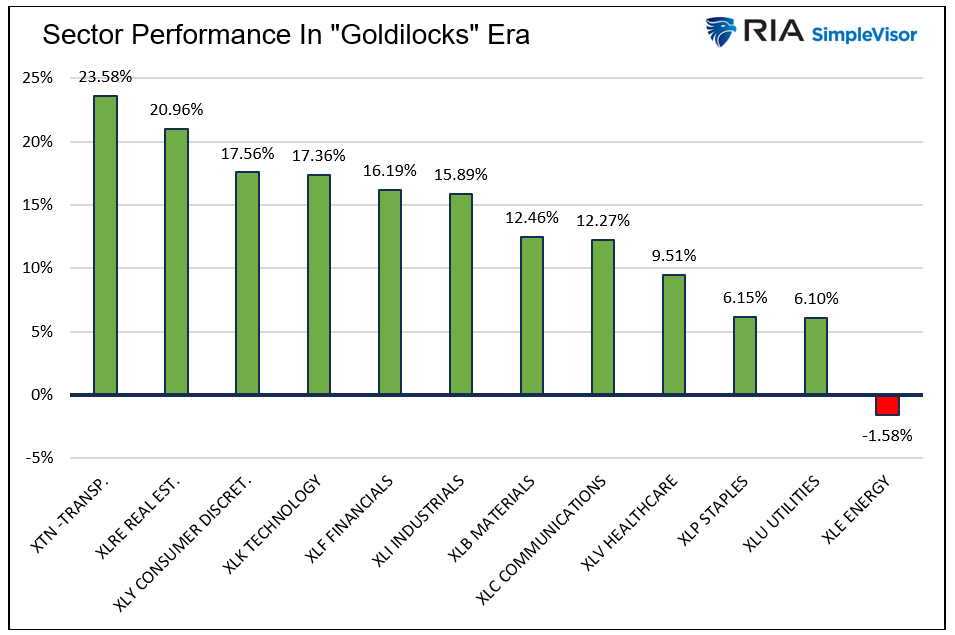
Today's popular narrative is a growing consensus for the Fed to engineer a soft landing and a “Goldilocks” economy.
To be considered a best-in-class outsource trading provider, one must excel in many areas.
In what could be a long-term positive for cryptocurencies as an asset class, data indicates $2.25 billion in new capital flowed into institutional cryptocurrencies products in 2023. That marks the third-best year of inflows on record.
Alphabet Inc.’s self-driving unit Waymo announced on Monday that it plans to unleash its cars onto the freeway in Phoenix “soon.”
The pandemic taught corporate America a valuable lesson: variety is not necessarily a good thing.
Many of us were prepping for year-end (or on vacation in Belize, in my case) in December. However, index providers were hard at work to ensure certain ETFs fully reflected the investment criteria advisors have come to expect.
The average risk-adjusted excess return across all active portfolios will be less than the risk-adjusted excess return of the market portfolio, before taking account of fees and trading costs.
The conventional wisdom is that lower interest rates stimulate economic activity, and higher rates dampen it. But new research casts doubt on this hypothesis.
Several strategists in the gold space expect the precious metal’s rally to continue in 2024. And some even believe it could outperform all other commodities this year.
The U.S. is adding new renewable energy capacity at a record clip, but that doesn’t mean it’s ready to quit fossil fuels just yet.
The long-awaited recession never materialized in 2023 as the sectors of the economy rotated from hot (i.e., travel and leisure) to cold (i.e., housing) over the last few years.
It’s hard to chart a course through equity markets in times of uncertainty. Here are our thoughts on some of the big questions on investors’ minds today.
As some of you will be aware, we have recently changed our business model, following an approach from a client who encouraged us to invest directly in listed securities on the back of the same seven megatrends that have formed the backbone of the fund investments we have made for years.
Strategas’ Todd Sohn and CFRA’s Aniket Ullal join in a roundtable discussion on several key ETFs and industry trends to watch in 2024. VettaFi’s Lara Crigger offers her ETF predictions for the upcoming year.
Here are our 10 themes for 2024. Count on more than a few surprise ingredients throughout the year to spice up the financial markets.
Our current 10-year outlook highlights better opportunities for cash and bonds, primarily driven by higher starting yields, and a steady outlook for stocks.
Across the U.S. wealth spectrum, $2 out of $3 of investable assets are in taxable accounts. Having a comprehensive tax management strategy is critical. In the context of separately managed accounts, tax-loss harvesting is one component of a tax management strategy. Tax-efficient or tax-aware portfolio rebalancing is a key part of that. That includes the ability to evolve or rebalance the portfolios periodically in a tax-efficient manner by minimizing the overall tax liability. The tax-efficient techniques involve pairing gains against losses or avoiding short-term gains in favor of long-term gains, or capping gains in general to minimize overall tax cost.
The US Treasury market posted its first annual gain since 2020 as slowing growth and inflation bolstered views that the Federal Reserve’s campaign of interest-rate increases is likely over.
In 2023, investing in growth was highly rewarding. We all heard about the Magnificent Seven Stocks that kept climbing higher throughout the year.
The start of a new year brings a chance for reflection and re-evaluation. For investors, a chance to rebalance. Franklin Templeton ETFs’ Dina Ting and Marcus Weyerer highlight the pitfalls of overweight exposure to mega tech stocks and where in the world to look for diversification in 2024.
Tweedy Browne is one of the most respected value managers. In this wide-ranging interview with its investment team, they explain why the opportunity set they are seeing among stocks is the best in 20-plus years.
It's that time of year when we start thinking about the old and envisioning the new. This has always been a special season for me, perhaps because of my unusual quirk of really wanting to divine the nature of the future—not just an investment in economics but in general.
Ned Davis Research (NDR) is a global provider of independent investment research, solutions and tools. Founded in 1980, NDR helps clients around the world make objective investment decisions. Its strategists and analysts use fundamental and technical research with models, charts, indicators and weight-of-the-evidence methodology to help clients see the signals and invest with confidence. NDR is headquartered in Sarasota, Florida with offices in New York, London, and Hong Kong.
When stakeholders convened at COP28, the 28th Conference of the Parties, from Nov. 30 to Dec. 12, it was with an unwavering acknowledgment of the real threat posed by climate change.
“I believe the overall market will be up 10% to 15% from today's level by the end of 2024,” said Jeremy Siegel in our annual interview.
Will Beijing take the necessary steps to restore confidence in its economic policies? Sinology explores.