Stocks enjoyed a profitable week in the lead-up to third quarter earnings season. The tech-heavy NASDAQ started the week strong, ending Monday at a record high.
Global income strategies offer a compelling value proposition for investors: a steady stream of income generated from dividend-paying equities, government bonds and structured instruments like equity-linked notes (ELNs) from around the world.
Bank lending rarely commands the attention that payrolls, inflation or consumer spending do. But it helps determine how much momentum the economy can sustain. The Role of C&I Loans: Commercial and industrial (C&I) loans, the workhorse of corporate finance, pay for everything from working capital to machinery and software.
The Northern ETF SKOR crossed the $1 billion AUM threshold following $247 million in recent inflows amid surging corporate bond yields.
If you already own a home, the purpose of this process is not to second-guess your home-buying choices or put pressure on yourself to sell a house you love. The point is to consider the value of your living space and the price you pay for it in a personalized, emotional way.
US equity futures held firm Tuesday despite a deepening selloff in chipmakers, as traders sorted through a slew of bank results from JPMorgan Chase & Co., Goldman Sachs Group Inc. and other lenders in the start to third-quarter corporate earnings season.
CLOs simply offer strong yield potential that often outpaces corporate bonds with similar credit ratings. Given that the ‘income’ portion of fixed income is often a key priority for investors, attaining high yield on a consistent basis gives CLOs a compelling use case.
With the 10-year Treasury yield at its highest level since 2002, buying bonds at 5% is the first real alternative that stock investors have had in nearly two decades.
Taylor Topousis and Christian Galipeau discuss high-conviction insights that go beyond media headlines.
Earlier last week, a supertanker loading crude in the Gulf of Oman was fixed at $1.01 million a day for a voyage to Asia, with another deal reportedly agreed at $1.16 million.
By generation, Gen Z and Millennials now make up 88% of online betting activity. Gen X trails at 9%. Boomers barely register. As recently as this spring, Millennials were the bigger group. Then Gen Z passed them, and Bank of America called it a “turning point.”
Global investing is changing. Geopolitical tensions, shifting trade relationships, energy costs and divergent central-bank policies are increasingly influencing which companies and markets are best positioned to navigate the environment.
For nearly four years, economists have been predicting that consumers would fail to sustain the economy. Yet despite many reasons for consumers to retrench, real personal consumption expenditures (PCE) grew 2.6% through September. The bottom line: Consumers keep worrying but keep spending.
For insurance investors, bond yields play a defining role in long-term planning, with the effects of their levels and movements rippling across balance sheets. Liabilities may move inversely to asset values, and today’s investment decisions have implications far into the future. That makes bond yields critical variables for prudent insurance investors. There are also insights in the “why” behind higher rates.
The Fed's recent rate increase may not develop into a hiking cycle as extensive as the one that began in 2022 because much of today's inflation pressure comes from supply constraints rather than broad economic overheating, where demand exceeds the economy's productive capacity.
Western Asset’s Ion Dan explains why he thinks the fundamental case for agency mortgage-backed securities has strengthened.
US Treasury yields have moved sharply higher, with the 10-year yield rising roughly 45 basis points over the past month to about 5.25%. That has understandably revived concerns about what higher bond yields could mean for equities.
The S&P 500 hit a new record high in 3Q as strong earnings offset headwinds from oil returning to $100/bbl, the Fed hiking rates, and the 10-year Treasury crossing 5%.
The dollar rally is forging ahead as soaring oil prices weigh on currencies of energy importing nations and global inflation fears persist.
Emerging markets (EMs) have historically been associated with commodity exports and low-cost manufacturing. Those characteristics remain relevant in parts of the investable universe, but the sources of competitive advantage have broadened materially.
Consumer sentiment falls in October to a five month low. The preliminary October reading for the University of Michigan Consumer Sentiment Index came in at 46.3. This marks a 3.7% (1.8 points) decrease from September.
With markets around the globe rattled by the bond sell-off, it may be time to pivot towards safe havens that still generate strong yield.
Active ETF flows offer a window into where the ETF ecosystem is going, and what its shifts and changes might mean for broader ETF innovation.
September ETF launches highlighted active strategies and an AI hardware ETF as year-to-date inflows reached a record $1.54 trillion.
Wall Street’s biggest banks are expected to unveil a quarterly stock-trading haul of nearly $19 billion when the firms report earnings next week.
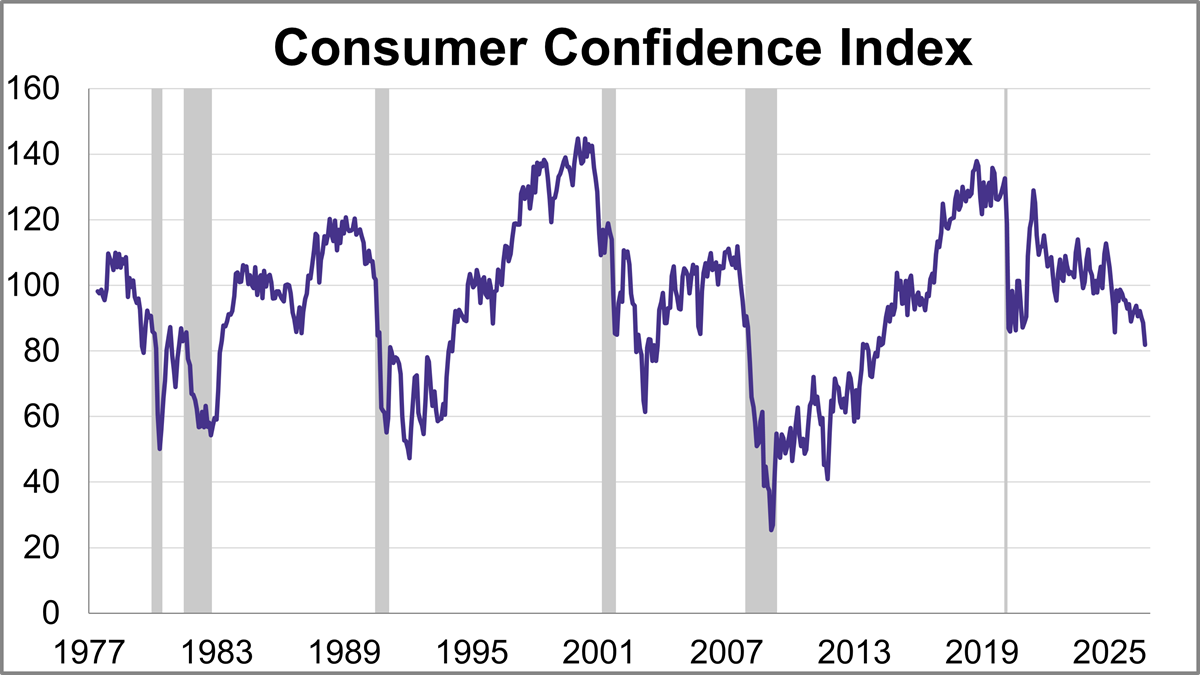
Consumer confidence is collapsing, hiring is weak and the housing market is largely frozen. All of which serves to underscore that the US economy is only holding up because of the boom in artificial intelligence and an aging population spending ever more on healthcare.
The U.S. economy is handing investors a muddled picture. Housing is stuck, hiring is lopsided, and households feel worse than the jobs data suggest. Add a string of geopolitical shocks and a Federal Reserve (Fed) under new leadership still establishing its reaction function, and the signals markets rely on are harder to read. Investors will have to adjust to this market, where clarity is scarce.
Investment performance is often measured by what a portfolio earns. But for investors with substantial assets across taxable, tax-deferred, and tax-free accounts, what they keep after taxes can be just as important.
ClearBridge Investments: With the economy still resilient, a gradual Federal Reserve hiking cycle could help broaden market leadership beyond the Magnificent Seven.
Hand-picking individual securities from an enormous fixed-income universe can be inefficient. That’s why AB developed a dynamic credit scoring model known as core score, which ranks investment-grade and high-yield corporate bonds by their attractiveness.
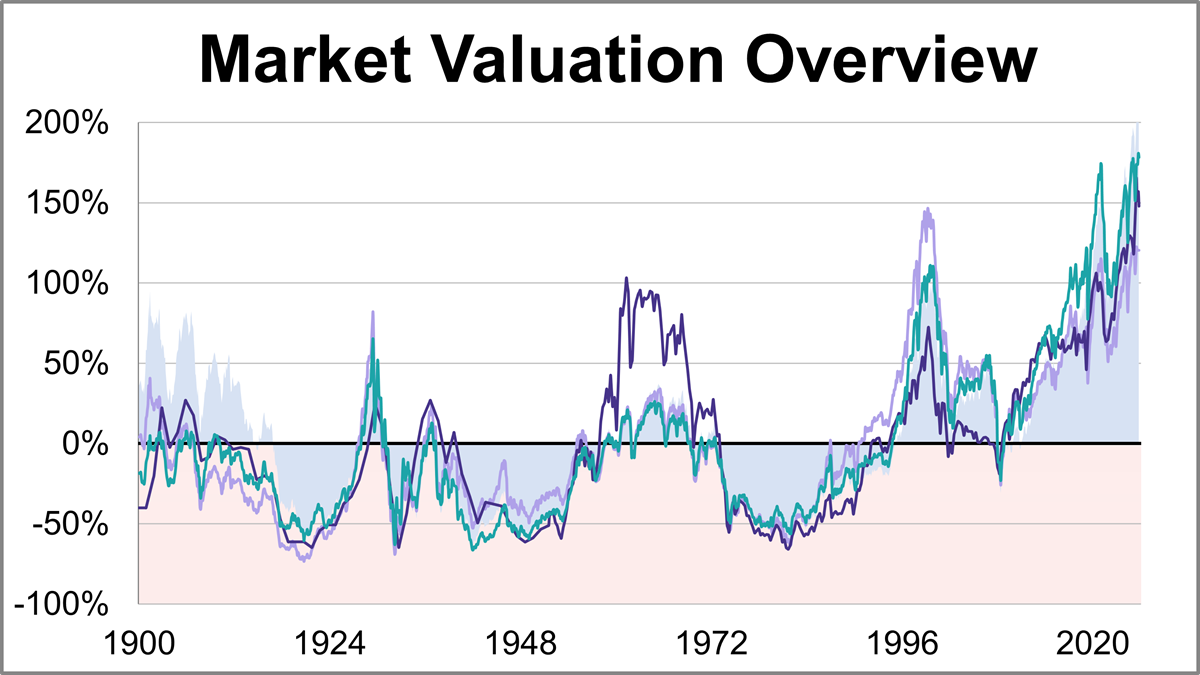
Here is a summary of the four market valuation indicators we update on a monthly basis.
Is now the time for senior loans? Shifting yields and rising pressure make the floating rate yield vehicles an intriguing place to watch.
Morgan Stanley Investment Management’s Vishal Khanduja, a top-performing bond investor, is turning bullish on US debt for the first time in a decade, with yields at two-decade highs serving as a check on economic growth.
Free-market-oriented economists probably live in a state of perpetual despair these days. Politicians and voters on both the left and right are turning on markets. Polls suggest widespread support for interventionist policies that economists long discarded for causing more harm than good.
On the surface, the municipal bond market may not check the “dynamic” box. After all, individual muni bonds and ETFs such as the ALPS BBH Intermediate Municipal Bond ETF (MNBD) are positioned, rightly so, as conservative, income-bearing investments.
For decades, investors have used growth and value allocations as a foundational block of equity portfolio construction. The distinction has been intuitive and practical. Investors expected growth to provide exposure to faster-growing companies, often with higher valuation multiples and greater sensitivity to earnings expectations.
There are many reasons to own bonds, but for many investors, one of the most important is principal preservation. Years of saving, investing, and market growth may help build wealth. Bonds can then play a different role, helping preserve that wealth while providing a predictable stream of income and cash flow.
After a nine-month rally in equity markets and a recent spike in bond yields, some investors may see fit to reduce their exposure to stocks. On the surface at least, bonds appear to offer better value than equities. The gap between stocks' earnings yields, the inverse of the price-to-earnings ratio, and bond yields is narrower than it has been in two decades.
AI's labor-market impact remains limited but uneven, as productivity and profits outpace hiring and import-heavy investment dampens U.S. job growth.
Rising interest rates can affect more than investment portfolios. Explore how changing IRS interest rates may influence several estate, charitable and tax-planning strategies.
As globalization recedes, governments and businesses have stronger incentives to invest in building more resilient societies and supply chains. That imperative has coincided with the emergence of artificial intelligence, creating a powerful interaction between technological innovation and economic security.
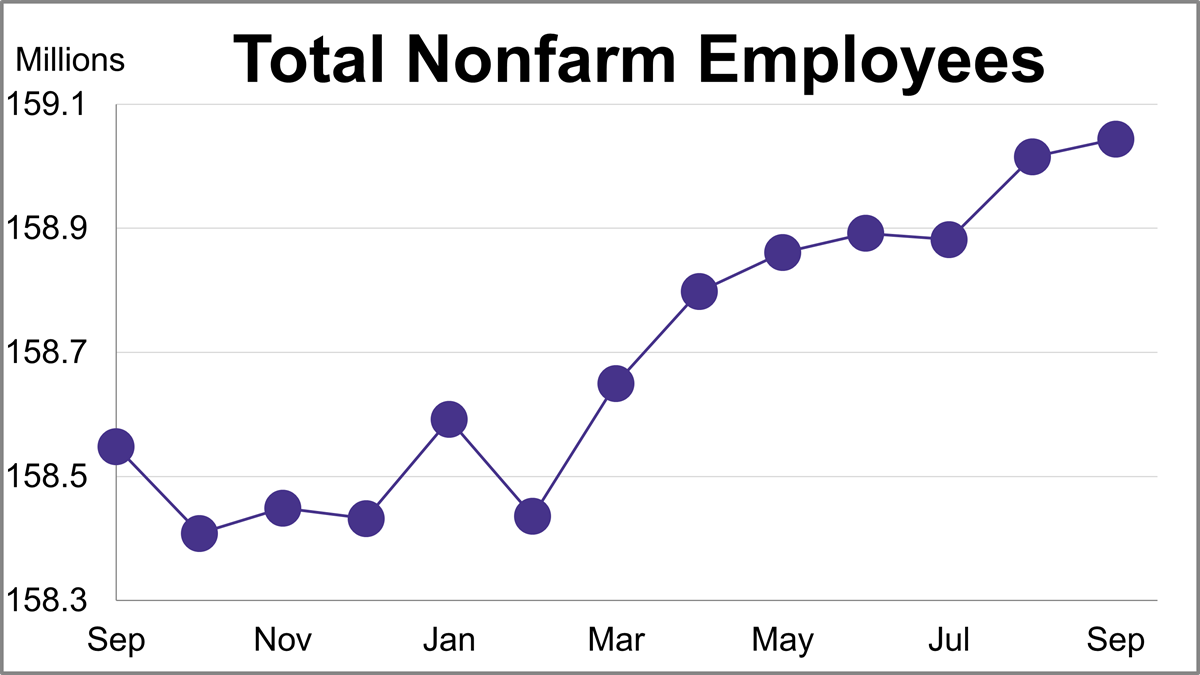
There is a general belief that there are four big indicators that the NBER Business Cycle Dating Committee weighs heavily in their cycle identification process. This commentary focuses on one of these indicators: nonfarm employment. In September, total nonfarm payrolls increased by 29,000 while the unemployment rate increased to 4.2%
International stock funds outpaced U.S. large caps in September, as ETF inflows cooled and investors leaned toward defensive sectors.
Market participants have been conditioned to expect clear Forward Guidance from Fed Chairs and Ben Bernanke, Janet Yellen, and Jay Powell provided it continuously, especially after the Financial Crisis. Chairman Warsh has made it clear that Forward Guidance will be less under his leadership, but he has offered a very important qualifier that many have yet to grasp.
The discipline of running a succession-ready firm makes every aspect of a business stronger, not just the eventual transaction. Advisors who operate this way attract better talent, serve clients more consistently, and create businesses that hold their value regardless of market conditions.
Inflation progress remains uneven: The latest Personal Consumption Expenditures Price Index showed some improvement after revisions, but several measures suggest price pressures remain sticky and above the Federal Reserve’s target
Seven months into the U.S.–Iran conflict, few historical analogues have held. The trajectory of oil prices has been consistent with previous geopolitical shocks, but the market response elsewhere has looked strikingly different. U.S. Treasury yields have moved notably higher, for example, while credit spreads have remained remarkably resilient.
This year has marked another remarkable chapter for the global economy and financial markets. Investors have navigated no shortage of challenges, from geopolitical conflicts and trade tensions to elevated energy prices and shifting interest rate expectations. Yet despite these headwinds, the economy continues to expand, corporate earnings remain resilient and markets have steadily climbed the proverbial wall of worry.
In this month’s issue, AI, energy and robotics are creating new opportunities in emerging markets, but selectivity remains key as policy, cost and execution risks evolve.
Industrials are supported by increased capital spending in electricity capacity, construction around the artificial intelligence-related (AI) infrastructure buildout, defense, and energy, although higher costs and possible delays in data center construction could temper growth.