Regarding the surprisingly strong employment data, Fed Chair Powell said the quiet part out loud. The media hopes you didn’t hear it as we head into a contentious election in November.
It’s been blamed for fueling stock volatility and dismissed as the latest case of market speculation gone too far.
We think market optimism can persist for now but stay nimble. We get more active in our long-term portfolios given a greater dispersion of returns.
Approximately 80% of all S&P 500 companies have reported fourth-quarter earnings as of today, and of those, 75% have reported earnings per share (EPS) above estimates. That’s well above the 10-year average, according to FactSet.
Japanese stocks were standout performers in 2023 after years of stagnation and deflation left Japan an unloved investment destination. Can the positive momentum continue in 2024? BlackRock’s Belinda Boa believes it can and sees the makings of a rags-to-riches story with staying power ― and abundant investment potential.
Companies supporting efforts to create a more secure and stable world could provide equity investors with an attractive source of long-term returns.
There’s one topic dominating the agenda as FX traders descend on Miami this week: how the currency market can adjust to a fast-approaching change to US stock settlements that stands to shake-up their industry.
Bitcoin is flirting with a winning run last seen a year ago, aided by the record-breaking debut of US exchange-traded funds for the token.
Tomorrow marks the start of China’s Lunar New Year, meaning it’s out with the Rabbit and in with the Dragon… but all eyes remain on the Bear. And no, I’m not talking about the hit Hulu series, but Russia.
Nvidia Corp.’s stock has rallied so much this year that it’s now threatening to overtake Amazon.com Inc. to become the fourth most valuable US company.
Hedge funds are paid big bucks for making smart market bets. Yet these days, a simple feature of the financial plumbing — largely overlooked on Wall Street during the low interest-rate era — is helping juice industry returns.
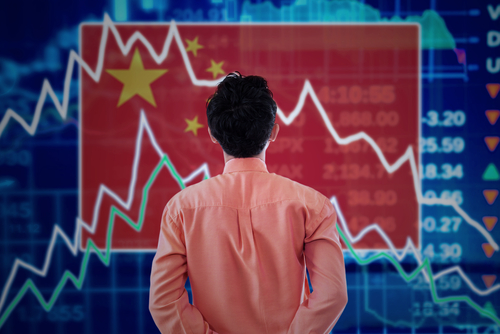
This year’s turmoil in China has sparked a stock meltdown, blown up structured financial products, led to public disgruntlement, and now President Xi Jinping has put a new market regulator in control.
Emerging-market equities have a bad rap. But a lost decade may have set up promising conditions for a recovery.
In February 2023, the Securities and Exchange Commission adopted rule amendments to shorten the standard settlement cycle to T+1 for transactions in U.S. securities including equities, corporate bonds, unit investment trusts, and exchange-traded funds.
Instead of pivoting directly toward an easing bias, the Federal Open Market Committee opted for a wait-and-watch approach in January. Franklin Fixed Income Economist Nikhil Mohan expects rate cuts to come, but not quite as soon as or as many as markets have been anticipating.
Gross domestic product (GDP) is often considered the most important indicator of the health of an economy. But there are other measures that provide different perspectives, which can be more timely and impartial. The level of equity markets is one such indicator that provides a window into what’s going on.
The era of US spot Bitcoin exchange-traded funds is a chance to repair the decay in crypto markets caused by the collapse of the FTX exchange and its sister hedge fund Alameda Research, according to market makers.
The US economy is testing bond traders’ faith that the Federal Reserve will deliver a series of interest-rate cuts this year.
Copper was one of only two metals that finished 2023 in the black, gold being the other metal.
Following scintillating runs by AI-related stocks in 2023, some market observers believe a cooling-off period could be in the cards. However, that doesn’t dent the long-term thesis for AI investing.
Over the next few pages, I will argue that consumer price inflation (CPI), which is now falling rapidly across the OECD, will soon return to levels that central bankers are comfortable with.
A renewed sense of optimism emerged during the fourth quarter, sparking an increase in U.S. equity trading volumes and a rally in risk-on fixed income assets.
Market expectations have established a high bar for central banks' rate cuts. Any disappointment like stronger inflation or economic growth could spark market volatility.
Andy Rothman reviews data points that offer insights into the coming quarters.
Interest rates in most parts of the world appear to be stabilizing, as inflation trends continue to decline from the high levels seen in the summer of 2022. Learn more about the implications for hedge fund strategies from K2 Advisors.
A new report by BMO Capital Markets suggests that the price of gold is no longer being driven by real interest rates. What replaced them? I unveil the answer below.
After 2023's price cuts and tougher competition, Tesla is set to report late Wednesday. Lower demand and a big, one-time jump in used EVs could drive a very different 2024.
The race for the White House intensified this week as Donald Trump won the Iowa caucus with 51% of the vote, handily beating rivals Ron DeSantis and Nikki Haley. Results from the online prediction market PredictIt now show that Trump has become the betting favorite to win November’s general election.
Chinese stocks just capped another dismal week, with a gauge of mainland firms listed in Hong Kong languishing at the bottom of global equity index rankings for the year so far.
The election outcome is unlikely to change the status quo for the Taiwan Strait, U.S.-China relations, or global markets which have seemed to price in geopolitical risk.
“The current fiscal path is unsustainable”. This stark warning comes from the US Treasury Department’s Bureau of the Fiscal Service’s fiscal year-end projections1. Based on current appropriations and tax law, these projections display steadily rising federal spending and flat tax receipts, as a percentage of GDP.
Why we believe small companies present key opportunities to tap into the heart of innovation and expansion in emerging markets.
The likelihood of another severe bout of inflation from higher shipping costs alone is low.
The January effect, named for the market anomaly where stock returns in January are typically higher than in other months, has been a subject of interest since it was first documented in 1942.
Risk assets surged to end 2023 as the Federal Reserve blessed market hopes for rate cuts. That momentum could persist for some time as inflation cools.
In this piece we compare two ways to take advantage of the USD’s richness versus emerging market currencies: EM equities and EM local currency debt. We believe that for relative value, diversification, and potential alpha reasons, EM local currency debt deserves a prominent place in portfolios today.
The U.S. is adding new renewable energy capacity at a record clip, but that doesn’t mean it’s ready to quit fossil fuels just yet.
We think 2023 stressed the value of adapting to a new volatile macro regime and leveraging investment insight and structural forces to find opportunities.
Before 2023 began, few saw the rise of interest in investing in Japan, long considered the land that optimistic stock bets go to die.
As some of you will be aware, we have recently changed our business model, following an approach from a client who encouraged us to invest directly in listed securities on the back of the same seven megatrends that have formed the backbone of the fund investments we have made for years.
Here are our 10 themes for 2024. Count on more than a few surprise ingredients throughout the year to spice up the financial markets.
The start of a new year brings a chance for reflection and re-evaluation. For investors, a chance to rebalance. Franklin Templeton ETFs’ Dina Ting and Marcus Weyerer highlight the pitfalls of overweight exposure to mega tech stocks and where in the world to look for diversification in 2024.
“I believe the overall market will be up 10% to 15% from today's level by the end of 2024,” said Jeremy Siegel in our annual interview.
CIO designate Sean Taylor discusses his investment outlook for the year ahead and how he sees 2024 unfolding for emerging markets, regionally, economically and thematically.
Will Beijing take the necessary steps to restore confidence in its economic policies? Sinology explores.
Kathlyn Collins, Head of Responsible Investment and Stewardship, says a renewed purpose among regulators and pressure from investors is yielding breakthroughs in the governance and the capital efficiency of Japan’s-listed companies.
If today were the last day of 2023, Bitcoin would have returned almost 155%, marking the best year since 2020, when it rose a phenomenal 305%.
With 2023 drawing to a close, the time has come once again to take a longer look at what next year might bring.
After clashing in recent years, Wall Street traders and the Federal Reserve are – for once – broadly in sync: The great monetary pivot is near as central bankers engineer a once-unthinkable soft landing in the world’s largest economy.
Investors are pouring cash into the world’s largest exchange-traded fund tracking emerging-market debt as confidence mounts that the US Federal Reserve is nearing the end of its aggressive monetary tightening campaign.