Daniel Ivascyn rode one big trade all the way to the top of the bond-market universe: speculative mortgage debt that he scooped up on the cheap in the wake of the great financial crisis.
Changes for investors include RMD age increases, higher catch-up contribution limits and a new 529 transferal option.
Valuation metrics across all but the U.S. interest rate dimension remain unambiguously attractive.
SECURE 2.0 focuses on changes that affect your retirement savings in the next year or two. Here are 11 changes that you need to understand.
People say that the best defense is a good offense. They are wrong, at least when it comes to protecting wealth.
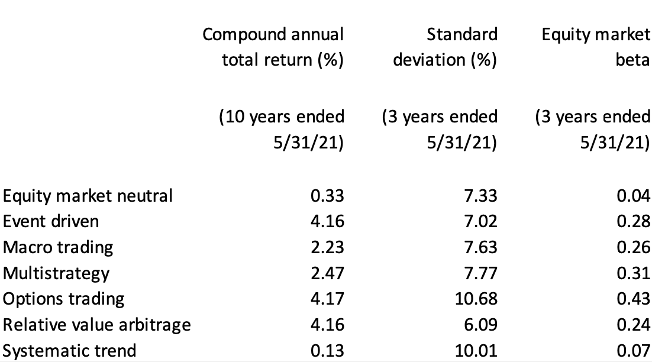
The recent embrace of so-called liquid alternatives by ordinary Americans seeking to fund their retirement is deeply troubling.
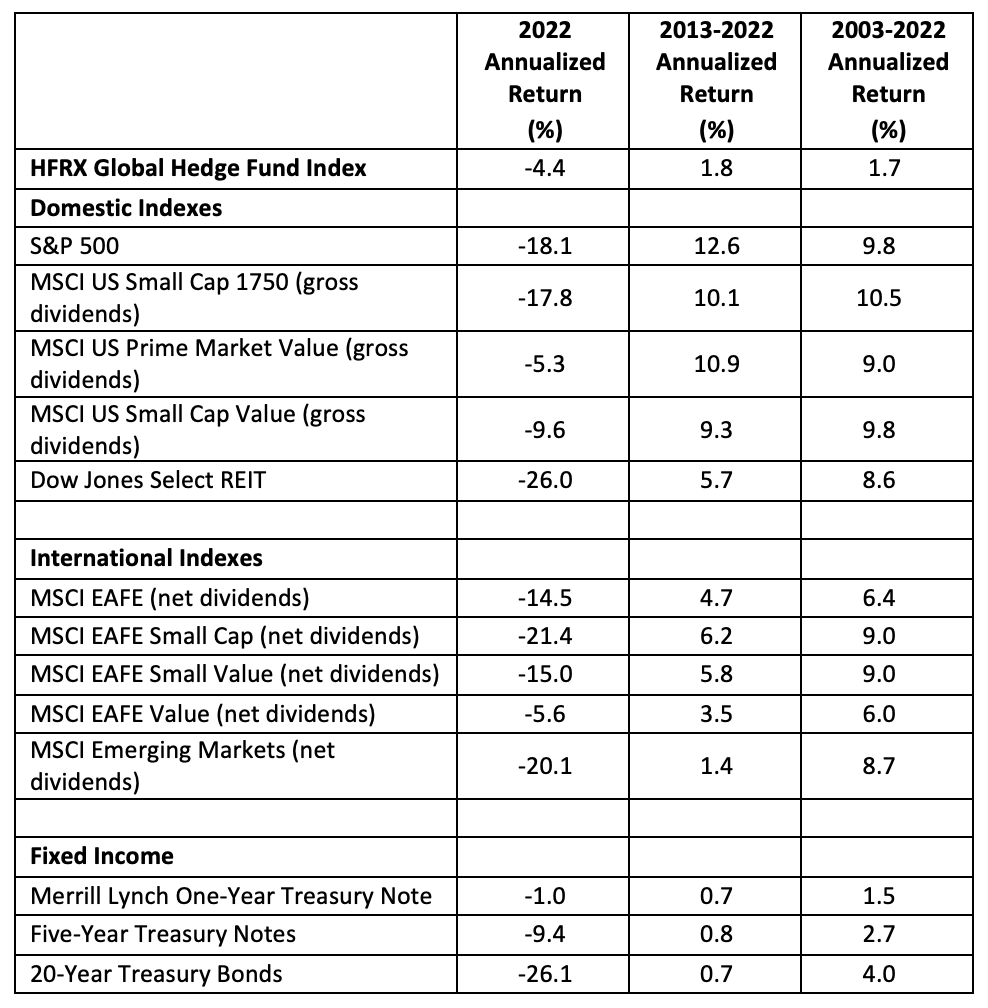
The greatest anomaly is that despite decades of poor performance and the failure to effectively hedge exposure to conventional security classes, assets under management among hedge funds have grown from about $300 billion 25 years ago to about $5 trillion today.
Bullish markets are increasingly pricing in a second-half reversal of the global monetary tightening wave, making it tougher for central bankers to vanquish inflation once and for all.
As a rout in the price of food commodities from wheat to cooking oil deepens, the cost of products on grocery shelves continues to rise.
Retail demand for bars and coins in the U.S. and Europe hit a new annual record last year in response to stubbornly high inflation and the war in Ukraine. Western investors gobbled up 427 tons (approximately 15 million ounces), the most since 2011.
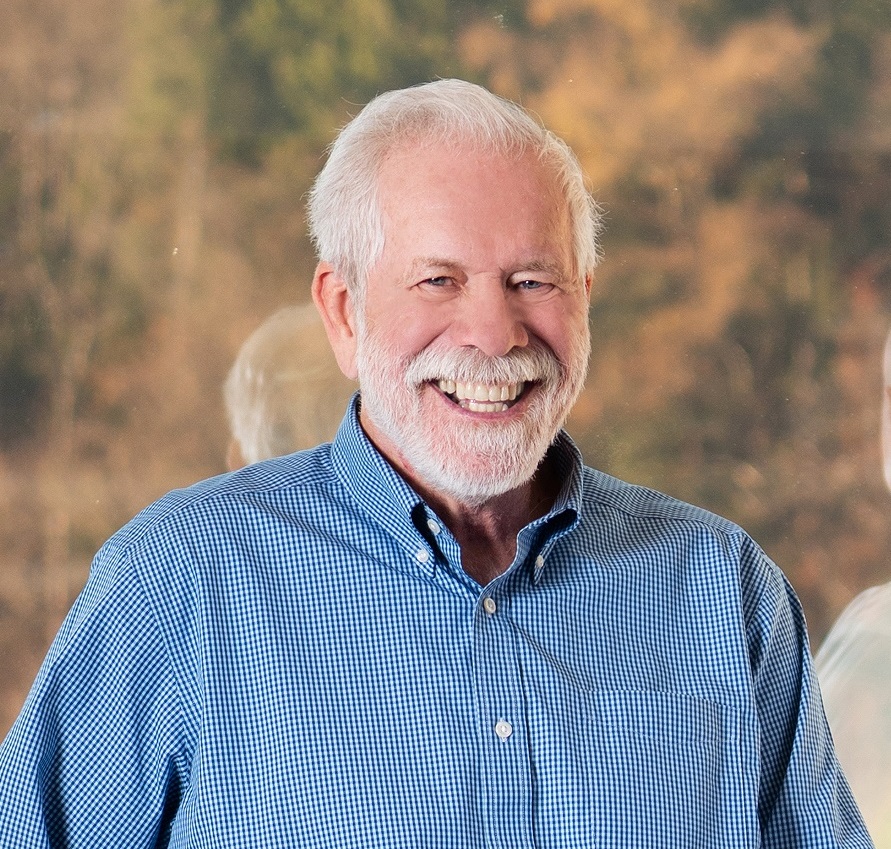
In 1965 I was studying for a degree in Engineering.
As expected and discussed in the January Macro Tides the December Consumer Price Index (CPI) dropped below 7.0% falling to 6.5% from 7.1% in November.
US market structure was back in the news recently with several stocks experiencing irregular price movements on the morning of January 24.
Three decades after helping give birth to the ETF industry, Morgan Stanley is officially back in the game in what could be a milestone moment for the investing world.
Blackstone Inc.’s $69 billion real estate trust hit a monthly redemption limit in January, as the firm’s crown jewel continues to wrestle with a line of investors seeking to get money out.
Punxsutawney Phil’s forecast is appreciated as a bit of inconsequential fun; nobody takes it too seriously. Unfortunately, that’s not the case on Wall Street.
The market has high hopes for the Fed, however, comparing this to the Fed’s own expectations, we see a very different narrative.
Inflation appears to have peaked, led by improvements in core goods prices and rate-sensitive sectors like housing.
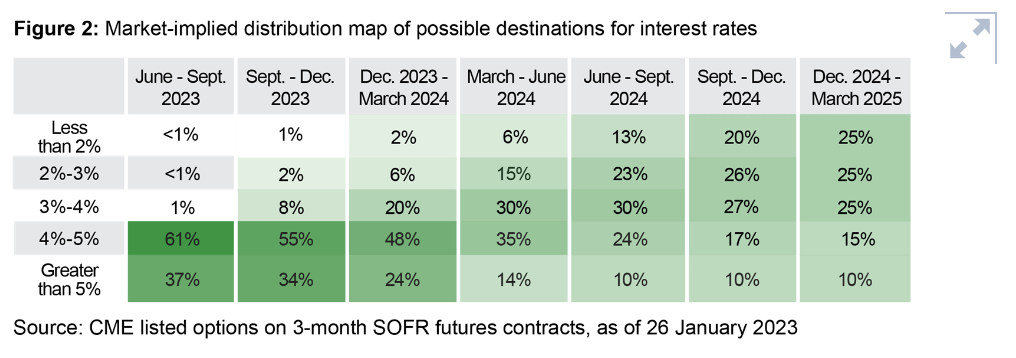
As investors seek to pinpoint market expectations for Federal Reserve policy, it’s critical to consider not just rate projections and derivatives pricing, but the degree of uncertainty and distribution of outcomes.
If you can’t be bothered to dedicate significant time or money to marketing, let me teach you a step-by-step way to get new clients in fewer than two hours a month.
Shaky property markets across much of the world pose another risk to the global economy as higher interest rates erode household finances and threaten to exacerbate falling prices.
Once-hated world stocks, bonds laced with interest-rate risk and even deadbeat crypto coins have just closed out a big new-year rally.
VettaFi’s Tom Lydon offers perspective on the strong start to 2023 for several ETF categories. FactSet’s Elisabeth Kashner highlights the latest ETF flow and fee trends.
A slowdown in US economic activity this year is likely to impact most states, which could face budget deficits, according to Jennifer Johnston, Franklin Templeton Fixed Income’s Director of Municipal Bonds.
RIAs will be more financially successful, will retain and attract more investment assets, and will produce superior financial results for their retiree clients when they embrace new thinking that begins with the acknowledgment that, in practice, the safe withdrawal rate is a fiction.
Guggenheim Investments’ Macroeconomic and Investment Research Group identifies 10 macroeconomic trends likely to shape monetary policy and investment performance this year.
U.S. stocks declining, as the markets trim a strong start to 2023 ahead of this week's host of key economic and earnings data, as well as the Fed's monetary policy decision.
Over the past couple of decades, I’ve told clients many very important things. Most of them are timeless, which is why I find myself saying the same things repeatedly. Here are the top 10, and I’ve saved my most important for last.
Jerome Powell and Wall Street are headed for another face-off this week as the Federal Reserve seeks to slow its inflation-fighting campaign without signaling a readiness to stop.
Since its launch in November, ChatGPT has been a smash hit. To explore the benefits of airline deregulation in the U.S., we sought the help of the AI content generator.
The Federal Reserve’s preferred inflation measures eased in December to the slowest annual paces in over a year while consumer spending fell, helping pave the way for policymakers to further scale back the pace of interest-rate hikes.
As Royce Investment Partners, the pioneers of small cap investing, celebrate their 50th anniversary, Chuck Royce and Chris Clark take a look at the past 50 years to provide a take on what they have learned and how it guides their views on what is yet to come for the asset class.
For Americans with a New Year’s resolution to trade in their gas furnace or water heater for climate-friendly heat pumps, a word of caution: Generous Inflation Reduction Act rebates for home electrification took effect on Jan. 1, but they won’t actually be available to homeowners until year’s end or 2024 at the earliest, according the US Department of Energy.
Here’s an article to help clients better understand the tax benefits of charitable contributions.
The Biden administration is under pressure from Capitol Hill lawmakers and student debt advocates to develop contingency plans to cancel billions of dollars in student debt and to move forward quickly if the Supreme Court strikes down the administration’s initial executive action.
Investors are still recovering from the municipal market beatdown of 2022, but the current higher absolute yield levels provide an attractive “re-entry” point for municipal market investors.
If you believe in the Milton Friedman adage that inflation is always and everywhere a monetary phenomenon, then you should also believe that the Federal Reserve can stop increasing interest rates. Now.
When we think about generating income for our clients, for over 30 years we’ve thought the most efficient way to do this is to blend the two key risks of fixed income into one portfolio.
Here are the three ways to get 2023 off to a great start so you can deliver even more massive value than ever before.
U.S. equities finished mixed in a lackluster trading session, as Q4 earnings season shifted into a higher gear today.
2022 was a banner year, and not in a good way.
COVID-19 has been a catalyst for change in many aspects of our lives, not least the migration to flexible working, which would have taken many more years without the pandemic’s brutal intervention.
Drew O’Neil discusses fixed income market conditions and offers insight for bond investors.
The first and easiest leg of the bursting of the bubble we called for a year ago is complete.
Stubborn inflation means more interest-rate increases are coming from the Federal Reserve and that sounds like great news for banks.
Ken Griffin’s Citadel churned out a record $16 billion in profit for clients last year, outperforming the rest of the industry and eclipsing one of history’s most successful financial plays.
Two major issues clients should consider in creating their own long-term care plan are where they will live and how they will pay for the care they are likely to need.
Word is out among hedge fund managers on how to get tax breaks for giving to charity - without actually handing over their money just yet. They can even keep it in their funds.
The problem with speculation is that there’s usually a gap between the underlying risk and the inevitable outcome.
To determine the places where affluent Americans give the most to charity, we compared 384 metro areas.