US household finances have reached a milestone by accumulating $1 trillion in credit card debt, which comes with an average interest rate of 20.6%.
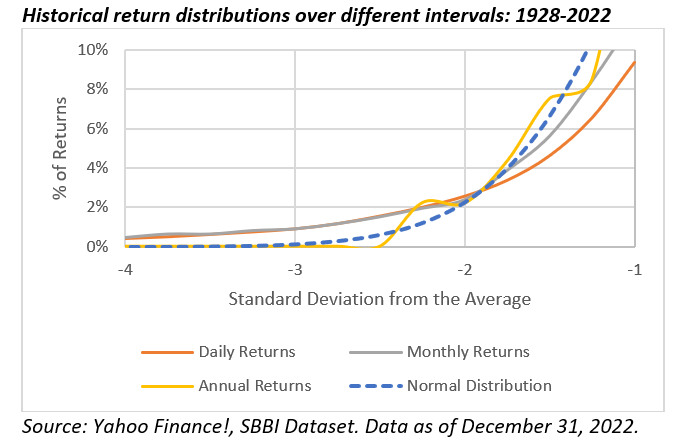
The next time someone suggests that nonnormal returns are a problem with Monte Carlo, tell them that their concern is a nonissue.
President Joe Biden and his team insist that “Bidenomics” — a term they’ve embraced — is more than a mere bundle of policy initiatives.
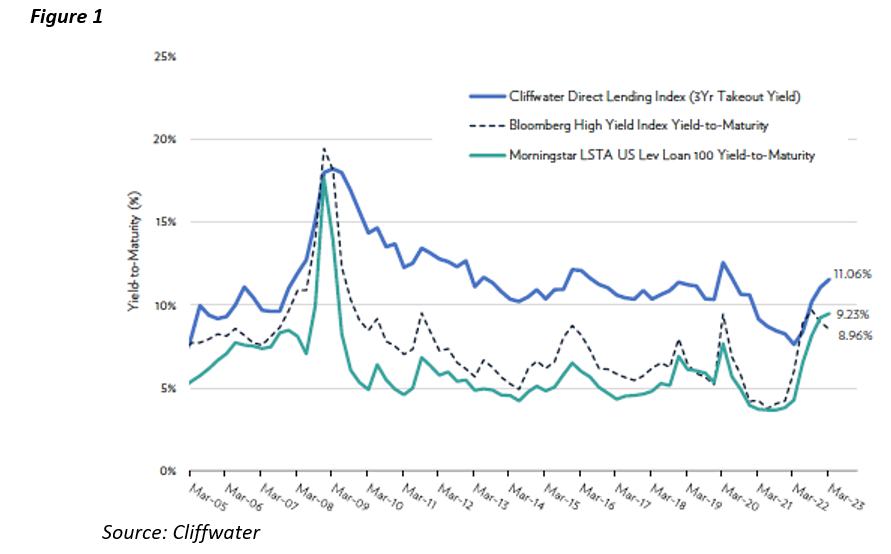
The turmoil in the banking system earlier this year caused private-debt issuers to make concessions, including floating rates and improved covenants, which make this an attractive asset class.
You’re nearly there! You’re nearing the age when you can finally stop working and enjoy some well-earned rest. But there are a few more steps you should take before officially retiring, which will ensure greater financial stability and peace of mind in your later years.
Volatile rates are adding to the cost of residential debt.
Broadly speaking, equity-based strategies fueled the initial boom in environmental, social, and governance exchange traded fund proliferation. As a result, criticism lobbed at ESG investing has focused on equity-based ESG funds.
Fitch’s recent downgrade of the U.S. debt rating alarmed investors as the deficit and debt steadily increased. The downgrade sent 10-year Treasury bond yields above 4%, causing concern about America’s deteriorating financial condition.
A $15.4 billion wave of debt is set to sweep over leveraged finance markets in September as Wall Street banks rush to lure in yield-hungry investors.
Even with elevated consumer prices and high borrowing costs, Americans continue to spend at a solid clip, complicating the Federal Reserve’s efforts to tame inflation.
With electricians, plumbers and other professionals in high demand, many Americans fresh out of university are questioning whether their expensive education was worth it.
China's economy may have spillover effects on global economic and earnings growth, but it's unlikely to lead to global financial contagion and send stock markets materially lower.
In the wake of the Federal Reserve’s annual gathering in Jackson Hole, Stephen Dover, Head of Franklin Templeton Institute, conveys one clear message: interest rates aren’t coming down anytime soon.
The world’s most powerful central bankers have vowed in unison to keep interest rates higher for longer if necessary to tame inflation.
You hear a lot these days how unaffordable housing has become in the US. One way to think about affordability is to look at home prices relative to household incomes.
The resumption of US student-loan payments in the coming weeks will deal a significant and lasting blow to the housing market, according to a new survey of real estate professionals.
Taxable municipal bonds may be an attractive option for investors in lower tax brackets, but there are things investors should know before making a decision.
Recently, I came across an example of something worse than having no will…
So-called “finfluencers” are preying on naïve investors, promising unrealistic returns while generating excessive commissions for themselves. Their bait is an indexed-universal life (IUL) policy. Read this to avoid making a costly mistake.
Applying planning expertise is a very complicated art form, a skill that is acquired over time, but which can be accelerated if there were a way to capture many of things that soon-to-be-retired advisors have learned through years of practice.
At 1,087 pages, a recent proposal to change capital rules would surely make life more complicated for big US banks. But will it make them safer?
Beaten-down US Treasuries are proving irresistible to some investors even after Federal Reserve Chair Jerome Powell said he’s ready to raise interest rates again to choke off inflation.
Jerome Powell has the bond market exactly where he wants it: lacking conviction as to the Federal Reserve’s next steps.
At its annual summit in Johannesburg this week, the bloc of five emerging countries—Brazil, Russia, India, China and South Africa—announced plans to expand for the first time since 2010.
Declining commercial real estate valuations will not likely lead to a wave of defaults among muni issuers, according to Franklin Templeton Fixed Income’s municipal bond team.
Watching coverage of the BRICS (Brazil, Russia, India, China and South Africa) summit in South Africa this week made us wonder why the members of the BRICS decided to name the section, in which Vladimir Putin was addressing the conference by video conference, “BRICS BUSINESS FORUM,” in English, yes?
As brutal as it’s been for US bond investors, the math is finally turning in their favor.
High interest rates begetting a recession was one reason many money managers were bullish on bonds after a bearish 2022. While the economy continues to run hot and a recession may not arrive, some suspect a bond bull market is still ahead.
For example, treasuries, investment grade bonds, corporate debt, and high yield to name a few. And in this case, like equities, they can be bought and sold on a stock exchange.
A one-time investment in Cummins of $10,000 in 2003 would have turned that $10,000 into $323,000 by August 21st. And more importantly, that $10,000 original investment would have generated $73,634 in income.
Longer-dated US Treasuries – those with maturities of 5 years or longer – continue to struggle. At best, coupon payments are keeping investors relatively flat.
Markets seem to be coming around to our Franklin Templeton Fixed Income CIO Sonal Desai’s view that the Fed will have to keep interest rates higher for longer, but now runaway fiscal deficits pose further upside risk to yields in the long term, she warns.
Econ on the Road Labor, Consumers, Inflation & Data A Kotok Commute Conversation with: Cameron Dawson, CIO at Newedge Wealth, Dave Nadig, Financial Futurist at VettaFi, and Barry Ritholtz, CIO at Ritholtz Wealth Management.
An abstract interest-rate metric is dominating discussions across trading desks ahead of the Jackson Hole symposium, with investors wondering if Federal Reserve Chair Jerome Powell will weigh in, and bracing for further declines in US Treasuries if he does.
Chuck Carnevale joins me today to share how to build a profitable dividend income portfolio as well as his secret to driving dividend income with the best dividend stocks 2023 which keep his passive income 2023 flowing into his dividend portfolio.
Interest rates are the penalty you pay for purchasing something today instead of postponing consumption until tomorrow. They are also the reward you receive for saving and engaging in delayed gratification.
As Capital Group celebrates 50 years of managing fixed income portfolios, longtime bond investors share some memorable experiences and lessons learned. The second of a two-part series features retired portfolio manager Mark Brett, who served as principal investment officer for Intermediate Bond Fund of America®, and current portfolio manager David Daigle, principal investment officer for American High-Income Trust®.
VettaFi’s vice chairman Tom Lydon discussed the Amplify Online Retail ETF (IBUY) on this week’s “ETF of the Week” podcast with Chuck Jaffe of “Money Life.”
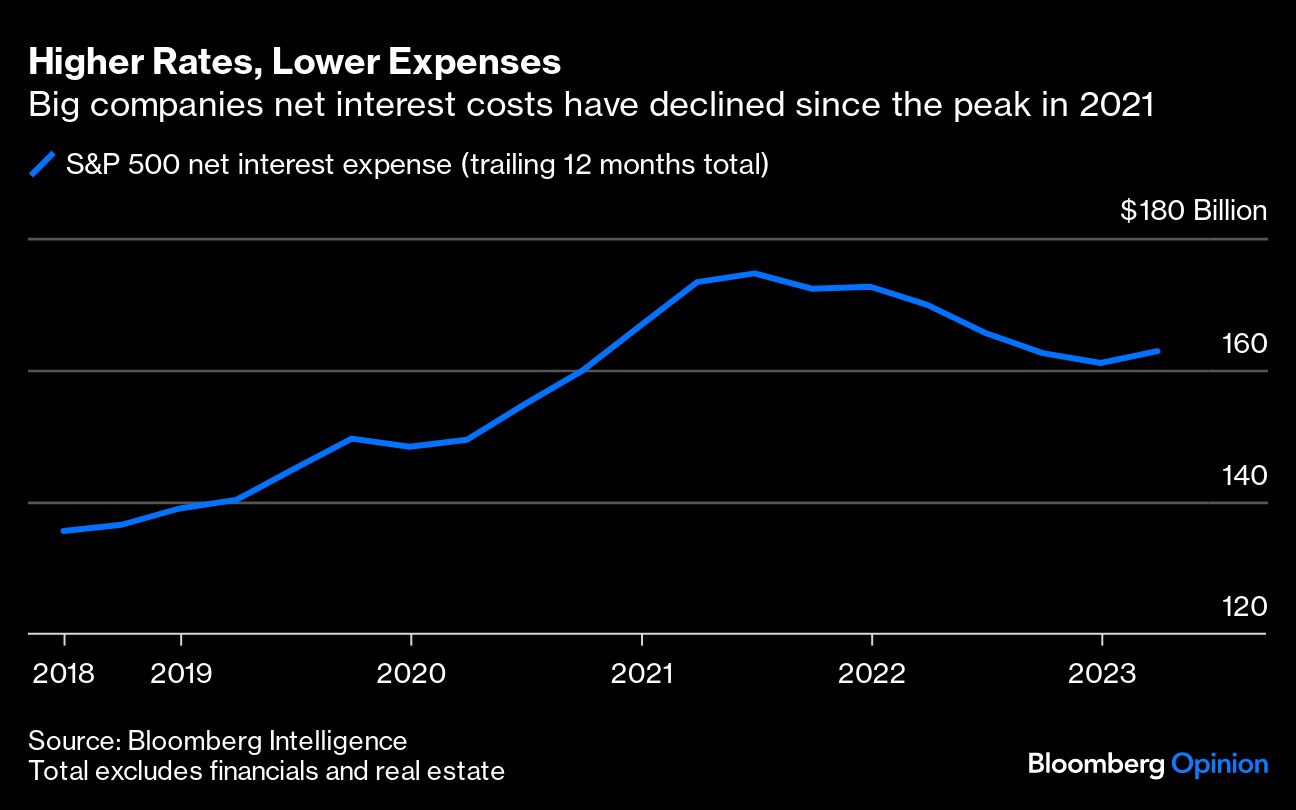
Until recently, I thought rising interest rates were — on balance — bad for businesses. In fact, many big companies are benefiting from the fastest rate-hiking cycle in decades, at least in purely financial terms.
The prospect of global interest rates remaining higher for longer is tipping the case for many investors to switch into bonds from stocks.
Increasingly more advisors and investors are discovering the benefits of options strategies in their portfolios. There is great value in understanding and utilizing options strategies with the range of benefits they can provide portfolios, including protective puts.
In terms of manufacturing, value added, which is basically the value of the output minus the costs of the input, the U.S. produces almost twice as much as Japan, more than three times as much as Germany, and five times as much as India.
In the current landscape, where bonds and stocks are experiencing positive correlation, it becomes even more important (if not critical) to incorporate additional diversification strategies to help mitigate portfolio risk and preserve portfolio balance.
Russia’s 2022 invasion of Ukraine and the ensuing war have prompted new and difficult questions for sovereign debt investors.
The Japanese factory automation and robot maker last month lowered its full-year operating income forecast by 24% because of a sharp slowdown in China and high inventories that could linger into next year. Its shares were quickly dumped and have continued to slide.
Since the beginning of 2022, the media has regularly warned a recession is coming.
With the path of least resistance for stocks seemingly lower for now, key to watch will be a stabilization in interest rate volatility and clarity on the path of monetary policy.
Nick Goetze discusses fixed income market conditions and offers insight for bond investors.
Despite the increasing popularity of self-directed brokerage accounts (SDBAs) within 401(k) plans, recent data reveals that women are under-utilizing this investment tool.
When your client conveys vast amounts of information – as is typically the case in a discovery meeting – it’s unrealistic to expect you to retain that information without writing it down. That’s about to change.