Companies and governments around the globe spent the past month streaming into debt markets, seizing on declining interest rates ahead of an uncertain US presidential election that many fear will spur volatility in markets.
Gold has forged multiple new record highs so far this year, and is now up some 30% year to date, 3.5% in the past week alone.
At a finance conference in London this summer, four senior investment bankers set about persuading the room that the $1.7-trillion private credit market isn’t a threat to Wall Street. Barely three months later, two of them have jumped ship to seek their fortunes in the upstart asset class.
Explore fixed-income tools that generate income and infrastructure.
MassMutual Head of Annuity Distribution Matt DiGangi recently sat down with VettaFi to discuss the increasing demand he is seeing for annuities, and how MassMutual has sought to meet client investor needs.
At this year's Future Proof, Jeffrey Gundlach took to the main stage and sat down for a candid conversation with CNBC’s Scott Wapner.
Today, I’m going to share stories about my best and worst investment decisions. Don’t worry, this isn’t just a brag-and-cringe session about making or losing money. These stories are about the valuable lessons learned, and how these adventures in investing helped shape my current approach.
The owner of the shuttered Three Mile Island nuclear plant in Pennsylvania will invest $1.6 billion to revive it, agreeing to sell all the output to Microsoft Corp. as the tech titan seeks carbon-free electricity for data centers to power the artificial intelligence boom.
Conference season brings about its own set of volatility catalysts. Portfolio managers and traders must keep their ears out for clues on the state of the broad economy, specific industries, and individual companies.
While the beach version of SoCal has had an epic, non-marine layer summer, it seems to have been enjoyed by few locals who instead violate the cardinal rule of adult life without children living at home and nevertheless travel to Europe in summer. We haven’t missed you.
Investors piled money into exchange-traded funds that buy emerging-market bonds on Friday amid optimism that developing-nation debt will get a boost from a highly anticipated Federal Reserve rate cut this week.
OpenAI Chief Executive Officer Sam Altman and Nvidia Corp. CEO Jensen Huang met with senior Biden administration officials and other industry leaders at the White House, where they discussed steps to address massive infrastructure needs for artificial intelligence projects.
Nvidia’s strong earnings exceeded expectations, but the stock fell as investors recalibrated their expectations given its high valuation.
As AI's usage becomes increasingly widespread around the globe, energy consumption is soaring, along with a demand for additional power.
Recent Fed commentary and economic data have crystallized investor confidence in rate cuts coming in less than a week
In a recent interview, Timothy Crawmer, global credit strategist at Payden & Rygel ($156.8 billion AUM), says it is the firm’s view that the Federal Reserve is going to start the rate cutting efforts in September with a 25 by 25 basis points, likely followed by another two 25 basis point cuts in November and December.
Given the backdrop of monetary policy stimulus, the global economy is poised for growth and international stocks for continued leadership.
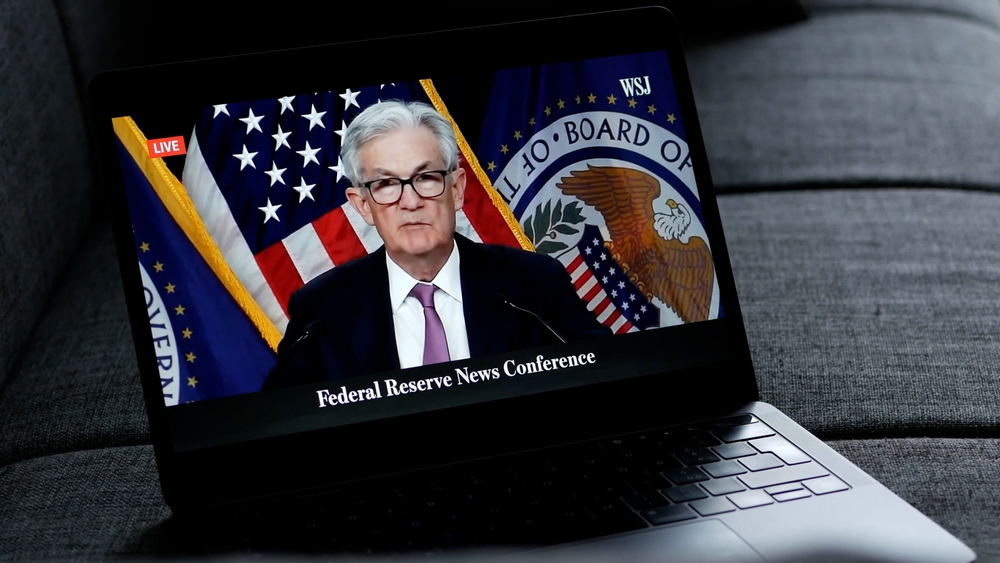
On the latest edition of Market Week in Review, Investment Strategist BeiChen Lin assessed the state of the economy, including the health of the services and manufacturing sectors, and the likelihood of a big rate cut at the upcoming Federal Reserve meeting.
Gold is typically an asset that doesn’t generate yield, but there are ETFs that deliver yield on a gold position through options.
Tax policies touted in the US presidential election could have a big impact on S&P 500 earnings, according to Goldman Sachs Inc. strategists.
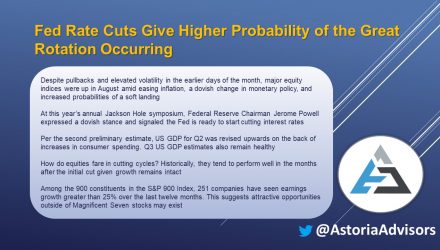
Despite pullbacks and elevated volatility in the earlier days of the month, major equity indices were up in August.
We’ve always admired the great artistry of David Byrne from the Band Talking Heads. My favorite song of theirs is “Once in a Lifetime.” We think this song can tell our readers a great deal about how to look at our portfolio as we navigate an expensive and maniacal S&P 500 Index environment.
In this edition, Harold Evensky explores the challenges facing sustainable and active funds, the implications of the new DOL Fiduciary Rule, and the value of long-term performance projections. With candid observations and critical analysis--read on to gain perspective on navigating the complex world of investing, the importance of risk management, and the role of fiduciary advisors in securing your financial future.
On the latest edition of Market Week in Review, Director and Senior Investment Strategist Alex Cousley and ESG and Active Ownership Analyst Zoe Warganz discussed key takeaways from the U.S. Federal Reserve’s (Fed) annual economic symposium in Jackson Hole, Wyoming.
Rules are made to be broken, so I would call this a 50 percent starting place in your discussion with the client. I certainly wouldn’t recommend only a 50 percent equity portfolio to a young client with a high willingness and need to take risk or the same to any client who had a low willingness and need to take risk.
The healthcare sector offers a compelling mix of defensive characteristics and growth potential driven by innovation. It also features ample dispersion that presents stock pickers with an opportunity to parse potential leaders and laggards in pursuit of above-market return.
Midstream’s second quarter earnings calls reinforced the positive outlook for US natural gas demand driven in part by expected power demand from data centers. This note discusses the advantages of natural gas for data centers, additional factors contributing to demand growth, and how midstream is uniquely positioned to benefit from these trends.
NFL owners are set to vote on selling stakes in their franchises to private equity, potentially joining a shift by professional sports leagues to attract institutional investors.
One of the last remaining bright spots for Chinese consumption is rapidly fading, as the nation’s economic malaise takes a toll on demand for even the most accessible of goods.
As tough as financial advisors claim to be, we still get nervous about “firing” clients, too. When we say “graduate,” that is our delicate way of handling an uncomfortable situation. It’s a cheap, but effective way to massage the misgivings that we have about terminating client relationships.
This week we take a not-so-random walk through the data, trying to simplify what is actually a fairly complex subject. I think it is quite fun, but also important. Let's dive in.
This week, before she accepted the Democratic Party’s nomination for president, Vice President Kamala Harris threw her support behind President Joe Biden’s tax proposals for 2025, which include a steep 44.6% capital gains rate and an unprecedented 25% tax on unrealized gains.
There’s no shortage of market-moving events on the docket to keep Wall Street busy right now.
Having the best referral in the world doesn’t convert a prospect. It’s your website that seals the deal, not only for referrals but for organic prospects as well.
Silver is an important component of solar photovoltaic (PV) panels, meaning that for China to reach its ambitious climate targets, it must import massive amounts of the white metal. In June alone, China spent over $228 million on silver, a new monthly record based on Bloomberg data going back to 2009.
Portfolio Manager Jeremy Sutch, CFA, and Chief Investment Officer Sean Taylor assess the issues besetting the region’s key markets—from domestic challenges to geopolitical headwinds—as well as their structural strengths, and whether prospects may brighten with the onset of a U.S. rate-cutting cycle.
BlackRock Inc. says the market for blended finance has now reached a “turning point,” as it targets growth in deals that combine private and public funding.
Value has been in a protracted slump versus growth for years, but it’s been undergoing something of a makeover during that time.
Advisors are offering customized holistic wealth management to their clients and their families to help ensure an orderly transition of wealth
It's a good time to revisit which equity market sectors are defensive themes. Certain products are nondiscretionary we can't live without.
A bid to break up Alphabet Inc.’s Google is one of the options being considered by the Justice Department after a landmark court ruling found that the company monopolized the online search market, according to people with knowledge of the deliberations.
Common wisdom is that consumers are pulling back on spending, but some green shoots are sprouting that might break ground as big retailers prepare to report second-quarter results.
Franklin Templeton’s David Mann highlights the firm’s diverse ETF lineup and offers perspective on stocks, bonds, and crypto. VettaFi’s Zeno Mercer goes in-depth on the “Magnificent Seven” stocks.
The statistical and investment views of Nassim Nicholas Taleb, author of the blockbuster book The Black Swan, are easy to summarize. First, most probability distributions are fat-tailed, not thin-tailed like the normal distribution. That renders useless or wrong the application of almost all conventional statistical techniques.
Slower employment cements the case for the Fed to start a series of rate cuts.
Actively managed ETFs continued to gain traction in July with $24 billion of net inflows. This represented 19% of the industry’s net inflows.
It looks like investors have been adding shares of Amazon.com to their carts in recent weeks.
Join the experts at Amplify ETFs and learn how GLP-1's could revolutionize the weight loss drug market as well as a strategy that can give your portfolio exposure to a theme that could see significant growth in the coming years.
On days like Monday’s dramatic selloff, which capped a three-week loss of $6.4 trillion in global wealth, personal finance experts usually have the same advice for wary retail investors:
The Federal Reserve is between the Rock of Gibraltar and the Rocky Mountains. The data they use to explain their policy choices is in apparent transition. A self-aware analyst, seeing the conflicting data, knows that the right policy choice will only be understood in hindsight.