The sharp division between public and private securities was a major bulwark of financial regulation from the New Deal in the 1930s to the end of the 20th century.
The S&P 500 Index finished within striking distance of all-time highs after whipsawing on whether President Donald Trump will fire Federal Reserve Chair Jerome Powell.
Swedish private equity group EQT AB reported better-than-expected underlying profit in the first half of 2025 as exit volumes jumped and all of its funds performed at or above plan.
Only a few years ago, the Biden administration declared export controls a “new strategic asset” to help the US maintain “as large a lead as possible” over China in advanced technology. President Donald Trump is now upending that approach.
Just four months into his tenure at the Pentagon, private equity billionaire Steve Feinberg has landed his first big deal: a $400 million bet on the US’s only miner of rare-earth elements, a key commodity in the rivalry with China.
U.S. trade policy movements are starting to resemble a soap opera. Following a series of threats, escalations and suspensions, President Trump has extended the tariff deadline to August 1.
June was a month of stabilization and subtle strength for preferreds.
We have a truly inspiring corporate leader among the companies in our portfolio. We don’t believe the global equity markets have realized it yet.
Three themes are worth emphasizing as we reach the midpoint of 2025: tariffs, interest rates, and global diversification. We emphasize these themes even amid recent heightened geopolitical tensions.
Global equity markets swung from steep losses to fresh highs during the quarter. In early April, President Trump imposed a baseline 10% tariff and reciprocal tariffs of up to 50% on dozens of trading partners, only to suspend most reciprocal tariffs for 90 days amid market panic.
Investors may be happy to shift some of their focus away from the ongoing tariff saga and back toward economic data and earnings reports.
Bitcoin’s 2025 ascent and the upside delivered by ETFs such as the CoinShares Valkyrie Bitcoin Fund (BRRR) has been attributed to a variety of factors, including increased adoption.
In this video, Chuck Carnevale, co-founder of FAST Graphs, aka Mr. Valuation, discusses Becton Dickinson (BDX), 53 years of dividend growth, a medical diagnostics company that has increased its dividend for 53 consecutive years.
The U.S. economy remains resilient despite headline volatility tied to shifting trade and tariff policies. Meanwhile, we continue to see a lot of volatility in the economic data as the world adjusts to these changing policies.
The two teams share aligned values and a commitment to providing customized wealth management solutions for their clients.
Learn all about how this strategy has performed in 2025 and what to expect going forward.
Market valuation indicators are used by investors and analysts to gauge whether markets are overvalued, undervalued, or fairly valued relative to historical norms. This video examines four market valuation indicators to assess the current market's valuation with data through June 2025.
Your technology matters. Your processes matter. But your team determines whether you scale or stagnate. Your people will make or break your growth story; choose wisely.
Meeting AI is proving to be a great starting point for enterprise wealth management teams to gain instant productivity. Acting quickly offers the additional compounding of long-term productivity and data advantages.
Each month, this column will focus on issues related to advisor transition. One of the most difficult ones is working with your team as you determine how, when, and where to transition your firm.
Goldman Sachs Group Inc.’s stock traders posted the largest revenue haul in Wall Street history, as volatility sparked by the Trump administration’s trade war spurred a second straight record quarter for the unit.
What was once dismissed as a fringe fantasy by a niche band of crypto believers is now being tentatively examined by the government-sponsored entities at the core of the US housing market.
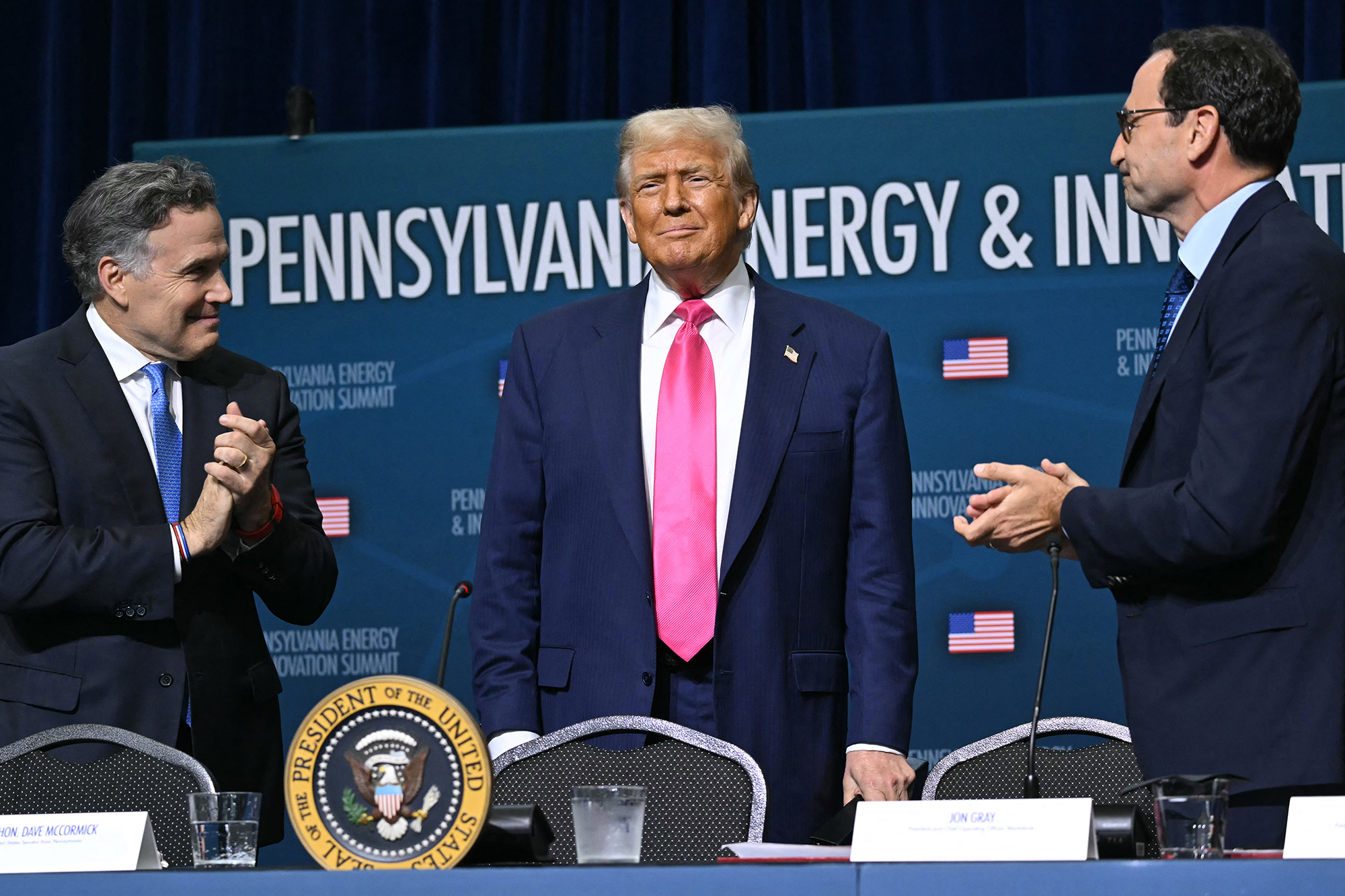
President Donald Trump hailed more than $92 billion in investments in artificial intelligence and energy infrastructure during a visit to Pennsylvania, highlighting his efforts to bolster US competitiveness in the AI field.
Chief executive officers in the US and beyond are becoming accustomed to the policy swings of President Donald Trump and are deciding they can pursue growth ambitions regardless.
In roughly seven years, Qube Research & Technologies has grown into a hedge fund powerhouse without setting foot in the US — the industry’s mecca. That’s about to change.
Low volatility exchange traded funds are a compelling solution for those looking to dampen risk while staying invested.
For many years, the pension plan has often been a drag on a corporation’s financial positions. Now that’s generally no longer the case, and it’s time to consider what’s next.
The RAFI™ Fundamental Index has a value tilt, but to characterize it as a value index would be an oversimplification that misses the important advantages that the fundamental index offers above standard “value” index approaches.
Everything that our team publishes has been through peer review. We candidly call out every opportunity we see to improve each other’s writing, from quibbling over word choices to challenging an essay’s entire premise.
As artificial intelligence transforms industries, investors face a critical question: How can they strategically approach investments in AI ETFs? Rene Reyna, head of Thematic and Specialty Product Strategy for ETFs at Invesco, offers valuable insights into navigating this complex landscape.
High yield bonds have historically delivered attractive long-term returns, and since the Great Financial Crisis they have also become higher quality, as weaker borrowers have departed the sector for the private credit and leveraged loan markets.
Markets continued their strong run last week before pulling back slightly as a flurry of tariff rhetoric hit the wires. It’s important to understand markets are rallying because they assume these tariff threats are more political posturing than lasting economic policy.
Drew O’Neil discusses fixed income market conditions and offers insight for bond investors.
A couple of years ago, I wrote about absolute versus relative returns. Given the latest market run, I am getting a lot of questions about chasing returns, and individuals comparing themselves to the S&P 500 index.
Emerging market (EM) countries are often generalized as all the same and driven by commodity prices. The reality can be very different. Here's what you should know about EM stocks now.
With the One Big Beautiful Bill Act (OBBBA) signed into law on July 4, this note briefly discusses some of the implications for energy broadly and the energy infrastructure space.
A powerful equity market rebound has pushed stocks to all-time highs, leaving investors elated but cautious amid lingering uncertainties.
Raymond Bridges, Managing Director of Bridges Capital, discusses the strategy behind the Bridges Capital Tactical ETF (BDGS), emphasizing the importance of risk-adjusted performance and the value of active management. VettaFi’s Zeno Mercer examines the rapid evolution of healthcare technology and highlights the ROBO Global Healthcare Technology & Innovation ETF (HTEC).
On this episode of the “ETF of the Week” podcast, VettaFi’s Head of Research Todd Rosenbluth discussed the CoinShares Valkyrie Bitcoin Miners ETF (WGMI) with Chuck Jaffe of Money Life. The pair discussed several topics related to the fund to give investors a deeper understanding of the ETF overall.
On Wednesday, Vanguard expanded its fixed income ETF selection with the launch of three new funds.
As 2025 progresses, investors and policymakers are navigating a highly complex economic landscape shaped by three powerful and interrelated forces: evolving trade policy, a cautious U.S. Federal Reserve (Fed), and growing concerns over U.S. fiscal discipline.
How can you be sure the information and recommendations your advisor offers you are not biased by their political views?
Investors who overlook the potential of card reward programs may be missing out on benefits that can contribute to the abundant lifestyle they are looking to build.
BlackRock Inc. pulled in $46 billion to its investment funds, and assets hit a record $12.5 trillion as clients rode out the volatility of President Donald Trump’s tariff policies in the second quarter.
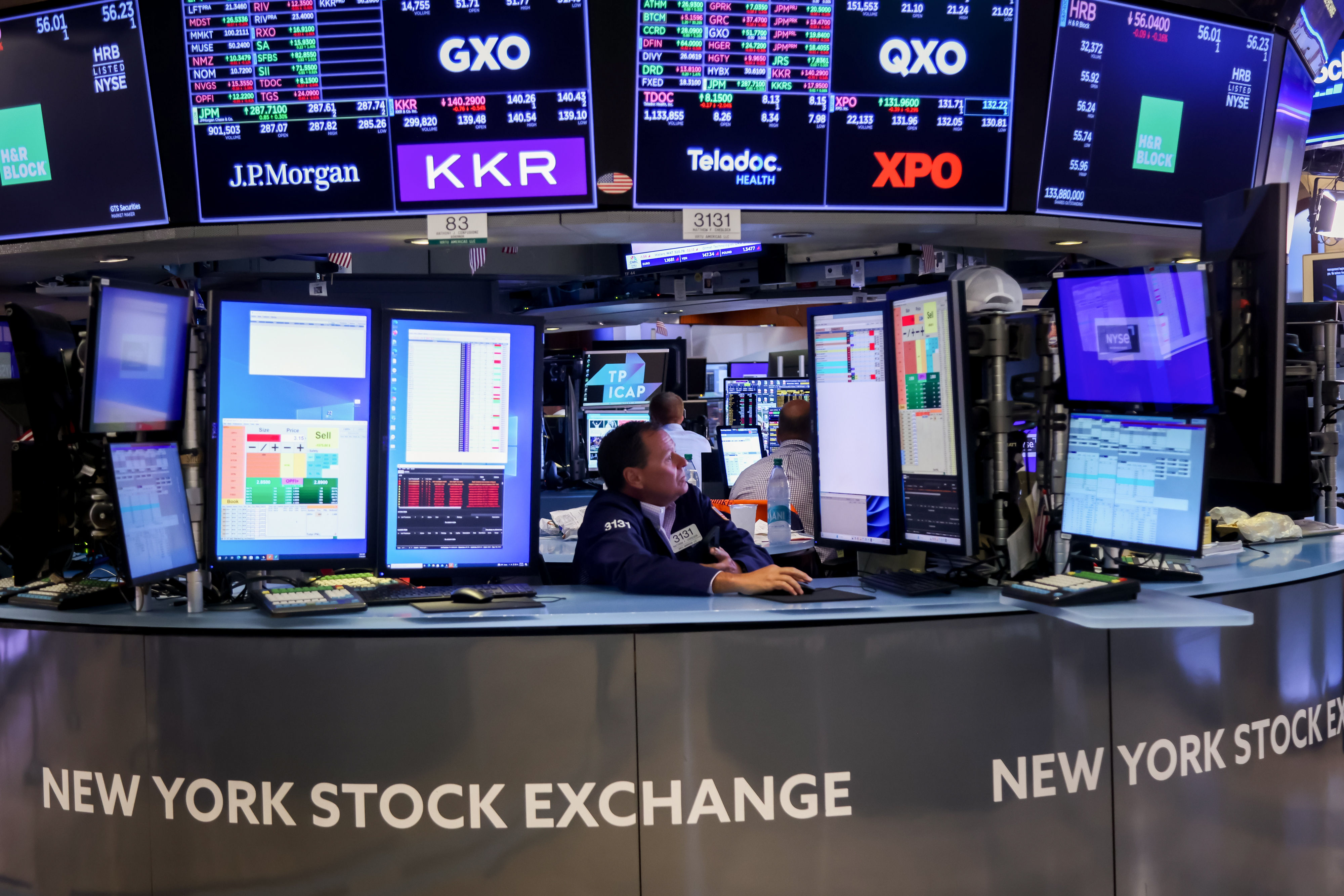
JPMorgan Chase & Co.’s investment bankers eked out a surprise gain in the second quarter, signaling what may be the start of a dealmaking rebound after widespread hesitation tied to US tariff policies.
Apple Inc. has struck a $500 million deal to buy rare-earth minerals from MP Materials Corp., the US producer that just last week secured backing from the Pentagon.
Housing affordability has become a flashpoint in the US economy. How can the country be truly wealthy when the bulk of a rising generation can’t afford a home?
Nvidia Corp. and Advanced Micro Devices Inc. plan to resume sales of some AI chips in China after securing Washington’s assurances that such shipments would get approved, a dramatic reversal from the Trump administration’s earlier stance on measures designed to limit Beijing’s AI ambitions.
We continue to believe we are seeing a rare opportunity in EM local debt, and our conviction has been strengthened by the Trump administration’s trade and economic policies, which suggest continued dollar weakness and relative strength for EM local currencies.
It is easy to invest when markets are rallying, but it can be tough for investors to stay in their seats when markets inevitably decline again.