With German fiscal spending rising, interest rates low and reforms continuing, European value stocks have the potential to shine despite the current political uncertainties, says Franklin Mutual Series.
In an interesting but problematic new book, After the Spike: Population, Progress, and the Case for People, two economists, Dean Spears and Michael Geruso, warn that the switch to a population implosion, currently underway, could have catastrophic consequences for human well-being and even survival.
I am growing more and more convinced that we simply can’t rely on historical precedents anymore. Economics is about human decisions, and humans, at least in a broad sense, seem to be making decisions differently than they did before the pandemic. I think we don’t fully understand how much has changed—for employment, inflation, consumer behavior, and more.
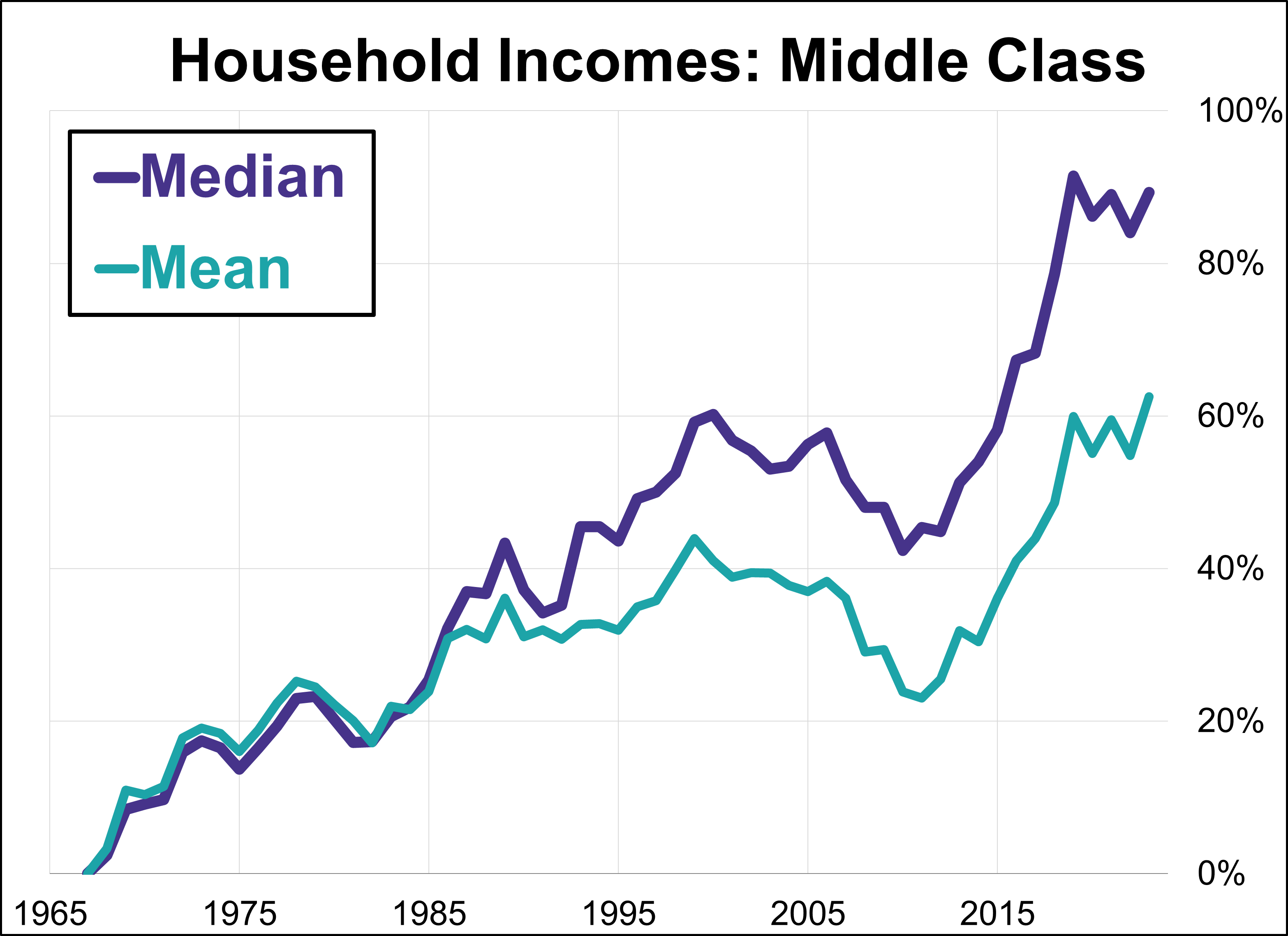
The median household is the statistical center of the Middle Class. Let's take a closer look at the Census Bureau's latest annual household income data with a focus on middle class income. In this update, we'll focus on the growing gap between the median (middle) and mean (average) household incomes across the complete time frame of the Census Bureau's annual reporting from 1867 to 2024.
Target date funds represent the investment industry's best thinking about how people should invest for retirement.
Although the Fed does focus on its dual mandate of employment and inflation, there is no question that the primary focus right now is on the employment side of the equation, especially given the recent stalling out in new job creation.
Cinthia Murphy, Investment Strategist at VettaFi, recaps the ETF landscape so far in 2025 and shares her outlook for the rest of the year. Daniel Noonan, Executive V.P. and Head of the Wealth Management Consulting Group at Cohen & Steers, discusses the firm’s entry into the ETF space, the growing momentum behind active management, and ETF strategies focused on real assets and alternative income.
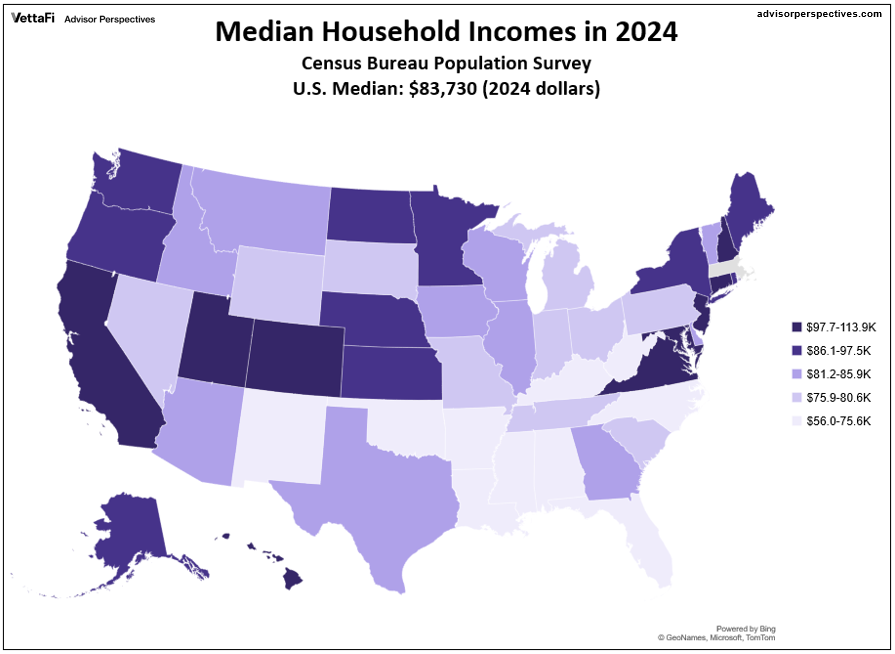
The median US income in 2024 was $83,730, up from $22,420 in 1984 — a 274% rise over the 40-year time frame. However, if we adjust for inflation chained in 2024 dollars, the 1984 median is $60.420 and the increase drops to 39%.
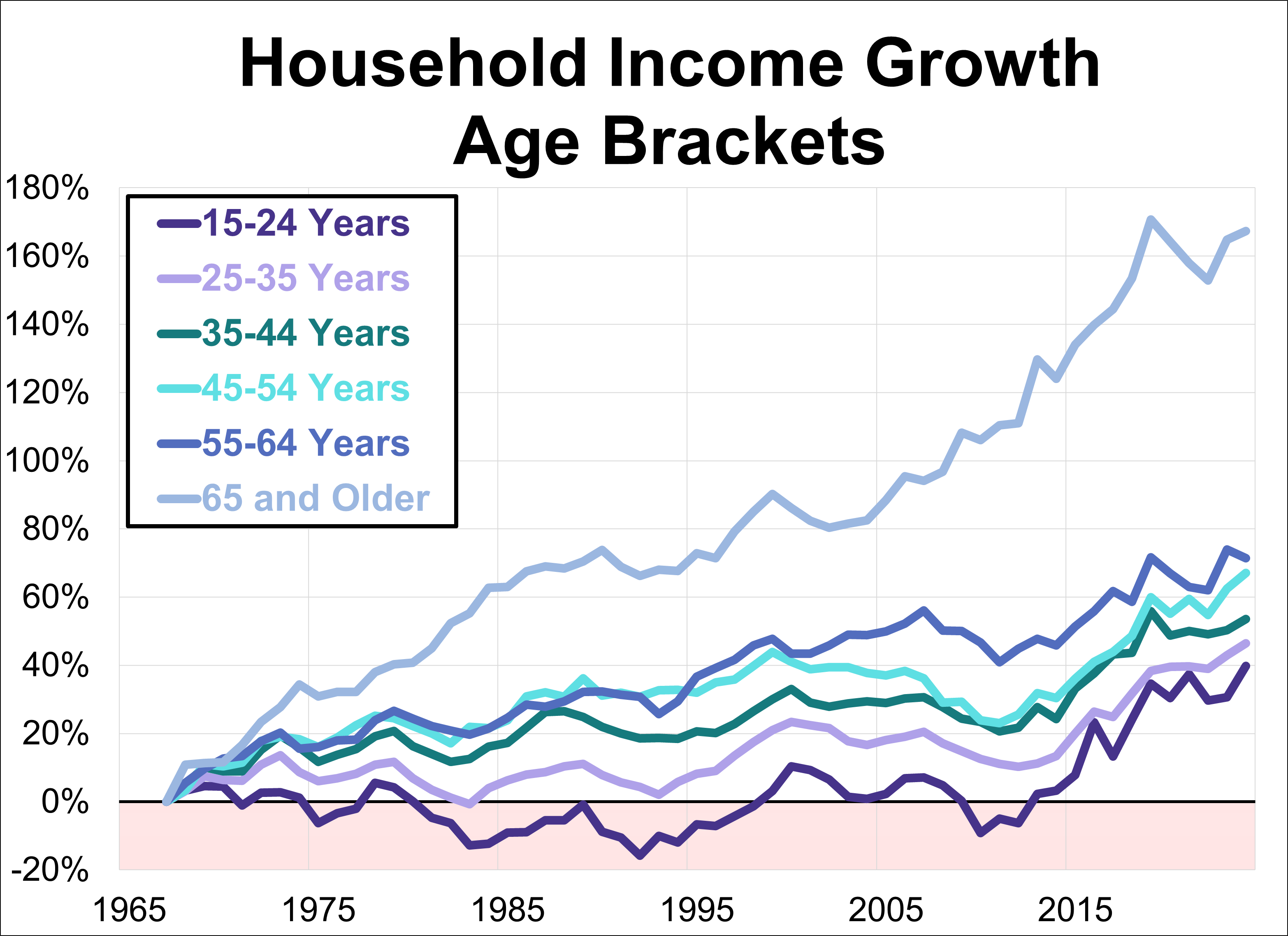
Our commentary on household income distribution offers some fascinating insights into average U.S. household incomes, but misses the implications of age for income. In this update, we examine household income with a focus on age bracket.
In a year that has seen foreign equities ETFs stand out so strongly, emerging markets may be somewhat underrated. Broad, global equities strategies — especially those that exclude U.S. firms — have done very well as investors have looked abroad to diversify.
Technology has made customization operationally viable across entire books of business. But the real opportunity lies in how it reshapes the advisor/client relationship. When complexity is handled behind the scenes, advisors can focus on deeper conversations, clearer guidance, and lasting alignment.
Gold mining equities are having a blockbuster 2025. Prices for the precious metal have hit one all-time high after another, and the miners who pull it from the ground are rewarding investors with some of the best returns in the market today.
For investors who want some chaos protection, something in their portfolio that’s not correlated to U.S. or developed market stocks and bonds, a managed futures strategy could be the ticket.
Conversations with clients about alternatives should focus on their specific goals, whether that's potentially enhancing returns, reducing risk, generating income, or achieving better diversification.
A Federal Reserve rate cut won't necessarily lower longer-term bond yields or mortgage rates.
For much of its nearly 17 years on the market, bitcoin has been viewed as a volatile asset. The largest cryptocurrency’s history is chock full of dramatic price swings in both directions and extended periods of turbulence.
We’ve received many client questions about seasonality in stocks, and specifically about the ‘September Effect’. This is the theory that investors should sell their stocks after Labor Day to avoid autumn volatility.
Global macro conditions remain constructive for risk assets, according to Franklin Templeton Investment Solutions. Get the team’s views across global assets in the latest “Allocation Views.”
There has not been a fundamental innovation in broad-market cap-weighted indexing in decades. Until now. With the Research Affiliates Cap-Weighted Index (RACWI), we introduce a fresh approach designed to fix a costly but little-known “bug” in cap-weighted indexing.
Earnings expectations for the Magnificent Seven (or Mag Seven) mega-caps remain optimistic, but profits may face pressure as spending rises. Equity investors should carefully evaluate each of the mega-caps while searching across other sectors for solid sources of profitable growth.
Making the case for potential rate cuts in his recent speech at Jackson Hole, Fed Chair Powell noted that policy is presently in restrictive territory.
Whenever there is change, the more people there are who have a voice and are able to understand the reasons for the changes, the more people there are who can be culture carriers to share with others in your firm. This can improve your chances of your team wanting to help make the changes work rather than resist what you are doing.
How should investors think about integrating private credit into their portfolios?
The U.S. dollar is experiencing a rare volatility squeeze, indicating that a major move is near. While the most likely direction is downward, any move will have a big impact on precious metals.
Healthcare has been the worst-performing sector in the S&P 500 so far this year.
Over the past several years we’ve watched the S&P 500’s performance become increasingly tethered to a handful of Mega-cap technology companies.
The market got exactly what it needed last week: confirmation that the economy is slowing—not collapsing—and that the Federal Reserve has the green light to start cutting rates. Payroll gains softened, manufacturing remains weak, and broader job slack is showing up with U-6 underemployment rising to 8.1%.
Looking back over the past 20 years, airline equities have tended to outperform in the final three months of the year, with the NYSE Arca Global Airlines Index gaining over 3% on average in October; this is followed by an even stronger showing in November and a 3% increase in December on average.
Over the past twenty years, in spite of incredible new technologies, US real GDP growth has averaged just 2.0% at an annual rate. By contrast, in the twenty years prior to the most recent twenty – from the mid-1980s thru the mid-2000s – real GDP grew at a 3.2% annual rate.
The Federal Reserve may cut rates a couple of times by year-end, but the pace and magnitude of easing in 2026 is unclear. There are still some roadblocks to lower bond yields.
Based on valuations, there's no denying we're in a bubble. That's noteworthy by itself, but it doesn’t tell us what will happen next. I will explain why selling now might not be the best move.
August brought with it a slowing in ETF launches from the summer spree, while inflows continued as investors increasingly bought into bonds.
From a revenue perspective, we were also encouraged by sales coming in +2.1% higher than analysts expected, with all 11 sectors showing positive revenue surprises. This also allays our fears that tariff impact might be worse than the analyst community feared.
Whether you’re building your portfolio, trying to diversify or considering new investments, understanding the difference between active and passive funds is extremely helpful. Both mutual funds and exchange-traded funds (ETFs) can be either active or passive.
Powell’s speech seemed to give an all-clear signal for a cut in September. The speech started with a focus on the softening labor market, concluding it is in a “curious kind of balance” with rising risks of layoffs.
Here’s how I see it going into a critical data week: the inflation gauges landed precisely on expectations while an ugly July trade gap shaves some growth from Q3, and that combination keeps the Fed on a path to cut 25 basis points at the next meeting.
Our quality rating system becomes incredibly powerful once it’s married with valuation analysis. We spend hundreds of hours researching stocks to arrive at these two inputs (quality and fair value). Here’s how combining these ratings works in practice using a grossly simplified example.
Consider coking coal. The high-quality solid fuel used in steelmaking was for many years seen as a jewel in BHP’s crown.
Bill Bengen is an MIT-educated rocket scientist, retired financial advisor, and somewhat unintentional founder of “the 4% rule.” The widely used rule of thumb resulted from a study he did more than 30 years ago. His new book, “A Richer Retirement: Supercharging the 4% Rule to Spend More and Enjoy More” is an update of this study.
Recently, we have seen rapid shifts in and out of various sectors and stock factors that disrupt momentum strategies. Therefore, understanding how momentum strategies work can help you better identify when they might be effective and when it's time to switch to a different approach.
NVIDIA (NVDA) earnings are the focus tonight, but investors’ attention will quickly shift back to the macro later this week. According to our Economic Calendar, with data licensed from Econoday Inc., a second read on Q2 GDP hits the tape Thursday morning.
The global exchange-traded funds (ETFs) market has rarely been more dynamic. Active strategies may be commanding the headlines, but index-based ETFs remain the bedrock of portfolios worldwide.
The financial markets often shift gears in September, moving away from the quiet summer months marked by low trading volumes and limited volatility, and entering a period historically associated with seasonal weakness and increased market instability.
A full-scale implementation partner does the behind-the-scenes—but critically necessary—work of managing portfolios according to the investment objectives, risk tolerance and preferences set by an investment team. In doing so, they free up time and energy for the investment staff to focus on decision-making.
Investors enjoying the pairing of domestic stocks and the momentum factor are likely familiar with some related ETFs. This includes the Invesco S&P 500 Momentum ETF (SPMO).
Benefit Street Partners believes private credit managers need to focus on the financial conditions during a fund’s investment period. Skilled managers know when to dynamically deploy more capital or pull back, as the weather changes.
International stocks have outperformed the broad U.S. stock market so far this year. If the U.S. dollar continues to weaken, it could boost international returns even more.
For nearly two decades, U.S. electricity demand was flat. Between 2005 and 2020, consumption barely budged, thanks to efficiency gains in appliances and slower economic growth. Utilities planned for more of the same.
Despite not meeting three of the four criteria, UPS valuations provide a better margin of safety than many stocks. However, while it may fare better comparatively, we would want to see improvement in earnings and sales trends before committing UPS to our roster of rainy-day stocks.
US investors are more concentrated than they think. Franklin Mutual Series believes diversifying into local, non-US currencies yields benefits, particularly in an environment of downward US-dollar pressure.