Morgan Stanley has set up a Digital Asset Lab to test technologies including stablecoins, tokenization and decentralized finance applications as the Wall Street bank explores how blockchain-based systems could be used across its business.
Chris Galipeau discusses high-conviction insights that go beyond media headlines.
Last week we looked at the Federal Reserve’s inflation problem. This week, let’s look at the other half of its mandate: maximum employment.
Many times, a team member raises an issue that isn’t really the main issue. I call this “the presenting problem.” Stay open. Listen and learn.
In late January, the week before Commerce Secretary Howard Lutnick announced a $1.6 billion government commitment to fund a US magnet maker, bankers at his former financial services company, now run by his sons, were busy earning fees raising $1.5 billion more for the company from private investors.
Novo Nordisk A/S is eyeing the hair-loss market as the maker of Ozempic seeks to expand its direct-to-consumer pharmaceuticals business.
Early this week, I was in Los Angeles at the All-In Summit along with about 4,000 others, including tech investors, money managers and entrepreneurs. The ticket wasn’t cheap, but it was well worth it.
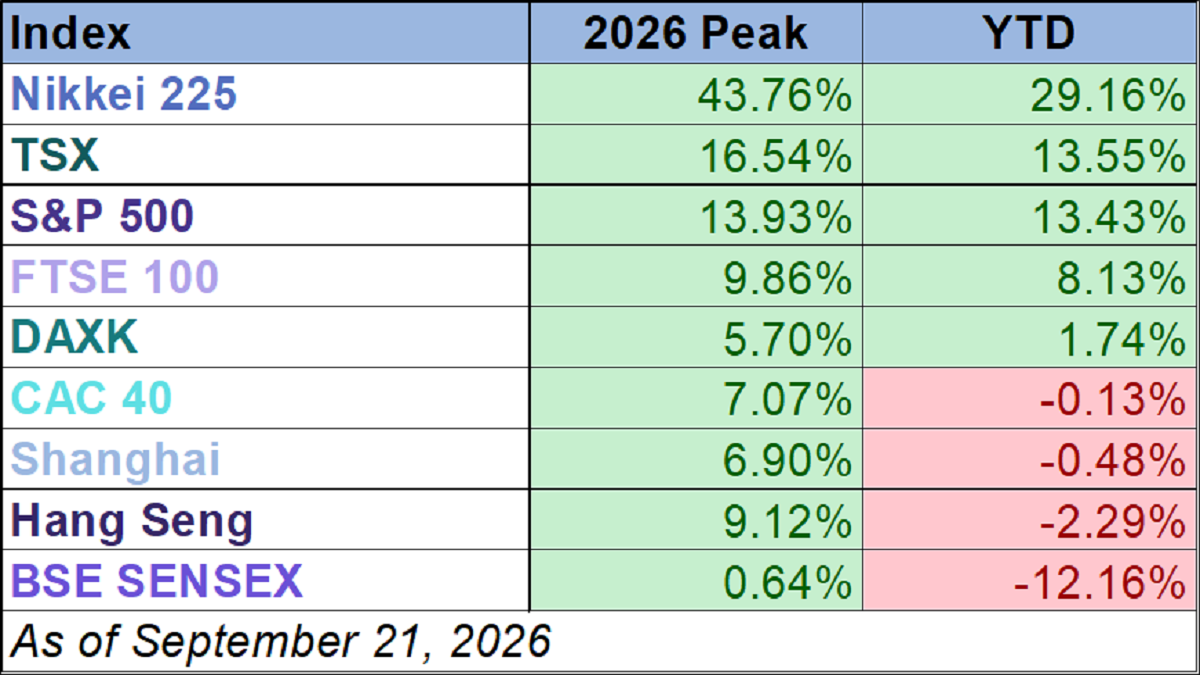
Six of the nine indexes on our world markets watch list posted year-to-date gains through September 21, 2026.
Traditional performance attribution shows which active exposures added value to a portfolio and which detracted value. But for ESG mandates, it can lead to a misleading interpretation because it doesn’t explain why certain exposures exist.
The Federal Reserve raised interest rates this week, in part to reset consumer expectations on inflation. Their work is likely not done, as there is a negative surprise coming for many consumers, especially in rural America. Winter is coming, and that means the return of home heating bills. Depending on how you heat your home, your bills could be much higher this winter.
The 2026 U.S. midterms are rapidly approaching, with major implications. Muni bonds, in particular, may be impacted.
A week of rising oil prices and higher interest rates sent stocks lower across the board as investors increasingly priced in the likelihood that the Federal Reserve (Fed) will begin a rate-hiking cycle at its September 16 meeting. Following the August Consumer Price Index (CPI) report, futures markets implied an 88 percent probability that the Fed will, or at least should, raise rates at next week's meeting.
For much of the past decade and a half, investors saw little reason to favor bonds over equities. Yields were low and returns were muted, especially in passive strategies. Equities seemed to offer a much clearer path to long-term capital appreciation. For many investors, bonds were, at best, ballast: a dull but generally stable component of a broader portfolio. Then the experience of 2022 had investors questioning even that view, as areas of high quality fixed income generated equity-like losses that eroded much of the prior decade’s real return.
Target-date funds have become a staple qualified default investment alternative (QDIA) because they help participants invest appropriately without requiring them to act. But as retirement nears, income needs become more pressing and financial situations diverge—a situation dynamic defaults seek to address.
Before I discuss why I disagree with the “AI bears,” I want to state that I respect their opinions, have evaluated their concerns, and have simply derived a different set of conclusions. That is an important statement, because this particular group of “AI bears” includes some of the sharpest risk minds in the business, and they have been early to almost every warning that later mattered.
Global bond yields have climbed to the highest levels in almost two decades, pushing up mortgage repayments and corporate financing costs. But one corner has remained unusually resilient: emerging markets.
August 2026 was a blockbuster month for ETF acquisitions.
It’s back-to-school season, and the ETF market is closing out a summer that proved anything but slow. August brought $180 billion in fresh net ETF asset inflows and saw the number of new ETFs coming to market cross 1,000 for the year. August also saw a barbell strategy against macro risks become a popular approach with ETF investors.
August was a good month in financial markets, with the S&P 500 up around 2.7%. The market leaders came from the commodity complex, with gold and bitcoin (not sure how this should be classified) being the two top performers.
Most people experience transportation through roads and airports. Traffic jams on highways and delays at major hubs are familiar frustrations. But the world's most important transportation network lies largely out of sight.
State Street’s top inflows for its SPDR ETFs during the year-to-date period and the past four weeks suggest that while investors have confidence in U.S. large caps, they’re still looking to hedge their bets by allocating to gold.
Anthropic PBC’s IPO is casting a long shadow over companies’ US listing plans, as they try to find room for their deals to grab attention after the Sept. 7 Labor Day holiday.
The future of geothermal energy, a renewable source that has charged up conservatives and liberals alike, is being charted in a scrubby patch of sagebrush, halfway between Las Vegas and Salt Lake City.
As the credit cycle ages, defaults are likely to remain front and center. But for investors evaluating private credit alongside public markets, measuring defaults is not as straightforward as it may seem.
Amazon.com Inc.’s Andy Jassy has begun making an audacious boast during conference calls this year. Though his company remains a top Nvidia Corp. customer, it’s also one of the world’s largest makers of data center chips in its own right.
Artificial intelligence is the topic of the day. It seems everyone has an opinion but not much actual factual knowledge. I’ve been dragging emails and research into my AI folder for a very long time. Today (and next week) I review those emails, as we are going to look at the reasons there is so much opposition to AI data centers.
It’s easy to make the case that the US equity market is in bubble territory. After all, the major metrics point in the same direction.
It has been a stellar Q2 earnings season, but we aren’t done yet. After the big retailers this week, Jensen Huang and NVIDIA grab the spotlight on Wednesday, August 26. Then Kevin Warsh takes the podium on the 28th. Through it all, daily market swings hinge on the latest AI developments, along with consumer trends and what’s happening geopolitically.
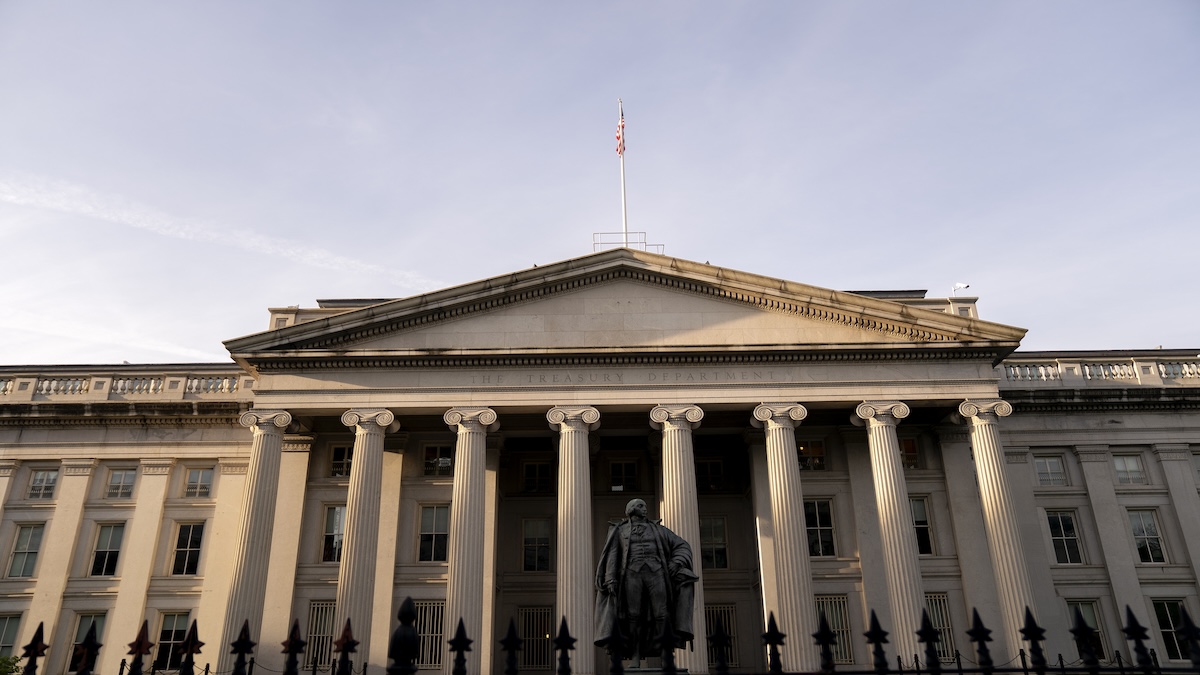
The US Treasury unexpectedly announced it’s ramping up buybacks of long-dated government debt, taking the action in the wake of yields on such securities hitting the highest levels in years.
More than a decade ago, hundreds of US garage entrepreneurs were working on shoestring budgets to develop drones with dreams of scaling the new technology. Then China’s DJI introduced a small, inexpensive drone with a stable built-in camera.
As growth accelerates, the first question a leadership team has to answer is not how big the firm can get. It is where the frontier sits, the exact point at which scale stops generating lift and starts generating drag.
The world’s busiest airport is coming to market with a more than $1 billion municipal bond sale, boosting issuance in the lagging airport sector.
As we write this, long TIPS yields once again yield 3.0% and, as in 2008, these rates may not last long. That means: You snooze, you lose. The time to buy TIPS is now. In this article, we lay out the options and make recommendations.
Life rarely stands still, and for families caring for a loved one with special needs, change can introduce both emotional and financial complexity. Marriage, divorce, the loss of a parent, an unexpected inheritance, or shifts in public policy may all significantly impact eligibility for benefits, long-term financial security, and family dynamics.
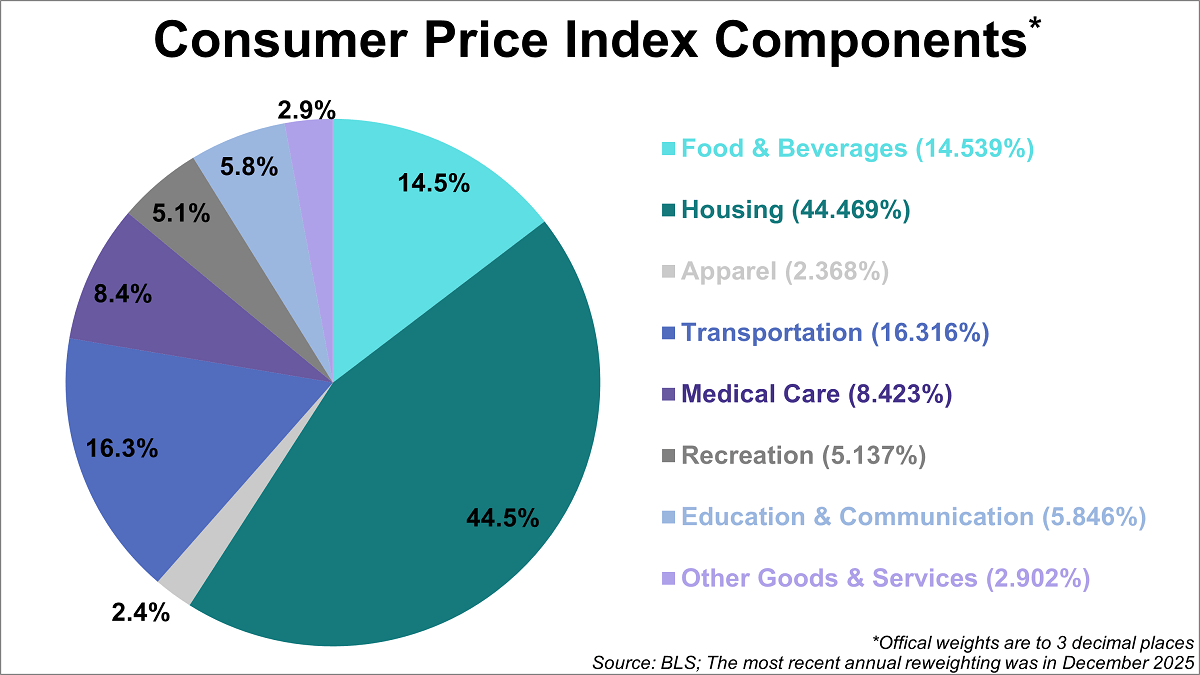
Inflation affects everything from grocery bills to rent, making the Consumer Price Index (CPI) one of the most closely watched economic indicators. The Bureau of Labor Statistics (BLS) tracks this by categorizing spending into eight categories, each weighted by its relative importance.
There is no one-size-fits-all individual investment strategy. We all have different needs. Once I decided I needed a portfolio that would work for today, I became convinced that a dividend growth portfolio should be the core of my long-term investment strategy. Not an addition, but the core.
As many of you know, our team at Smead Capital Management has studied the thinking and investment careers of Charlie Munger and Warren Buffett. In today’s Go-Go artificial intelligence-dominated stock market, we’d like to walk you through the concept of the Circle of Competence.
On Thursday, July 30, Amazon Inc.(AMZN) released its Q2 2026 earnings report. Given its crucial position as a Mag 7 mega-cap straddling both tech and e-commerce, Amazon’s earnings reports are usually closely watched by the broader investing community.
This week’s vote from the Federal Reserve FOMC committee is going to have implications for quite some time. I think most of the pundits who are writing about this have their analysis wrong. This was not just a vote to not raise rates. I think there was a lot more going on behind the scenes.
For many years, globalization felt like a one-way street. Supply chains stretched effortlessly across continents. Companies built “just-in-time” systems that assumed goods, data, and capital would flow smoothly around the world. Investors could buy a global index fund and feel reasonably confident that they were capturing the benefits of ever-closer integration.
Health care stocks came alive in the second quarter, benefiting from relatively low valuations and a late rotation away from some high-flying tech names. The sector returned 9.5% for the period, good enough to tie for fourth among the S&P 500® Index's 11 sectors.
Today we’ll consider the interaction between long-term interest rates, the Fed’s limited ability to influence them, inflation and the housing market. And because home prices are the biggest concern for many households, we’ll start with a look at the latest changes there. And then look at the Federal Reserve’s likely reaction.
During periods of elevated market stress, including those that see pinched corporate bonds, collateralized Loan Obligations (CLOs) often outperform other corporate bond assets. Add to that, CLOs often emerge from those rough patches in strong form, delivering impressive returns a year after downturns.
Those who are familiar with Vanguard’s ETF lineup are likely well-acquainted with the Vanguard S&P 500 ETF (VOO). After all, this fund — which provides low-cost exposure to the S&P 500 — is currently the largest fund in terms of AUM.
Electricity demand is surging all over the world. To meet this demand, vast investments in power generation need to be made, and grids need to be overhauled and expanded. Ramping up electricity generation and delivery is extremely expensive, and electricity prices have spiked up throughout much of the developed world.
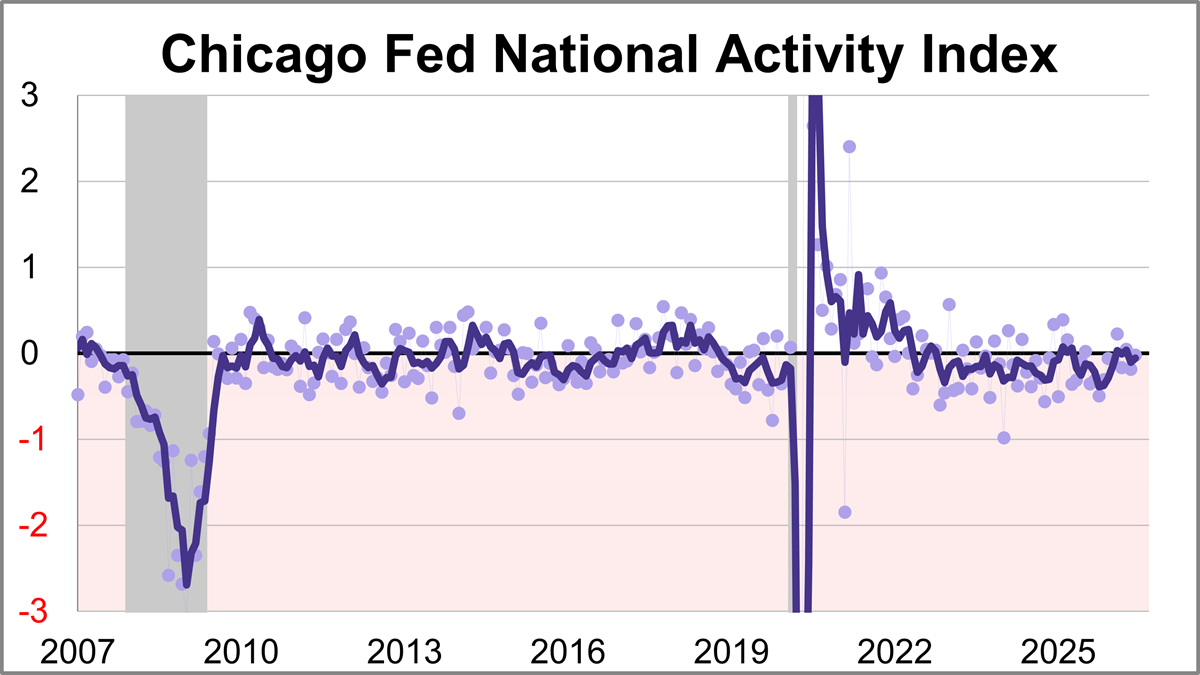
The Chicago Fed National Activity Index (CFNAI) rose to -0.02 in June from -0.19 in May. One of the four broad categories of indicators used to construct the index decreased from May, and two categories made negative contributions.
When clients, specifically, feel they matter to their advisor, they engage more deeply in the planning process, follow through on recommendations, refer more frequently, and build lasting relationships that transcend market volatility.
Andy Burnham pledged a “new economic model” for the UK as he sought to reassure Britons that his ascension as their seventh prime minister in little over a decade would bring an end to the country’s political instability.
For physicians, major financial decisions may rarely affect just one area of their financial life. The real potential risk is failing to understand how those decisions impact everything else.
A growing number of corporate leaders, buckling under the stress and uncertainty of the AI age, are looking for a very human solution: A chief of staff.