2026 has kicked off with investors on the lookout for opportunities in a broadening market. While tech remains an important part of countless investor portfolios, it’s not the only category offering opportunities.
Prediction markets aren't going away. They're designed to be fun and exciting for bettors, intellectually engaging, and culturally resonant. The question isn't whether your clients will participate, but whether you'll have a productive framework ready when they do.
War with Iran is adding a new level of chaos to already uncertain times. What about your retirement savings? Is your investment portfolio safe? Is it time to think about pulling out of the stock market?
Sustainability analysis is most useful when it helps investors and advisors understand how structural economic forces may shape risk and opportunity over time. This includes energy demand, resource constraints, regulation, and physical risk.
Join the experts at GraniteShares as they explore the autocallable market, unpack how it works, and provide strategic solutions to today’s market challenges.
Global conflict has erupted in 2026, from South America to the Middle East. With energy at the center of the picture, markets face potentially serious volatility.
Data center developers plan to reduce their reliance on utility grids by investing in onsite power for rapidly scaling facilities. The shift creates opportunities for electrification infrastructure providers as energy independence takes on new urgency.
For months, Wall Street’s panoply of risk-hedging strategies did little but lose money. Now, as uncertainty sparked by the war with Iran hits the market’s most popular trades, investors that loaded up on portfolio protection are being rewarded.
President Donald Trump said the US and Israel are making significant progress in the war on Iran and could end the conflict “very soon,” cooling a surge in oil prices.
Those are a lot of disappointments in a relatively short time. That also left some investors wondering if Treasuries are still the bear-market hedge they are touted to be — which prompted me to ask if they ever were. After digging into the data, I discovered a surprising answer: no.
The European Central Bank can be forgiven for feeling nauseous as a massive global deleveraging of risk since the Iran war started has hit the euro area’s currency and interest-rate markets particularly hard.
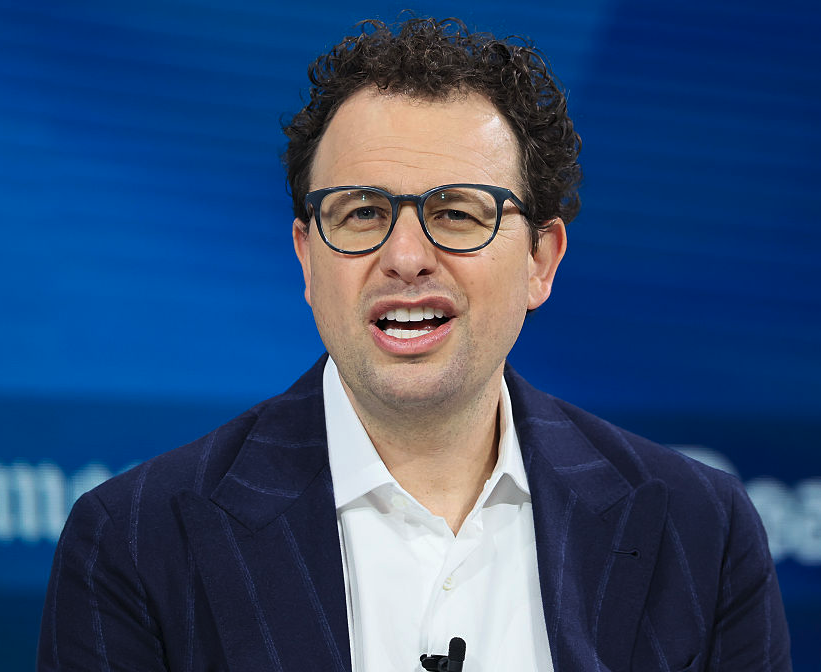
Big Tech’s consolidation of power seemed a foregone conclusion even as Sam Altman’s OpenAI sparked an artificial intelligence boom with ChatGPT.
We have repeatedly highlighted the delicate balance that the U.S. economy and markets remain suspended in as the Federal Reserve treads a thin line between a softening labor market and stubborn inflation that continues to hover above its 2 percent target.
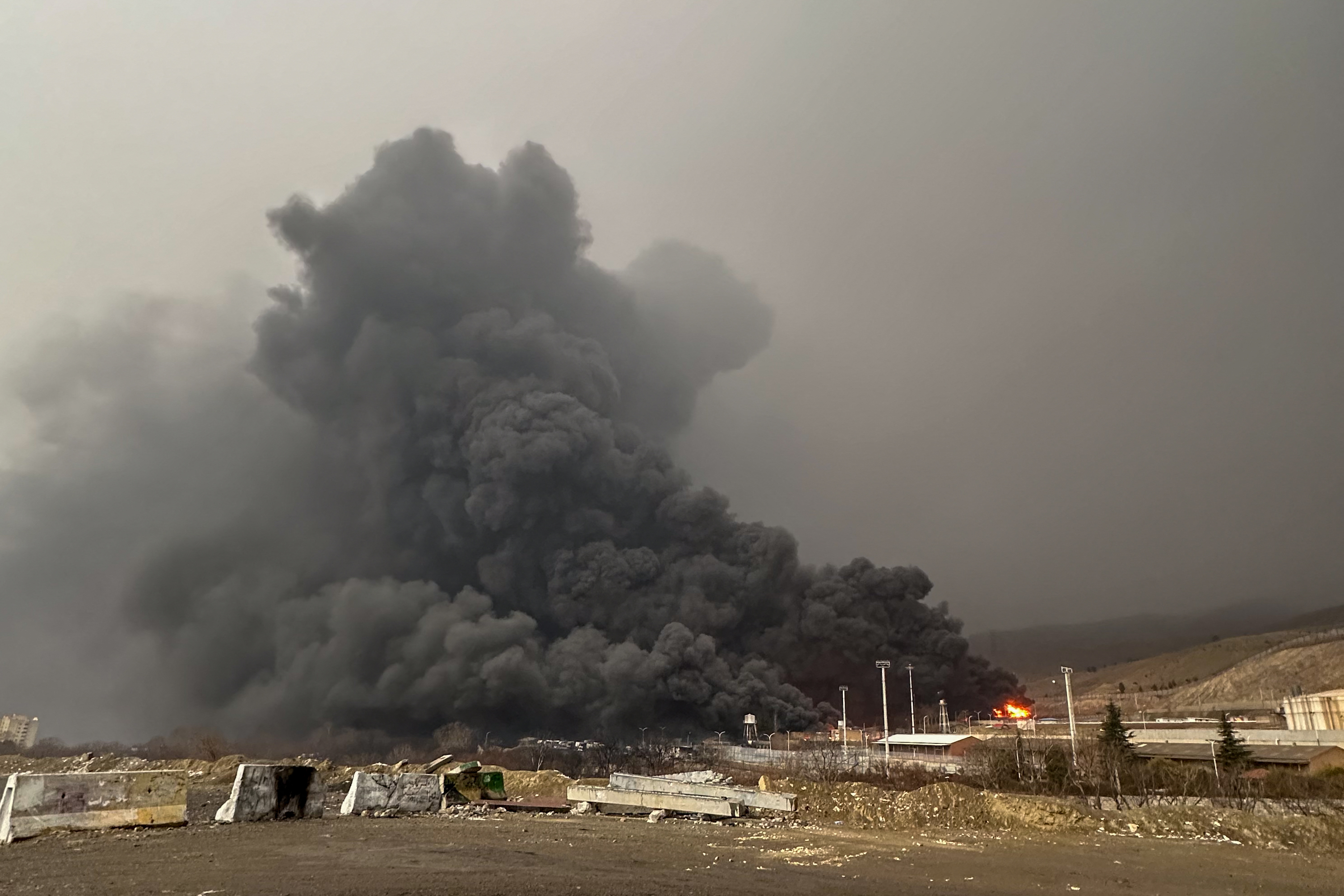
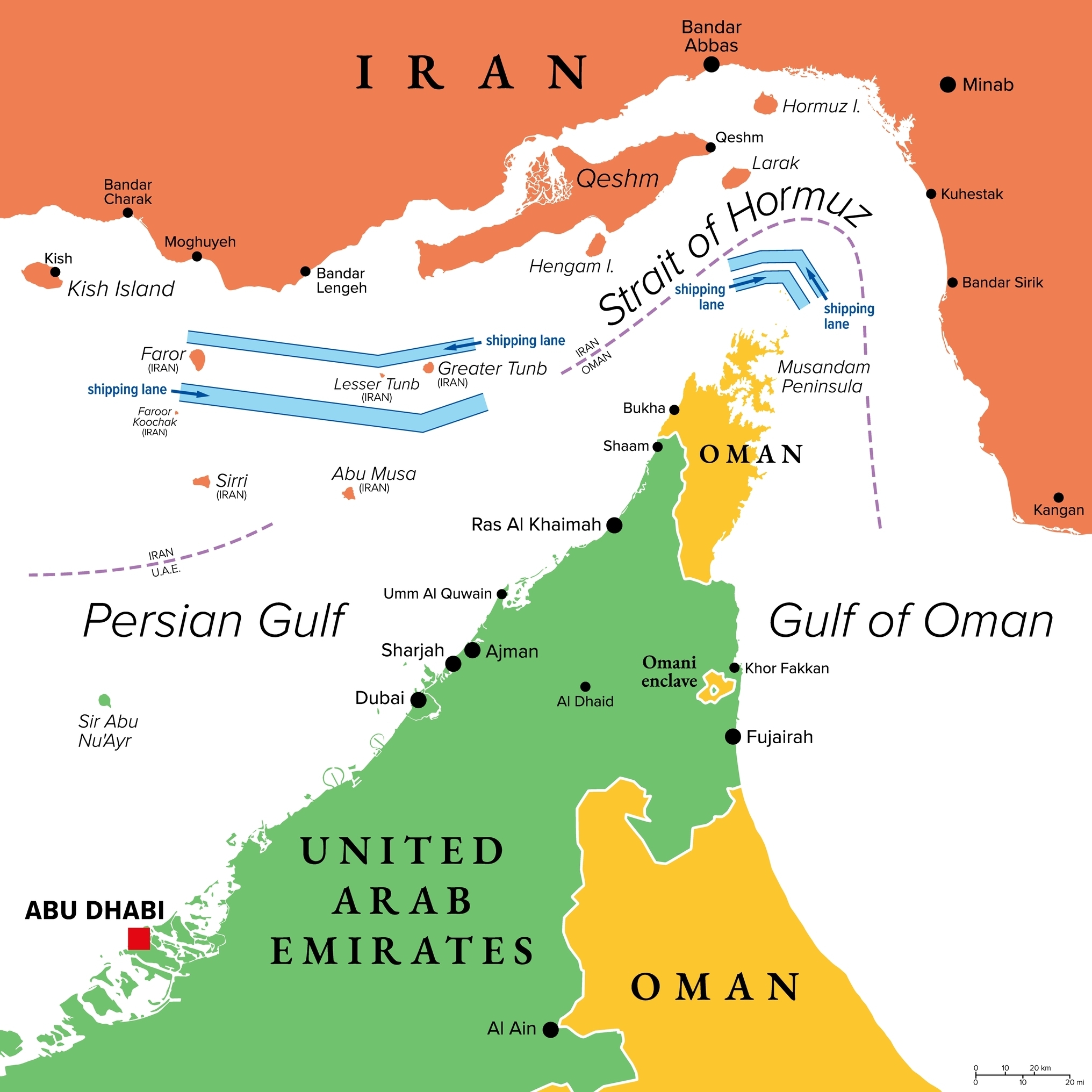
Markets hate uncertainty, and right now there’s plenty to go around. The outbreak of the U.S.-Iran conflict, following by Iranian retaliation against oil infrastructure across the Persian Gulf, has sent crude prices surging and shipping rates soaring to record levels.
Energy markets drove this week’s market volatility, with the conflict in Iran triggering a sharp rise in oil and natural gas prices. Through Thursday’s close, West Texas Intermediate crude oil was up roughly 17% from last Friday, pushing prices close to $80 per barrel.
About a month ago the financial markets were surprised by a January jobs report that was stronger than expected. The consensus was for a gain of 68,000 private-sector jobs, but the actual came in at a much higher 172,000.
Markets face a complicated mix of signals. The payroll report came in dramatically weaker than expected, several standard deviations below forecasts, and prior months were revised downward. Taken together, the last two months essentially show zero payroll growth.
Doug Drabik discusses fixed income market conditions and offers insight for bond investors.
With its airspace closed and many flights grounded, gold stuck in Dubai is being sold at a discount.
The opening months of 2026 have been hectic. A partial inventory of major developments during the year to date would include the removal of Venezuela’s leader; a government investigation into the Chairman of the Federal Reserve; tension with Europe over Greenland; and a broad swath of U.S. tariffs stricken down by the Supreme Court. It’s been a lot to digest.
In this article, we explore how this speculative environment and the aggressive trading in passive ETFs are playing out. We also examine how to identify and capitalize on sector and factor rotations, turning passive investors' aggressive behavior into an opportunity.
The global economy is now moving through what Absolute Strategy Research (ASR), an award-winning macro-strategy firm, has described as a rupture, meaning a break from the assumptions that governed the post–Cold War era. Governments are intervening more directly in markets and supply chains are being reshaped with geopolitical considerations at the forefront. Nowhere is this shift more visible than in industrial metals.
While we don’t find much reason to underweight our allocation to U.S. stocks based on the current high degree of concentration, we do believe that the valuation of the overall U.S. stock market today is consistent with low expected returns relative to safer fixed income investments.
Today’s letter will look at something even more important: recent developments in artificial intelligence. The models are advancing at an accelerating pace, with major new capabilities revealed just in the last 2-3 months.
The S&P 500 closed at 6,740 on Friday, its lowest level since mid-December, as technical deterioration, collapsing payrolls, and $100 oil converged on the charts. Every major moving average has broken. Here’s what comes next.
One of the most common questions investors ask is simple: “How’s the market?” After more than 50 years in the investment industry, this is a question that comes up constantly. But the truth is, the question itself is somewhat misleading.
Concerns about private credit have intensified in recent months. Investors are grappling with questions about weakening credit quality, stale valuations, looser underwriting, redemption risk in certain types of funds, and the impact of AI‑driven disruption.
In this week's episode, Todd Rosenbluth (Head of Research at VettaFi) joins Chuck Jaffe to break down the SPDR SSGA US Large Cap Low Volatility Index ETF (LGLV).With geopolitical turmoil in the Middle East causing market jitters, many investors are looking for a way to maintain equity exposure without the "stomach-churning" swings of the broader market.
Stocks and currencies have seen steep losses, with the MSCI equity index posting its biggest weekly drop in six years, and bond yields have jumped.
Gold fell, pressured by a stronger US dollar and concern about the prospect of higher interest rates, as the war in the Middle East extended into a second week and oil rallied.
US stocks dropped on Monday, continuing on from the biggest weekly drop since October, as the prospect of a prolonged war in Iran sent energy prices soaring and stoked fears over inflation.
Netflix Inc.’s stock price is staging a dramatic reversal triggered by management’s decision to walk away from its proposed acquisition of Warner Bros. Discovery Inc. late last month.
Iran’s strategy in its war with the US and Israel is by now clear: Impose an intolerable economic cost on President Donald Trump, forcing him to abandon his “war of choice” as American gasoline prices surge. Is there any way the Islamic Republic’s blueprint for survival can fail?
The Debt Black Hole keeps getting bigger. Household debt grew modestly in the fourth quarter of 2025, ending the year at another record high.
While senior military officials on both sides have signaled that the campaign may intensify in the near term, keeping headline risks elevated, we outline below why we believe the conflict is likely to be short-lived, and what that could mean for the economy, the Federal Reserve and financial markets in the weeks ahead.
Software stocks have suffered a rude awakening amid fears that artificial intelligence (AI) will upend the industry. While the outlook is highly uncertain, the indiscriminate market response may be conflating structurally exposed software businesses with more durable companies.
February ended with a sharp escalation in conflict involving Iran, putting geopolitical risk back on investors’ radar and unsettling energy and emerging markets. But for most of the month, performance was driven largely by continued rotation tied to AI disruption and shifting earnings expectations.
Thematic exchange traded fund assets in the U.S. have surged from $22 billion in 2015 to over $193 billion today, but not all thematic funds deliver on their promises, according to a new FactSet analysis.
As investors navigate an increasingly complex market, the demand for sophisticated, outcome-oriented ETF strategies has reached a significant inflection point. Goldman Sachs Asset Management is seeing strong success in this space, evolving its suite of derivative-based ETFs to meet the diverse needs of modern portfolios.
Improving after tax returns is rarely as simple as boosting pretax returns or reducing tax expenses. It’s actually quite a bit more involved than that. As we see it, maximizing after-tax performance requires an “all of the above” approach, applying a range of techniques in a holistic way.
This week I sat down with Eric Fine, who manages emerging market bond portfolios at VanEck. I had a tidy interview all mapped out… and then escalating events in the Middle East reshuffled the deck. That’s okay because it ultimately led us somewhere more interesting than where I’d intended to go.
Managed futures strategies, also known as Commodity Trading Advisors (CTAs) or trend-followers, are designed for environments where macro shifts drive persistent price trends across equity, bond, commodity, and currency markets. As geopolitical risk has spiked due to the conflict with Iran, the current backdrop will present a unique test for investment strategies.
Traditional safe havens — Treasuries, the yen, the Swiss franc, and gold — have offered investors no refuge as the Middle East conflict roiled markets this week.
With “energy dominance” comes great turbulence. President Donald Trump’s open-ended war against Iran reflects a US seemingly unconstrained by energy needs and ready to wield its own fossil fuels as instruments of power.
With one month left in the quarter, M&A is running a little light compared to the record-breaking close of 2025. According to Wall Street Horizon’s coverage universe of 11,000 global equities, there have been 59 M&A announcements and 78 closes as of March 2.
As the market continues to move deeper into the first quarter of 2026, the fixed income landscape calls for more stability.
In a recent episode of the Money Metals Midweek Memo, host Mike Maharrey discussed volatility in the gold and silver markets amid escalating geopolitical tensions and broader financial market turmoil. Maharrey opened by criticizing mainstream financial media coverage of a recent selloff that occurred as markets reacted to a conflict involving Iran.
Amid perceived artificial intelligence (AI) threats, cybersecurity stocks are enduring quite a rough patch. However, there are alternative viewpoints.
Nearly 50 million Americans go to court each year without a lawyer. Low-income Americans are especially vulnerable, with most saying they “do not get any or enough legal help” for their major civil legal problems.
Bond investors, who have been focused on inflation since the Iran war began, say a surprise in the monthly US jobs report has the potential to upend their expectations for Federal Reserve interest-rate cuts.