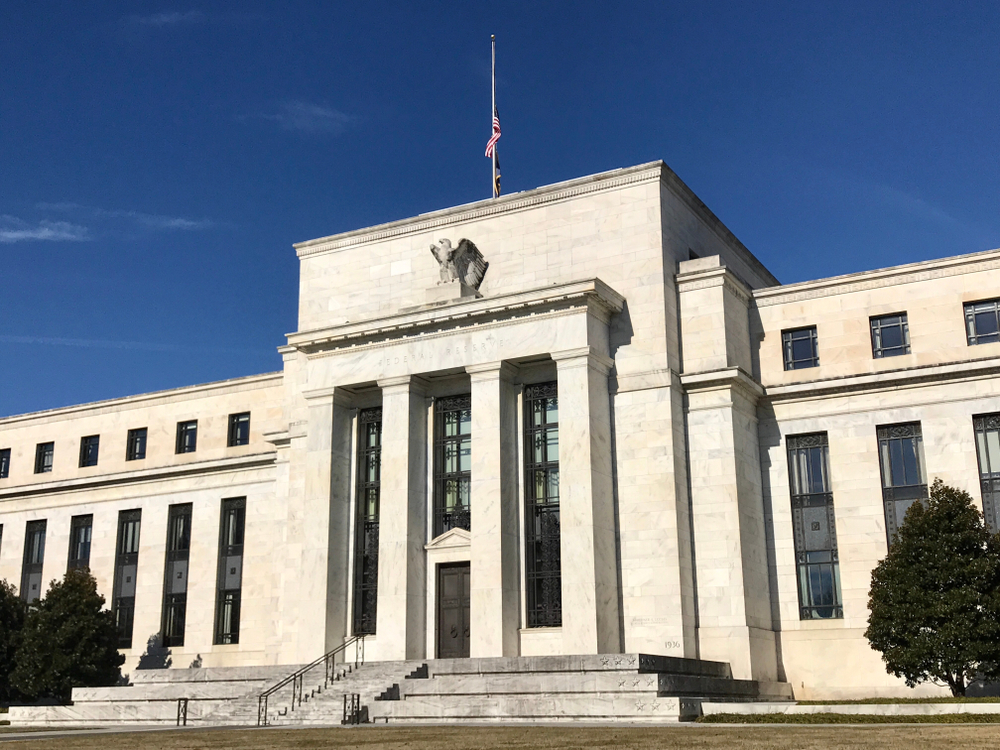
In another sign that we are entering an era of even looser monetary policy, Federal Reserve Chairman Jerome Powell hinted that balance sheet reduction is about to come to an end.
There is little question that the key economic storyline of Q3 was the fact that new job creation was not anywhere near as solid as the markets and, perhaps more importantly, the Fed believed.
The third quarter demonstrated the market’s ability to focus on powerful, long-term themes like technological productivity and monetary policy, even amidst significant short-term political noise. While large technology companies were once again a driver of headline returns, the positive performance across nearly all global asset classes rewarded a diversified approach.
The stock and bond markets are taking the government shutdown—and lack of data releases—in stride, but how long the calm might last is an open question.
Wall Street has finally capitulated to gold’s record-breaking run.
In Game 1 of the 2025 National League Championship Series, the Dodgers looked ready to break the game open. Bases loaded, one out, Max Muncy at the plate.
Being a millionaire isn’t what it used to be. This isn’t a lament, it’s a fact: As Bloomberg News reported last week, almost one-fifth of US households have a net worth of more than $1 million. Fully one-third of them have gained that status since 2017.
As the bond market expects more rate cuts to come after September’s drop of 25 basis points, investors may want to consider intermediate bonds as a way to maximize income.
Rare earth elements have become the latest flashpoint in the collision between geopolitics and markets.
As the calendar has now turned squarely into Q4, the sweepstakes for who will be nominated as next Chair of the Federal Reserve will no doubt increase.
According to Wall Street Horizon’s proprietary data, Q3 2025 marked a record in the number of new U.S. ETF launches. The tally (above 200) brought the trailing four-quarter sum to more than 800. Investors have never had more choice to tweak their strategies, aim for higher income yields, or even bet on single stocks in new, creative ways.
In 1967, a helicopter from United States Steel Corp. carrying a team of geologists made an accidental discovery after landing in a remote corner of the Amazon rainforest: a giant iron-ore deposit that would become Carajás, one of the world’s richest mineral regions.
To start from the top, the dollar’s doing fine. Having appreciated 3% in the past month, it remains above its 40-year average. It still commands the lion’s share of currency trading and global central bank reserves, even if international investors are hedging more exposure.
We examine the broader implications of China’s threat to expand restrictions on rare-earth exports.
Recent data shows that even after strong international stock performance year-to-date U.S. stock markets continue to dominate global equity indexes, representing around two-thirds of the market capitalization of all global stocks, as represented by the MSCI All Country World Index (ACWI).
Big banks begin reporting Tuesday and are expected to benefit from a steeper yield curve, strong trading, and investment banking demand. The profit path ahead is less certain.
Medicare open enrollment, which is underway and runs until December 7, allows individuals to change or sign up for plans, potentially saving money and/or improving their coverage. Our Bill Cass shares the key things you need to know.
During the third quarter of 2025, the U.S. markets demonstrated notable resilience despite facing a complex mix of trade tensions, policy shifts, and economic sector-specific developments.
Issuing new shares is usually considered a recipe for souring sentiment as stockholders get diluted. But in this go-go artificial intelligence-crazed market, that logic has been turned upside down.
In just two years, India has gone from being the best-loved emerging market to the most sold, and now investors are bracing themselves for yet another quarter of disappointing corporate earnings.
With gold scaling record highs on what feels like a daily basis, mainstream financial analysts are scrambling to raise their price forecasts.
Big banks are flying. Traders and dealmakers at Citigroup Inc., Goldman Sachs Group Inc., JPMorgan Chase & Co. and Wells Fargo & Co. enjoyed a roaring third quarter while lending grew, too.
The financial markets have been laser-focused on upcoming policy decisions from the Fed, and rightfully so. Following the resumption of the current rate cut cycle, investors have been wondering what exactly this second phase will ultimately look like.
Argentina's latest lifeline does not address the nation's structural issues.
As our title suggests, September saw positive performance in fixed income markets but a great and overdue catch-up for municipal bonds.
This Packers season has parallels to today’s financial markets. The Artificial Intelligence (AI) boom has propelled markets higher for the past 3 years. The S&P 500 is up just shy of 15% through 9/30/25, following 20%+ years in 2023 and 2024.
Join the experts at WisdomTree for a product due diligence session focused on their active-passive barbell approach to income.
In the current economic climate, many high earners are living paycheck to paycheck and generally wrestling with anxieties about their financial security. However, there are ways financial planners can help calm clients’ fears and create a “cushion” in times of uncertainty.
The sector is also emerging as the most in-demand S&P 500 sector this quarter. XLV has attracted some $872 million in net new money by Oct. 13, according to our data. That places XLV among top 10 equity ETF asset gatherers this quarter.
Last week’s headlines around China tariffs and corresponding weakness in oil prices brought back memories of April and May when oil and energy stocks sold off sharply on the heels of tariff news. The weakness in energy infrastructure has been particularly acute.
Every market jolt this year — from April’s tariff scare to September’s tech pullback — has met the same reflex on Wall Street: more ETF buying. That collective impulse has now pushed US exchange-traded fund inflows past $1 trillion, the fastest asset haul the industry has ever seen.
Sometimes there are economic narratives that don’t quite deserve a debunking — they have more than a kernel of truth to them — but rather demand an appropriate level of skepticism. Three such stories are widespread today.
Sentiment in the fixed income markets remains bullish and issuance is robust, but spreads are tight so we are staying defensive and investing opportunistically.
If you want to understand where we are in the cycle, skip the noise and follow profits. Corporate profits are the lifeblood of investment, hiring, and market returns.
Sunday, October 12 marked the third anniversary of this bull market. Fast forward three years, and this bull market is still going strong. But will it continue? You may be surprised to know that bull markets lasting three years tend to keep going for a while.
Finance ministers and central bankers, gathering in Washington for the annual meetings of the International Monetary Fund, face a global trading system in disarray, uncertainty over the dollar’s standing and the likely course of interest rates, and financial markets that are (for now) unnervingly complacent.
With official data halted by the U.S. government shutdown, investors turn to private and high-frequency indicators to track jobs, spending, and growth in real time.
Doug Drabik discusses fixed income market conditions and offers insight for bond investors.
CIO Sean Taylor assesses a strong quarter for emerging markets which was driven by returns in North Asia and Latin America, and AI-related themes.
VettaFi’s Head of Research Todd Rosenbluth discussed the Vanguard Emerging Markets Ex China ETF (VEXC) on this week’s “ETF of the Week” podcast with Chuck Jaffe of “Money Life.”
The Vanguard Retirement Outlook broke down exactly how retirement-ready the American workforce is, on a generational basis.
China’s sweeping new restrictions on rare earth exports mark its first major effort to police the global flow of critical minerals it dominates, using the same playbook that allows the US to wield power far beyond its shores.
Join the experts at T. Rowe Price for a product due diligence session covering their suite of fixed income ETFs.
September proved to be a powerful month for ETF flows, even as investors faced elevated long-end volatility, concerns about fiscal deficits, and a shifting macroeconomic backdrop. Rather than retreat from markets, investors leaned into opportunity, particularly in fixed income.
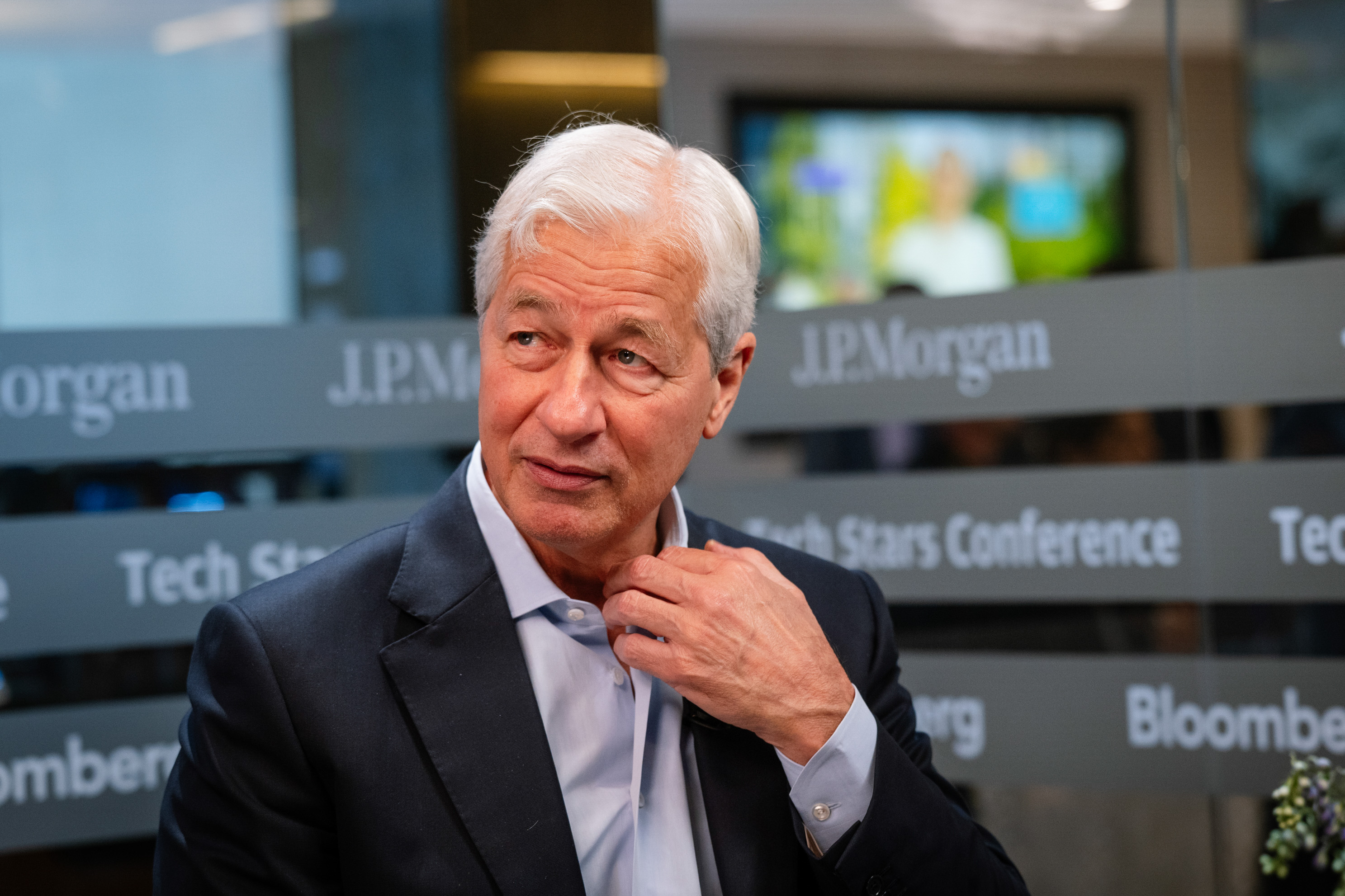
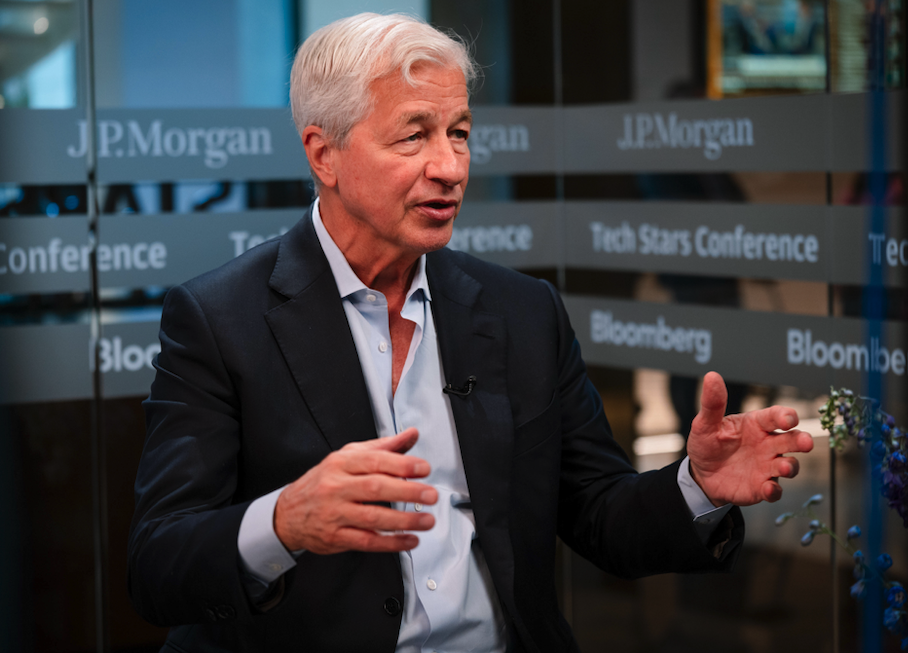
JPMorgan Chase & Co. vowed to funnel $1.5 trillion into industries that bolster US economic security and resiliency over the next 10 years — an initiative that will invest billions of dollars in companies and hire bankers and other professionals
If you do not communicate with your prospect in their unique thinking mode, they will not become your client. If you can keep rapport high by matching their buying mode, you will double your business.
Wall Street strategists have a warning for dip buyers tempted by Friday’s rout in US stocks: There could be more pain ahead, even as China and the United States are signaling openness to trade talks.
Over the next decade, the US economy will face two big challenges: higher interest rates and AI-generated disruption. Each invites the same solution: policies to keep rates below their market level.
On a recent episode of the Money Metals podcast, host Mike Maharrey interviewed Brien Lundin. Brien Lundin is the CEO of Jefferson Financial, publisher of Gold Newsletter, and organizer of the New Orleans Investment Conference.
Trump’s threat to impose 100% tariffs roiled markets Friday, and clearly, if implemented, would send stocks much lower. But this may also be the last salvo before a final deal is worked out.