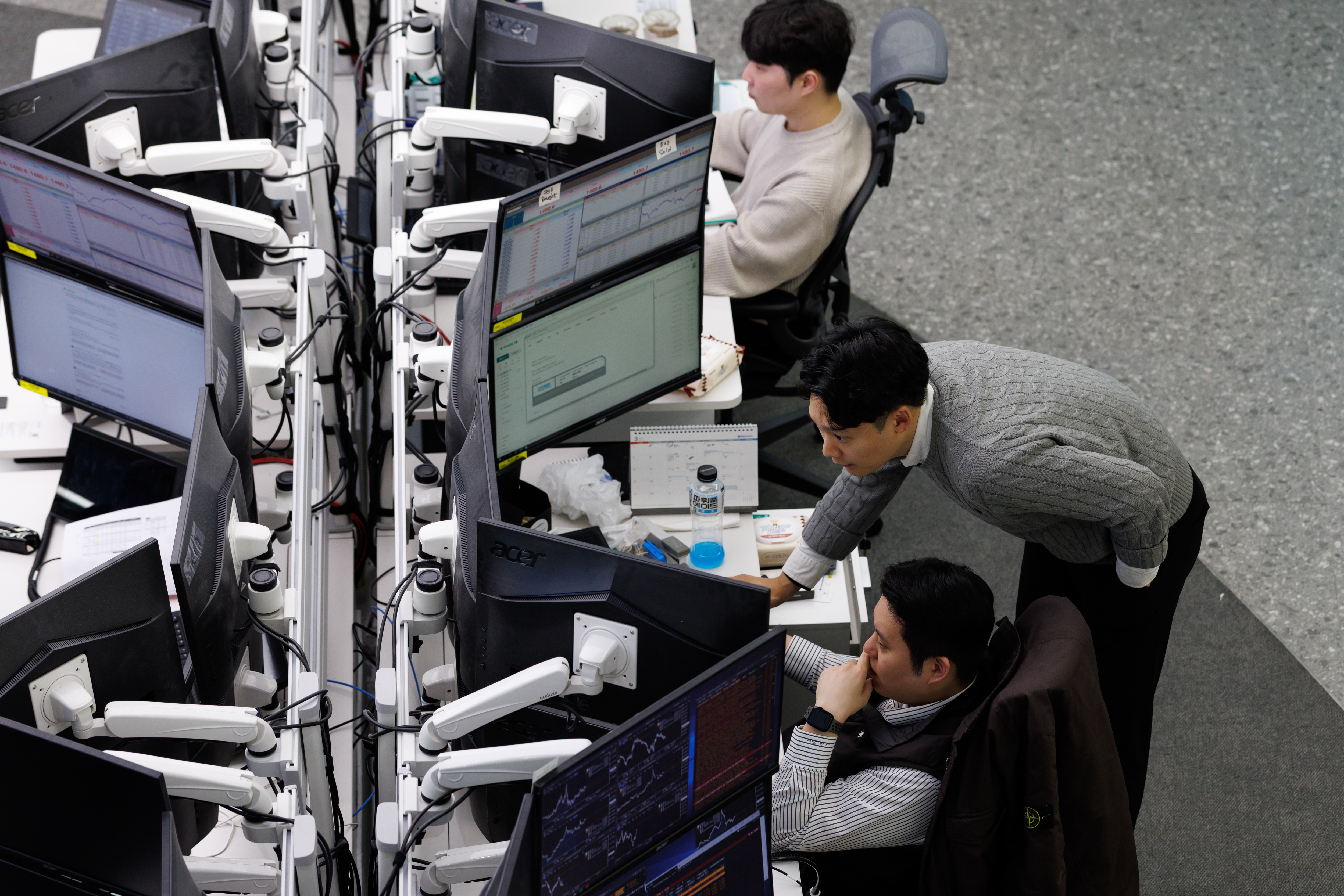
JPMorgan Asset Management is issuing its first Taiwan-focused wealth management product in more than a decade, joining global rivals rushing into one of Asia’s hottest exchange-traded funds markets.
China’s underappreciated equity market and energy resilience amid current geopolitical tensions warrants consideration, according to Franklin Templeton ETFs’ Dina Ting. In this article, she discusses the different factors that underpin her views.
Iran-related geopolitical risk has boosted stock volatility, especially in sectors like Energy. Uncertainty remains high and there are a range of scenarios for how this conflict could be resolved and how it might affect economic conditions and markets.
When geopolitical tensions flare up, the natural assumption is that gold should immediately surge. War breaks out, markets panic… and the metal rallies as investors rush to safety.
The whole world will feel the consequences of this conflict.
The mood in the stock market by the end of last week was the type of stuff that contrarian investors dream about.
The worsening energy shock from the Iran War has raised risks of a more severe crisis. It may resolve quickly, but the longer it persists, the larger the possible economic damage. Asia and Europe are most vulnerable.
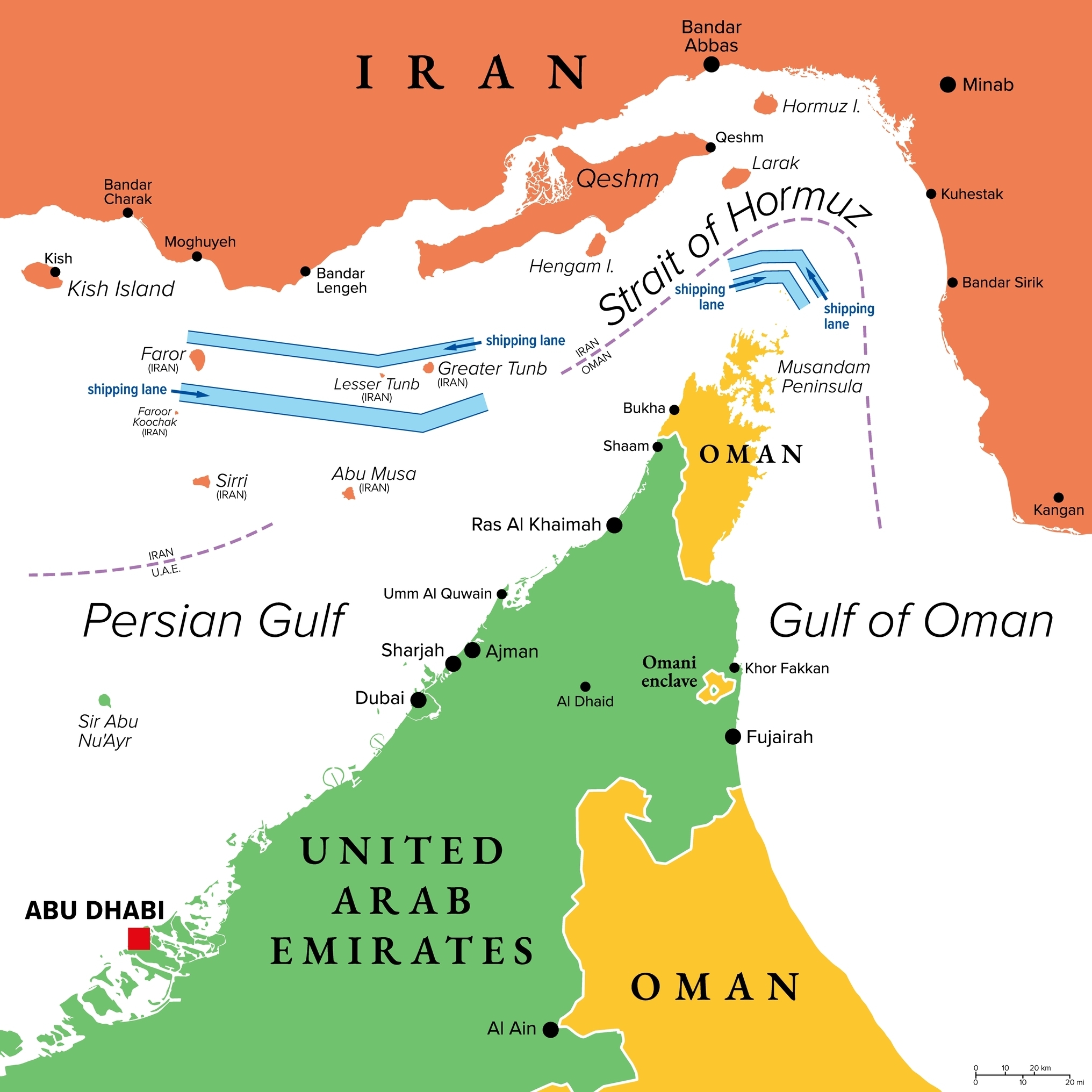
European stocks rose Friday as oil prices slipped below $100 a barrel, following news reports of an Indian tanker’s passage from the Strait of Hormuz, a key shipping artery that’s been effectively shut amid the Iran war.
Supported in part by a growing U.S. defense budget, legacy aerospace and defense ETFs are performing admirably. A trio of those funds each have more than doubled over the past three years.
The military conflict in Iran and the Middle East is curtailing the global flow of oil and natural gas. This adds notable pressure to energy prices and the near-term inflation outlook, while also raising questions about countries’ reliance on energy imports and their economic resilience.
If tensions de-escalate soon, there could be relatively little impact on international markets. However, risks will rise if global energy supplies face a prolonged disruption.
The ongoing conflict involving Iran and the disruption to energy markets has moved beyond headline risk and is now influencing expectations for growth, inflation and policy. As of March 9, oil prices briefly breached the $100 per barrel threshold — a development that shifts the macro conversation compared to last week.
We have repeatedly highlighted the delicate balance that the U.S. economy and markets remain suspended in as the Federal Reserve treads a thin line between a softening labor market and stubborn inflation that continues to hover above its 2 percent target.
Markets hate uncertainty, and right now there’s plenty to go around. The outbreak of the U.S.-Iran conflict, following by Iranian retaliation against oil infrastructure across the Persian Gulf, has sent crude prices surging and shipping rates soaring to record levels.
With its airspace closed and many flights grounded, gold stuck in Dubai is being sold at a discount.
The opening months of 2026 have been hectic. A partial inventory of major developments during the year to date would include the removal of Venezuela’s leader; a government investigation into the Chairman of the Federal Reserve; tension with Europe over Greenland; and a broad swath of U.S. tariffs stricken down by the Supreme Court. It’s been a lot to digest.
Stocks and currencies have seen steep losses, with the MSCI equity index posting its biggest weekly drop in six years, and bond yields have jumped.
February ended with a sharp escalation in conflict involving Iran, putting geopolitical risk back on investors’ radar and unsettling energy and emerging markets. But for most of the month, performance was driven largely by continued rotation tied to AI disruption and shifting earnings expectations.
Looking at the energy market with a wide-angle lens, I don’t see anything remotely approaching the pain of 2021-22, when the energy crisis label was appropriate for Europe. There’s nothing matching the contours of the 1990-91 shock, let alone the 1973-74 and 1979 crises.
A world where we can cook up AI videos in seconds from the apps on our phones might seem remote from the physical realities of warfare in the seaways of the Persian Gulf. In fact, they’re closely intertwined.
The war in Iran and the risk that it could lead to a wider regional conflict have roiled global financial markets. Oil and European gas prices have spiked while equity markets have seen sharp declines.
For over a decade, the narrative surrounding emerging market (EM) debt has been dominated by a single, overpowering force: the United States Dollar. As the greenback surged from the mid-2010s through the early 2020s, investors seeking yield in emerging markets largely sought shelter in "hard currency" debt—bonds issued by emerging nations but denominated in U.S. dollars.
The war in Iran is forcing investors to reevaluate one of their most profitable stock strategies, leading some to conclude that the “Sell America, Buy Asia” trade has reached an inflection point.
It turns out, the biggest financial victim of President Donald Trump’s decision to strike Iran is not the S&P 500, but equity markets across North Asia.
By now you’ve likely seen the news that the Department of War (DOW) issued a Friday-evening ultimatum to Anthropic, maker of the Claude AI chatbot, demanding unrestricted military access to its technology.
Managers are strategically maintaining AI exposure toward memory and semiconductor supply chains, and rotating toward enterprise adopters while trimming crowded hyperscalers.
Global asset managers who collectively oversee more than $20 trillion of assets have grown more bullish across emerging-market equities, currencies, domestic bonds and credit, potentially offering fresh momentum to the sector’s record-busting rally.
As investors digest the potential impact of artificial intelligence and debate whether this new technology will help or destroy existing businesses, a sharp divergence is occurring in global equities.
According to the UN World Tourism Organization, an estimated 1.52 billion international tourists traveled the world in 2025. That’s nearly 60 million more than the year before, representing 4% growth, and it marks a return to the steady, pre-pandemic growth trend of 5% annually that the industry enjoyed between 2009 and 2019.
An unintended consequence of the brutal bear market in Bitcoin has been to focus the blockchain industry’s attention where it is most needed: real-world assets.
In a 6-3 decision, the highest court in the U.S. ruled that President Trump lacks the legal authority to impose sweeping tariffs. But the administration has a Plan B in place.
There are two sides to the current stock market. One side, ignorance avoidance, requires us to know where the money is. The other side, stock selection, is to know where the money is going.
Four months ago, digital assets underwent what I believe was the most consequential liquidation event in their history. On October 10, 2025, over $19 billion in leveraged positions were wiped out within hours. Bitcoin plummeted from roughly $122,000 to $105,000. More than 1.6 million trader accounts were liquidated.
Adani Group plans to invest $100 billion by 2035 to develop green-powered, AI-ready data centers as billionaire Gautam Adani seeks to capitalize on India’s bid to emerge as a hub for artificial intelligence and cloud computing.
Gold demand in the tech and industrial sectors was generally flat at 222.8 tonnes in 2025. This was down about 1.5 percent from 226.2 tonnes the previous year.
Gavekal CEO Louis Gave is one of my favorite people to speak with on anything related to portfolio construction and the non-US perspective, and I knew our latest conversation about emerging markets (EM) would be anything but conventional.
Push will come to shove in the weeks ahead as tech executives take questions at key investor conferences over the back half of the first quarter.
There’s no stopping the momentum in the ETF market. January 2026 brought a record $166 billion in net inflows, surpassing the last three Januarys combined.
In what is shaping up to be another blockbuster year, Asia’s markets are outpacing peers in the US and Europe, drawing global investors as extreme swings rattle assets from tech stocks to metals.
LPL Research highlights five reasons emerging markets look attractive in 2026, from dollar weakness to accelerating earnings, and AI-driven growth.
This past week, I had the privilege of attending the 2026 Harvard Presidents’ Seminar alongside some of the nation’s top executives and thought leaders. One of the most compelling speakers was Ambassador Kevin Rudd, former prime minister of Australia.
After several years dominated by macro shocks, markets are transitioning into a phase where dispersion, selectivity, and disciplined portfolio construction matter more than broad directional bets.
After more than a decade of U.S. dominance, the tone has shifted, and investors understandably want to know whether this is a brief rebound—or the start of a new leadership cycle. While we do not time markets or make predictions, we believe long-term investors can benefit from maintaining international exposure by understanding the broader structural forces that have historically shaped these cycles.
The semiconductor industry will reach $1 trillion in revenue this year for the first time ever, fueled by artificial intelligence and the spread of computer chips to virtually every part of the economy.
Investors seeking protection from geopolitical volatility and stubborn inflation in 2026 may find opportunity in short-term bonds, where active management has historically delivered returns 25% higher than passive strategies, according to Vontobel Asset Management.
Natural gas prices surged to multi-year highs in January on the back of sharply increased demand resulting from a major late-month storm and persistent cold snap that left much of the United States blanketed in ice and snow.
Morgan agreed that the move looks parabolic on a chart. He also cautioned against assuming the rally is just retail euphoria. He pointed out that many physical silver holders have been net sellers even as prices rise, which implies the strongest buying pressure may be coming from larger, more strategic sources.
Precious metals, cryptocurrency, and currency speculation appeal to fear-driven parts of us that want certainty, protection, or a shortcut to wealth. Unfortunately, for most investors, that promise is never fulfilled.
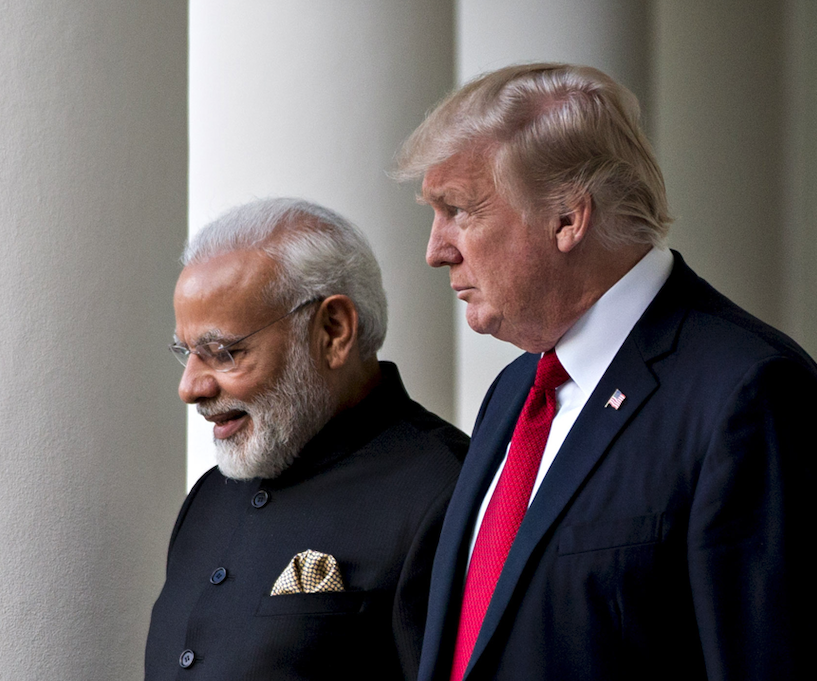
President Donald Trump and Prime Minister Narendra Modi took a major step to reset fractured ties with a surprise deal on Monday to slash tariffs, bringing much-needed relief to India’s economy.
VettaFi recently sat down with Morten Paulsen, head of research for robotics & machinery at CLSA, to discuss the transition of physical AI into a tech-driven industrial up-cycle. Paulsen projects that persistent U.S. labor shortages will drive domestic robot shipments toward a historical high of 40,000 units in 2026.