Some clients don’t want to expose everything and may find it annoying to be asked deeply personal questions. I do think, with some work, everyone can come around to share more about themselves if they are approached correctly. Here are some suggestions.
You don’t need a massive budget or an in-house team to market effectively. You need a focused, sustainable approach designed for small firms like yours. Here’s what that looks like in action — and how to start seeing results without burning out.
Jeff Schulze, Head of Economic and Market Strategy at ClearBridge Investments, discusses key spending, employment and other policy factors he is following as we look forward to 2026.
Like ducks on a pond, markets often appear calm on the surface while churning furiously underneath. For financial markets, above the surface, attention has focused on equity market valuations and record-tight levels of credit spreads, but a deeper look reveals even more extreme dynamics below.
In a recent episode of the Money Metals podcast, host Mike Maharrey sits down with Jordan Roy-Byrne, CMT, MFTA, editor and publisher of The Daily Gold, to unpack where gold and silver are in the current cycle.
Yes, we may be in the second market bubble of this century. Alternatively, the market may be pricing in a shift as fundamental as the transition to either electricity or the internet. Either way, investors must think clearly, act deliberately, and avoid the kind of blind speculation that turned past booms into bloodbaths.
Investors are needy. Insatiable, really. But it makes sense: If an investor buys a share of a company, they’re going to want some benefit from it.
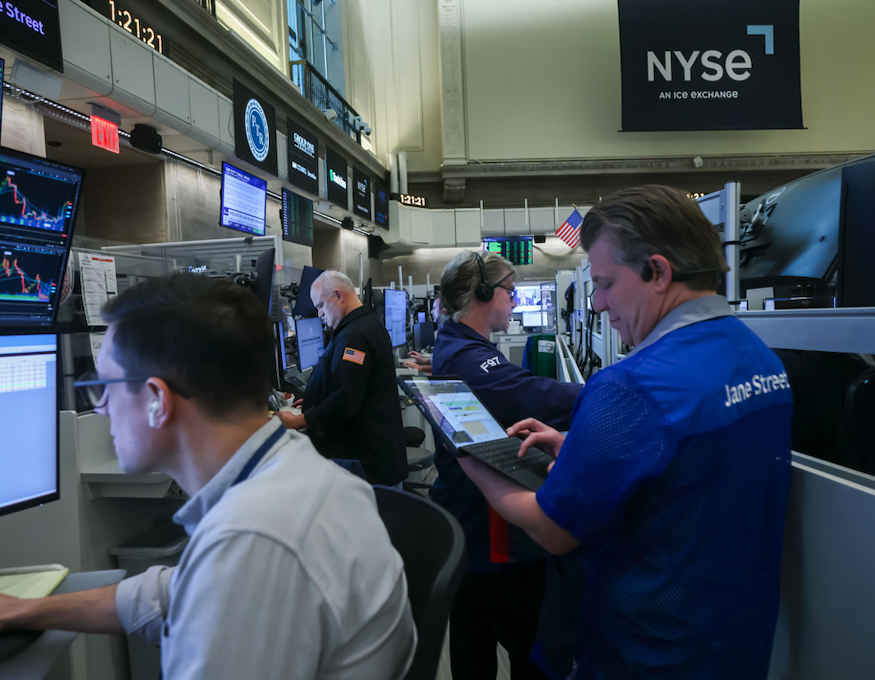
Kalshi Inc.’s Chief Executive Officer Tarek Mansour got my attention when he claimed last week that prediction markets could rival stock exchanges in a few years. Of course, this does not mean that people will buy and sell stocks on Kalshi, but that prediction markets will be where information is aggregated and prices set, with the New York Stock Exchange and its ilk relegated to processing orders.
The release of OpenAI's ChatGPT three years ago sparked an artificial intelligence mania on Wall Street, fundamentally reshaping the stock market landscape. This AI-driven frenzy has minted new market leaders, made the S&P 500 significantly more concentrated, and served as the dominant driving force behind the current bull market in US stocks.
Emerging market (EM) equities have seen exceptional outperformance in 2025, with major countries like South Korea and Brazil posting massive gains. The primary driver of this trend has been a weakening U.S. dollar, which historically encourages capital flow outside the United States. The critical question now for investors is whether this dollar weakness marks the start of a multi-year downtrend or is simply a temporary correction.
On this episode of the “ETF of the Week” podcast, VettaFi’s Head of Research, Todd Rosenbluth, discussed the Utilities Select Sector SPDR Fund (XLU) with Chuck Jaffe of Money Life. The pair discussed several topics related to the fund to give investors a deeper understanding of the ETF.
JD Gardner, Founder of Aptus Capital Advisors, goes inside the decision to launch the lowest-cost buffer ETFs and the outsized role investor behavior plays in long-term returns. Stacey Morris, Head of Energy Research at VettaFi, spotlights the latest leaders and laggards in energy ETFs and what could drive the sector in the months ahead.
Despite facing rising tariffs and trade barriers globally since the U.S.-China trade war began in 2017, Chinese exports have surprisingly continued to grow. Total annual exports have expanded by 58% since 2017, reaching a staggering $3.58 trillion, which is a performance far better than many analysts predicted given the severity of the trade conflict.
This article explores gold's role as a distinct, independent alternative asset class, discussing its diversification benefits, and practical ways for investors to gain exposure.
Retail earnings ahead of Black Friday show a clear split: value-focused discounters like TJX and Walmart are thriving, while Target and home improvement stores struggle with consumer pullback on discretionary items. This shift reflects broader economic pressure, as consumers trade down due to high prices, weakening income sentiment, and increased reliance on credit.
Advisors spend hours gathering information via different systems that should already be talking to each other. But by the time they make sense of it, the market has moved on. I’ve seen even well-established firms face this problem because their systems rarely communicate smoothly.
Wall Street’s macro traders are headed for their best year since 2009 as clients rushed to place bets on changing interest rate policies by central banks around the world.
Amid concerns that the traditional 60/40 investment mix no longer works, financial experts are recommending a 20 percent allocation to gold as a necessary portfolio adjustment. This shift is driven by the fact that gold is increasingly viewed as the most reliable hedge against inflation and government spending, unlike bonds which have lost their safe-haven status. Consequently, investors are initiating a "quiet revolution" by moving billions into gold ETFs.
The article argues that making productive use of AI requires strong critical thinking, statistical, and analytical abilities, a necessity challenged by weakening standards in math and reading in educational institutions.
From a purely economic standpoint, imposing taxes on credit unions or ending taxes on banks would have the same outcome. If Congress were serious about fairness, either option would be a logical choice.
In this new series, Chuck Carnevale, co-founder of FAST Graphs and widely known as “Mr. Valuation”, begins the process of constructing a F.I.R.E. Dividend Growth Portfolio from the ground up. F.I.R.E., which stands for Financial Independence, Retire Early, is built on the idea of creating enough growing income to eventually support early retirement.
Returns from emerging market bonds hinge on five factors, our economic research suggests. And for the first time in two decades, four of these are now favourable, heralding a new phase of outperformance for the asset class.
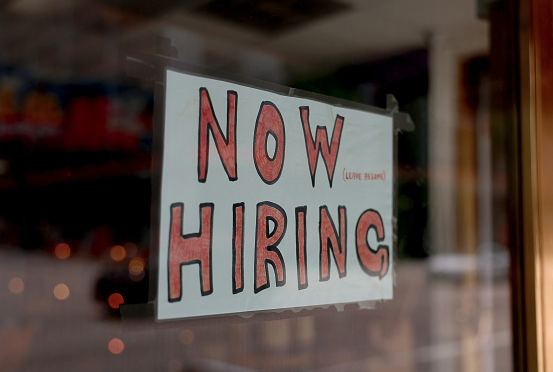
Although the September employment report surprised to the upside, the overall stance of the US labor market remains weak, something that was underscored by the third consecutive increase in the rate of unemployment, from 4.1% in June to 4.4% in September.
Transitioning to an independent RIA model involves complex challenges, from navigating compliance and non-solicitation agreements to setting up scalable technology. This article highlights how specialist partners, specifically Terrana Group’s Advisor Transition Consultants, provide the strategic guidance and hands-on support needed for a seamless and profitable move.
After a gangbuster stock market rally since the early-April lows, many of the prior highfliers have taken a breather amid AI bubble and valuation concerns.
Many of you may have recently seen a chart circulating on the internet suggesting a nationwide collapse in home prices is on the way, that we are in the “biggest bubble in history,” the collapse is “inevitable and nothing can stop it.”
Markets traded with an unusual mix of strong micro data and fragile macro sentiment last week and nowhere was that clearer than the reaction to Nvidia’s excellent earnings. The fundamentals showed strong demand, a robust product cycle, and clean forward guidance—yet the stock slumped after an early surge.
Those who have defaulted into TDFs need to un-default and take back risk control over their lifetime savings. Safe assets include Treasury bills and short-to-intermediate TIPS, even though their returns are low. The price of safety is low, but reliable, returns.
A flood of debt sales from Big Tech risks overwhelming buyers and could weaken the credit market on both sides of the Atlantic.
The U.S. economy’s recent growth has a distinctive engine: large‑scale capital expenditures (capex) tied to artificial intelligence (AI). Firms such as Microsoft, Alphabet (Google), Meta Platforms, and Amazon have announced massive investments in data centers, servers, networking equipment, and AI infrastructure.
AI looks like a classic investment bubble to us, with very high valuations and signs of rampant speculation. But we recognize that while many investors harbor fears that AI might be a bubble, they are far from sure of that fact and tend to assume the market is appropriately priced as a fairly strong prior.
Answers to questions investors are currently asking about Treasury bonds, tax policy, credit quality and other issues currently affecting fixed income investments.
Sun Life Financial Inc.’s newly unified asset-management division plans to hire about 20 senior executives as it looks to turn a collection of investment managers into a more coordinated global powerhouse.
We enter 2026 after a year of robust global stock gains on AI optimism, falling interest rates and a resilient world economy. Beneath this stability, however, lies a more fragile environment.
Looking at your portfolio and feeling a distinct lack of income? Now may be the time to get more income into portfolios, with this version of covered call ETFs offering a solid option.
Vanguard continues its push into the active ETF market with the introduction of three news funds focused on equities. These are the Vanguard Wellington U.S. Value Active ETF (VUSV), Vanguard Wellington U.S. Growth Active ETF (VUSG), and Vanguard Wellington Dividend Growth Active ETF (VDIG). This bolsters the current active equity roster to now eight funds for the issuer.
This month’s Muni Monthly covers performance, supply and demand technicals, fundamentals and valuations for the month ending October 2025.
As measured by the largest ETF dedicated to the sector, real estate stocks are offering middling performances this year. That is disappointing considering the Fed has pared interest rates two times. However, that tepid sentiment arguably belies opportunity with ETFs such as the ALPS Active REIT ETF (REIT).
In times of uncertainty — whether in sport or in markets — the ability to separate fact from feeling — or ideology — is critical. This principle applies across leadership, investing and even today’s AI-driven economy.
The interview features Cynthia Murphy and John Davi, Founder, CEO, and CIO of Astoria Portfolio Advisors, discussing their firm's investment philosophy and the current market environment. Davi explains Astoria's three verticals: managing risk-based ETF portfolios, running quantitative stock selection models, and offering their own equity, fixed income, and alternative/real asset ETFs. The conversation highlights key market concerns like high inflation and the dominance of the "Mag Seven" stocks, with Davi recommending diversification into international stocks, mid-cap stocks, financials, industrials, and inflation-fighting strategies like gold and Bitcoin, especially for traditional 60/40 portfolios.
Alternative investments have already gained plenty of traction in 2025, and things may very well be the same for 2026. However, it’s crucial to evaluate which kind of alternative investments could provide a more potent use case than others.
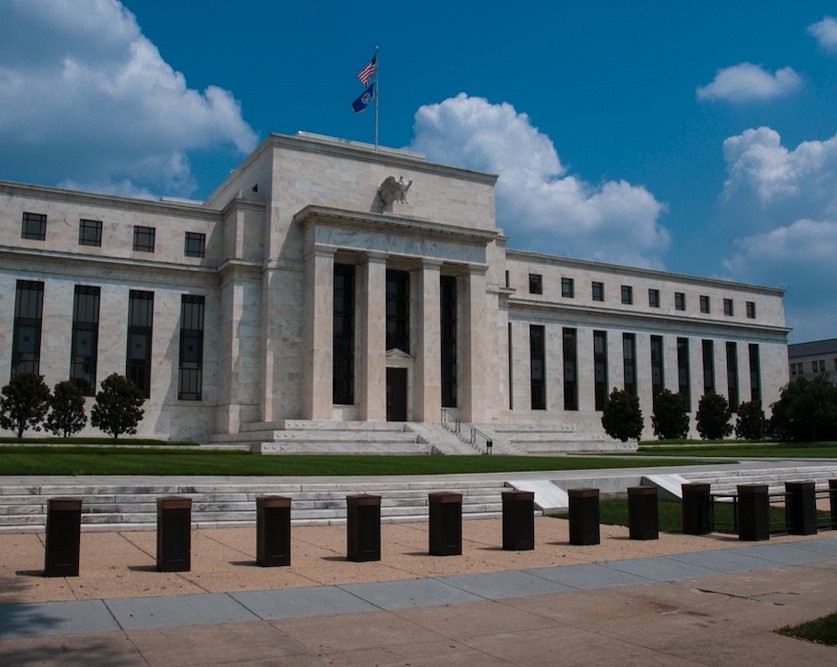
The S&P 500 Index edged higher to start Friday, recovering some of the losses caused by recent concerns over stretched valuations and a potential AI bubble. The recovery was supported by remarks from Federal Reserve Bank of New York President John Williams, who suggested there is room to lower interest rates soon. These comments immediately boosted market expectations for a December rate cut.
The article examines the high valuations of AI-focused tech giants like Alphabet and Nvidia, contrasting the risk of an "AI bubble" with their powerful profitability. While Berkshire Hathaway's new stake in Alphabet signals confidence, both companies require substantial future growth to justify their current multiples.
The article examines how tech giants like Meta are using massive, off-balance-sheet special-purpose vehicles to finance multi-billion dollar data centers. Despite these complex structures, large investors are treating the debt as a direct obligation of the tech company, leading to a subsequent sell-off of Meta’s publicly traded corporate bonds.
The end of the government shutdown left the SEC with an avalanche of paperwork, forcing staff to prioritize new company registration statements critical for initial public offerings (IPOs). More than a dozen companies had to revise their IPO timelines due to the delays, creating market uncertainty.
The continued slump in the housing market is now being compounded by a weakening U.S. labor market and a surge in mass layoffs. This labor uncertainty is making potential buyers reluctant to commit to purchases, even as affordability improves and mortgage rates stabilize. This dynamic is leading homebuilders to reduce construction and staffing, further worsening the job market.
The ETF industry continues to grow, with new funds arriving all the time. Each year, hundreds of ETFs arrive on the scene, from covered call ETFs to active bond ETFs and everything in between.
Macro Signposts highlights takeaways from the data analysis conducted by our team of economists and other experts.
Are you looking to combine small-cap upside with income? With markets seeing increased volatility and large-caps looking expensive, marrying the two could boost portfolios.
Okay, this is for more than just millennials. It’s for anyone who feels stuck and can’t get started with their investing strategy. If you poke around on the internet, it sounds like my generation might be in the most trouble.