The SEC has granted Dimensional exemptive relief to offer dual share class funds, a move that allows certain mutual funds to offer an ETF share class under the same structure. This monumental decision, following the expiration of Vanguard's patent, is expected to open the floodgates for other asset managers seeking to offer their existing mutual fund clients the tax efficiency and structural benefits of ETFs.
Last week's economic landscape was defined by conflicting signals from key indicators, suggesting a growing divergence between investor behavior and underlying consumer health.
Looking at your portfolio and feeling a distinct lack of income? Now may be the time to get more income into portfolios, with this version of covered call ETFs offering a solid option.
Vanguard continues its push into the active ETF market with the introduction of three news funds focused on equities. These are the Vanguard Wellington U.S. Value Active ETF (VUSV), Vanguard Wellington U.S. Growth Active ETF (VUSG), and Vanguard Wellington Dividend Growth Active ETF (VDIG). This bolsters the current active equity roster to now eight funds for the issuer.
As measured by the largest ETF dedicated to the sector, real estate stocks are offering middling performances this year. That is disappointing considering the Fed has pared interest rates two times. However, that tepid sentiment arguably belies opportunity with ETFs such as the ALPS Active REIT ETF (REIT).
In times of uncertainty — whether in sport or in markets — the ability to separate fact from feeling — or ideology — is critical. This principle applies across leadership, investing and even today’s AI-driven economy.
The interview features Cynthia Murphy and John Davi, Founder, CEO, and CIO of Astoria Portfolio Advisors, discussing their firm's investment philosophy and the current market environment. Davi explains Astoria's three verticals: managing risk-based ETF portfolios, running quantitative stock selection models, and offering their own equity, fixed income, and alternative/real asset ETFs. The conversation highlights key market concerns like high inflation and the dominance of the "Mag Seven" stocks, with Davi recommending diversification into international stocks, mid-cap stocks, financials, industrials, and inflation-fighting strategies like gold and Bitcoin, especially for traditional 60/40 portfolios.
The S&P 500 Index edged higher to start Friday, recovering some of the losses caused by recent concerns over stretched valuations and a potential AI bubble. The recovery was supported by remarks from Federal Reserve Bank of New York President John Williams, who suggested there is room to lower interest rates soon. These comments immediately boosted market expectations for a December rate cut.
The article examines the high valuations of AI-focused tech giants like Alphabet and Nvidia, contrasting the risk of an "AI bubble" with their powerful profitability. While Berkshire Hathaway's new stake in Alphabet signals confidence, both companies require substantial future growth to justify their current multiples.
The article examines how tech giants like Meta are using massive, off-balance-sheet special-purpose vehicles to finance multi-billion dollar data centers. Despite these complex structures, large investors are treating the debt as a direct obligation of the tech company, leading to a subsequent sell-off of Meta’s publicly traded corporate bonds.
The ETF industry continues to grow, with new funds arriving all the time. Each year, hundreds of ETFs arrive on the scene, from covered call ETFs to active bond ETFs and everything in between.
Are you looking to combine small-cap upside with income? With markets seeing increased volatility and large-caps looking expensive, marrying the two could boost portfolios.
Okay, this is for more than just millennials. It’s for anyone who feels stuck and can’t get started with their investing strategy. If you poke around on the internet, it sounds like my generation might be in the most trouble.
October ETF launches saw a plethora of funds join the ETF ecosystem, representing important trends and intriguing ideas.
Every market needs speculation, but when it spreads into nearly every asset class, investors face a different kind of challenge. Sometimes the smartest move is the least exciting one.
Be wary of claims that indexing and passive investing have huge hidden costs. In my view, passive investing involves owning, as close as is economically feasible, every stock weighted to market capitalization. So this means total stock index funds.
After peaking at just over $126,000 in early October, Bitcoin has dropped 30% — breaking through key thresholds, spooking ETF investors, and rattling holders big and small. One group in particular remains exposed: traders who bet on a rebound — and now find themselves underwater while paying for it.
The growing clout of private companies like OpenAI is causing Wall Street to redraw the boundaries of its equity research business.
keep hearing some version of this argument: Yes, we’re in an AI bubble. But even in the dot-com crash, the best companies survived and made people rich. Just look at Amazon.com Inc.
Just six months ago, Alphabet Inc. investors feared the company could be a casualty of the artificial intelligence revolution. But after a trillion-dollar rally those concerns have flipped, and now the biggest worry is if the stock is getting too expensive for its own good.
In today’s equity markets, investors face a paradox: share price swings are more dramatic than ever yet often have little to do with a company’s underlying health or earnings. So how can investors achieve true diversification and risk reduction in a world driven by fickle market forces?
With the federal government shutdown now over, until the end of January at a minimum, the money and bond markets have turned their attention back to the Fed. Specifically, the conjecture is centered on whether another rate cut will be forthcoming at the December 10 FOMC meeting.
As 2025 draws to a close, investors and advisors will be considering their tax-loss harvesting opportunities. By selling some investments at a loss, those investors can reduce their overall tax bills next year.
Stocks started the week with strong gains following the government reopening agreement, but the momentum was quickly erased by concerns over Federal Reserve policy. Hesitancy from Fed Chairman Powell to cut rates pushed down the odds of a December cut, causing the Dow to drop significantly from its record level.
On this episode of the “ETF of the Week” podcast, VettaFi’s Head of Research, Todd Rosenbluth, discussed the Invesco S&P MidCap Momentum ETF (XMMO) with Chuck Jaffe of Money Life. The pair discussed several topics related to the fund to give investors a deeper understanding of the ETF.
Covered call strategies have become a very popular fund type in recent years. By leaning on the options market, covered call funds offer high levels of income but can limit upside.
This paper highlights and provides examples of how investment managers can reclaim and shape their own narrative by leveraging data science and alternative data sources, demonstrating the power in presenting information in new ways.
Artificial intelligence has brought about a paradigm shift in the diagnostics industry, enhancing the accuracy, speed, and efficiency of disease detection. AI can now process and analyze vast, complex datasets, from medical images and lab reports to genetic data, far beyond human capacity.
The result is the first sustained selloff for the group since April, with the Nasdaq 100 leading the broader market lower as investors ditch tech winners in favor of more defensive stocks. One of the beneficiaries: companies with juicy dividend payments.
Famed investor Michael Burry, popularized by The Big Short, is sparking new conversations after his firm decided to return outside capital. Recently bearish on the AI investment boom, Burry's Scion Asset Management purchased put options against major AI players like Nvidia and Palantir in the third quarter.
Wall Street will get a sense of where the billions of dollars being spent on artificial intelligence are going when Nvidia Corp. reports its earnings after the bell on Wednesday. How the sinking stock market will react is another question.
With the federal government open after its longest shutdown on record, we will soon get a clear indication of how payrolls fared in September and October.
Monetary cycles define eras of opportunity. For years, we lived under quantitative tightening. Liquidity was withdrawn, balance sheets were reduced, and capital became expensive.
If you’d told me twenty years ago that we’d soon see rockets launching into orbit every day-and-a-half, I’d have smiled politely and changed the subject. Yet here we are: in the first half of 2025, a new launch hit the sky every 28 hours—six hours ahead of last year’s record pace.
With peak earnings season now in the rearview mirror, the market's focus shifts from broad-based results to specific, unresolved questions. Last week's tech sell-off and mixed IPO fortunes have put a spotlight on valuations, making Nvidia's upcoming report a critical test for the entire AI sector.
Greg Stumm, CEO of American Beacon Partners, breaks down key ETF trends, including distribution, active management, multi-share class structures, private assets, and crypto. Jason Greenblath, Senior Portfolio Manager & Director of Corporate Credit Research at American Century Investments, highlights where he sees opportunities in fixed income and makes a strong case for the value of active management.
Join NEOS Investments, an award-winning ETF issuer, for a timely discussion on how options-based ETFs can help advisors position portfolios for year-end and beyond. Learn how these strategies can support income-focused clients, enhance after-tax outcomes, and help stay invested through changing market conditions.
For the third quarter of 2025, most energy infrastructure companies maintained their payouts, with MLPs largely providing sequential growth. Still, the vast majority of midstream companies have increased their dividends within the last year.
The SEC has granted Dimensional Fund Advisors approval to adopt the dual share class fund structure, previously used exclusively by Vanguard to save investors billions in taxes. This decision, following the expiration of Vanguard's patent, marks a watershed moment for the $13 trillion US ETF industry and sets the stage for a wave of similar approvals for dozens of other money managers.
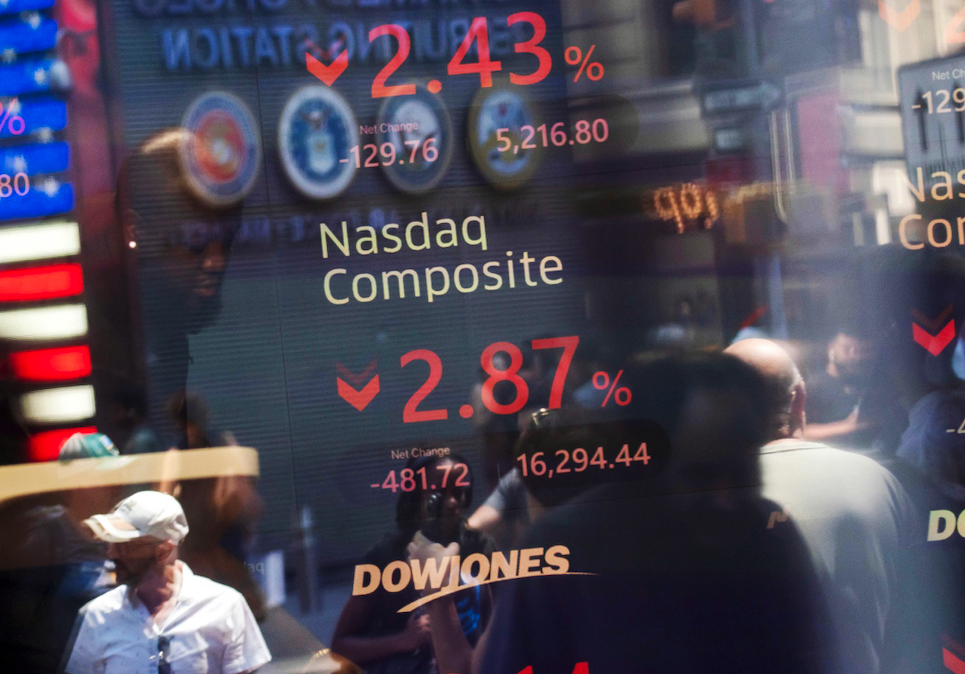
US stocks sank, putting the S&P 500 Index on track for its longest slide since August, as a six-month rally shows signs of cracking following a $1.2 trillion selloff in cryptocurrencies and amid fears around stretched artificial-intelligence valuations.
As someone who’s been involved in capital markets his entire adult life, I can safely say that gold investors haven’t seen a period like this in decades. The third quarter of 2025 was nothing short of historic, and in many ways, I believe we’re witnessing the beginning of a new era for the yellow metal.
There is a frenetic, sweaty-palm feel to the US economy lately. Markets are looking frothy and consumers are anxious, and meanwhile the gambling and stock markets are converging as people bet on all sorts of strange assets and events.
The government shutdown came to an end last night after 43 days, making it the longest shutdown in history. We will leave it to the political commentators to pass judgment on what it means for the decision-makers in Washington.
Market corrections often present chances to acquire quality assets at attractive valuations. Hence, “buy the dip” has long been a mantra for many investors.
The future is now: 5G, fiber optics, power grids, and digital networks. Brock Campbell, CFA of BNY Investments reveals how BKGI (the BNY Mellon Global Infrastructure Income ETF) delivers inflation protection, steady income, and exposure to essential growth assets.
To invest or not to invest in alternatives; that is the question for anyone involved in the business of retirement planning. FAs can help clients navigate the brave new world of customized alternatives, but this is easier said than done.
There’s no denying AI has again been a captivating theme for investors and technology enthusiasts this year. But that proposition could be ramped up in 2026.
The artificial-intelligence boom is raging, fueled by a mad dash to add computing capacity. Tech giants are funneling billions of dollars to construction companies and industrial suppliers of equipment and power to build the vast data centers that the technology requires.
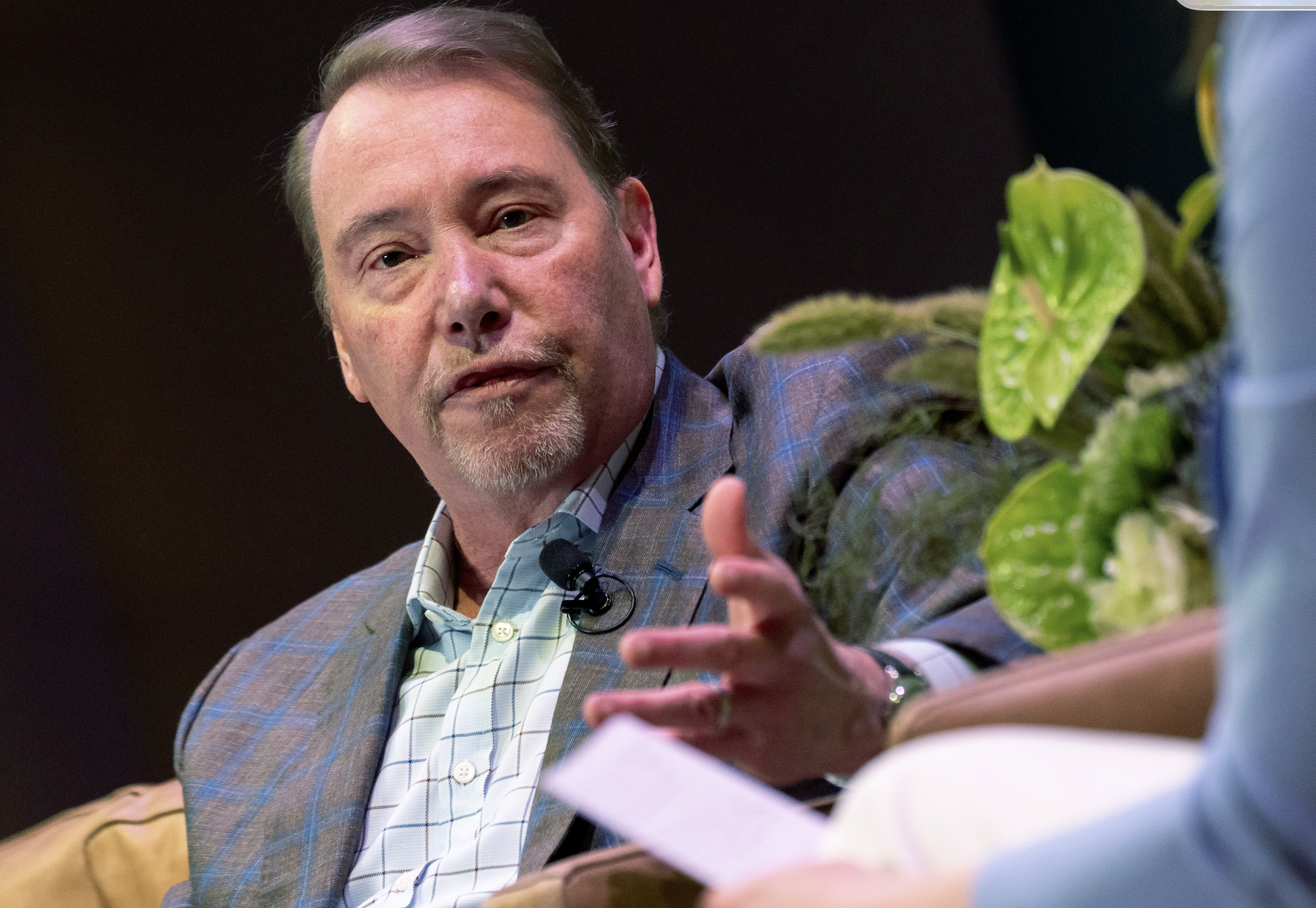
In markets awash in “garbage lending” and unhealthy valuations, Jeffrey Gundlach is keeping his strategy simple: load up on cash and stay away from private credit.
We were in the camp that the Federal Reserve (Fed) should have reduced interest rates during the first half of the year, taking advantage of the underlying disinflationary path during that period.