While idiosyncratic and recessionary default risks remain present within this asset class, senior-secured private debt continues to offer the potential for more favorable risk-adjusted returns, particularly when compared to public equities and fixed income.
This might be the artificial intelligence era, but AI’s greatest contribution to financial services isn’t replacing advisors — it’s making them more human. Advisors have an unprecedented opportunity to focus on what their clients truly value: empathy, understanding, and genuine presence.
Energy is dominating headlines on escalating geopolitical tensions in the Middle East. Following military strikes over the weekend, disruptions in the Strait of Hormuz — a chokepoint responsible for roughly 20% of global oil flow— have sent markets into a risk-off frenzy.
Oil surged for a second day as the US and Israel stepped up their war against Iran, with the sprawling conflict’s impact on energy assets in the Persian Gulf continuing to grow.
Gold sank after a four-day rally, as traders weighed the escalating war in the Middle East against the prospect of a stronger dollar and elevated inflation.
US Treasuries slumped for a second day as surging oil prices prompted traders to slash bets on more than one Federal Reserve interest-rate cut this year.
With uncertainty rising through geopolitical conflict, AI risk, and inflation, ETFs that offer greater portfolio control may be the way to go.
By now you’ve likely seen the news that the Department of War (DOW) issued a Friday-evening ultimatum to Anthropic, maker of the Claude AI chatbot, demanding unrestricted military access to its technology.
The market spent the week digesting a modestly hotter PPI print, a pullback in NVIDIA after earnings, and a move in the 10-year Treasury yield below 4 percent.
As markets rotate to favor small caps and international equities, rising risks are likely to make investment discipline even more important for seizing opportunities, write Chris Galipeau and Lukasz Kalwak of Franklin Templeton Institute.
Greg Abel has passed his first test since taking over from Warren Buffett as Berkshire Hathaway Inc.’s new chief executive officer. In his introductory shareholder letter, he emphasizes that Berkshire’s culture runs far deeper than a single man. Yet, almost in the same breath, he tells us not to worry — after all, Buffett is still lurking around the office.
History may rhyme, but it doesn’t repeat. War is uncertain, and while the US and Israel are dominating, investors would be foolish to assume they know every twist and turn to come. Even here at home, where threats exist.
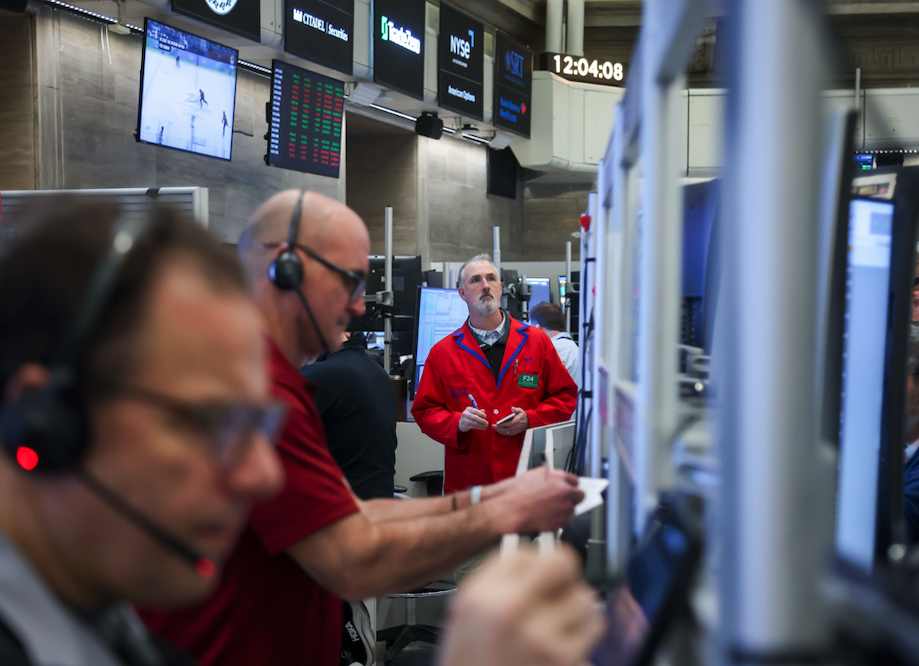
AI fatigue has taken hold of financial markets. The companies powering the AI revolution (Nvidia, Google, Microsoft) were down. The companies that are being (or might be) disrupted by AI, like software makers, were also down.
Private credit firms are facing a major test, with mom-and-pop investors pulling their cash in fear of corporate defaults spiking and artificial intelligence destroying many of the software businesses that these funds have lent to.
Strong performance and dividend yields amid volatility — typically, an investor may need to sacrifice one in order to maximize the other.
U.S.-led strikes in Iran have pushed oil prices higher and reignited geopolitical risk. Our view: markets are pricing a limited conflict, with broader investment implications still manageable unless escalation proves prolonged. As always, diversification and a long‑term perspective matter most when uncertainty peaks.
The bulk of “Everybody Loses” sends the reader on a lurid journey through the sportsbook ecosystem. Funt is a talented investigative reporter with a velvet prose hand, but “Everybody Loses” features some key omissions. These oversights, however, are minor, and perhaps even necessary in such a tightly focused, powerful work.
For each market downturn, we explored how investor sentiment reacted around the event. To gauge investor sentiment, we considered a variety of measures. With each of these measures, we explored how long it took for investors to come back to a previous high.
In this episode of ETF of the Week, Chuck Jaffe and Todd Rosenbluth (Head of Research at VettaFi) break down the Capital Group Dividend Value ETF (CGDV). While many dividend funds focus solely on high yield, CGDV takes a different approach by focusing on high-quality companies with the potential to pay and grow dividends. With a perfect five-star rating from both Morningstar and Lipper, this fund has rapidly grown to $30 billion in assets by consistently landing in the top 10% of its peer group.
The recent rotation from growth to value is well documented. While the return divergences between technology stocks and materials or industrials stocks are significant, they do not tell the whole story. There are also extreme return differentials between broad industries and their sub-industries. In this article, we address the divergence of the broad technology sector and the software-as-a-service (SaaS) sub-industry.
Qatar shut down liquefied natural gas production at the world’s largest export facility after it was targeted in an Iranian drone attack, sending European gas prices surging more than 50% and rattling global energy markets.
When JPMorgan Chase & Co. took the lead last year in financing the $55 billion takeover of Electronic Arts Inc., a record-setting leveraged buyout, Wall Street saw it as a sign that a lucrative period of bankrolling super-sized private equity deals might come roaring back.
Amazon.com Inc. may be a leader in the artificial intelligence race, but investors are increasingly unwilling to pay up for the cost of maintaining that position.
BlackRock Inc.’s Global Infrastructure Partners LP and EQT AB agreed to buy AES Corp. for about $10.7 billion in cash as the market heats up for power plant developers that can provide electricity for energy-hungry AI data centers.
I am indeed working on my book about what I believe is a coming crisis by reviewing five different cycle theories. They all suggest a crisis occurring sometime around the end of this decade or perhaps shortly thereafter. And all for different reasons. One background element ties them together, which is the subject of today’s letter.
Artificial intelligence-themed companies certainly propelled the stock market to greater heights in 2025. Near the tail of end of the year, however, market experts questioned whether certain companies benefiting from the AI theme had the underlying fundamentals to support their lofty valuations.
Small-caps and the related equities have found their respective grooves. The fact that the Russell 2000 Index is higher by more than 7% year-to-date confirms this. On the surface, the small-cap resurgence is good news.
In investing and life, spending your time on critical variables and what is really important directionally pays dividends. AI can legitimately reduce “task time” in the investment business, but it does not replace experience and judgement. Not having double-digit bodies running around also helps one focus.
The U.S. is on the back end of fourth-quarter earnings season, and the overall tone from corporate management teams has been constructive. For the S&P 500 Index, earnings growth tracked close to 15% year-over-year, marking a fifth consecutive quarter of double-digit growth.
The rise of prediction markets offers statisticians and social scientists the kind of help that astronomers get from a new space telescope or particle physicists from a bigger supercollider. We finally get to test theories and resolve questions that people, held back by poor data, have been wrangling over for decades.
US stocks opened lower as risk-off sentiment swept through markets and fintech Block Inc.’s massive layoffs fanned angst that artificial-intelligence is poised to upend broad sections of the economy.
Last year’s market surge wasn’t built on hype. New research from Alger shows that AI spending and the accompanying infrastructure buildout drove corporate earnings higher, with fundamentals doing the heavy lifting rather than investor sentiment alone.
The Trump administration on Wednesday closed a $26.5 billion loan package for Southern Co. power projects in Georgia and Alabama amid rising concern about electricity price affordability and electricity-thirsty data centers.
OpenAI has raised $110 billion in a deal that values the startup at $730 billion, representing the ChatGPT maker’s largest funding round to date and bolstering its costly push to secure more computing power and talent for AI development.
After underperforming for much of the last decade, emerging-market (EM) equities rebounded nicely in 2025. Is it too late to invest? We don’t think so. With valuations still attractive and earnings growth forecasts looking up, this could be the right time to give the developing world a closer look.
Q4 wrapped a solid year of U.S. company earnings. But as the numbers rolled in strong, stock markets oscillated widely. Fundamental Equities Global CIO Carrie King is optimistic as she looks ahead to 2026 and offers three observations on the prevailing dissonance.
US bonds are wrapping up their best monthly performance in a year against a backdrop of rising global risks, with resurgent demand serving as proof that investors still see Treasuries as the premier haven in turbulent times.
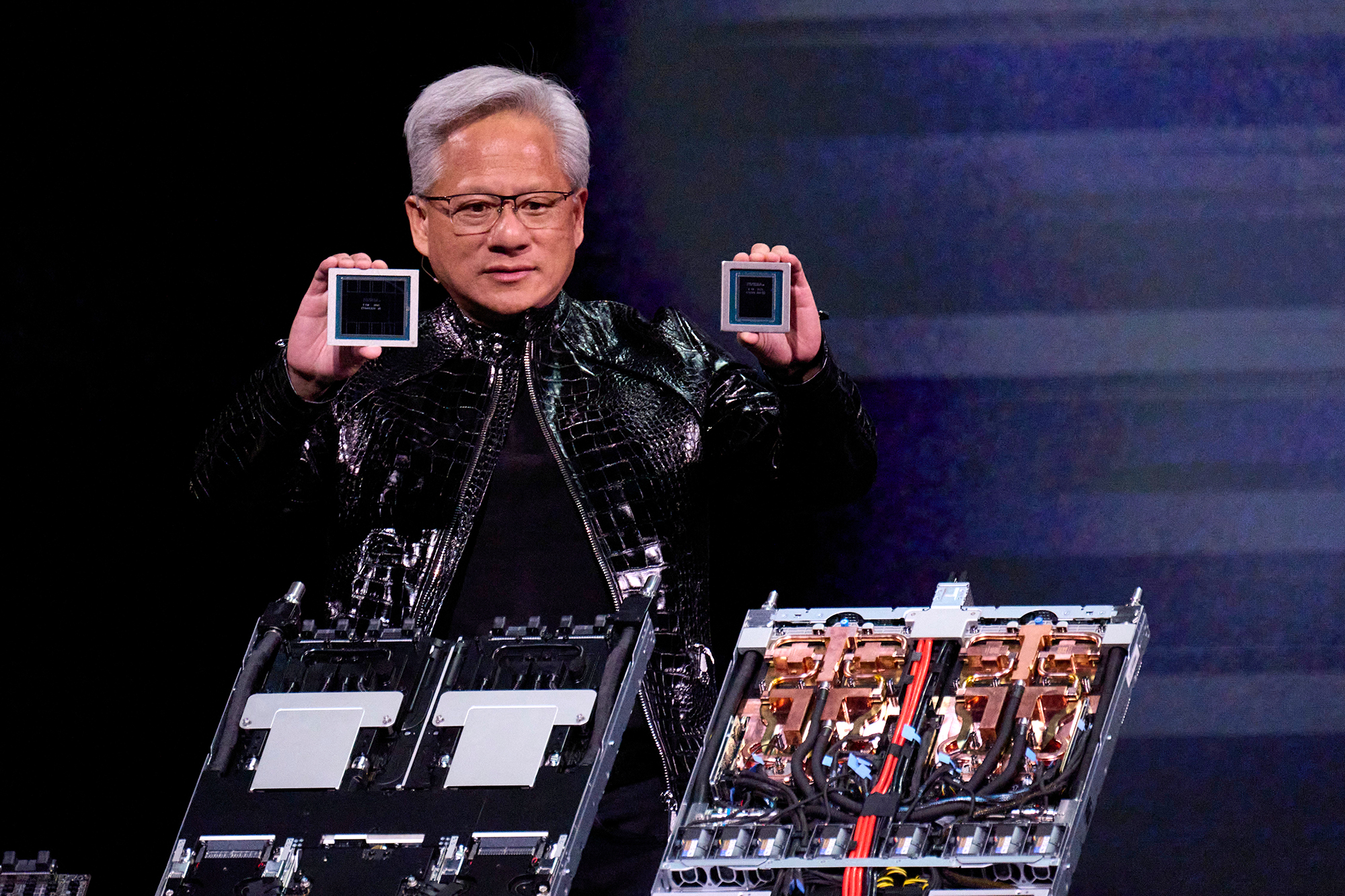
Nvidia Corp.’s latest sales forecast drew a lukewarm response from investors, signaling that concerns over a potential bubble continue to weigh on the dominant maker of artificial intelligence processors.
2026 offers plenty of opportunity in tech investing once again following a breakout year for tech AI tech in 2025. Inventors want that tech upside, but this year could behoove investors to diversify outside of AI hyperscalers.
While the equity market has its well‑known “January Effect,” credit markets also show a seasonal pattern. Looking back over nearly three decades of data, January tends to be one of the better months for corporate bond spreads.
The S&P 500 has been stuck in a range for the better part of four months, and investors are paying up to protect against the possibility that the next big move is down. To a growing number of strategists, that pessimism is cause to expect the opposite.
Almost 1,000 active ETFs launched in 2025, but did their performance substantiate the demand? Across the universe of funds, active managers for ETFs and mutual funds found that outperformance was elusive compared to their passive peers based on the latest Morningstar US Active/Passive Barometer report.
Despite early volatility driven by global bond market stress, tariff-related tensions, renewed inflation concerns, and uncertainty surrounding Federal Reserve leadership, equities finished January higher, with the S&P 500 reaching new all-time highs.
Matt Markiewicz, Head of Product and Capital Markets at Tradr ETFs, highlights the company’s leveraged single-stock ETF lineup and innovative monthly and quarterly reset products, while offering insight into the growing sophistication of retail investors navigating leveraged and inverse ETFs. Christian Magoon, Founder and CEO of Amplify ETFs, discusses Amplify’s rapid ascent past $20 billion in assets, driven by strong demand for its YieldSmart ETFs and thematic offerings.
2026 may already be more than a month in, but advisors and investors are still quite keen to navigate the complex geopolitical market in order to find the most opportune investment opportunities.
In a notable shift for the start of 2026, the S&P 500 is experiencing a divergence in factor performance. Typically, high beta (aggressive, high-risk) and low volatility (defensive, safe-haven) factors sit on opposite sides of the seesaw. When one goes up, the other usually comes down.
The threat to software-backed businesses from artificial intelligence should prompt investors to shift focus from technology to companies that toil in the physical world, like miners, power producers and industrial firms, according to Ulrike Hoffmann-Burchardi, global head of equities and chief investment officer for the Americas at UBS Wealth Management.
The playing field presents broad opportunities for income investors today, with income and growth potential across asset classes. But an effective defense is also critical in capturing that potential. When it comes to the tools of the trade, we think broader is better.
Gold’s sharp swings and a new Federal Reserve chair are not separate stories. In a recent episode of the Money Metals podcast, Mike Maharrey sat down with Axel Merk, President and Chief Investment Officer of Merk Investments, to connect the dots between market turbulence and what may be a structural shift at the Fed.
Stripped to its essentials, finance is a race against time. What lies ahead of us is unknown, and the vast industry of banking and finance has developed to manage the risks that come with making commitments now that depend on an uncertain future.