There’s a whiff of panic among investors these days. US Treasury yields have climbed to levels unseen in more than a year at the same time as a furious rally has left stocks near all-time highs. Surely, both moves can’t coexist for long, goes the narrative.
LPL Research examines rising inflation risks amid geopolitical tensions, while resilient growth and strong investment support continued expansion.
The exchange-traded fund marketplace continues to expand. Now with more than $20 trillion in assets under management ($14 trillion in the U.S., growing at an 18% five-year annualized clip), 2026’s volatility and emerging investment themes have taken the universe to new heights.
Chris Galipeau discusses high-conviction insights that go beyond media headlines.
That Buffett cash hoard has also created a lot of speculation, innuendo, and assumptions, which is what I want to walk through in today’s discussion. Primarily, what that cash hoard actually represents, the popular theories explaining it, and what it really costs shareholders to hold.
I’ve long been a student of game theory, the branch of mathematics that studies how rational actors make decisions when their outcomes depend on what everyone else does. It’s a helpful framework for understanding markets and geopolitics, and right now, there’s no better place to apply it than Taiwan.
A frequently asked question in recent weeks is whether the market is simply ignoring the risks stemming from the current geopolitical conflict, especially given the spike in oil prices that has pushed inflation pressures higher.
The artificial intelligence (AI) evolution moves at breakneck speed. While generative AI is still a significant part of the underlying investment thesis, physical AI is rapidly accruing momentum.
Chemistry is a vital component when building an organizational powerhouse. This applies not only to just sports, but also the executive world. In the NBA, the New York Knicks assembled the “Nova Knicks.” This effectively reunited a championship-caliber core of Villanova alumni in Jalen Brunson, Josh Hart, and Mikal Bridges.
I was in West Texas recently to witness firsthand the emerging practical applications of artificial intelligence. What I saw bolstered my conviction about the technology’s progress and the need to mold it rather than resist the change.
The stagflation narrative dominating financial social media isn’t completely wrong. That’s what makes it so dangerous. After more than 30 years of managing client portfolios through actual inflationary cycles, not watching them on YouTube, I’ve learned that the most damaging investment advice isn’t built on outright lies.
In our Q2 Equity Market Outlook, we identified healthcare as one area where artificial intelligence (AI) is having tangible benefits and presenting investors with new expressions of the AI investment theme. While healthcare may glean some luster from an AI halo, the investment case is also one of counterbalance to the AI juggernaut.
The United States has not felt the greatest costs of the Iran conflict, but challenges are becoming visible. Energy prices have risen, with limited prospects for relief. Inflation measures are poised to spread to other product and service categories. Inventories that helped to blunt the impact are depleting; supply chain distortions are accumulating.
AI is surely the zeitgeist at industry conferences across sectors right now. Emerging technology, increased efficiency, and scalability are all talking points. But so too are headcount reductions, reduced tech-sector free cash flow, and growing worries about a 1990s-like bubble.
The most attractive conversion opportunities appear when income temporarily drops. Early retirement before Social Security and RMDs begin is the classic window. Sabbaticals, business transition years, the gap after a company sale, years with unusually low K-1 or bonus income. These are all potential openings.
It’s likely not a bubble. Earnings are high. Prices are high because they anticipate future high earnings growth. The historical record shows that growth rate is achievable.
While US stocks have been going from one record to the next, global asset allocators haven’t quite kept up. And that may keep the market’s upward momentum intact as fund managers try to catch up.
Apollo Global Management Inc. announced last week that it will soon provide daily pricing for its private credit. It may not sound like a big move, but its decision to lift the veil on these assets could be the most impactful development in financial markets and investing in a long time.
I’m all about trying to build bridges and fix things, and I am also a realist. I often tell clients there is a right way, and then there is what you can get done within your environment. I’ll always lean toward the second one.
A real fundamental story doesn’t require a parabolic chart to validate it. In fact, fundamentals tend to drag prices up the trend line, not push them through the ceiling. When a “shortage” narrative arrives at the same moment that the worst-quality names in the sector are leading the index higher, that’s not fundamentals at work.
Firms pulled back sharply on hiring last year as policy uncertainty and higher input costs – driven largely by tariffs – forced a reassessment of risk. Nonfarm payroll growth averaged just 9,700 per month in 2025, down dramatically from 121,600 in 2024. That slowdown reflected a familiar corporate response: When uncertainty rises, labor – the largest and most flexible cost – becomes the primary adjustment mechanism. Rather than expand headcount, firms chose to wait.
Early detection, I believe, is one of the smartest investments you can make, whether we’re talking about your portfolio or your health.
Scalable personalization means saving time while not sacrificing the “secret sauce” that is unique to your practice. Time savings can come from scaling portfolio construction via model portfolios or direct indexing, adding tools or talent to complement strengths, and using technology like AI.
LPL Research explores how a potential Warsh-led Fed could reshape policy, Treasury markets, and volatility amid rising deficits and shifting demand.
Gold bugs often claim that when more dollars are in circulation, each dollar buys less; prices rise, and gold, as a store of value, helps protect purchasing power from that decline. As a result, they believe that a rising money supply, in and of itself, is inherently inflationary.
That skepticism isn’t contrarianism for its own sake, but rather the recognition that when a thesis achieves consensus, the crowd has usually already priced the easy part of the move, and the hard part is what comes next.
Ironically, the story I want to discuss today involves two companies we do not own and never have owned. Though they are household names, and this transaction is one of the most significant acquisitions in business history.
Opening a 529 plan is a tax-advantaged way to set aside money for college. The money you contribute can grow tax-deferred and qualified withdrawals are tax-free.
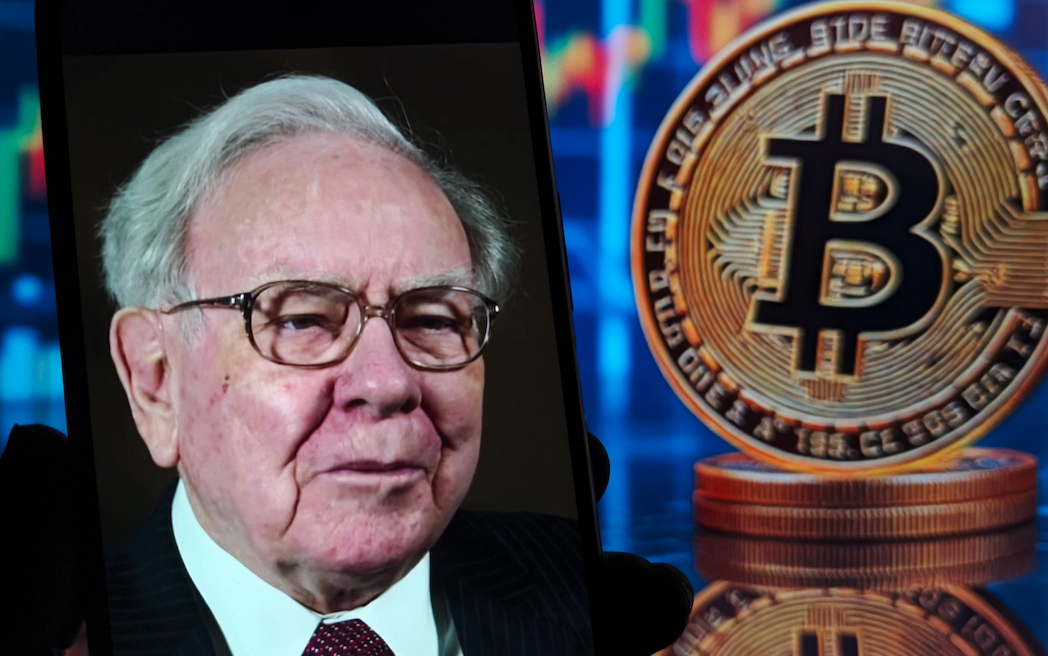
Warren Buffett shared his usual wisdoms about patience, diligence, prudence and kindness in a CNBC interview the morning of Berkshire Hathaway Inc.’s annual meeting last Saturday, the first in many decades that the oracle did not lead. But the sign that hung above him spoke loudest.
Research Affiliates explains how a fundamental growth strategy can outperform traditional market-cap-weighted growth indices.
Wall Street banks are getting ready to raise billions of dollars taking data center companies public, even after IPO investors have already piled into anything that looks like a bet on artificial intelligence spending.
S&P 500 first quarter 2026 earnings are tracking at nearly 28% year-over-year, with rising profit margins suggesting the strong run could persist.
Global equity markets entered 2025 with a familiar narrative. U.S. leadership remained firm, supported by strong earnings, AI-driven optimism, and a market structure increasingly dominated by a narrow group of large-cap companies. For many investors, the path forward seemed clear: stay anchored to what worked.
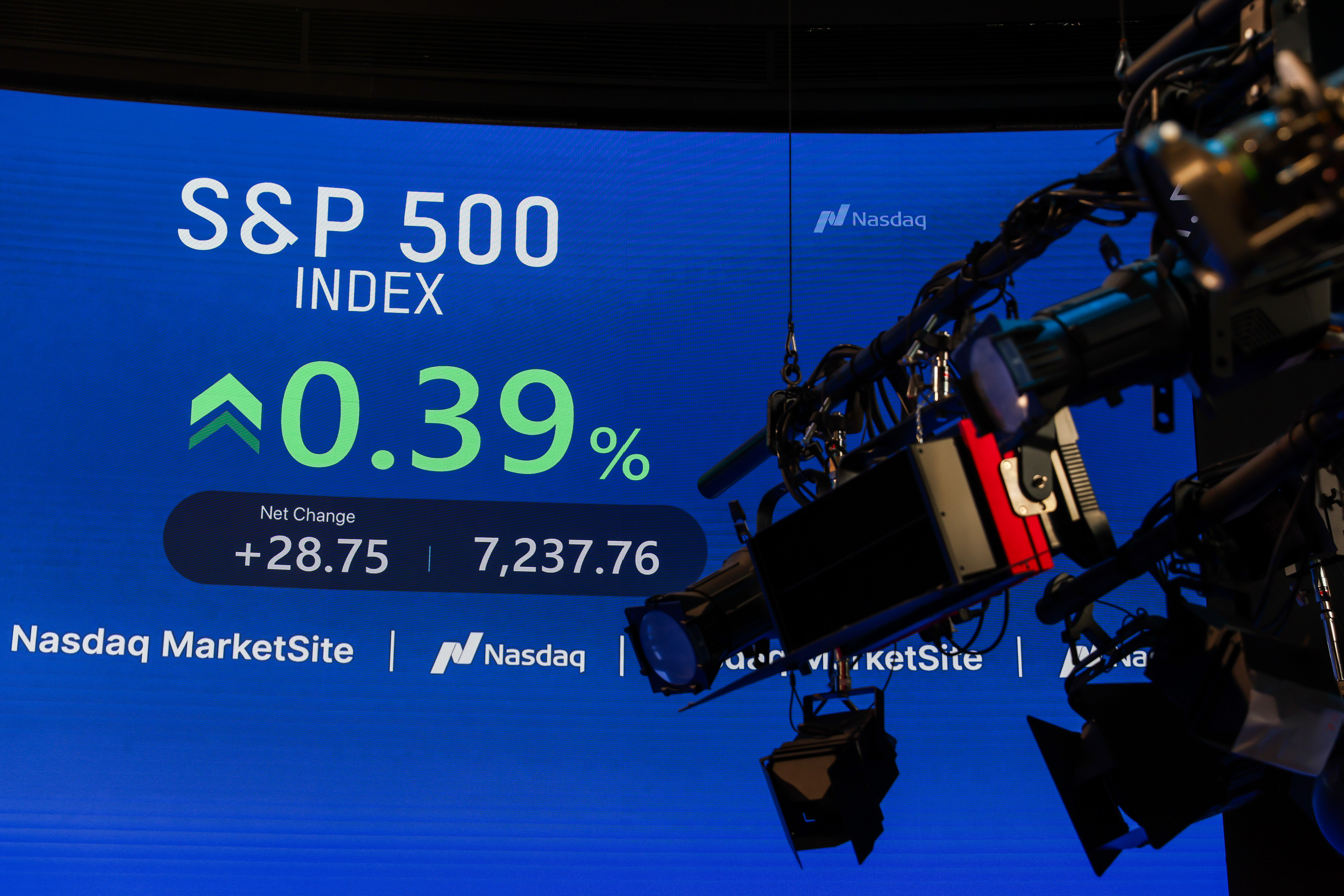
The S&P 500 hit a fresh record high last week. The median stock in the index is sitting 13% below its 52-week peak. That divergence is not a footnote or a curiosity.
The ability to explain something is not the same as having clarity on why it matters. Some advisors know exactly where their value sits and how to explain it. For others, it’s less obvious. If that’s the case, this isn’t something you solve by rewriting your messaging. It requires taking a step back.
LPL Research examines overlooked tech growth, assessing strong earnings, AI skepticism, and valuation opportunities for investors.
Affordability is a major problem that is finally getting the attention it needs. As important is directing that attention at the root cause of America’s cost-of-living crisis: inadequate wages.
Morgan Stanley and JPMorgan Chase & Co. are leading the process, according to people familiar with the matter. A large majority of the financing is expected to be in the form of debt, with the rest equity, the people said, asking not to be identified discussing private information.
It may be a cliche to invoke the pick-and-shovel sellers of the California Gold Rush, but what better way is there to frame what’s happening to Apple Inc.?
Get ready each week with high-conviction insights that go beyond media headlines.
Alphabet Inc. is selling its biggest-ever euro-denominated bond and tapping the Canadian dollar debt market just months after record-breaking deals in other currencies, showing the huge funding needs of its ambitions in artificial intelligence.
Students of game theory often start with a lesson in the prisoner’s dilemma: two agents would gain a better collective outcome by cooperating, but each has an individual incentive to take action that is at their partner’s expense.
What a week this was! On Tuesday, I participated on a panel at the Bitcoin Conference in Las Vegas, where I discussed why Bitcoin miners have a head start in the race for AI compute.
The poor sentiment toward private credit funds has dragged down many high-quality BDCs, as well as weaker ones. The chaos and bad press surrounding private credit funds are not reasons to avoid BDCs. In fact, we think it’s a reason to consider them.
April saw a strong rally, which fully reversed the stock market’s losses in March. US markets set new all-time highs, and European stocks came within whispering distance of their all-time highs as well.
Shell (SHELL NA) announced last week that they are acquiring ARC Resources (ARX CN). Arc Resources is a gas business in the Montney Region of Canada and is a name that the investors of Smead Capital Management are fairly familiar with.
One of private equity’s biggest challenges right now is getting money back to investors. Advent and Cinven have just made a small dent in the industry’s mountain of unsold assets by agreeing the sale of TK Elevator to Finland’s Kone Oyj.
In today’s market, income investors remain firmly focused on one objective: yield. With traditional sources of income still under pressure, demand for high-income ETFs continues to grow — especially those capable of delivering consistent monthly payouts.
The European Union (EU), pursuing ambitious decarbonization goals, is significantly recalibrating its emissions compliance regime with the Carbon Border Adjustment Mechanism (CBAM). This new border tax intends to promote fair competition amid varying emissions rules and costs. Our research suggests it could also offer insight into profitability as the rising costs to meet carbon limits weigh on corporate financial health, creating winners and losers.
In a recent (unscientific) Franklin Templeton social media poll, we asked investors what they felt was the biggest risk to the global economy over the next 12 months. Nearly half (45%) of respondents highlighted high oil prices as their greatest fear factor.