The Biden administration is moving toward a release of at least another 10 million to 15 million barrels of oil from the nation’s emergency stockpile in a bid to balance markets and keep gasoline prices from climbing further, according to people familiar with the matter.
U.S. equities are beginning the new week sharply higher, getting a boost from the U.K.'s decision to abandon nearly all its tax cut plans.
Readers of a certain age will remember Carnac the Magnificent, Johnny Carson’s recurring alter ego.
Commodities are entering a crucial period as earnings season gathers pace, Europe firms up its energy-crisis response, and China’s political elite gathers in Beijing for a twice-a-decade summit.
S&P 500 Introduction 2022 has been a bad year price-wise for the stock market as measured by the S&P 500. However, I contend that is not enough to simply know that the market is down, it is even more important to know why.
For some bankers, net-zero is like a new year’s resolution—a pledge one makes and often breaks before a year has passed.
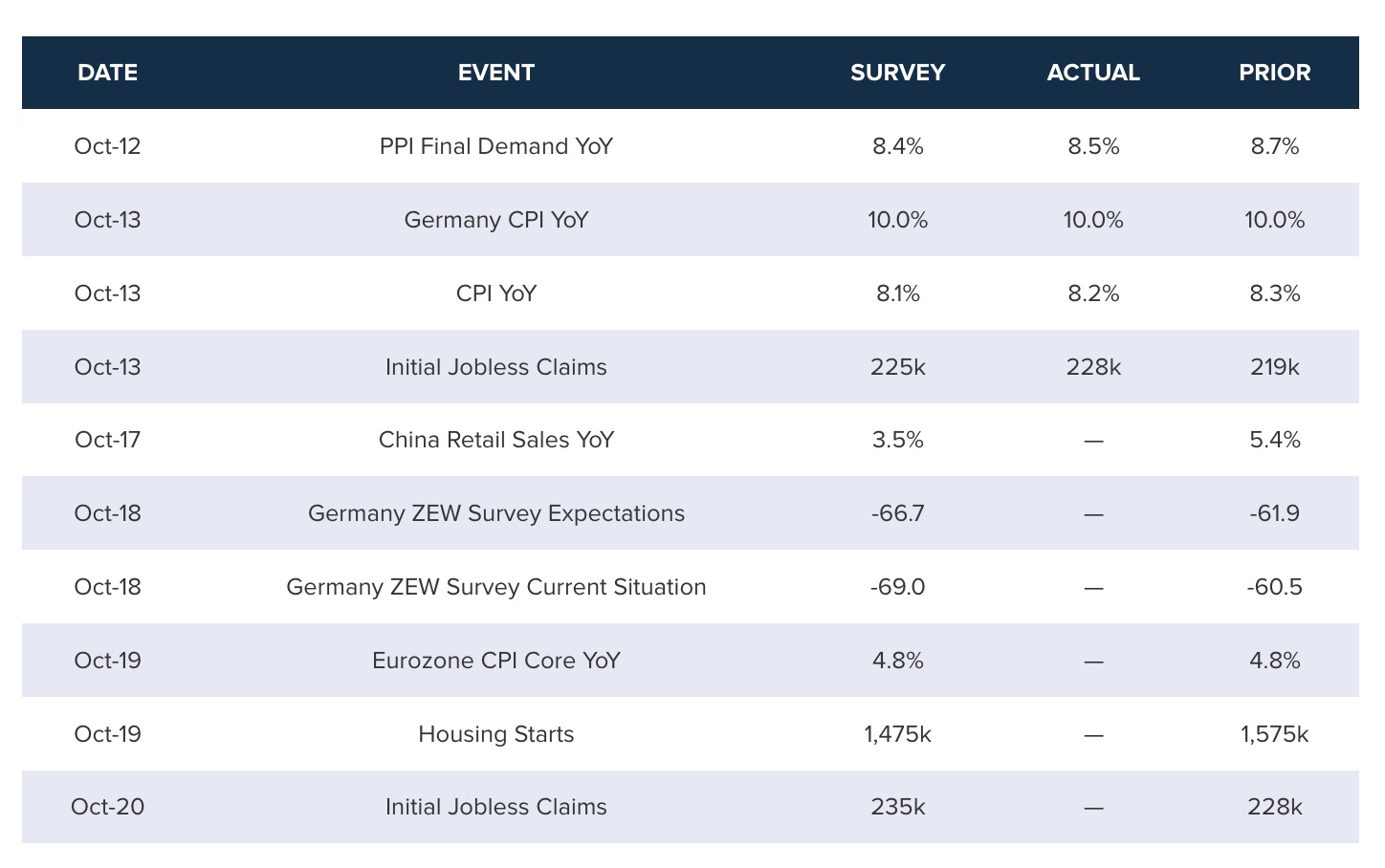
Markets have been whipsawed in recent weeks, first by talk that a cooling labor market would allow the Federal Reserve to “pivot” away from its aggressive interest-rate hiking campaign, and then by comments from central bankers that any such move would be premature — as Thursday’s hot consumer price index report proved.
It’s October and we’ve avoided slipping into a third world war for almost eight months, so we have that going for us.
The Fed’s inflation-fighting efforts have resulted in a stronger dollar relative to most other major currencies.
The top 50 broad strategy funds – determined by highest historical performance through 2021--outperformed the market by 21 percentage points through the first six months of 2022.
U.S. stocks are mixed and subdued as the markets digest another hot inflation report in the form of the September Producer Price Index.
U.S. equities are mixed as investors await this week’s highly anticipated September inflation data.
Shares of semiconductor companies fell Monday, with the industry selling off globally after fresh US curbs on China’s access to American technology added to a disappointing start to the earnings season, stoking concern that the industry’s downturn is far from over.
Everywhere you turn, the biggest players in the $23.7 trillion US Treasuries market are in retreat.
A sizzling rally in global semiconductor stocks this week is starting to look illusory as a slew of disappointing earnings from major chipmakers pointed to a likely protracted downturn for the sector.
Today I want to talk about why the labor market is so out of balance. Some of this is new and some has been brewing for many years. We will end with some commentary on yesterday’s unemployment report.
October will test the Fed’s resolve.
The recipe for making money if you’re a commodities trader is simple: buy natural resources in one place and time and sell them somewhere else later — hopefully making a buck by exploiting the difference.
Investors hoping that third quarter earnings will be strong enough to reverse this year’s steady selloff in technology stocks should brace for the prospect of weak company outlooks causing further pain.
Democracy is under attack, yet many Americans fail to see the threat, according to Seth Klarman. Leadership must come from the business community to respond to this challenge.
U.S. stocks are trading modestly lower in pre-market action with the markets awaiting tomorrow's key September nonfarm payroll report.
As billions of fans eagerly await the 2022 World Cup, CIO Larry Adam draws parallels between the globe’s most popular sport and the current investing environment.
Every year, Northern Trust Asset Management issues a multi-asset class, five-year investment outlook known as its Capital Market Assumptions Report. Per the recently released 2023 edition, Northern Trust is expecting market returns to be slightly below long-term historical averages. While they believe lower stock valuations may provide some support, upside will be limited by higher interest rates. They see a somewhat similar dynamic playing out with bonds, where returns will be supported by higher yields that will be capped by flatter global yield curves. Among the six investment themes they’ve identified as driving markets over the next five years are Slow Growth Transitions, which looks at such slow transitions across the globe as pandemic to endemic; globalization to regionalization; and fossil fuels to renewables. Here today to discuss CMA’s themes and forecasts is Chris Shipley.
This year's brutal market has investors across asset classes and international markets running for the exits. But where there’s panic and wreckage, there’s also arbitrage and opportunity.
For most of 2022, the VIX been above its average, which historically has led to lower equity returns. I will review the risks that investors face, which explain the continued high level of uncertainty.
Investors are primed for any bit of good news to help them forget a brutal quarter for stocks that took this year’s value destruction to $24 trillion. A resilient corporate earnings season might give them that.
U.S. equities are higher in afternoon action following a recent plunge to lows not seen since 2020.
In the 1980s there was a famous TV ad for Wendy’s with the tagline “Where’s the beef?”.
I will provide several examples of how to reduce your real estate expenses, thus increasing your practice's profitability.
“Invest in what you know.” You’ve likely heard this advice before.
Insurance protects against losses – fires, floods or a wrecked car. Because of the life-altering consequences of such as loss, clients rarely question the cost of the insurance. When viewed through an analogous framework, the cost of lifetime-income insurance, such as a GLWB, is fairly priced.
Week by week, the bond-market crash just keeps getting worse and there’s no clear end in sight.
The world will be going from an era of zero rates and loose monetary policy to higher rates and likely slower growth, except in certain sectors. Adjusting to this change will be both problematic and also full of potential opportunities.
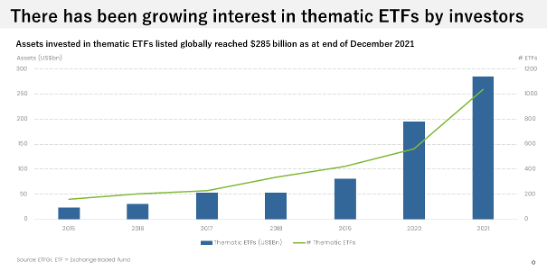
Here are some key points that advisors should keep in mind when dispensing advice and recommendations on thematic ETFs.
Nations are being forced to go it alone in erecting defenses against the relentless strength of the almighty greenback, with no sign that governments are willing to act in concert.
Federal Reserve officials raised interest rates by 75 basis points for the third consecutive time and forecast they would reach 4.6% in 2023, stepping up their fight to curb US inflation that’s persisted near the highest levels since the 1980s.
Recently, the Biden Administration started taking victory laps on deficit reduction.
After countless delays, the Ethereum “Merge” finally took place this week, switching the blockchain protocol from proof-of-work (PoW) to proof-of-stake (PoS).
Ray Dalio came out with a gloomy prediction for stocks and the economy after a hotter-than-expected inflation print rattled financial markets around the globe this week.
Over the years, I’ve explained at length why I’m not interested in forecasts, but I’ve never devoted a memo to explaining why making helpful macro forecasts is so difficult. So here it is.
The S&P 500 is a popular proxy to represent the state of the stock market.
“Price matters again in investing,” according to Bob Wyckoff a managing director of Tweedy, Browne. “That serves the interests of value investors.”
Tuesday's hotter-than-expected inflation report pours cold water on the possibility of lower interest rates from the Federal Reserve any time soon, and by extension, the prospect of lower mortgage rates.
Wall Street may soon see a new stock exchange exclusively for environmentally focused companies amid a boom in demand for sustainable investments.
Chief Economist Eugenio J. Alemán discusses current economic conditions.
President Joe Biden is going to spend several hundred billion dollars to cancel the debts of millions of college students. This big outlay will probably bolster his standing among graduates in the up-to-$125,000-a-year salary range who populate the deep-blue voting grounds of urban America.
The dirty little secret of office expenses is you should never pay for it as a variable expense.
Widening participation in the Fed’s standing repo facility and bond buying programs could mitigate another liquidity crisis in the Treasury market.
As policy makers vie to claim the mantle of hawk-in-chief, spare a thought for what we like to think of as the recovery.
Around the world, soaring borrowing costs are squeezing homebuyers and property owners alike.