Dimensional’s Kaitlin Hendrix explains the firm’s new unified managed account platform, which enables financial advisors to scale with Dimensional or non-Dimensional ETF model management and customize with Dimensional SMAs. VettaFi’s Cinthia Murphy highlights the top 20 active ETFs by inflows in 2024.
Traders should brace for a significant pullback in the stock market as uncertainty swirls around the US presidential campaign, corporate earnings and Federal Reserve policy, according to Morgan Stanley’s Mike Wilson.
Those wishing to explore the gap between the nation’s apparent macroeconomic success and its microeconomic malaise would do well to consult Ruchir Sharma’s What Went Wrong with Capitalism.
Wall Street analysts continue significantly lowering the earnings bar as we enter the Q2 reporting period. Even as analysts lower that earnings bar, stocks have rallied sharply over the last few months.
The expert and you are in a car and the expert is driving. After awhile, you notice that the expert is driving the car by looking through the rearview mirror. Concerned you ask him why he’s not looking ahead as he drives.
Taking a closer look at the different types of active ETFs is important for investors. While many active ETFs incorporate some dynamic investment elements, their management philosophies can differ significantly and that has implications for their performance, risk profile, and alignment with investors’ financial goals.
My financial education didn’t have the most auspicious start. I suppose I was lucky that in high school I had a class on basic investing and finance.
Owning only the U.S. stock market likely means being overweight Tech. But Tech stocks don't always outperform. Investors may want to look outside the U.S. to be diversified.
In this piece, we attempt to answer a number of questions we have gotten from clients about the impacts that rising levels of passive investing may have had on the stock market.
Unlocking your practice's full potential involves strategic planning and a comprehensive understanding of these critical factors. Whether you’re planning an exit or aiming for growth, these insights will help you maximize your practice's value.
In this piece, I demonstrate that small-cap equities become increasingly attractive for investors with longer investment horizons.
This week I had the privilege of participating in a YPO (Young Presidents’ Organization) event held in Victoria Falls, Zimbabwe. One of the main topics of discussion was investment opportunities in neighboring Zambia, a country that, despite its challenges, is a rising star on the African continent, due largely to its copper exports.
Retail trade sales in the U.S. are reported by distribution channel. For example, gasoline sales are reported through the gasoline stations distribution channel, although those gasoline stations’ sales also include everything else sold at gasoline station convenience stores, i.e., hot dogs, tobacco, sodas, gum, chips, coffee, etc.
Oil retreated from a nearly two-month high as traders weighed a weakening physical market against escalating Mideast tensions.
Schwab Sector Views is our six- to 12-month outlook for stock sectors, which represent broad sectors of the economy. The Schwab Center for Financial Research (SCFR) combines a factor-based approach with a market and economic assessment to determine the ratings.
Investors need a better grasp of risk-management tools to gauge a portfolio’s strategic resilience in a rapidly changing world.
As Apple Inc. prepared to introduce its Vision Pro headset a year ago, the worry at Meta Platforms Inc. was that the hardware geniuses in Cupertino were about to unveil a breakthrough in mixed reality, some new take on a computing platform that Chief Executive Officer Mark Zuckerberg had been trying to crack for more than a decade.
Today emerging markets are too big to ignore. The asset class represents a large and growing proportion of the world economy, accounting for over 40% of global GDP in 2022. The asset class includes a broad spectrum of issuers, with investment opportunities of varying risk/return.
Bond investors have been looking for an approach that delivers attractive, repeatable, uncorrelated active returns. Is their wait over?
No coach is going to be able to work well with your team unless you are very clear about expected outcomes. What will success look like in working with the coach?
This year's tale of two markets has underscored resilience at the index level but considerable weakness at the individual member level, leading to massive performance divergences.
The U.S. is clearly a leader in terms of regulatory enforcement. However, its regulators also have an important role to play in informing and shaping regulatory policy on an international scale. industry, this role is only likely to become more important.
On this episode of the “ETF of the Week” podcast, VettaFi’s Head of Research Todd Rosenbluth discussed the BondBloxx CCC-Rated USD Yield Corporate Bond ETF (XCCC) with Chuck Jaffe of “Money Life.” The pair talked about several topics regarding the fund to give investors a deeper understanding of the ETF overall.
The old saw about doing the same thing and expecting a different result is less simple than it seems. Sometimes you need a few attempts to get it right.
Bitcoin could be headed for the stratosphere, according to a new report by Bernstein. The global investment firm is predicting that the world’s top digital asset could hit $200,000 by 2025, $500,000 by 2029 and—no, you’re not seeing things—$1 million per token by 2033.
Investment-grade corporate bonds remain attractive given their lower risk and relatively high yields. Long-term investors who can handle volatility might consider high-yield bonds and preferred securities, but we wouldn't suggest large positions in either.
Small cap performance has been a hot topic lately, with many pundits declaring the small cap premium on life support or dead altogether.
First-generation low carbon equity benchmark indices were developed almost a decade ago with the goals of mitigating climate risk and preparing for the transition to a low carbon economy.
New research highlights how active management may be more beneficial than passive strategies for avoiding overvalued securities.
In the past decade, investors have started to factor in the cost of a product when they make decisions. Issuers have responded by lowering expense ratios, but there are other factors that can contribute to a product’s total cost. Tracking error and trading expense can also impact the total cost of a given ETF, for example.
Join the experts at Vanguard on June 20th at 2pm ET and learn all about the benefits of reducing all costs associated with an ETF.
Portfolio Managers Guy Barnard and Greg Kuhl highlight how the shelter component of CPI is exerting downward pressure on inflation, paving the way for rate cuts – a tailwind for listed real estate.
When SEO is carefully managed during a merger, everyone wins: clients feel comfortable, associates are more confident, and vital branding and marketing assets are preserved.
Traders are lavishing billions of dollars on quant-powered stock trades, boosting an investing style that’s struggled to gain traction in an era when simple bets on traditional large-cap indexes have paid off handsomely.
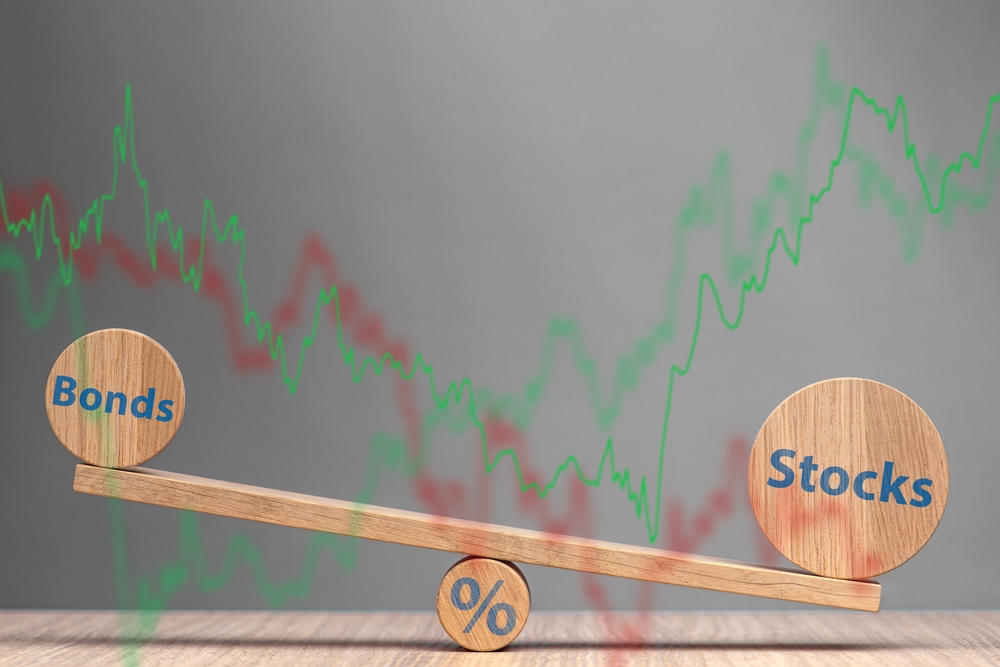
In periods of positive stock/bond correlations, the case for diversified sources of return is much clearer. With stocks and bonds now showing their strongest positive correlation in almost 30 years, the natural diversification and risk protection that a traditional 60/40 portfolio offers is open to question.
Here we are in June. Things are mostly continuing in a Newtonian fashion: “A stock at rest will remain at rest, and a stock in motion will remain in motion, seemingly at constant velocity and in a straight line, unless acted upon by a net force.” Or Elon swiping your Nvidia chips.
The manufacturers of solar equipment, similarly, aren’t in the final analysis providing us with panels of silicon and glass, but machines that can harvest power from the sun. The activities of each group of companies provide a fresh flow of useful energy to the world every year. And by many measures, the solar companies have already overtaken Big Oil.
For married couples, it is important to understand the rules for claiming Social Security survivor benefits in order to plan ahead. Our Bill Cass discusses the details.
When Apple Inc. Chief Executive Officer Tim Cook and his top deputies this week unveiled a landmark arrangement with OpenAI to integrate ChatGPT into the iPhone, iPad and Mac, they were mum on the financial terms.
VettaFi discusses spot ether ETFs, spot bitcoin ETFs, and the crypto ETF universe.
India’s equity markets have experienced strong growth and momentum, with rising incomes and political stability contributing to the country’s potential for accelerated growth.
The derivative income space has grown tremendously over the last five years. Since the end of 2019 there has been a ten-fold increase in assets invested in derivative income ETFs and mutual funds, from $7bn to $73bn.
Consider toning your prospecting efforts by prioritizing referrals and integrating them into your broader strategy for sustainable growth.
We have gained a number of new investors and get regular vetting interest from investors who need to understand the roots of our stock-picking discipline.
Looking into the second half of the year, we are optimistic that returns will be stronger, but also expect volatility to remain elevated.
T. Rowe Price research leader Jay Nogueira shares thoughts on his own 2024 outlook as well as the firm's research approach.
It is essential for financial professionals to include a variety of sources of guaranteed income to give clients the freedom to worry less, gain confidence about the future and enjoy life more.
In this article, Russ Koesterich discusses the YTD strength of energy stocks and why it could continue.
Being an equity growth investor has been a rewarding experience in the past year. Watching growth run-up has made for exciting charts.
New data from Goldman Sachs reports that younger generations of investors are using more personal investment plans to prepare for retirement.
Historically, the level of U.S. debt has had no correlation with the performance of the stock or bond markets.