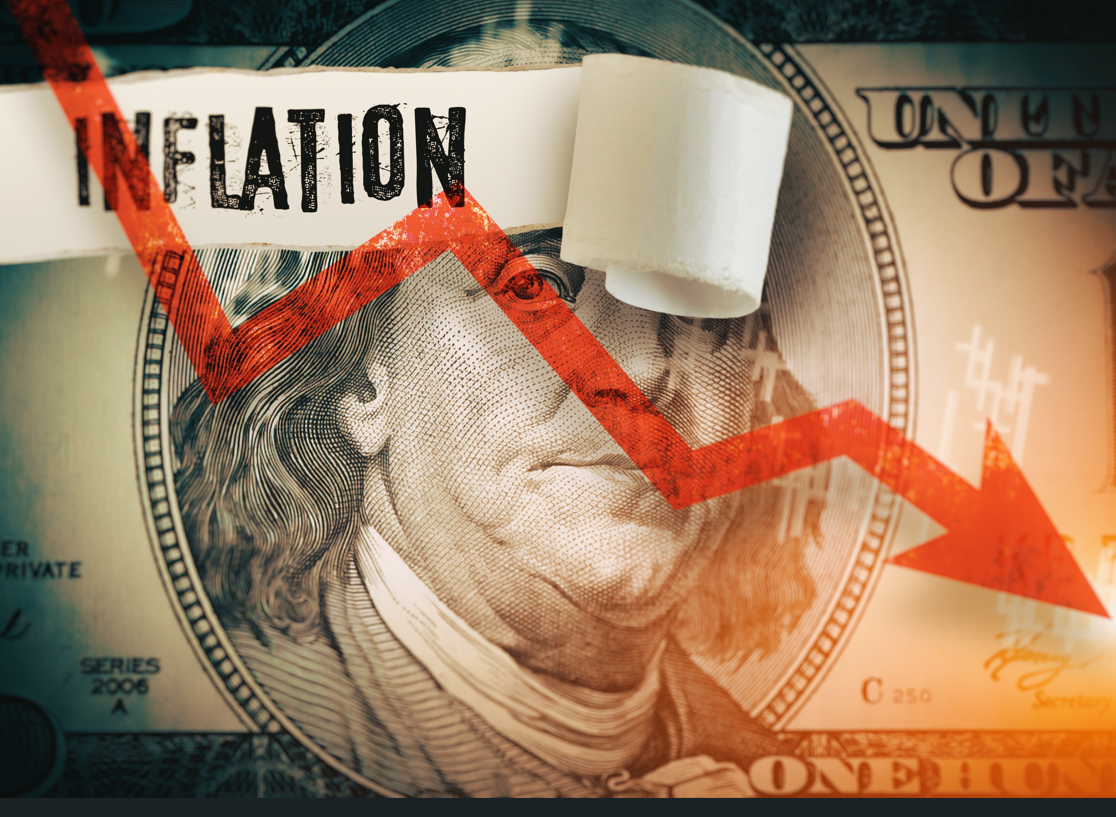
The world’s most powerful central bankers have vowed in unison to keep interest rates higher for longer if necessary to tame inflation.
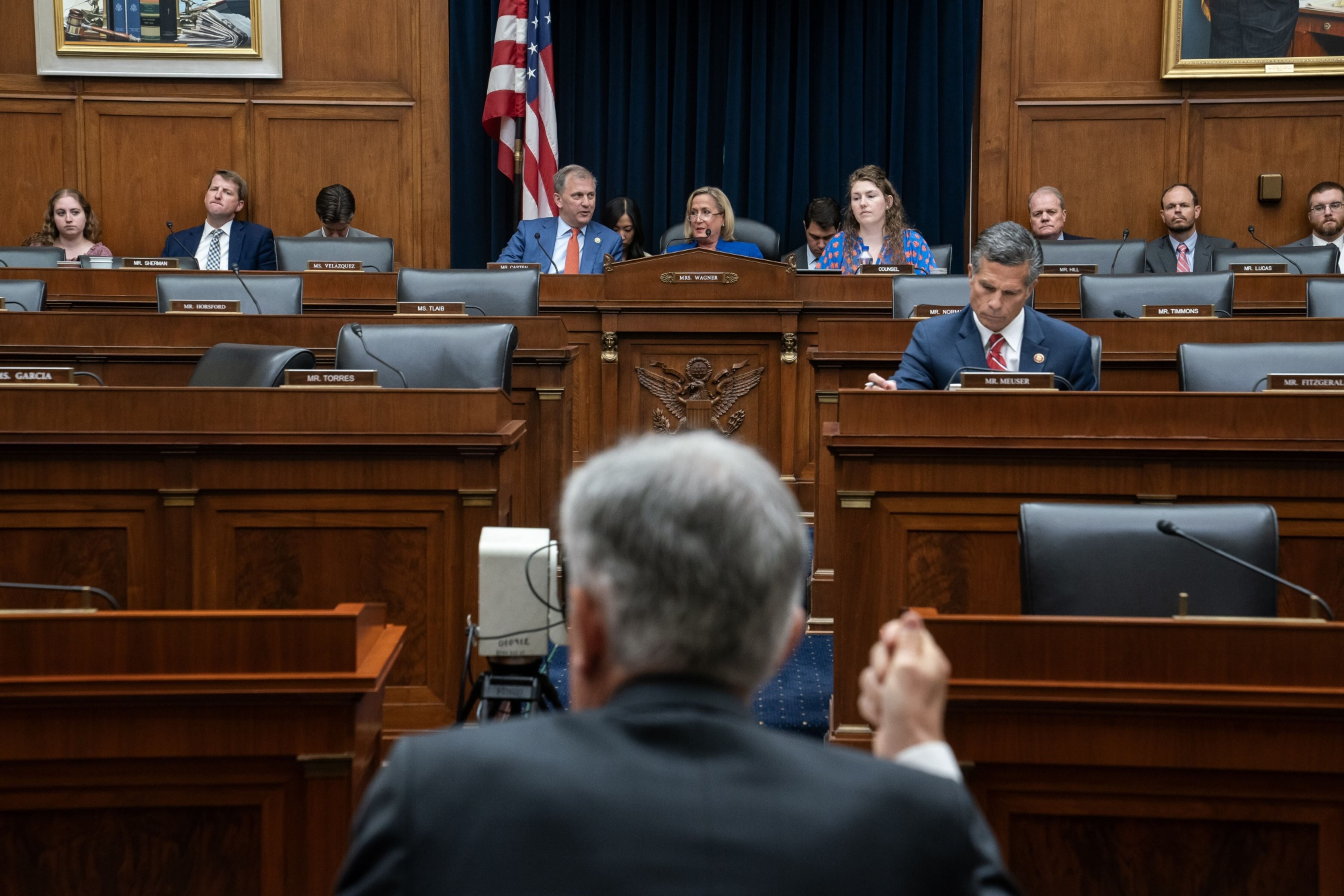
Federal Reserve Chair Jerome Powell briskly dispensed with the idea of raising the central bank’s inflation target in his speech at the Jackson Hole conference last week. But the idea isn’t going away.
AI is a tool to elevate and redefine job duties. Here are strategies for how AI can augment the work of fiduciary advisors while helping them stay relevant and competitive.
Let’s explore the transformative potential of AI and the opportunities and challenges it presents and make an informed decision about harnessing its power for your firm.
A few weeks ago, VettaFi announced an AI symposium at the end of the month. Our hope was to bring some of the leading experts in asset management to discuss how the future is fast approaching.
Financial advisors have a unique job. To be competent, they must deeply understand some highly specialized topics centered around finance.
Taxable municipal bonds may be an attractive option for investors in lower tax brackets, but there are things investors should know before making a decision.
So-called “finfluencers” are preying on naïve investors, promising unrealistic returns while generating excessive commissions for themselves. Their bait is an indexed-universal life (IUL) policy. Read this to avoid making a costly mistake.
Applying planning expertise is a very complicated art form, a skill that is acquired over time, but which can be accelerated if there were a way to capture many of things that soon-to-be-retired advisors have learned through years of practice.
Like Samuel Beckett’s titular character Godot, we are still waiting the all-but-certain U.S. recession. It may yet happen, but it’s wise to understand why forecasters were so grossly incorrect.
Surging interest in artificial intelligence systems will add further strain to global electricity grids with the potential to rival the massive energy consumption of Bitcoin. Thankfully, the premier cryptocurrency has shown us a way to mitigate the impact.
Beaten-down US Treasuries are proving irresistible to some investors even after Federal Reserve Chair Jerome Powell said he’s ready to raise interest rates again to choke off inflation.
Jerome Powell has the bond market exactly where he wants it: lacking conviction as to the Federal Reserve’s next steps.
As investors look for clues about what monetary central planners are thinking at Jackson Hole, the BRICS countries – Brazil, Russia, India, China, and South Africa – are holding a summit of their own in Johannesburg.
Surprised that the S&P 500 swung into the green Friday? Don’t worry. Just wait. It’ll fall again after the next opening bell.
Is a stock market rally coming? I think that is most likely the case. However, to understand why, we must review what we said at the beginning of July in “Complacency Seems Overly Complacent.”
At its annual summit in Johannesburg this week, the bloc of five emerging countries—Brazil, Russia, India, China and South Africa—announced plans to expand for the first time since 2010.
Financial advisors frequently attribute their marketing challenges to not finding that one magic solution. But the true culprits are deeper, foundational issues.
Is AI going to be a major part of our lives going forward? Is it worthy of being classified as a megatrend? What are the best ways to access it as an investment? What are investors overlooking about AI as an investment theme?
Declining commercial real estate valuations will not likely lead to a wave of defaults among muni issuers, according to Franklin Templeton Fixed Income’s municipal bond team.
High interest rates begetting a recession was one reason many money managers were bullish on bonds after a bearish 2022. While the economy continues to run hot and a recession may not arrive, some suspect a bond bull market is still ahead.
Technology stocks are in trouble, with the buzz around artificial intelligence set to be overshadowed by the effects of higher-for-longer interest rates, according to Bank of America Corp. strategists.
For example, treasuries, investment grade bonds, corporate debt, and high yield to name a few. And in this case, like equities, they can be bought and sold on a stock exchange.
Over the last several years, we’ve heard plenty of talk about artificial intelligence. There’s even debate about whether AI will ever become sentient and decide to destroy humanity.
Advisors and investors typically allocate to index funds and exchange traded funds linked to well-known benchmarks, such as the S&P 500, in the name of diversification. After all, these funds are homes to hundreds of stocks and those sizable rosters imply some level of diversity.
Federal Reserve Chair Jerome Powell signaled the US central bank is prepared to raise interest rates further if needed and keep borrowing costs high until inflation is on a convincing path toward the Fed’s 2% target.
Markets seem to be coming around to our Franklin Templeton Fixed Income CIO Sonal Desai’s view that the Fed will have to keep interest rates higher for longer, but now runaway fiscal deficits pose further upside risk to yields in the long term, she warns.
If you’re interested in investing in mutual funds or exchange-traded funds (ETFs) – or you already have some in your portfolio – you may be wondering what exactly the difference is between an active and a passive fund.
International stocks and the related exchange traded funds have accumulated bum reputations after lengthy spells of underperforming domestic equivalents.
Econ on the Road Labor, Consumers, Inflation & Data A Kotok Commute Conversation with: Cameron Dawson, CIO at Newedge Wealth, Dave Nadig, Financial Futurist at VettaFi, and Barry Ritholtz, CIO at Ritholtz Wealth Management.
The holy grail of stock investing is buying great companies on the cheap. Stock picker Peter Lynch plied a variation of that strategy to fame and fortune in the 1980s using his so-called PEG ratio.
Vanguard Group’s best-of-both-worlds stranglehold over the money-management industry is facing a new kind of challenger.
An abstract interest-rate metric is dominating discussions across trading desks ahead of the Jackson Hole symposium, with investors wondering if Federal Reserve Chair Jerome Powell will weigh in, and bracing for further declines in US Treasuries if he does.
The first six months of 2023 were full of surprises for investors, not the least of which was a Nasdaq surge of 32% — its best first half since 1983. The S&P 500 Index gained nearly 16% for the first half, powered by mega-cap stocks.
This weekly update tracks some of the largest cryptocurrencies by market share: bitcoin and ether. We’ve also included XRP, as it was one of the largest cryptocurrencies when this article began.
Generative artificial intelligence (AI) investing is taking the world by storm this year. With that, there are substantial, long-term investment implications.
VettaFi’s vice chairman Tom Lydon discussed the Amplify Online Retail ETF (IBUY) on this week’s “ETF of the Week” podcast with Chuck Jaffe of “Money Life.”
The prospect of global interest rates remaining higher for longer is tipping the case for many investors to switch into bonds from stocks.
Investors are finally showing signs of losing their antipathy toward commodities.
As the demand for faster, smaller, and more efficient electronic devices grows, so does the need for advanced semiconductor manufacturing techniques. Traditional methods have their limitations, and ASML’s mission revolves around transcending these boundaries.
Increasingly more advisors and investors are discovering the benefits of options strategies in their portfolios. There is great value in understanding and utilizing options strategies with the range of benefits they can provide portfolios, including protective puts.
In terms of manufacturing, value added, which is basically the value of the output minus the costs of the input, the U.S. produces almost twice as much as Japan, more than three times as much as Germany, and five times as much as India.
Year-to-date, the largest exchange traded fund dedicated to real estate investment trusts (REITs) is saddled with a small loss, while the S&P 500 is higher by about 15%.
In the current landscape, where bonds and stocks are experiencing positive correlation, it becomes even more important (if not critical) to incorporate additional diversification strategies to help mitigate portfolio risk and preserve portfolio balance.
Russia’s 2022 invasion of Ukraine and the ensuing war have prompted new and difficult questions for sovereign debt investors.
Working with Complex Products- A Market Making Perspective A Conversation With: Andres Rincon, Director, Head of ETF Sales & Strategy, TD Securities and Dave Nadig, Financial Futurist, VettaFi
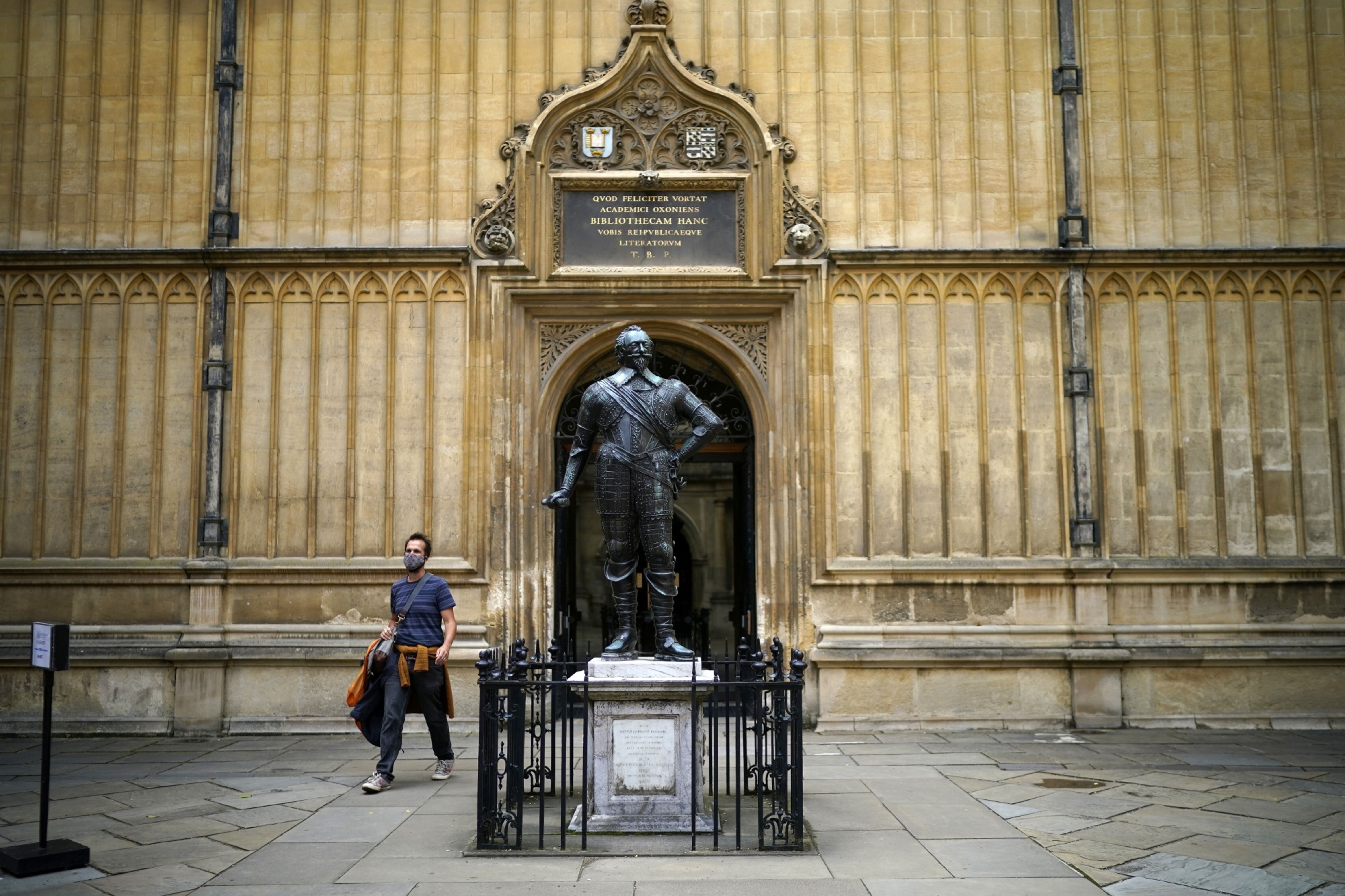
Artificial intelligence (AI) is capable not just of disrupting higher education but of blowing it apart. The march of the smart machines is already well advanced. AI can easily pass standardized tests such as the GMAT (Graduate Management Admission Test) and the GRE (Graduate Record Examination) required by graduate schools.
The Japanese factory automation and robot maker last month lowered its full-year operating income forecast by 24% because of a sharp slowdown in China and high inventories that could linger into next year. Its shares were quickly dumped and have continued to slide.
Big Tech’s earnings season is wrapping up with a bang: Nvidia Corp., at the center of the artificial intelligence frenzy, is reporting results that could set the tone for global stock markets for the rest of the year.
Cognitive biases can be as detrimental as they are universal, and the curse of knowledge is no different.