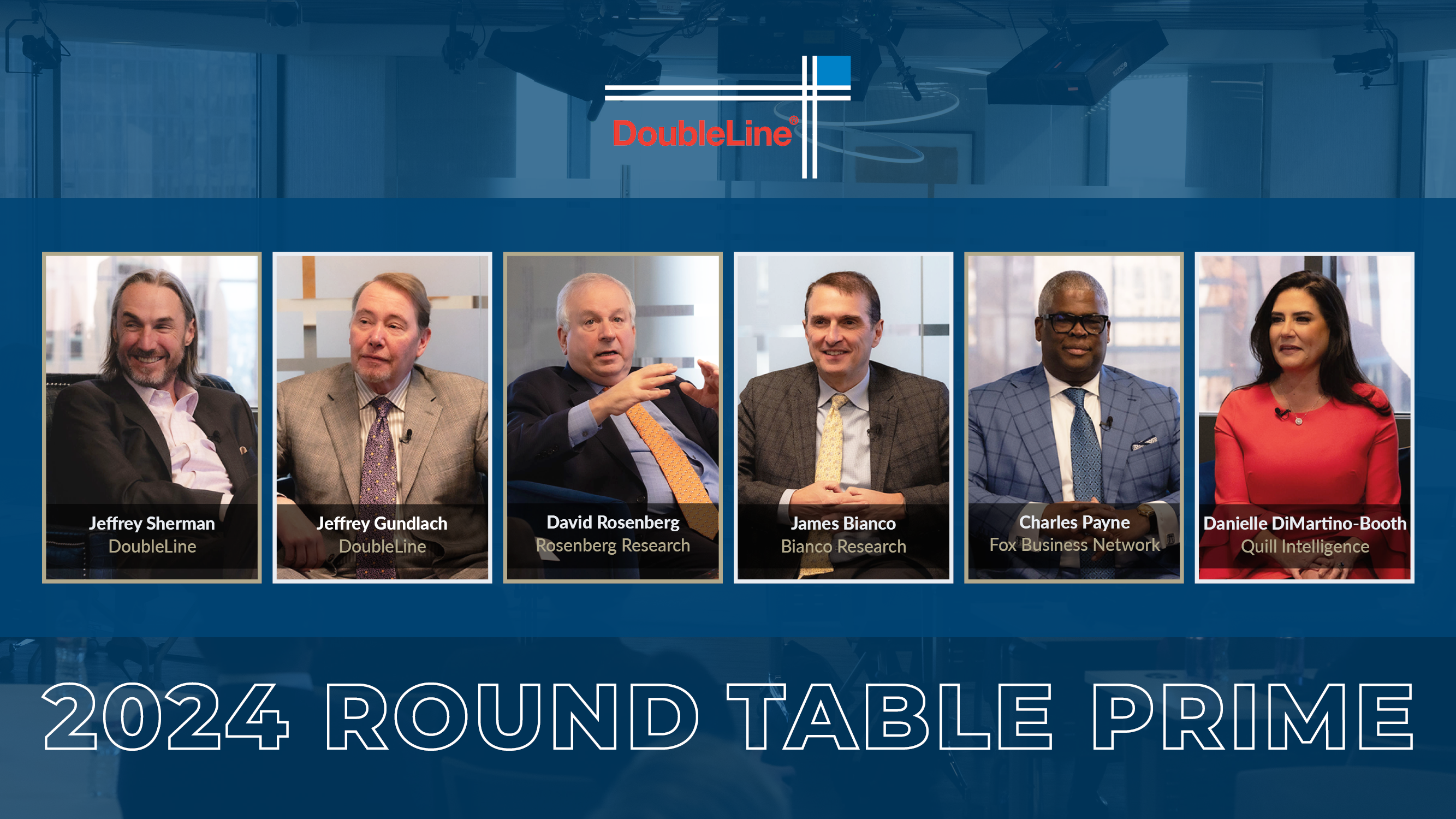
During the macroeconomic segment of its 2024 edition, participants in DoubleLine Round Table Prime among other issues debate the seeming failure of the most telegraphed recession in history to materialize in 2023, the intersection of Federal Reserve policy with a presidential election year and deep changes in the economy post-2020.
A recent report from the International Monetary Fund (IMF) has projected that AI will affect almost two out of every five jobs done by humans around the world. AI of course will impact work that is already somewhat or totally automated.
The fourth quarter of 2023 was a more favorable environment for active managers in the UK, Europe, Emerging Markets, U.S. Small Cap and Listed Infrastructure, while being more challenging for U.S. Large Cap, Global, Global ex-U.S., Japan, Australia, Canada, Long/Short and Global Real Estate managers.
Interest rates in most parts of the world appear to be stabilizing, as inflation trends continue to decline from the high levels seen in the summer of 2022. Learn more about the implications for hedge fund strategies from K2 Advisors.
Despite several physical gold ETFs on the market seeing strong outflows and spot Bitcoin ETFs stealing market share, gold miner ETFs haven’t necessarily faced the same problem of outflows.
A new report by BMO Capital Markets suggests that the price of gold is no longer being driven by real interest rates. What replaced them? I unveil the answer below.
While 2023 was the year of Fed rate hikes, the fixed income market is expecting 2024 to be the year of rate cuts. At the December 2023 meeting, the Federal Reserve’s own guidance was for three 25 basis point reductions in 2024.
Bitcoin rose past $41,000 amid a slowdown in outflows from the $20 billion Grayscale Bitcoin Trust that strategists said may help to stanch a two-week slump in the token.
Investors who wait too long to get off the sidelines may find they’ve missed out.
Investors will literally beg Jamie Dimon not to retire: One did so at JPMorgan Chase & Co.’s investor day last year. But the chairman and chief executive officer of America’s biggest bank can’t do his job forever.
Bitcoin has fallen below $40,000 after rising to just under $50,000 before the spot bitcoin ETF launch. Many investors expected this to be the beginning of a price rally that would be extended later this year through the halving event and take us to prices seen in 2021.
The expectation of higher corporate earnings in 2024 could help prop up the actively managed NEOS S&P 500 High Income ETF (SPYI). Of course, capital markets are brimming with optimism, with the expectation of rate cuts to come.
For the first time ever, ESG funds suffered net global outflows amid a major exodus by US investors from environmental, social and governance strategies.
Registered investment advisors have long leaned on the 60% equities/40% fixed income portfolio structure. While it’s not perfect, it has served clients well, broadly speaking.
Economic growth is barely positive in the Eurozone, and the Chinese stock market has been in freefall. But for all its doubters, the US economy and markets continue to shock the world. For a moment at least, that’s worth celebrating.
The BlackRock U.S. Equity Factor Rotation ETF (DYNF) is approaching its fourth birthday. The active ETF outperformed the S&P 500 over the past one- and three-year periods.
Two big things have happened in the crypto world this month: a public validation and a semi-private snub. Both of them bode poorly for its future.
China’s authorities are stepping up efforts to stabilize the stock market after a massive selloff. The collapse in valuations since a peak in 2021 makes them the world’s “best value proposition,” according to at least one market veteran.
When the Treasury Department previews its note and bond auction sizes for the next three months on Jan. 31, some of the projected sizes are likely to be the biggest investors have ever seen.
Defensive equity strategies that limit downside losses but lag too much in up-markets may be missing the mark. Is there another way to reduce volatility?
Amid expectations that the worst case scenario for interest rates this year is that the Federal Reserve will halt its tightening cycle, some fixed income investors may be inclined to take their eyes of floating rate notes (FRNs).
The anticipation of rate cuts to come this year is making for a busy bond month to start 2024. Now, regional banks are adding to corporate bond sales, according to data from Bank of America.
When markets are volatile, it's tempting to move into cash. But those high yields on short-term cash instruments aren't as attractive once taxes and inflation are factored in.
According to my guest today, the lagging effects of central bank tightening will lead to a further deceleration in growth, a mild U.S. recession, anemic growth in Europe, but more resilience in emerging markets. Past episodes of high U.S. inflation suggest it will take about two years to bring core inflation down by half from its peak level. Equity valuations are stretched, particularly in big tech. Monetary authorities have decreased their support. And governments have probably already reached the limits of the fiscal stimulus they can provide.
Given those challenges, you will learn about the opportunities for investors across a range of asset classes. There are quality U.S. and international stocks that trade at reasonable valuations and stand to benefit from important technology and secular trends. The expectation of lower interest rates in the future is creating opportunities in fixed income markets. That is in longer duration and in niche parts of the market like cat bonds and agencies.
Following approval of spot bitcoin ETFs, many believe bitcoin could be increasingly important in the future. The ETF wrapper adds much needed accessibility transparency, and liquidity, giving investors an opportunity to take advantage of all that crypto has to offer.
Join the experts at Invesco and Galaxy to learn all about the latest sensation in investing and discover how this opportunity can help your portfolio.
VettaFi’s Head of Research Todd Rosenbluth discussed the Goldman Sachs MarketBeta Russell 1000 Value Equity ETF (GVUS) on this week’s “ETF of the Week” podcast with Chuck Jaffe of “Money Life.”
The markets never fail to keep us guessing, but this year has shown even more evidence that predicting markets is a fool's game. What's in store for 2024? We have some ideas...
The Federal Reserve’s asset purchase program, known as quantitative easing, has twice helped save the US economy — first during the financial crisis and then again with the Covid-19 pandemic.
The US 30-year yield climbed to its highest level so far this year Wednesday after poor demand for an auction of five-year notes, a week before the Treasury is expected to announce a heavier borrowing schedule for the February-to-April period.
Nomura Asset Management’s Richard Hodges began the year by buying credit default swaps, worried that rate-cut bets were becoming too aggressive. He reduced the hedge when the cost of protection increased, and now stands ready to dip in again.
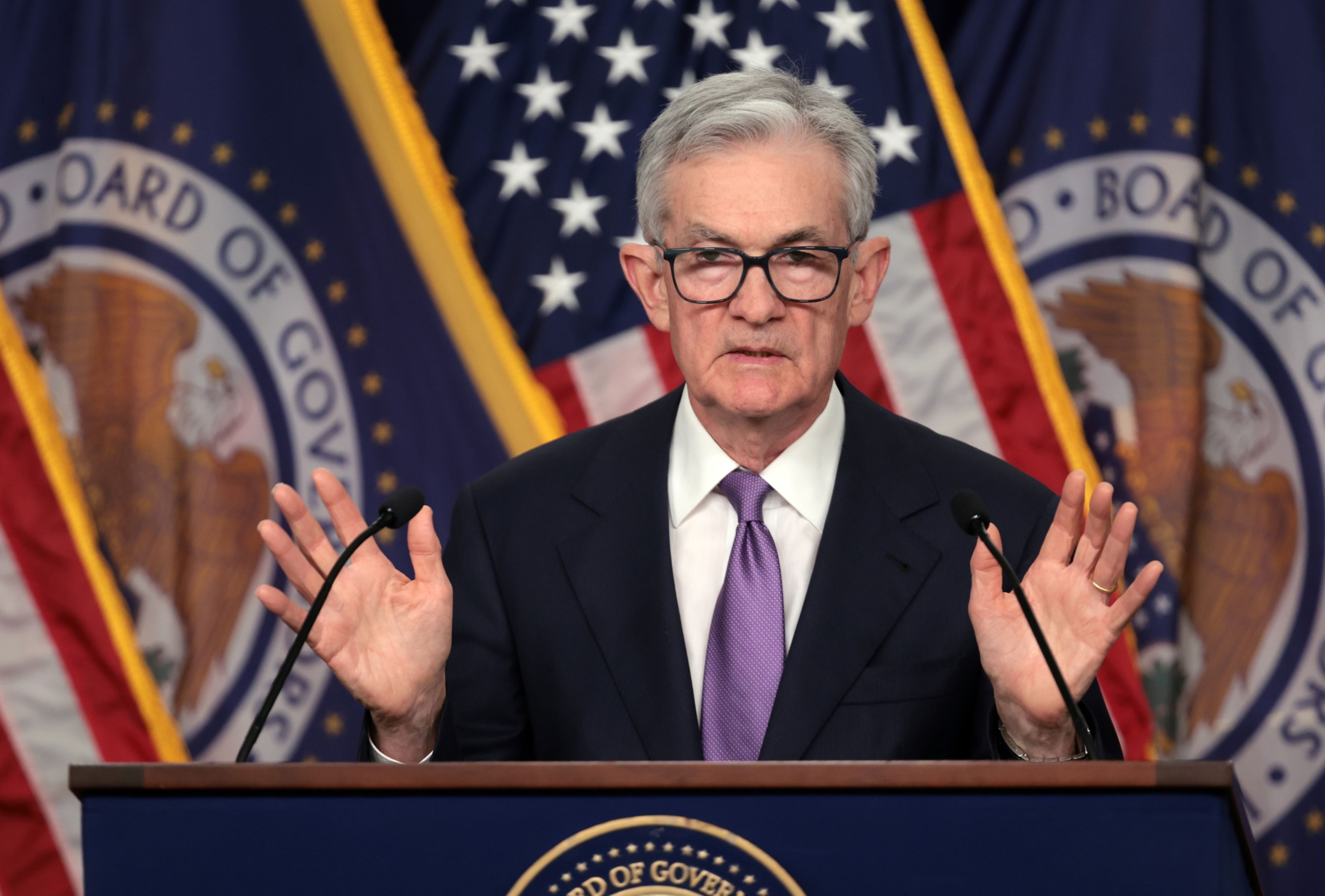
The Federal Reserve is expected to make interest rate cuts this year. But representatives from the U.S. central bank are sending the message that the cuts won’t be coming soon.
While the S&P 500's all-time high hasn't been accompanied by other parts of the market (notably, small caps), further gains are possible if breadth firms up.
Despite its original stated goal, US antitrust policy has always been used merely to ensure the free entry of competitors into all markets, rather than to address the problem of market power. But in the age of Big Tech, this approach has become woefully inadequate.
Improve your income potential with a tactical, unconstrained strategy that sources opportunities across geographies and asset classes. BlackRock Multi-Asset Income Fund takes a risk-first approach while seeking to deliver a consistently attractive yield.
As we get ready to review the Q4 earnings report, stocks have rallied sharply over the last two months
Gold has long been known as a safe haven and diversifying asset that investors turn to in times of economic and geopolitical distress. Last year was just such a year, with gold drawing the attention of investors of all stripes.
Today, VettaFi’s groundbreaking financial services conference Exchange rang the Nasdaq bell in Times Square. Exchange is slated to start on February 11 in Miami, Florida.
The euro celebrates 25 years of virtual existence this month, with its digital creation in 1999 followed by the introduction of physical notes and coins in 2002. It's embedded successfully as the domestic means of exchange within the 20-nation euro zone.
In the rapidly evolving outlook for interest rates, some things are still sacrosanct. The pace of price increases has slowed significantly, and the argument is now how much — rather than when — borrowing costs will be lowered this year.
China’s mutual fund houses are trying to tamp down investors’ enthusiasm for US stocks, putting new restrictions on buying into their products as demand soars.
No matter which way markets go, Goldman Sachs Group Inc. says some traders are modeled to sell stocks over the next week.
One powerful and underutilized marketing strategy is client testimonials and reviews.
The Fed may have set the inflation fire, but the same Fed under Paul Volcker also helped extinguish it. I will examine the change in mindset at the Fed in the mid- to late 1970s.
Bank loan income may decline if the Federal Reserve cuts interest rates. That doesn't mean investors should avoid them altogether, but it's important to understand the risks.
Last Friday, Bloomberg Senior ETF analyst Eric Balchunas joined VettaFi vice chairman Tom Lydon and head of research Todd Rosenbluth for the VettaFi Cryptocurrency Symposium to talk about the launch of the first spot bitcoin ETFs the day before.
Financial advisors are gearing up for a successful year and preparing for client reviews. We offer four actionable ideas and practices to help advisors address some key concerns many investors are having about the year ahead.
This week saw the annual World Economic Forum (WEF) in Davos, Switzerland. Top researchers join public and private sector leaders to explore the issues facing the world. Every year features an outlook for key risks; this year, the risks felt less hypothetical than they might have in calmer times.
Investor sentiment toward China has soured after a tough year for the economy and stock market. But the painful economic transition is also creating real opportunity.
After initial optimism at the start of 2023 spurred strong performance, munis subsequently struggled as the Fed continued its tightening policy, raising fed fund rates to 5.25%−5.50%, before pausing in September.
January 2024 is likely to be remembered for the strong launch of 10 new spot bitcoin ETFs and the uplisting of the Grayscale Bitcoin ETF (GBTC).