Most of the things we expected to happen during the first half of the year in fact did: Inflation eased, U.S. economic growth slowed, the Federal Reserve appears to be near the end of its rate-hike cycle, and the U.S. government debt ceiling standoff was resolved before a potential default.
The Federal Reserve paused in June but raised its estimates for the policy rate later this year. We expect a July increase but remain skeptical about subsequent hikes.
For this edition of Bull vs. Bear, James Comtois, and Elle Caruso debate the pros and cons of investing in high-yield fixed-income ETFs.
They’re the gilded class of high finance, whose shrewd bets and jumbo-sized paydays are the envy of Wall Street.
The surprising resilience of the economy despite the aggressive tightening remains the Fed’s biggest challenge at this point in the cycle. Below we discuss how the Fed’s thinking will likely evolve for the remainder of the year and what it means for the markets.
The spring of 2022 was rough for the US economy. Markets plunged while inflation spiked. “Stagflation” was the word of the day, and for a period of time, there was some merit to that outlook.
One of Wall Street’s most bearish strategists isn’t giving in to the bullish about-turn in equities, saying investors may be in for “a rude awakening.”
The potential for a Fed pause presents an opportunity for investors to consider adding duration back into their portfolios.
Sometimes it feels like the economy and markets are on different tracks.
Chief Economist Eugenio J. Alemán discusses current economic conditions.
The European Central Bank (ECB) hikes rates and signals more tightening ahead.
Naturally, the recent banking crises in the US and Europe raise concerns about EM exposure to financial sector risks too. We’ve found that the EM financial sector overall looks strong and resilient—but that several individual EM countries’ banks could be vulnerable.
A year ago, the US Consumer Price Index was rising at an almost 9% annual rate. The Federal Reserve was trying to change that trend with tighter policy. But it wasn’t just the Fed. All of us—businesses, consumers, everyone—responded to the pain.
Measuring changes in consumer prices is a messy, imprecise undertaking, one that can result in conflicting data, and yet these data are used by both the public and private sectors to guide important policy decisions.
Money managers are flocking to extremely precise fixed-income exchange-traded funds as a hawkish central bank and economic uncertainty batter the bond market.
Going into the Fed meeting today it seemed like the consensus was toward a skip, pause, or possibly a full-on stop in raising interest rates going forward. Indeed, there are reasons to be optimistic about inflation coming down despite currently sticky “core numbers.”
For the first time since beginning the current tightening cycle in March 2022, the Fed opted against raising the federal funds rate at the June 14, 2023, FOMC meeting. The decision officially ends a run of 10 consecutive interest rate hikes by the central bank.
State and local tax revenues sank in April, yet we believe most governments have strong fiscal positions, with ample reserves and budget flexibility to manage the decline.
Using our AI engine, we prompted a description of the Atlanta Fed’s Flexible CPI. What we got was a pretty decent explanation.
Macroeconomic uncertainty has sparked questions over the durability of the traditional 60/40 portfolio—highlighting why investors may want to add alternative investments to the mix.
Bond traders are stepping up wagers that the Federal Reserve will steer the US economy into a recession.
Turns out not even hawkish saber-rattling by the Federal Reserve is enough to awaken stock investors from the spell cast on them by artificial intelligence.
The US core consumer price index — which excludes volatile food and energy prices — rose 0.4% in May from a month earlier, extending its streak of moderately bad inflation readings of roughly that size to six. On a three-month annualized basis, core CPI has been around 5% since November.
The Federal Reserve will meet this week and announce its decisions on Wednesday.
The Euro Stoxx 50 Index is up about 13% year-to-date. Not a bad return for a region whose largest economy is in recession, and whose second largest is facing one of the worst inflation fights in decades.
In this article, we explore three of those important economic releases from the past week: the S&P Global Services PMI, the ISM Services PMI, and the trade balance.
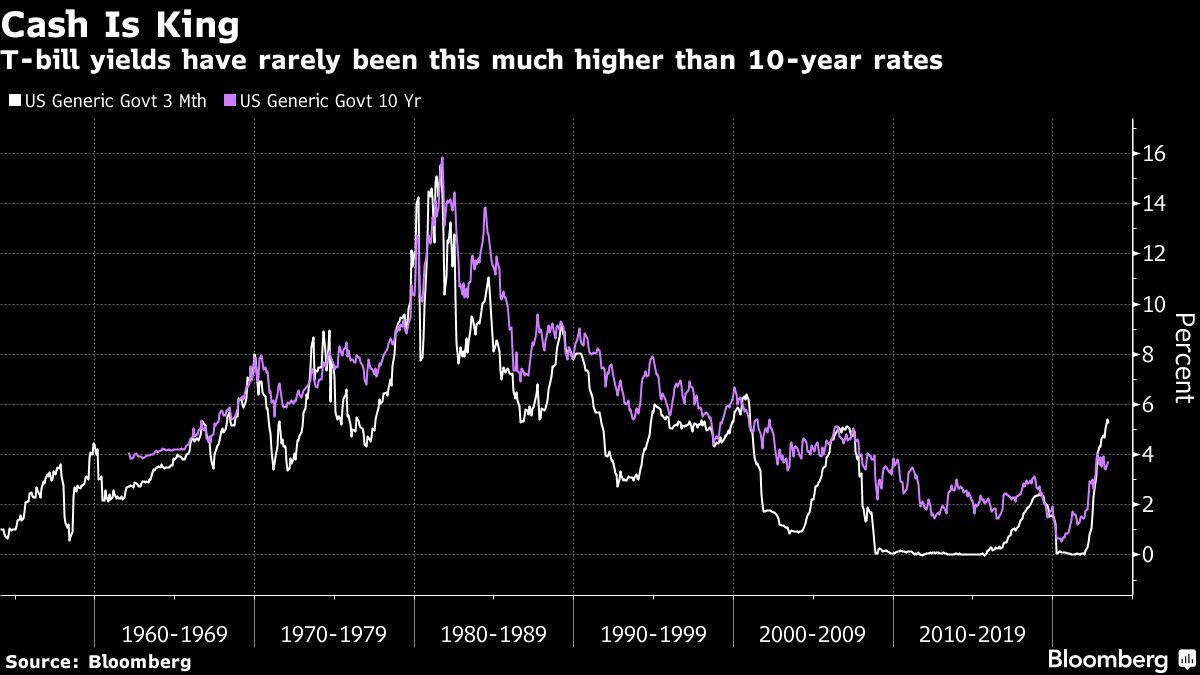
Advisors parking cash in short-term T-Bills yielding are missing out on potential capital appreciation. The current fixed income market provides an opportunity not seen since the financial crisis to earn total return from longer-dated, high-duration bonds.
Federal Reserve officials paused on Wednesday following 15 months of interest-rate hikes but signaled they would likely resume tightening to cool inflation, projecting more increases than economists and investors expected.
With interest rates elevated and the number of UK mortgage deals shrinking on a daily basis, many borrowers are seeking to shore up their finances by paying down their home loans early. However, just because you can doesn’t mean you should.
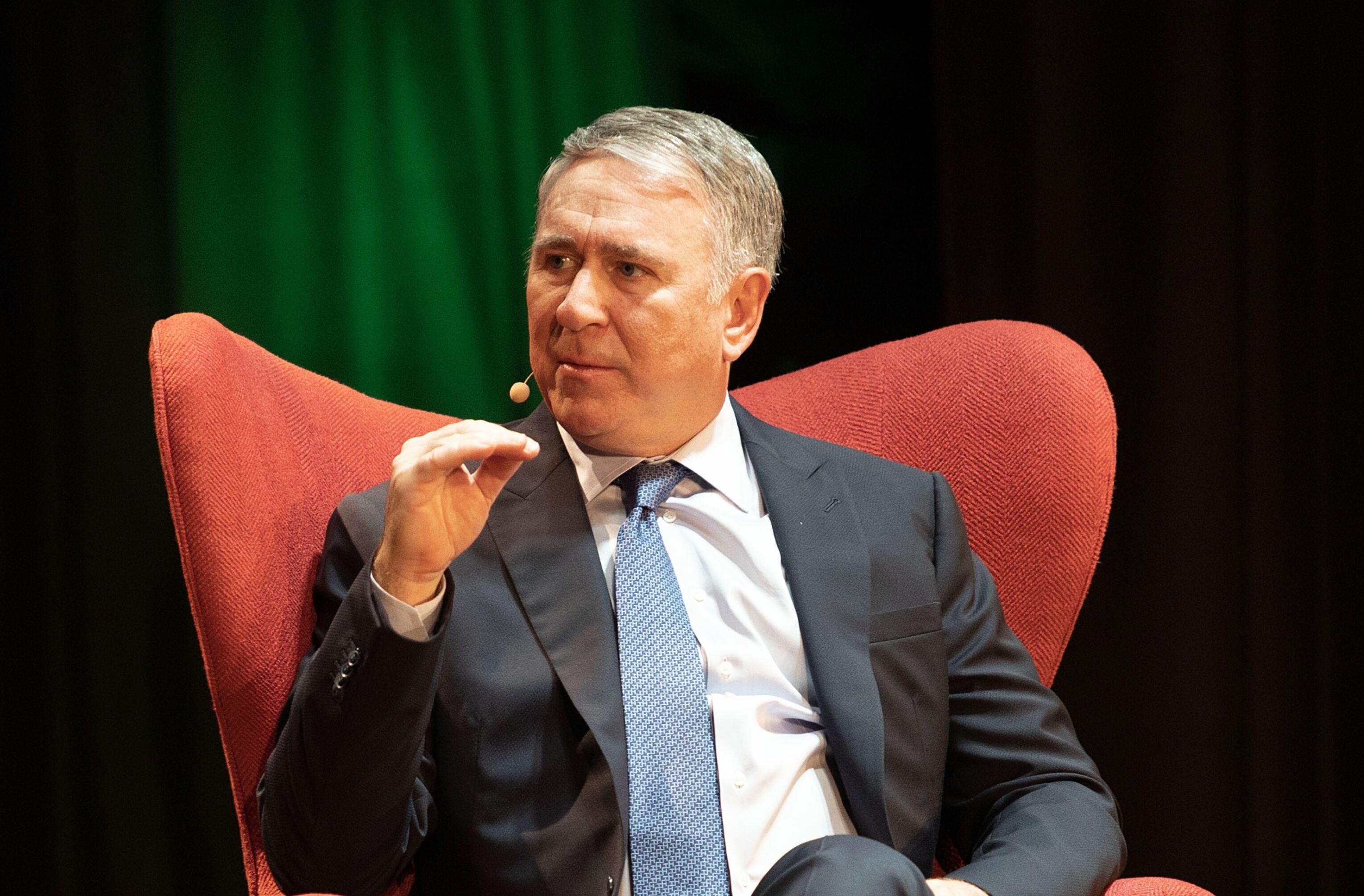
Ken Griffin, whose hedge fund churned out a record $16 billion for clients last year, is increasing his focus on credit trading as he braces for a potential US recession.
The market for wagers on the course of Federal Reserve policy shows that traders now expect the US central bank’s policy rate will peak in September, where they previously looked for it to crest in July.
With their ability to act as an inflation hedge, diversified, and return enhancer, commodities should be considered an important portfolio allocation over the long term.
A broadening out in market performance would help bolster a more sustainable stock rally, but that hinges on increasing clarity for monetary policy, recession risk, and bank stress.
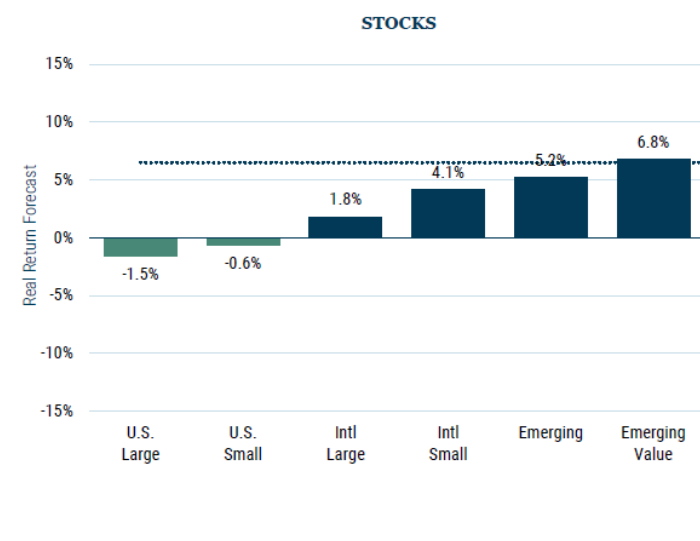
GMO has published a new seven-year asset class forecast.
A perennial challenge faced by all big or small, developed or developing economies is achieving sustainable economic growth that boosts standards of living and financial stability. Globalization has been the road that brought economies to that destination.
According to the ICI, assets in money markets have ballooned to $5.3 trillion—the equivalent of the world’s 5th largest economy. And with so much cash sitting on the sidelines, a fundamental question persists. Are investors being compensated to wait? Find out why sitting in cash could be a risky proposition as inflation and economic growth show signs of slowing.
Don’t miss an in-depth conversation with fixed income experts from VettaFi and AllianceBernstein, who will share insights on how to position portfolios amid a challenging market environment.
Topics will include:
The crypto verse has seen what seems like a lifetime of ups and downs already this year, yet activity in products linked to the industry has been nearly nonexistent, with analysts saying that investors have abandoned the sector without plans to come back anytime soon.
William Eigen isn’t about to apologize for his bond fund’s performance this year. Yes, his $8.7 billion JPMorgan Strategic Income Opportunities Fund is trailing about 60% of its peers after trouncing nearly every one of them last year.
Big money managers are slashing bearish wagers and boosting equity exposure ahead of a week of potentially market-moving news.
In August 2020, Exxon Mobil Inc., the largest American oil company, was expelled from the Dow Jones Industrial Average, the world’s most famous stock index. It was described at the time as green triumphing over greed.
With several EM countries facing elections in the next 12 months, Eric Spencer, Senior Research Analyst on Loomis Sayles' Global Emerging Markets Equity team, weighs in on potential risks and opportunities.
In many respects, COVID-19 was not a temporary disruption.
The Eurozone just entered a recession as the region posted two consecutive quarters of negative economic growth. The manner in which it entered a recession is a bit quirky.
VettaFi’s Lara Crigger offers perspective on two of the year’s most noteworthy ETF stories. Northern Trust’s Michael Natale presents the firm’s base case on equities and fixed income. Teucrium’s Sal Gilbertie spotlights several ETFs including their recently launched AiLA Long/Short Base Metals Strategy ETF (OAIB), which leverages artificial intelligence.
Clearly, investing in gold has been an epic failure.
A key question advisors will face from clients is whether a recession is likely and if so, what to do about it. The widespread pessimism among consumers and investors adds another layer of complexity to portfolio management.
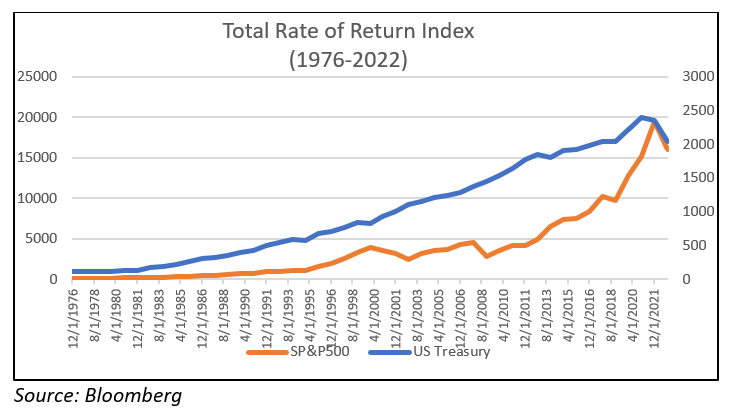
While the 60/40 approach may rapidly become obsolete, the debate over its value has bolstered the teaching of MPT and stressed the benefit of extensive diversification as the most efficient portfolio construction methodology.
Soaring corporate profits are a big part of the inflation problem, and keeping interest rates high is the best way to rein them in, according to Bloomberg’s latest poll of professional and retail investors.