The Santa Claus Rally often grabs headlines because markets tend to deliver solid gains during this short window — or perhaps because it falls during a typically quiet news cycle.
Challenging the conventional view of gold as a bubble, this analysis explores whether the metal's 109% surge since 2024 signals a permanent paradigm shift rather than a looming crash.
After three strong years in a row, major indexes ended the year seeking direction. While optimism abounds, here are some potential issues that could trip up U.S. stocks.
Companies across the US and Europe are preparing to sell a record amount of high-grade bonds in 2026, testing investors’ appetite as yields drift lower.
With less than two weeks to go, 2025 is set to be a record-breaking year for the $13 trillion US exchange-traded fund industry: new high-water marks in flows, launches and trading volume. It’s up for debate whether the next few years will be as kind.
Before we turn the page on 2025, let’s take a moment to reflect on the key trends that shaped the economy and financial markets this year. Despite heightened policy uncertainty and persistent geopolitical tensions, both proved remarkably resilient.
This week, President Donald Trump ordered a blockade of oil tankers entering and leaving Venezuela, dramatically escalating U.S. pressure on the Maduro regime.
Many people only respond financially to the end-of-season of income changes like job raises, bonuses, and commissions. Carey tapped into something much smarter: letting a single holiday song transform into an evergreen asset that pays her consistently every Christmas. That can apply to your own personal finances as well.
The market’s big “aha” moment last week was a CPI print that came in meaningfully cooler than expected, followed immediately by the usual chorus that it must be “distorted.”
In this year-end reflection, we eschew the typical theater of market predictions to instead examine the "knew-it-all-along" effect and the cognitive illusions that make past volatility seem orderly.
Over the last couple of years, inflation alarmists such as Paul Tudor Jones, James Grant, and Jeff Gundlach have all said that inflation is returning with force. In different ways, they each stated that they would not own Treasury bonds due to the expectation that inflation would rise as the dollar declined due to the ongoing deficits.
Emerging markets are poised to start 2026 as a favored trade on Wall Street, with money managers betting a multi-year cycle of investment inflows is underway.
The S&P 500 is near all-time highs, leading some to question whether markets are in a bubble. A careful analysis of past bull markets suggests this is not the case.
This article explores the tension between individual economic outlooks and the institutional desire for collective stability in a highly scrutinized environment.
The global race to build AI infrastructure has accelerated sharply. Estimated capital expenditures now total more than $5 trillion, equivalent to the annual GDP of Germany.
The era of "easy" yield in money market funds is ending as the Federal Reserve begins its long-awaited series of rate cuts. To stay ahead of shifting borrowing costs, investors are increasingly looking toward the flexibility and proprietary research of actively managed fixed income ETFs.
In the current installment of The Roundup, Oaktree experts explore the need for renewed vigilance in the direct lending market, discuss the future of private credit in Europe, identify the evolution of the high yield bond market, and reflect on the backdrop for emerging markets equities.
Gold traded near a record as investors assessed US inflation data that came in softer than expected. Platinum extended a breakneck rally that saw it surge close to $2,000 an ounce.
Doug Drabik discusses fixed income market conditions and offers insight for bond investors.
Elevated yields, steeper yield curves, and ongoing volatility make core bonds a compelling choice for total return, income, diversification, and downside risk mitigation in today’s markets. Active management is key: Historically, it has helped core bond portfolios outperform passive strategies through a rigorous, diversified approach.
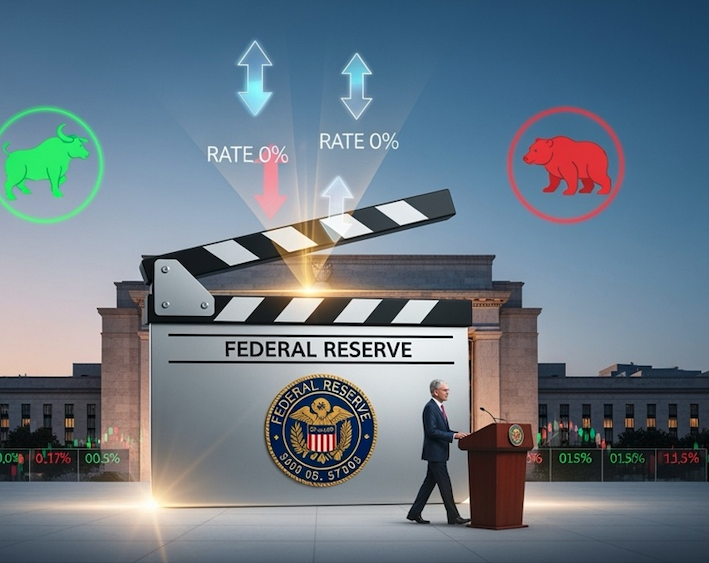
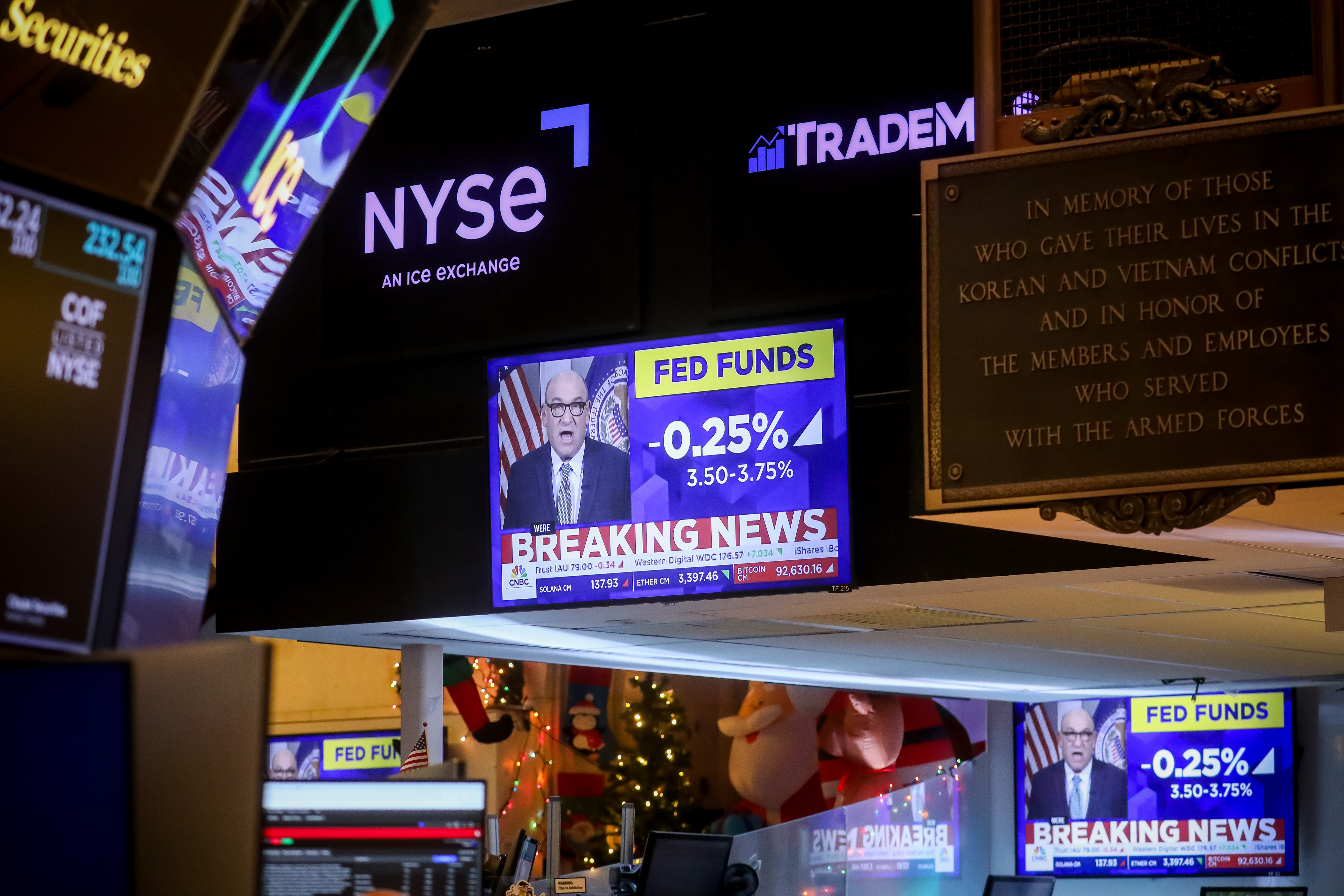
Last Wednesday, the U.S. Federal Reserve (Fed) delivered a widely anticipated 25-basis-point rate cut at its final meeting of the year. In the press conference that followed, Chair Jerome Powell emphasized that monetary policy is now much closer to neutral and that the central bank is likely nearing the end of its rate-cutting cycle.
Dividends offer a powerful dual benefit: they provide an immediate, consistent stream of passive income, while also being an incredible tool for long-term wealth building through the magic of compounding when reinvested. The yield is the essential metric that measures this horsepower, allowing investors to effectively compare and manage their income-generating investments.
ClearBridge Investments expects a broadening of market participation that should benefit more diversified portfolios in 2026.
A generation ago, a single income could support a family, buy a house and pay for a vehicle or two in the driveway. Today, even two high earners are struggling to purchase a new home.
Researching lesser-known economic indicators on the thinkorswim® platform is a low-effort way to potentially elevate an investor's game.
The Federal Reserve delivered a "dovish version of the hawkish cut," confirmed by the market's rally, new equity highs, and subtle shifts in leadership. The surprising effective end of Quantitative Tightening and a softening inflation framework underscore a clear turn toward accommodation and ample market liquidity.
While the Federal Reserve is expected to cut short-term interest rates next year, these reductions are predicted to have minimal effect on long-term rates, such as the 10-year Treasury yield.
Emerging market carry trades, a popular strategy that returned about 17% in 2025, are widely expected to continue yielding gains in 2026 due to persistent interest rate gaps and a weakening US dollar.
As someone who views corporate finance through a pragmatic lens, I’ve been closely watching the current surge in capital expenditures (capex) tied to artificial intelligence (AI). When a company spends massive amounts of free cash flow and takes on increasing debt, does that lead to a positive outcome for investors?
We expect the US economy to remain resilient in 2026, providing a constructive backdrop for risk assets, as well as corporate and municipal credit. But the mix of macro uncertainty, policy division and elevated deficits could widen the range of potential outcomes and increase rate volatility—especially as the Federal Reserve approaches the neutral rate.
Each December, those of us in the investment business lay out our expectations for the coming year. We do so with the knowledge that no one has a clear crystal ball (it’s one of the reasons I like Oprah’s quote).
Investors are navigating not just uncertainty, but an unstable environment influenced by tariffs and inflation, among other factors. While volatility may increase, there is likely room for another solid year in 2026, especially for fixed income and international stocks
The economic narrative last week was shaped by a highly anticipated Federal Reserve rate cut, which came against a backdrop of conflicting signals in the labor market.
This year has witnessed some of the most significant policy shifts in recent memory. Economic, strategic and fiscal norms have all been challenged, creating a level of uncertainty that has been hard keep up with.
Around this time, most mutual fund and exchange-traded fund (ETF) providers release estimates of their upcoming distributions. We track and aggregate these early numbers to help you better prepare for what to expect.
The Federal Reserve lowered its policy interest rate by 25 basis points, as widely expected. However, Fed Chairman Powell hinted at a pause ahead, and there were several dissents.
The Federal Reserve delivered a widely expected 25-basis-point (bp) rate cut in December, then signaled a more data-dependent path ahead. Barring an economic shock, we probably won’t see another rate cut until the second half of next year.
International stocks could be poised for another strong year in 2026 due to accelerating global growth, attractive valuations and the potential for dollar weakness.
Despite the concern post-2024 election about rising U.S. deficits and a potential return of "bond vigilantes," the supply side of the Treasury market has remained stable, with deficits settling near the $1.8 trillion baseline.
Gold wavered as traders mulled the Federal Reserve’s outlook for interest rates. Bullion gained as much as 0.5% in US trading before paring some gains, while Treasury yields and the dollar declined.
US Treasuries rose after the Federal Reserve lowered interest rates by a quarter-point for a third straight meeting and left the door open to additional policy easing in 2026.
The dot-com bubble burst in 2000. Now, 25 years later, anxiety abounds about the potential for a similar AI bubble burst and resultant crash.
The year 2025 exemplifies the prevailing regime — markets driven less by fundamentals and traditional business-cycle dynamics and more by fiscal and monetary policy influence. Today, policy decisions have emerged as one of the most impactful forces driving market direction.
After a turbulent start to 2025 defined by US policy shocks, attention shifted to AI optimism and corporate fundamentals, with earnings and capex intentions often eclipsing traditional data releases. Despite these twists, returns were solid across asset classes.
We believe the macro environment will continue to be unstable given policy crosscurrents and a wobbly labor market, but stocks can likely churn higher given a firmer earnings backdrop.
After a "mini swoon" in November driven by AI bubble concerns, market tranquility has returned this December as investors await the Fed's widely anticipated 25 basis point rate cut and Chair Powell's subsequent remarks.
Three years with five reliable recession signals, five recession scares, and no recession. Why? And what comes next. A useful framing of the economy for the last three years and why a recession isn’t imminent now.
Active fixed income ETFs took center stage at VettaFi's recent 2026 Market Outlook Symposium, with two industry leaders sharing thoughts.
I’ve lived through several bubbles and read about others, and they’ve all hewed to this description. One might think the losses experienced when past bubbles popped would discourage the next one from forming. But that hasn’t happened yet, and I’m sure it never will.
With the Fed's final 2025 meeting approaching, markets anticipate a third rate cut amid labor weakness, though the FOMC remains publicly divided on balancing a cooling job market against sticky inflation.