Unlike most of the rest of the world, I will attempt to minimize all there is to say about the beginning of the next 4 years, as the persistent yack and what to make of it reverberates in all corners of the financial globe.
The central question we want to address in this note is how to quantify how “price sensitive” insurance buyers should be, and in the context of insurance, what is the “price” they should be sensitive to?
Today we are going to revisit that matrix updated through 2024. We will see what we got right and wrong, what further inferences we can now make and why I think it confirms my general shift in market strategy over the past few years.
Portfolio Manager Andrew Mattock, CFA, explains the importance of assessing U.S. tariffs as a component among external variables that can influence, rather than drive, investment returns.
AI drug developer Recursion Pharmaceuticals Inc. is considering an Amazon Prime-style subscription model for selling its pipeline of medicines.
Looming U.S. and global policy shifts may potentially rattle markets, but a tactical and flexible approach could help investors navigate risks and opportunities regardless of how events play out.
Trade war fears and disappointing data have sparked a flood of defensive buying activity in consumer staples, utilities, and healthcare stocks.
Dean LeBaron’s name may not be familiar to many readers, especially those who only began their careers in the 21st century. But all of us should know who he is. Before there was even a term for it, Dean was the first truly successful quant.
None of us outside Trump’s inner circle know what the real goals are. What looks like needless chaos might lead to benefits that outweigh the costs. One potential benefit is revenue. Could the tariffs produce significant tax revenue that would help reduce the federal debt? The president seems to think so.
Apple Inc., as it seeks relief from US President Donald Trump’s tariffs on goods imported from China, said that it will hire 20,000 new workers and produce AI servers in the US.
Attractive yields and a broad opportunity set bolster active bond investments amid today’s uncertain macroeconomic and market outlook.
For a few months now, I’ve been referring to today’s heightened geopolitical climate as the “new red Cold War,” where artificial intelligence (AI)—not necessarily fighter jets and nuclear weapons—serves as the primary battleground between the U.S. and its adversaries, most notably Russia and China.
President Donald Trump ordered his administration to consider imposing reciprocal tariffs on numerous trading partners, raising the prospect of a wider campaign against a global system he complains is tilted against the US.
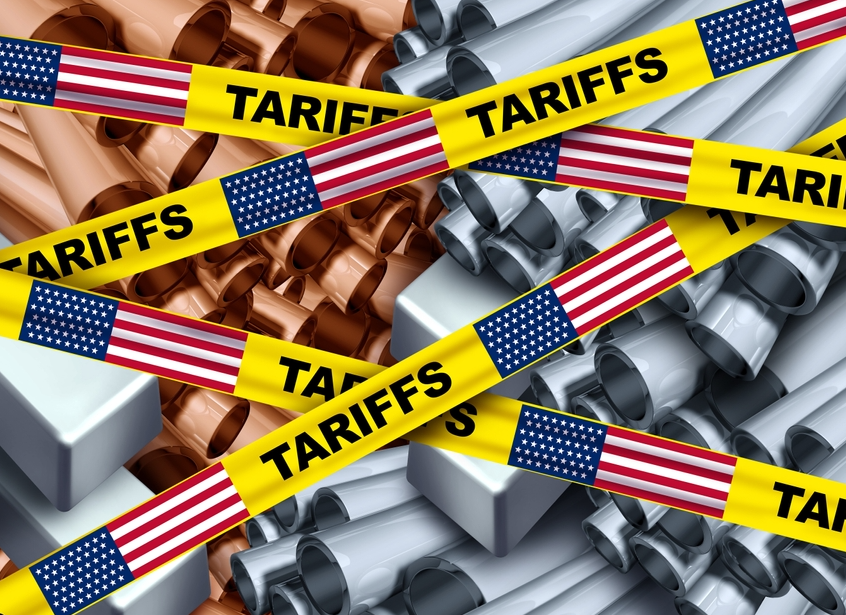
A closer look at the broader landscape reveals why the United States remains positioned to pursue a strategy of tariffs.
Startup investors including Alphabet Inc.’s Google and SoftBank Group Corp. are betting that quantum computing, often thought of as a fantastical science experiment, is getting closer to having sweeping real-world applications.
Bloomberg’s bonus calculator offers a revealing look at the divergent value of Wall Street employee payouts.
In this note, we'd like to share our analysis of one potential solution we've been hearing about a lot lately. It involves leveraged direct index tax-loss harvesting.
We hope you enjoy the latest newsletter from Harold Evensky.
The ETF industry reached a significant milestone on Wednesday, as there are now over 4,000 ETFs trading at the same time.
Tariffs could upend the U.S. auto and energy sectors.
On this episode of “ETF of the Week” podcast, VettaFi’s Head of Research Todd Rosenbluth joined Chuck Jaffe of Money Life to talk about the Calamos Bitcoin Structured Alt Protection ETF – January (CBOJ).
Deregulation is among President Donald Trump’s most enduring policy themes. In his 2016 campaign, he called for widespread deregulation and made it a central plank in both his economic and energy platforms.
During a rocky fourth quarter, strength in the financials sector was a unifying theme across global markets.
In our view, active investors face opportunities to outperform created by looming policy changes and the macro landscape.
Treasuries rallied on Monday as investors flocked to the safety of US government bonds after equities slumped in a selloff driven by technology shares.
In mid-2023, the estimated costs to roll S&P 500 futures on a quarterly cycle was roughly 0.40%, or 40 basis points (bps) annualized—a fairly justifiable expense for most investors considering the benefits of the instrument.
The gap between US federal spending and tax revenue is currently bigger, as a share of gross domestic product, than it’s ever been outside of major war or other crisis.
On this episode of the “ETF of the Week” podcast, VettaFi’s head of research, Todd Rosenbluth, discussed the Invesco KBW Bank ETF (KBWB) with Chuck Jaffe of Money Life. The pair discussed several topics related to the fund to give investors a deeper understanding of the ETF overall.
Donald Trump opened his second term as US president with a market-jolting recalibration of his tariff policies, in a sign of turbulence ahead for investors and corporate executives.
Chinese officials are evaluating a potential option that involves Elon Musk acquiring the US operations of TikTok if the company fails to fend off a controversial ban on the short-video app, according to people familiar with the matter.
On the inaugural edition of Market Week in Review for 2025, Senior Director and Chief Investment Strategist for North America, Paul Eitelman, discussed Canadian Prime Minister Justin Trudeau’s resignation as well as the latest batch of U.S. and global economic data.
Gold certainly had a great 2024, but 2025 is already shaping up to be an opportune year to build up more exposure through ETFs.
2024 was about as good as it gets in the equity markets – with the BGEP up 31% and the broader market as a whole posting double digit gains. Underneath the surface, we believe that there are three main drivers of the year’s solid returns. We discuss them below in our market review and outlook.
Stocks rallied in 2024, delivering a second consecutive year of gains exceeding 20%, as investors embraced cooling inflation, falling interest rates and the prospect of lower corporate taxes under a second Trump administration.
Change is a catalyst that can drive innovation and help position businesses in all industries for sustained success. The adoption of wealthtech illustrates the transformative power of embracing change.
Recommend reading that provides a bed of knowledge for the key themes we think will define 2025. Ours differs from other lists you might see elsewhere at this time of year in that we focus on relevance rather than recency, though there are new books here, too.
Happy Holidays! As the page for the new calendar year will soon turn, three cheers for a happy, healthy, and prosperous new year! With 2024 rapidly drawing to a close, we reflect on the year and all that’s transpired—our readers are wonderful, the economy remains in good shape, and market returns have been stellar for those who participate.
Has the U.S. economy diverged from the global economy, or are a lot of economic canaries in coalmines keeling over and warning the U.S. is soon to catch down?
From start to finish, 2024 was a year of change, with a multitude of implications for investors.
Private credit firms want more than corporate lending. The largest are laying the groundwork to finance everything from auto loans and residential mortgages to chip manufacturing and data centers in an effort to swell the size of the market by the trillions.
The range of potential economic outcomes is wide, but a solid starting point suggests resilience.
Energy is everything. Or, if Einstein was right, you and I are just energy in material form. Accelerate us to lightspeed squared and we might become something else.
Portfolio managers and market strategists from Payden & Rygel review the opportunities and risks ahead for four bond market sectors: high yield, emerging markets, global bonds and low duration securities.
Do you recall the famous line from the movie Glengarry Glen Ross? “Always Be Closing.” This may be good advice later in the process of working with a prospective client, but in the first conversation, try this instead: Always Be Curious.
CEO Ali Dibadj highlights the three macro drivers that investors must navigate in 2025 and beyond, as well as the importance of actively positioning for a brighter investment future.
In the port city of Duluth, Minnesota, local activists and Washington-based groups are coalescing to scrutinize — and possibly stall — a $6.2 billion acquisition of a power utility led by Global Infrastructure Partners.
If you thought the detention and subsequent release of Resolute Mining Ltd.’s chief executive by the government of Mali two weeks ago was a one-off, you would have been wrong.
Assets in money market funds reached an all-time high of $7 trillion this past month. Now that rates are moving lower, money market yields may not be as attractive to many investors and assets may gradually leave money funds.
It’s the anniversary of the first-ever controlled nuclear fission chain reaction. And it’s the day that Enron filed for Chapter 11 bankruptcy in 2001.
VettaFi spoke recently with Nate Williams, a vice president and ETF specialist with Franklin Templeton, about the growth of its ETF business.