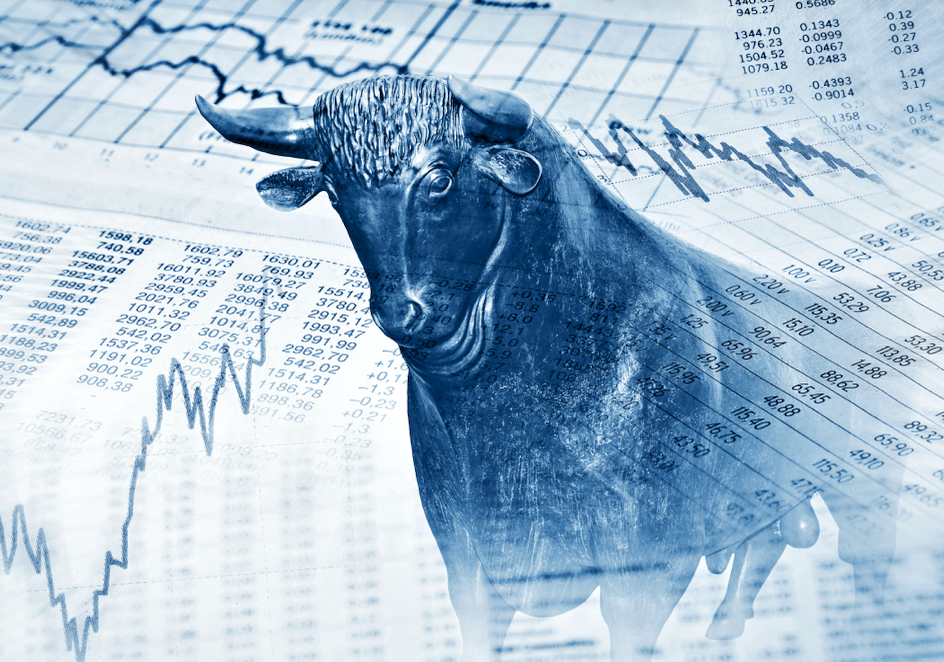
Rising margin debt levels signal increasing speculation and leverage in the market, with the cost of carrying this debt nearing historical peaks that have typically preceded significant stock market corrections.
I’ve lived through several bubbles and read about others, and they’ve all hewed to this description. One might think the losses experienced when past bubbles popped would discourage the next one from forming. But that hasn’t happened yet, and I’m sure it never will.
Roxanna Islam, Head of Sector & Industry Research at VettaFi, shares her perspective on several recent ETF developments, including Vanguard opening brokerage access to spot crypto ETFs, Goldman Sachs’ acquisition of Innovator ETFs, and the SEC’s pushback on filings for 5x leveraged products. Petra Bakosova, CEO of Hull Tactical and Portfolio Manager of the Hull Tactical U.S. ETF (HTUS), explains the firm’s approach to delivering tactical, risk-managed S&P 500 exposure.
This week’s data presented a mixed picture of the U.S. economy as investors look ahead to the Federal Reserve (Fed) meeting next week.
A conventional data center uses between 5,000 and 15,000 tons of copper. A hyperscale data center, on the other hand—the kind being built to run artificial intelligence (AI)—can require up to 50,000 tons of copper per facility, according to the Copper Development Association.
The UK and Japan are responding to investor demand to boost short-term borrowing, a shift in strategy that offers governments lower interest payments but exposes them to potentially costly rates swings at the time of debt rollovers.
This has been a bumpy year for the US economy. Although there was a massive boom in AI-related investments in 2025, policy-induced uncertainties and disruptions to official data releases clouded the picture.
Google, once seen as lagging after the launch of ChatGPT, is now surging in the AI race with its new Gemini 3 model winning praise and driving investor confidence.
The U.S. economy’s recent growth has a distinctive engine: large‑scale capital expenditures (capex) tied to artificial intelligence (AI). Firms such as Microsoft, Alphabet (Google), Meta Platforms, and Amazon have announced massive investments in data centers, servers, networking equipment, and AI infrastructure.
This article explores the growing changes and challenges facing the Federal Reserve. It argues that due to political pressure and fiscal irresponsibility from Congress, the Fed is losing its policy effectiveness and its long-held tradition of consensus voting is breaking down, leading to an era of unpredictable decisions.
Answers to questions investors are currently asking about Treasury bonds, tax policy, credit quality and other issues currently affecting fixed income investments.
In times of uncertainty — whether in sport or in markets — the ability to separate fact from feeling — or ideology — is critical. This principle applies across leadership, investing and even today’s AI-driven economy.
As 2025 nears its final 100 calendar days, market focus is already beginning to turn forward and attempt to reconcile what market drivers could remain in place, and what could change in the first year of the new half-decade. While not an exhaustive list, here’s some of our early keys to 2026.
Thirty-three nations, including new signatories Senegal and Rwanda, have now committed to a global pledge to triple nuclear power capacity by 2050. The World Nuclear Association suggests this ambitious target of installing about 1,200 gigawatts is achievable if governments fully implement their promises. However, other forecasts indicate meeting this goal will be challenging given current capacity projections.
As someone who’s been involved in capital markets his entire adult life, I can safely say that gold investors haven’t seen a period like this in decades. The third quarter of 2025 was nothing short of historic, and in many ways, I believe we’re witnessing the beginning of a new era for the yellow metal.
As happened in the previous era, several forces are combining to keep inflation alive. Today I want to review what’s happening. This won’t be a fun letter to read, but it’s important. You need to prepare for what could be coming.
We were in the camp that the Federal Reserve (Fed) should have reduced interest rates during the first half of the year, taking advantage of the underlying disinflationary path during that period.
My first experience with a major economic/stock market bubble was the dot-com bubble of 1998-2000. Many investors forget that the Nasdaq and S&P 500 Index bubble that ended March 10, 2000, was the first bubble in a series of three bubbles.
Consumers are in a sour mood over inflation and jobs as major retailers prepare to report earnings and offer their outlooks for the holiday shopping period.
Though we are getting limited amounts of economic data during the federal government shutdown, the official and private sector data we are receiving generally paints a positive picture for U.S. economic activity.
Investors are pouring money into active ETFs, but a closer look reveals a migration of assets into the wrapper instead of a resurgence in alpha-chasing bets.
Hints of reforms to ease foreign-ownership limits in Saudi Arabia set off the sharpest rally for its equity market in years this autumn, reigniting investor curiosity.
Following a 9-month hiatus in its rate-cutting cycle, the Federal Reserve (Fed) recently resumed monetary easing, with cuts in September and October 2025 in response to signs of a softening labor market.
Warren Buffett has raised a red flag about a segment of the housing market that deserves more attention – senior homeowners (i.e. homeowners over sixty years old). He has noted that Americans over 60 have been taking on increasing amounts of debt, a trend that could pose broader risks to the economy.
As an advisor, I also have come across cases of “financial secrecy” in which one partner hasn’t been forthcoming about their financial history. Financial infidelity can severely damage or even diminish relationships and current family dynamics. Today we'll discuss some red flags.
One of the most prominent characteristics of the financial markets that I’ve detected over the years is their tendency to obsess over a single topic at a given point in time. Today it’s the recent string of episodes in sub-investment grade credit.
2025 has not been just a story of U.S. resilience. The Asia-Pacific (APAC) region has weathered storms and stayed firmly on course.
With an economy exceeding $1.1 trillion and a proven record of conservative budgeting, New York City stands apart as both a global capital and a dependable municipal credit. Let’s look at 10 reasons why we believe NYC’s fiscal health and credit strength may continue.
The US stock market has roared past every caution sign on its way to a dizzying 36% surge since the April lows. It’s now staring down one favored by investing legend Warren Buffett.
In their latest article, Why Hold Expensive Slow-Growing Stocks? An Alternative Framework for Value and Growth Indices, Chris Brightman, Campbell Harvey, Que Nguyen, and Omid Shakernia, argue that traditional style-box construction forces investors to hold stocks that are neither true “value” nor true “growth”—notably, expensive, slow-growing companies that have historically underperformed.
Amidst ongoing US policy unpredictability and signs of a softening labor market, the US economy and markets have continued to demonstrate notable resilience. A long-awaited Federal Reserve interest rate cut, and strong corporate earnings supported equity and credit markets - yet policy shifts, elevated stock valuations, and ongoing geopolitical tensions continue to pose potential headwinds.
The US Treasury indicated it’s not looking to boost sales of notes and bonds until well into next year, in a decision that will see the government increasingly rely on bills to fund the budget deficit.
The good news for investors is that history may be on their side. According to the Halloween effect—also known as the Halloween strategy or indicator—stocks have tended to outperform in the six-month period from November to the end of April, compared to the six months from May to the end of October.
As global rate pressures ease and fundamentals strengthen across key economies, conditions appear increasingly favorable for EM local bonds and currencies.
As equity valuations approach — or in some cases surpass — the record highs of 1999, investors are growing increasingly anxious. This unease is partly driven by the media issuing grim warnings, often based in part on CAPE valuations.
Effectively reading the Federal Reserve's Beige Book can help investors spot economic, industry, and consumer trends that could potentially impact investment portfolios.
We continue to hold gold across all strategies, viewing it as a strategic asset. Central banks remain steady buyers, underscoring gold’s role as both a store of value and an inflation hedge.
Over the last 56 years, I’ve spent a lot of time making suggestions to clients regarding their investment processes and portfolios, and I’ve been on the client side as a member of various investment committees. But seldom have I been able to bridge the two, serving as an active participant in clients’ investment processes.
We live in what Brett Arends claimed as“The Dumbest Stock Market In History,” but I believe it is potentially the most dangerous era. That phrase is not hyperbole as it reflects structural distortion, extreme valuations, and an investor base intoxicated by momentum and narrative.
Earlier this week, several of my friends texted me in frustration, letting me know that they couldn’t place trades on Coinbase or Robinhood. The culprit wasn’t market volatility or government regulation, but something far more mundane: a cloud outage.
Kinder Morgan (KMI) announced its third-quarter results this week. It reported in-line results as well as a robust outlook for growth. Beyond earnings results, company commentary focused on its so-called shadow backlog and the recently announced binding open season with Phillips 66 (PSX) for the Western Gateway pipeline.
This article does not discuss the rationale of owning gold as a long-term asset. Instead, it questions the recent jump in gold prices and whether the current levels are fundamentally justified.
While policy and geopolitical risks persist, we believe many countries are better positioned to absorb trade shocks and attract funding. And with spreads near historical lows but yields still elevated, we believe the asset class continues to offer compelling opportunities—particularly in high-yield and select frontier markets.
Gold and silver saw their steepest selloff in years as investors locked in profits on concern that the recent historic rally in the precious metals left them overvalued.
Even thoughtfully managed strategies may underperform or suffer sharp losses. This can encourage poorly timed emotional decisions that exacerbate the decline. A systematic risk-management framework that employs stop losses can help minimize such behavioral biases.
I want to discuss a different approach to portfolio management with you today. Rather, how to think like a “bear,” so you see the risks of the speculative bull run. However, to act like a “bull” to capture the gains while available. But that is a difficult skill to master.
Since the shutdown began, air traffic controllers and TSA agents have been working without pay. Many are calling in sick, leading to longer lines and more flight disruptions.
Every market cycle eventually changes investor psychology to believe risk has been conquered.
Monetary and fiscal policy are now decisively stimulative to the economy thanks to interest rate cuts and the passage of the One Big Beautiful Bill Act. This should provide a tailwind to investments.
The U.S. economy shows moderate growth and rising inflation, with manufacturing lagging and services expanding. Recession fears have faded; policy uncertainty and deficits remain concerns. AI drives market highs, gold surges, and investment focuses on healthcare, materials, and gold.