Argentina's latest lifeline does not address the nation's structural issues.
As our title suggests, September saw positive performance in fixed income markets but a great and overdue catch-up for municipal bonds.
This Packers season has parallels to today’s financial markets. The Artificial Intelligence (AI) boom has propelled markets higher for the past 3 years. The S&P 500 is up just shy of 15% through 9/30/25, following 20%+ years in 2023 and 2024.
Sometimes there are economic narratives that don’t quite deserve a debunking — they have more than a kernel of truth to them — but rather demand an appropriate level of skepticism. Three such stories are widespread today.
Sentiment in the fixed income markets remains bullish and issuance is robust, but spreads are tight so we are staying defensive and investing opportunistically.
If you want to understand where we are in the cycle, skip the noise and follow profits. Corporate profits are the lifeblood of investment, hiring, and market returns.
Sunday, October 12 marked the third anniversary of this bull market. Fast forward three years, and this bull market is still going strong. But will it continue? You may be surprised to know that bull markets lasting three years tend to keep going for a while.
Finance ministers and central bankers, gathering in Washington for the annual meetings of the International Monetary Fund, face a global trading system in disarray, uncertainty over the dollar’s standing and the likely course of interest rates, and financial markets that are (for now) unnervingly complacent.
With official data halted by the U.S. government shutdown, investors turn to private and high-frequency indicators to track jobs, spending, and growth in real time.
US manufacturing may now be at its most vulnerable after decades of ceding crucial mining and production activities to China in the pursuit of low costs and higher company profits, and robust government support will be needed to narrow the time for securing the manufacturing supply chain.
CIO Sean Taylor assesses a strong quarter for emerging markets which was driven by returns in North Asia and Latin America, and AI-related themes.
Aakash Doshi, Global Head of Gold Strategy at State Street Investment Management, delves into the key drivers behind record-high gold prices and unprecedented inflows into gold ETFs. Todd Rosenbluth, Head of Research at VettaFi, discusses the firm’s rapidly expanding indexing business and shares his perspective on the role of thematic ETFs in today’s portfolios.
The Fed may be chasing economic balance with its tiny nudges. Our wisest course is to find our own personal financial balance within the context of the larger economy. We can build it one grounded financial decision at a time.
September proved to be a powerful month for ETF flows, even as investors faced elevated long-end volatility, concerns about fiscal deficits, and a shifting macroeconomic backdrop. Rather than retreat from markets, investors leaned into opportunity, particularly in fixed income.
Over the next decade, the US economy will face two big challenges: higher interest rates and AI-generated disruption. Each invites the same solution: policies to keep rates below their market level.
On a recent episode of the Money Metals podcast, host Mike Maharrey interviewed Brien Lundin. Brien Lundin is the CEO of Jefferson Financial, publisher of Gold Newsletter, and organizer of the New Orleans Investment Conference.
With the U.S. government shut down, the Labor Department was unable to release the monthly employment report on October 3. You could almost sense the economics community experiencing a kind of withdrawal, not sure of how to cope with the deprivation of data.
Earnings season kicks into high gear this week, with the big banks unofficially firing the starting gun on Tuesday.
After joining the World Trade Organization (WTO) in 2001, China’s trade with Latin America grew an average of 31% a year for approximately the next decade. In 2024, bilateral trade between the two regions hit $518 billion, overtaking the U.S. as South America’s top trading partner.
Corporate bond routs from Sao Paulo to Istanbul are signaling to investors that the standout run in emerging markets may be starting to show some cracks.
Today we’ll go through the steps central banks typically follow through the debt cycle. Then we’ll contrast them with what central banks could do that might actually work.
As we write this, the market’s reaction to the government shutdown in the U.S. has been little more than a shoulder shrug. That would seem a rational response, particularly if this shutdown is short-lived.
The combined effects of declining capacity utilization in the United States and globally, the inherently deflationary power of artificial intelligence (AI), the Federal Reserve’s deliberate monetary restraint, and the liquidity-draining impact of tariffs will serve to impede economic growth and decrease inflation through 2025 and beyond.
Polymarket is a rational system, with efficiency, security and incentives designed into the platform. But it may still see unanticipated problems.
It's odd to consider, but a recession could flip our bullish outlook on bonds to bearish. It's unusual because typically, inflation drops during a recession, leading to lower yields and higher bond prices. However, we believe that if an economic downturn or recession occurs soon, the immediate effect on bonds will be favorable.
Private equity secondaries transactions likely will surge to a record in 2025. Learn what’s driving institutional investors to use them.
Betting against the dollar has been the dominant trade this year in the $9.6 trillion-a-day foreign-exchange market, but the wager is starting to stumble.
The European Union (EU) has a problem. For decades, member states enjoyed a tall glass of peace dividend lemonade under the shade of the U.S. security umbrella. Unfortunately, that era has ended.
September was a powerful month for ETF flows, despite volatility, fiscal deficit concerns, and a shifting macroeconomic backdrop.
While the Consumer Price Index is closely followed, these five under-the-radar inflation gauges can provide more insight into inflation's trajectory.
The recent US government shutdown likely triggered immediate ripple effects across the workplace and has implications for retirement savers.
To make an allocation to any asset class, it’s essential to understand not just the return potential but also the underlying riskiness. In hard currency emerging debt, the primary risk is sovereign default.
Gold has climbed steadily higher over the past year. And the August attempt to fire Fed governor Lisa Cook seemed to catalyze what has since been a steep price rally.
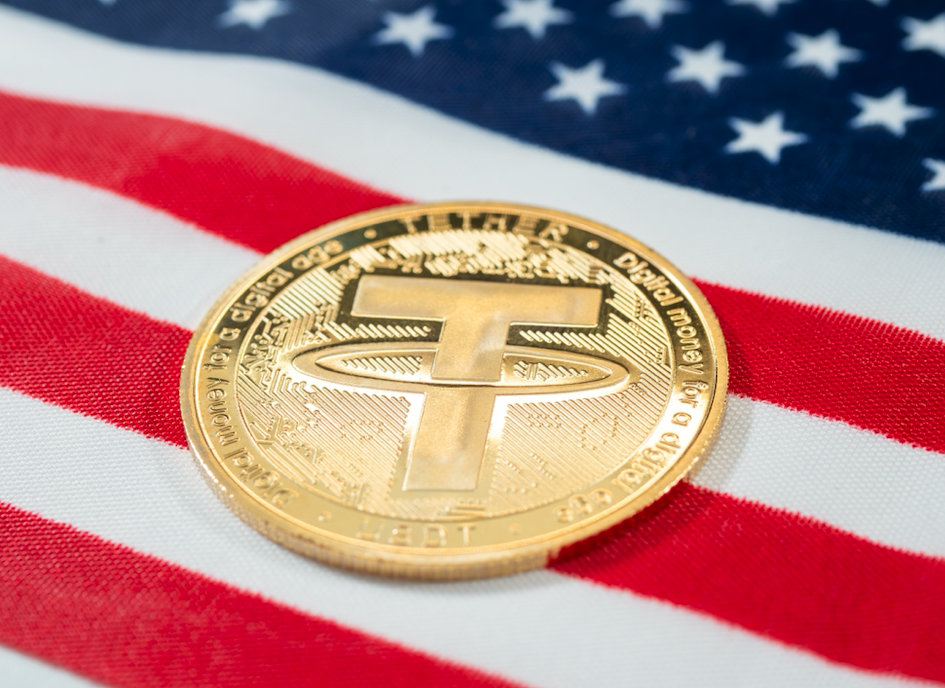
A decade ago, stablecoins were conceived as a bridge for speculators to travel between risky digital assets like Bitcoin and the less turbulent world of fiat money. That is changing fast. In the hands of a crypto-loving Trump administration, these dollar clones are shaping up as a highway that will carry America’s influence around the world.
For years, mainstream investment gurus have steered clients away from gold. But with the yellow metal gaining more than 87 percent since January 2024, it’s getting hard to ignore the yellow metal.
The full impact of U.S. import tariffs on the broader economy has yet to be felt and may not happen for some time—or even at all. Economic distortions from tariffs are still filtering through the global economy, but so are offsets such as fiscal and monetary stimulus, as well as spending on artificial intelligence (AI).
The US government shut its doors on October 1. Republicans and Democrats couldn’t agree on a spending bill, so non-essential portions of the government are closed until further notice.
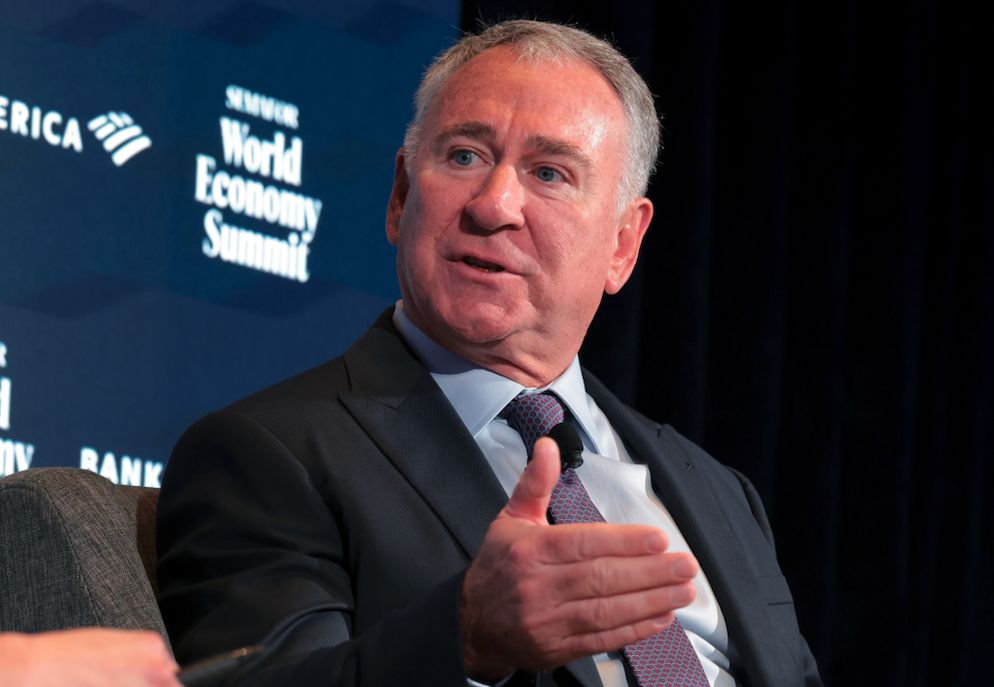
In the history of Wall Street, few have been as successful as Ken Griffin. Over the past three decades, he has built his Citadel hedge fund into a global financial behemoth, helping Griffin accumulate a personal net worth of about $48 billion. So when he makes a market call, it’s worth paying attention.
Higher yields earlier in the year opened a window for meaningful tax loss harvesting. Investors who acted captured valuable tax savings, while those who waited saw opportunities diminish as yields retraced lower through the end of the third quarter.
October 8 marks World Financial Planning Day, a global celebration highlighting the power and purpose of financial planning.
The jaw-dropping spike in gold prices is a reminder of what primal creatures we humans are — especially the species among us known as active traders. But the surge should also remind us of the importance of calling on the more evolved parts of our brain.
The balance of risks to the Federal Reserve’s dual mandate (price stability and maximum employment) prompted the central bank to lower its policy rate in September in an effort to bolster the economy and employment.
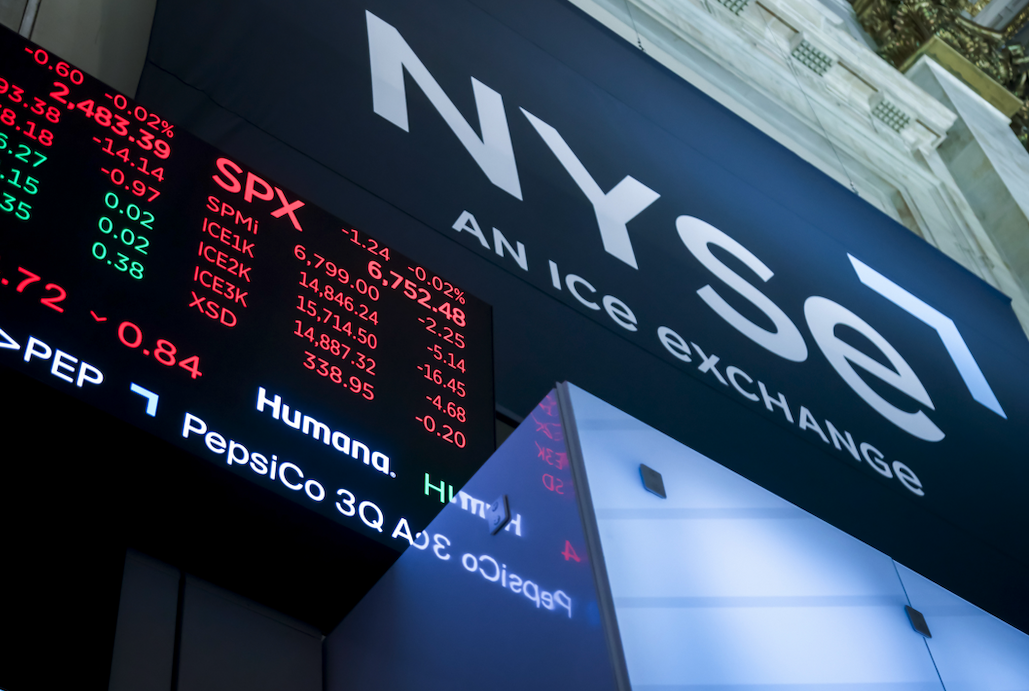
The market is in a funny place. September was a strong month for financial markets, its typical negative seasonality notwithstanding.
As a result of the One Big Beautiful Bill Act, the lifetime exclusion for gifts and estates will increase permanently to $15 million next year with annual inflation adjustments to follow.
Fixed Income Portfolio Managers Brent Olson and Tom Ross consider current credit spread levels and offer reasons why they could remain rangebound for some time.
Markets surged to record highs in 3Q 2025 as the Fed’s first rate cut reignited optimism, with AI-driven market growth and broader participation leading gains, but a cooling labor market and fiscal uncertainty set the tone for a more selective, year-end investment positioning in 4Q
When bear market losses occur, headlines talk in percentages: “The market dropped 20 %.” Investors nod. A 20 % decline sounds manageable, historical, and expected.
Inflation is a quiet seeping in the background that you may not notice today. Yet over years it can drain value from your retirement reservoir. The fix doesn’t require a full remodel, just regular maintenance. What kind of maintenance does it take to prevent inflation leakage? Here are a few suggestions.
Three things to watch this month from Franklin Templeton Emerging Markets Equity: China's Golden Week, tariffs on India and the likelihood of a year-end market rally.
We believe corporate America will follow up an outstanding second quarter earnings season with another good one in the third quarter.