Treasury Inflation-Protected Securities, or TIPS, can help buffer a portfolio against inflation. However, it's important to understand their unique characteristics and complex nature.
The stakes for OpenAI are existential at worst and a serious burden at best as it seeks to go public. In preparation, the company has taken spring cleaning to the next level — embarking on a culling of “side quests” like the video creator Sora, ending some science research and even putting on hold its plans for an erotic version of ChatGPT.
So the question is not whether innovation can drive growth. It’s how much growth innovation can drive. The falling population and heavy debt load mean productivity will need to increase GDP by at least 2.5%, maybe 3% depending on the path of interest rates.
Here’s where I want to start, because this is the point that almost every government debt analysis, including the article we’re responding to, completely ignores. Government debt doesn’t disappear into a void. By definition, if the Government borrows capital from someone, that capital must flow somewhere.
Active ETFs are punching well above their weight in 2026. Despite representing just 12% of total ETF assets, actively managed funds have captured 40% of year-to-date flows, Todd Mathias, head of North America ETF product strategy at Franklin Templeton, told attendees at an April 27 roundtable discussion at the firm’s Manhattan office.
BlackRock Inc. is bringing its roughly $2.5 billion money market fund to cryptocurrency exchange operator OKX, with Standard Chartered Plc holding the underlying assets — the latest sign that Wall Street infrastructure and digital-asset markets are converging.
European stocks started the year much stronger than their US peers but the tantalizing prospect of the euro area clawing back some of its persistent gap in earnings growth, and the higher company valuations that come with it, looks to have slipped through its grasp again.
The “American Industrial Renaissance” is an investment theme investors and allocators alike have probably been pitched several times, or at the very least heard about. Supply chains for manufactured goods have evolved to become more complex, while U.S. manufacturing employment as a share of total employment has steadily declined, leaving policy makers to grapple with the ramifications of a shrinking manufacturing base.
Despite the turbulence, the global LCC market remains an enormous force. Four of the world’s 10 largest airlines—Ryanair, Southwest, IndiGo and easyJet—operate on a low-cost model. The broader budget travel market is projected to exceed $315 billion by 2028, according to Statista.
You don’t have to agree with Chater and Loewenstein’s “crowding-out” hypothesis or their policy prescriptions to benefit from It’s on You, which will, at a minimum, allow the reader to identify and deconstruct i-frame PR when they come across it.
With a better understanding of the derivatives and leverage that led to the GFC, we now explore private credit — a small “niche” financial sector, such as subprime mortgages — which is being called the next match to light a financial bonfire.
If the first quarter of 2026 taught us anything, it's that markets are dynamic and that the factors shaping them extend well beyond corporate fundamentals. The road ahead presents a wider range of outcomes than investors have faced in some time. The outlook remains fluid and highly dependent on how several key factors evolve.
As of this writing, the Strait of Hormuz remains effectively closed since February 28. Roughly 20% of the world’s seaborne oil stopped moving through the chokepoint. T
Back-and-forth developments over the weekend around the Strait of Hormuz have added near-term volatility to energy markets. That uncertainty is feeding into oil prices and reinforcing questions about how persistent energy-driven inflation pressures could become, particularly if disruption risks continue to ebb and flow.
There’s no shortage these days of stories, posts and videos warning of the robot armies readying to vacuum up white-collar jobs in technology, finance, marketing, you name it. And there’s no doubt that artificial intelligence is rapidly changing how we live and work. Amid all this, though, a relative calm has descended on the labor market and should persist for the rest of this year, at least.
Elon Musk’s SpaceX is no stranger to the stratosphere, and neither is its coming initial public offering.
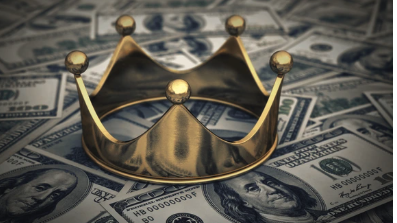
At this point, investors of all ages are well aware just how much inflation can cut into one’s spending power, whether it be for everyday expenses or big-time purchases.
Stocks have been on a bit of a rollercoaster over the past two months. If your nature is to tune out the noise and check in occasionally, you might have missed it. After a 9 percent sell-off earlier in the year, markets quickly rebounded and have recently traded at all-time highs.
Since the Federal Reserve announced the resumption of quantitative easing (QE) in December, the central bank has expanded its balance sheet by over $200 billion.
Amid rising college costs and mounting student debt, parents are looking for more ways to lessen the financial burden of higher education. Luckily, 529 college savings plans can help. These unique savings vehicles offer several tax breaks for parents as they save for their children’s future education.
As the spring session for my graduate class, Leadership Lab, comes to a close I am in Chicago working with middle management leaders in the financial advisory space on leading teams. It seems appropriate at this time to offer some reminders about simple things you can do to be a better leader for your team.
Every prospect is different. They have different interests, different decision timelines, and different levels of engagement. Treating them all the same because your CRM can't segment effectively is leaving money on the table.
The stock market selloff between February 28 and April 14 produced one of the more instructive market lessons in recent memory. It isn’t because of what the market did, but because of what investors did in response.
The history of the U.S. airline industry is really a history of consolidation driven by crisis. The pattern has been remarkably consistent. Historically, when an external shock has hit—a recession, a war, an energy spike—the weakest carriers have folded or been acquired, while the strongest have emerged leaner and more profitable.
Get ready each week with high-conviction insights that go beyond media headlines.
Given the misunderstanding linking subprime mortgages and private credit, I discuss how leverage and derivatives, layered atop subprime mortgages, were at the heart of the GFC. A better understanding of that event will help advisors and investors better assess whether recent woes in private credit are an omen of another crisis or an overstated concern.
Choosing when to invest is one of the most important factors influencing your retirement security. The best time to start building retirement savings is after your first paycheck. Starting that early allows you to maximize how much time you have to save and how much time those dollars have to grow, thanks to compounding interest.
Today we're going to look at the underlying data and find that while the world is not ending anytime soon, there are actually good reasons for the disparity in forecasts. So, it’s okay if you’re confused. The stock market just hit an all-time high, energy is volatile and will be a negative on global growth, to say the least.
Amplify’s path is unique in the ETF space and has carved out a small but powerful stronghold for itself. Its focus on thematic and income strategies lends Amplify resilience across different market types, and its commitment to innovation means it doesn’t tend to issue many “me too” products.
The BLS jobs report has become so distorted that it often tells us almost nothing reliable about the actual state of employment. I realize that is a serious claim, but let me back it up with the data. I want to show you what I believe is a simpler, more honest alternative.
The S&P 500 closed Wednesday at a fresh all-time high of 7,022.95, surpassing the late-January peak and capping a remarkable round trip from the spring selloff.
One of the hottest themes in investing this year has been Space. Partly due to its tie-in with the broader Defense theme, and more recently, thanks to investor excitement over the upcoming SpaceX IPO, space investing as a thematic opportunity has been capturing attention and investor dollars.
As transition activity increases, what was once seen as a step between portfolios is becoming part of the outcome itself. Execution is now more closely tied to how portfolios are reshaped, particularly as restructures grow larger, more frequent, and more complex.
On Wednesday, April 15, Sprott Asset Management expanded its lineup of exchange-traded funds with the debut of the Sprott Rare Earths Ex-China ETF (REXC). According to Sprott, REXC is the only ETF on the market that is offering a focus on rare earth companies outside China.
Intel Corp. shares leaped to their highest intraday level since the dot-com era on Friday as optimism that the chipmaker’s turnaround plan is working continues to grow.
Late last year, the Federal Reserve ended its latest quantitative tightening (QT) program: the process by which it shrinks its balance sheet by selling securities or letting them mature without reinvestment.
“Diversification” has been the driving principle of investing and risk management for generations. But what does it mean to be “diversified?”
Hedge funds are increasingly downbeat on the dollar as the prospect of a two-week ceasefire extension between the US and Iran sap the currency’s war-driven strength.
Despite a confluence of economic shocks in the first quarter, markets have held up remarkably well, but cracks appear to be forming beneath the surface.
The US dollar's obituary has been written many times—with increasing frequency over the past year. Each time we get a fresh round of analyses declaring that de-dollarization is accelerating, the world is reorganizing its financial architecture around alternatives and the greenback's reign is drawing to a close.
With Q1 earnings season well underway, it was Johnson & Johnson (JNJ) giving investors a peek at how the broader healthcare sector might perform
With the US-Iran war demonstrating not just how captive the world economy remains to fossil fuels, but also how easily energy can be weaponized, whether to drill at home is becoming an even more pressing question for some countries.
When I teach my graduate classes in leadership, we talk about the essence of motivation. Even the best leaders cannot motivate other people to do something. They can create an environment within which the person becomes self-motivated. But motivation is intrinsic.
Outside of energy commodities, capital markets posted a downbeat March as cross-asset volatility spiked in response to the outbreak of hostilities in the Mideast, and kicked off April in similar, choppy fashion before posting a swift bounce following last Wednesday’s two-week ceasefire agreement.
Rapid development of AI technology poses a direct threat to the SaaS sector, but the risks are not necessarily terminal or universal and vary based on time horizon.
While infrastructure companies are not immune to a potential economic slowdown, they may provide a longer-term investment opportunity amid an uncertain macroeconomic backdrop.
Diversification is finally paying off. After more than a decade of U.S. dominance, international equity ETFs are enjoying monster inflows, outpacing their domestic counterparts for the first time since early 2023.
Yield curves exist for many products and can be interrelated, yet they also carry distinctive characteristics. Normally, long-term rates are higher than short-term rates because investors demand a higher return for lending money over longer periods. This arrangement would create an upward-sloping curve much like the Treasury curves displayed to the right.
The gap between what advisors are doing and what's now possible in tax-aware portfolio management has never been wider. The tools have outpaced the practice. Here's where I see advisors falling short, and what to do about it.
Saving for education can feel like a race against rising tuition costs, but 529 college savings plans offer families a powerful way to stay ahead.