A small mutual-fund provider is slated to make history later this month as the first to convert its products into exchange-traded funds.
"This pandemic has magnified every existing inequality in our society – like systemic racism, gender inequality, and poverty." Melinda Gates
How long will the effects of COVID be felt in potential growth, the tourism sector and bankruptcy filings?
Yields have jumped so much, in fact, that they’re giving stocks a serious run for their money. The 10-year yield is now higher than the S&P 500 dividend yield, which may have added to the selling pressure that cost stocks close to 2.5% yesterday.
We hope you enjoy Harold Evensky's latest NewsLetter.
The unprecedented $9 trillion rescue mission by central banks to haul the world economy from its coronavirus recession is being tested as rising bond yields and inflation bets threaten their ability to keep borrowing costs down.
The obstacles to higher yields in the world’s biggest debt market are slowly melting away.
That there was a price “bubble” that burst in the American political economy from 1835 to 1845 is beyond question. The challenge is to reconcile the data sets for commodity and securities prices, interest rates and production volumes with the narratives of what happened.
Liquidity is valuable to investors. Therefore, they should demand higher expected return (a risk premium) for less liquid stocks. But new research shows they have not earned that extra return in public equity markets.
Millions of Texans were without power this week when the state was hit with a record setting winter storm. An overhaul of its aging infrastructure would require massive amounts of metals and other materials, which would be positive for miners and producers.
In late 2020, a new kid emerged on the bargain-of-the-decade block. UK stocks, and notably UK value, reached very cheap levels relative to value stocks in other developed economies. Today, UK value remains at remarkably low valuations relative to most of its fundamentals.
A vaccine-fueled economic recovery and investors’ surging appetite for risk mean that the European equity rally can keep going in 2021, according to strategists.A vaccine-fueled economic recovery and investors’ surging appetite for risk mean that the European equity rally can keep going in 2021, according to strategists.
New virus variants are stoking COVID-19 angst, but we see vaccination programs opening the door to economic and market recoveries.
There are signs that the food inflation that’s gripped the world over the past year, raising prices of everything from shredded cheese to peanut butter, is about to get worse.
The Emerging Markets (EM) asset class is often labelled a commodity play for investment purposes. The argument is simple and directional; EM countries export commodities, so rising commodity prices are good for the asset class, whereas falling commodity prices hurt EM countries.
Emerging-market investors seem to have a lot going for them right now -- and the renewed weakness in the U.S. dollar is adding to the bullish mood.
Happy Year of the Ox! Today China and a number of other Asian countries celebrate the Lunar New Year, also known as the Spring Festival.
Yields on two-year Treasury yields briefly printed a record low under 0.1% on Thursday as cash trading got underway in London after a holiday in Asia.
By buying or overweighting characteristics-based factor exposure and selling or underweighting beta-based factor exposure, investors can position their portfolios to reap the rewards of factor investing while bearing less risk.
It’s more than enough money, at going prices, to buy one GameStop, two AMC Entertainments and four Bed Bath & Beyond's.
Our Fixed Income CIO Sonal Desai shares her investment views and strategies for the post-pandemic recovery. She explains why inflation looks likely to gain steam, and how the balance of fundamentals and valuations become especially crucial today when looking for attractive returns in fixed income.
Powerful demographic trends will cause higher inflation and interest rates, and a reduction in inequality as labor reclaims its bargaining power in the global economy.
It’s hoped that an extra $1,400 in the pockets of everyday Americans may help support lagging U.S. consumption. We believe the stimulus, along with improved vaccine roll out, may also help support commercial air travel.
CIO Robert Horrocks, reviews a topsy-turvy 2020 and shares the reasons for his relative optimism for Asia and the emerging markets in 2021.
Despite a pandemic, tariffs and superpower political tensions, the resilience of the Chinese economy was clear in 2020. In this issue of Sinology, we highlight five macro trends from 2020 that investors should watch this year.
Corporate earnings are likely to be strong in 2021, reflecting strong consumer demand and resilient cash flows.
Advisor Perspectives, the most-read eNewsletter for financial advisors as ranked by the Erdos & Morgan “FAMOUS” Study in 2019 and 2020, has announced its Venerated Voices™ awards for commentaries published in 2020.
Those of you with kids and grandkids may at some point have stepped inside a GameStop. If so, you might be familiar with the video game retailer’s tagline: “Power to the players.”
As China begins the year of the Ox, many investors are wondering whether another bull run is possible in 2021. Given that last year’s rally was extremely narrow, we believe many parts of the market still offer pent-up recovery potential.
In the years since the end of the gold standard, there’s been a significant lack of discipline in government spending. Today, the federal debt is closing in on an astronomical $28 trillion, which is more than 130% of the size of the U.S. economy.
Janet Yellen invoked an enduring era of low interest rates in delivering the Biden administration’s opening argument to lawmakers for its $1.9 trillion Covid-19 relief proposal.
The speculative “V” is one of the most interesting and challenging features of the market cycle. For passive investors, it can be a period of exhilaration followed by panic.
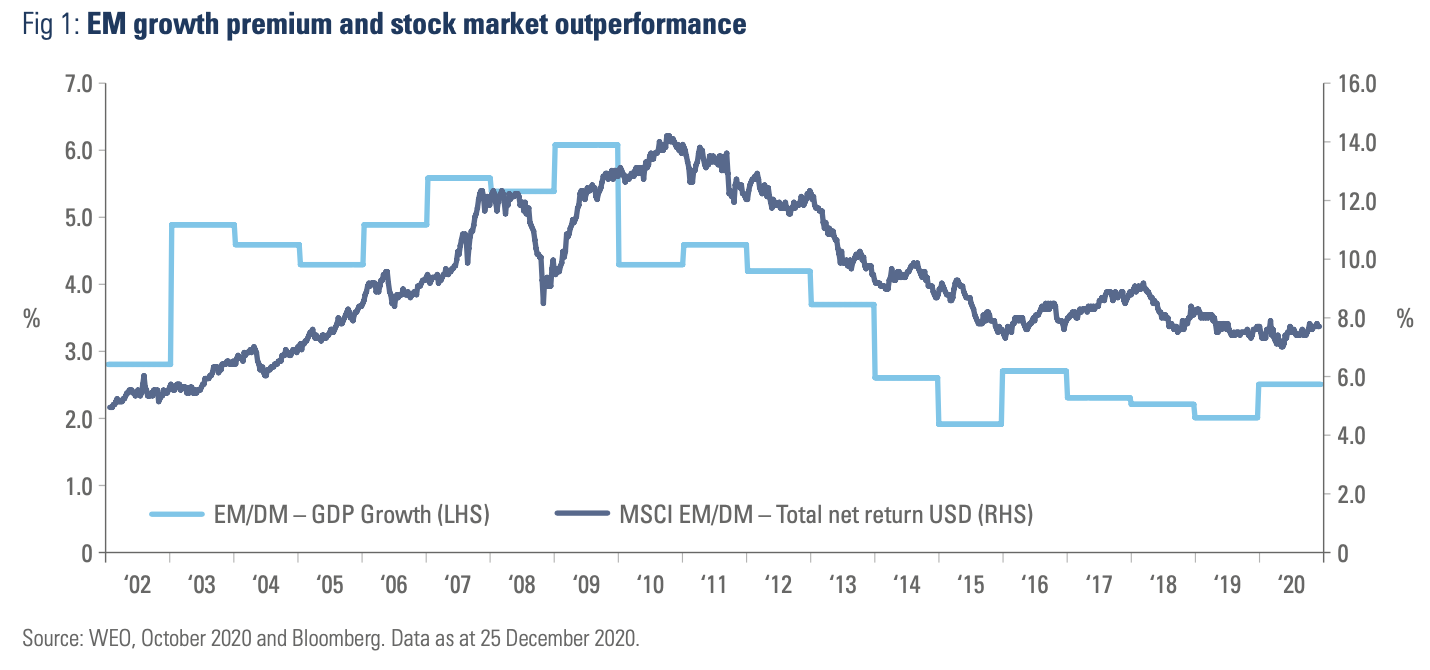
Emerging-market stocks rebounded in 2020 even as the COVID-19 pandemic spread globally. As vaccines and other favorable conditions unfold, investors have good reasons to consider EM equities in 2021 while strategically considering their potential risks.
Founding Father Benjamin Franklin said it best: “They who can give up essential liberty to obtain a little temporary safety deserve neither liberty nor safety.” In this light, what are we to make of Trump’s social media suspension?
The Loomis Sayles Investment Grade Sector Team answers three questions on their outlook for 2021.
We’ve distilled our economists’ 2021 projections for the global economy into a quick 4-page summary. Get concise details on our expectations for the coming year, including:
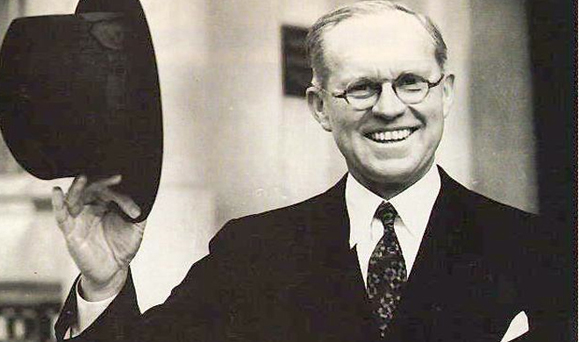
If Gary Gensler becomes the SEC chairperson, it will harken back to the SEC’s origins and its first chairman, Joseph P. Kennedy.
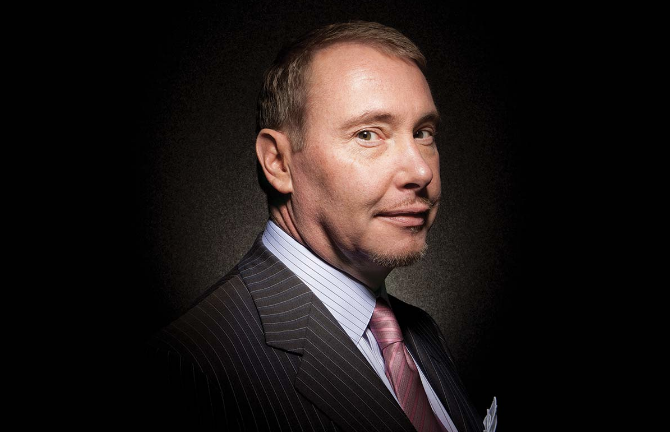
In his forecast for 2021, Jeffrey Gundlach predicted a “regime change.” Investors should prepare for themes that reverse prior trends: U.S. equities will underperform the rest of the world, inflation will rise, volatility will be higher, and the dollar will weaken.
The US state of Georgia held January runoff elections that determined two Democrats as their US senators, giving the Democratic Party control of the legislative and executive branches through 2022.
On January 11, 2021, the Executive Order 13959 (“E.O.”) issued by Donald Trump designed to protect U.S. investors from financing Communist Chinese Military Companies will go into effect. In this Q&A, Matthews Asia addresses key questions on its potential impact for investors.
This should be positive for gold, given the potential for greater government spending and, therefore, inflation.
Despite extensive economic and human costs, 2020 may be a turning point in multiple ways.
2020 will live long in memory, and so it should. EM have navigated, and in some cases excelled, during the most challenging stress test in recent history. The crisis will ultimately prove temporary, in our opinion, and 2021 is well placed to be a year of recovery.
Free from a house view on economies, markets or stocks, J O Hambro Capital Management’s (JOHCM) fund managers invariably see the world in different ways. We asked a number of our managers for their thoughts on the outlook for their asset class next year, what they would like to see and the possible surprises that 2021 could bring.
Global carbon pricing is an essential part of any long-term solution to the climate crisis. But advanced economies also need to provide the developing world with highly concessional financing and technical expertise to help it decarbonize – all guided by a World Carbon Bank.
A new strain of Covid-19, more contagious than previous strains, is now circulating in dozens of countries. Other new strains, such as one first detected in South Africa, will almost certainly emerge. Aside from the challenges these mutations pose to public health, they will also be a test of our moral and political principles.
Gold and Bitcoin had a very good 2020. Investors, worried about currency debasement from all the money-printing, sought stores of value. Gold surged over 25%, its best year in a decade, while Bitcoin was up more than 300%.
Although some on the committee agreed with the market consensus for a moderate continuation of economic growth and equity markets, the majority agreed with a more positive scenario in which the global economy outperforms market consensus, while equities, especially those outside of the US, rally sharply.
How can credit markets help active investors achieve their goals in the present low yield environment? Here are 5 ideas.
Our Head of Equities, Stephen Dover, shares his 2021 equity outlook. He sees opportunity amid upheaval.