Discover why Strait of Hormuz disruptions extend beyond oil, how supply shocks are transmitting into agriculture markets, and what third-order commodity effects may mean for portfolios.
To better understand how AI might affect the labor market and, ultimately, the economy, we’ve summarized Citrini’s bleak outlook alongside rebuttals from Citadel Securities and Bianco Research. These summaries provide a useful primer on how labor markets may adjust to the upcoming major technological changes.
For investors, understanding the full anatomy of fixed income is critical, not only to capture attractive risk-adjusted returns in today’s environment but also to appreciate its indispensable role in powering economic growth and financial stability.
A progressive rallying cry to tax the rich is being welcomed by traditionally Republican states, including Florida and Georgia, looking for a new pitch to draw migrants — especially wealthy migrants — from the coasts.
The wreckage in large technology stocks that sent the Nasdaq 100 Index into a correction is flashing signs that have marked turning points for the group in the past.
Some of Wall Street’s biggest bond-fund managers say financial markets are underestimating the risk that the US war in Iran will cause a sharp slowdown in an already sputtering economy.
Thanks to strong gains in markets over recent years, with many indices at or near record highs, the 60/40 default portfolio has quietly morphed into a bundle of expensive U.S. growth equities and credit exposures offering narrow spreads over Treasuries. In our view, such a portfolio is likely to disappoint investors by delivering low single-digit real returns.
Government statistics are invaluable in deciphering the state of the U.S. economy. But they don’t always tell the whole story.
The conflict in the Middle East has raised concerns about oil prices, global growth and market volatility. Chief Investment Officer Sean Taylor assesses the potential economic impacts of the crisis and its implications for growth and diversification in emerging markets and Asia.
Rationally, no one should feel happy about an income tax refund. The refund is a correction of a tax overpayment; the recipient effectively gave the government an interest-free loan over the course of the prior year.
Today, Vanguard decided to join the target-maturity party, launching a suite of corporate bond ETFs designed to assist investors with bond laddering. Vanguard’s entry is significant due to its massive distribution scale in tandem with its low-cost reputation.
As tax law changes from the OBBBA take effect, taxpayers may want to evaluate their financial plans. Our Bill Cass shares some essential strategies—including Roth conversions that may help taxpayers optimize savings.
The actively managed fund charges a 0.65% expense ratio and uses an options overlay designed to generate income while managing volatility. Energy makes up 45.87% of the fund’s sector allocation, followed by information technology at 25.83%, industrials at 16.43% and utilities at 11.87%, according to the factsheet.
As the ETF industry witnessed expansive growth during the past decade, providers have been engaging in a fee war as competition heats up. Industry giants like Vanguard and BlackRock have slashed expense ratios to near-zero, but that era of fee compression could be reaching an inflection point.
Next week’s releases should help clarify whether recent volatility remains contained or begins to translate into weaker fundamentals.
Franklin Templeton is partnering with Ondo Finance to offer tokenized versions of its ETFs that trade around the clock through crypto wallets, bypassing the brokerage accounts and limited trading hours that have defined fund investing for decades.
Eve oversees dozens of brainiac office hands; monitors countless earning calls; keeps tabs on CEOs; parses corporate filings; conducts due diligence; brainstorms stock picks.
Energy cycles have a way of rewarding investors who show up early, while punishing those who assume the next upturn will look exactly like the last one. Supply disruptions caused by the war in Iran that began just under a month ago have upended markets globally, with oil markets taking center stage.
In today’s era of automation, some situations demand a more active approach. Municipal bond investing is one.
Rapid advances in artificial intelligence, persistent geopolitical tensions – particularly the conflict in Iran – and ongoing trade uncertainty have kept headlines loud and emotions elevated, ultimately demanding investors remain adaptive and disciplined. In this kind of environment, the biggest mistakes come from reacting to noise rather than fundamentals.
Bitcoin is now less volatile than some Magnificent 7 stocks, but it's still capable of steep, prolonged declines.
Many people forget that gold was in a bull market in early 2008 but suffered a significant selloff at the onset of the financial crisis when the yellow metal fell 32 percent, giving up about 40 percent of its previous bull market gain. Gold then took off and soared by over 153 percent over the next few years.
A SEP IRA offers small businesses and sole proprietors a flexible, tax advantaged way to fund 2025 retirement savings. With high contribution limits, simplified administration and deadlines extending through tax filing, it can provide a practical solution for boosting long term financial security.
At the height of the meme stock craze, investors made and lost fortunes as their speculative trades made headlines. This trend was so dramatic and so widespread that reporting on it moved beyond financial publications into the mainstream press and even into a few movie scripts.
At the risk of leaving aside the flow-through of the crude oil price into expenses such as electricity, trucking, and so on, let’s just look at the pocketbook hit from filling up the family car specifically.
In a world of intensified uncertainty and dispersion, investing becomes less about forecasting and more about favoring more liquid, high quality assets that can be resilient across a variety of scenarios.
The Iran conflict has changed the paths for inflation and central bank actions.
The multi-asset playing field presents income investors with broad opportunities across asset classes. But investors that rely only on traditional stock dividends and bond interest may be missing out on other attractive income sources.
If you’re not sure what direct indexing means, you’re not alone. Even after the recent growth, direct indexing remains relatively unknown. As our risk review team never fails to remind us, you can’t invest directly in an index. So what exactly is direct indexing?
As portfolios limited to public equities capture a smaller slice of corporate growth, private investments are increasingly finding a place in long-term wealth-building strategies, including 401(k)s.
The conversation about automation is still stuck in 2016. “Robots are coming for your job.” But look at what’s actually happening in the countries that leaned into robotics.
The advisors who build systematic processes around employer dependence risk won't just retain these clients. They'll become the firm these clients refer their colleagues to.
Geopolitical headlines rarely arrive quietly. The recent escalation in the Middle East is a reminder of how quickly tensions can feel destabilizing.
How Do You Value Zero GrowthIn this video, Chuck Carnevale (“Mr. Valuation”) explains the fundamentals of stock valuation and addresses a common misconception: that all companies should be valued at the same price-to-earnings (P/E) ratio.
Uncertainty persists in 2026, affecting the broader fixed income market. Collateralized loan obligations (or CLO) have emerged as a viable option with the advent of exchange-traded funds (ETFs), which have democratized access to retail investors.
Corporate credit markets have become unsettled about the potential for advanced agentic AI tools from firms such as Anthropic and OpenAI to automate functions across legal, analytical, marketing, and sales workflows, effectively targeting the software as a service (SaaS)/enterprise software space.
T. Rowe Price is leveraging three decades of private equity experience to give active ETF investors access to companies at the core of artificial intelligence, including OpenAI, Anthropic, and Databricks, according to Christopher Murphy, head of ETF specialists at the firm.
QBI is a generous deduction hiding in plain sight. The difference is not technical brilliance. It is leadership — knowing which decisions matter, when they matter, and who needs to be coordinating them.
As part of comprehensive retirement distribution planning, evaluating how and when NUA applies can help reduce lifetime tax liability and preserve more of what has been earned over the course of a career.
BlackRock Inc.’s Rick Rieder, the firm’s top bond-market executive who was passed over by President Donald Trump to be chair of the Federal Reserve, is pursuing investor cash for his first hedge fund in years.
Faster productivity growth lifts earnings, improves the long-run fiscal arithmetic, and allows the economy to run stronger without recreating the inflation regime of 2022. Historically, markets are slow to recognize when the supply side of the economy has improved. This time should be no different. The productivity story is more durable than this week’s Iran developments, which is dominate trading over the near term.
As 2026 unfolds, market leadership is shifting in ways that go beyond the usual sector rotation. While AI-driven growth fueled recent gains, rising capital expenditures, energy demands, and valuation pressure are forcing a reassessment across both public and private markets. At the same time, economic data—particularly beneath headline job growth—suggests a more uneven expansion than many expected.
The key swing factor remains oil prices. If the conflict ends within this window, we still expect only limited impacts on our economic and asset‑class outlooks.
The Securities and Exchange Commission should focus on enabling retail investor access to innovation rather than limiting products through merit-based judgments, according to Commissioner Hester Peirce. In a discussion with Todd Rosenbluth, head of research at TMX VettaFi, during the Exchange conference in Las Vegas, Peirce shared insight from her term at the SEC and examined the agency’s role moving forward.
With liquidity and credit stress in the private credit market rising, we must consider whether the Fed might once again ignore its mandates to backstop exuberant markets.
In this episode of ETF of the Week, Chuck Jaffe sits down with Todd Rosenbluth, Head of Research at VettaFi, to discuss why the SPDR Gold MiniShares Trust (GLDM) is a top pick for investors looking for gold exposure.
Thanks to Section 351 of the US tax code, investors can contribute their appreciated assets directly into an ETF structure without realizing gains at the time of transfer. Here, we briefly explain the mechanics, limitations, and potential benefits and risks of a 351 exchange to seed a new ETF with appreciated assets.
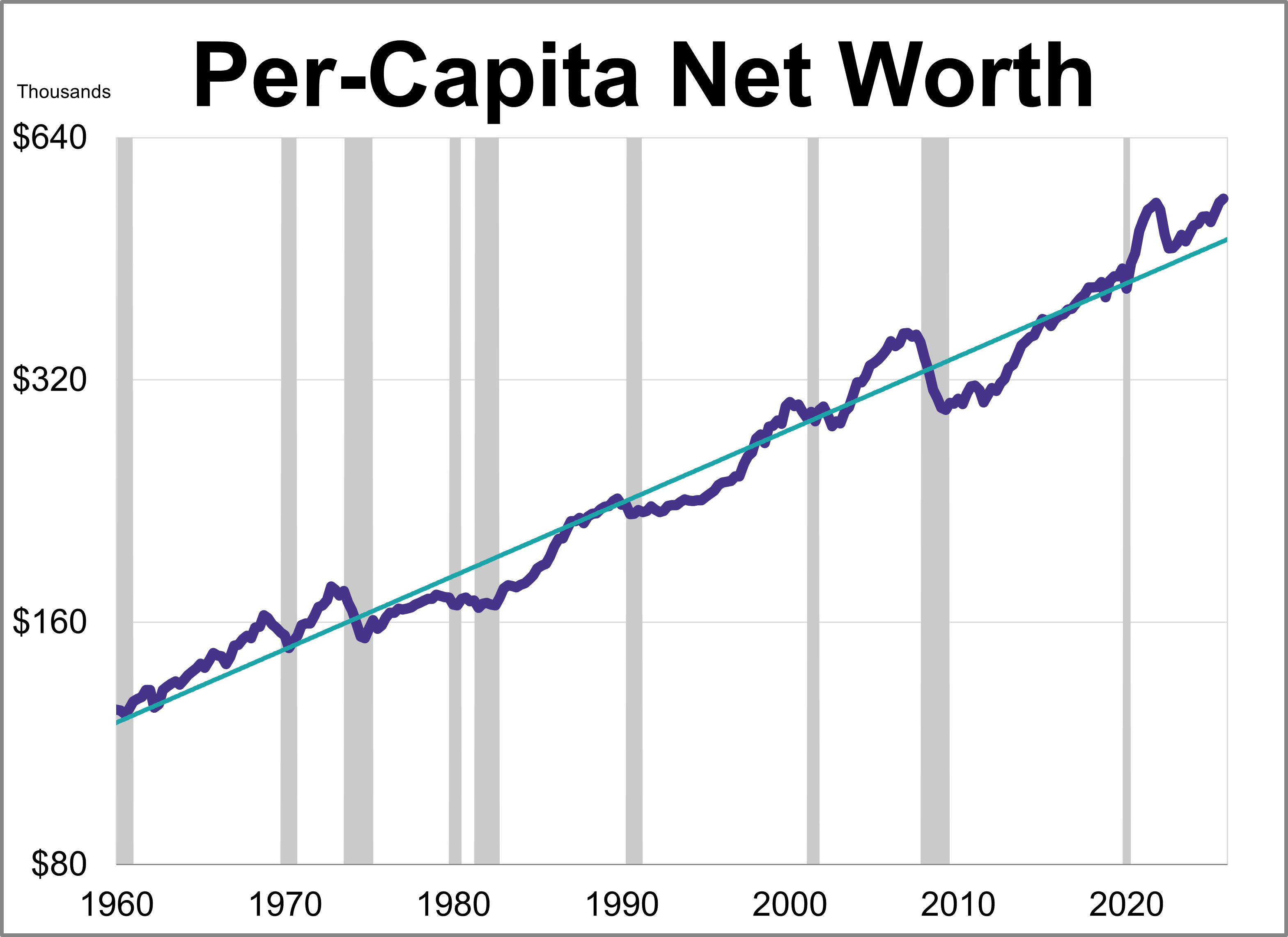
How much wealthier are Americans since the Great Recession? While a look at the headlines shows a staggering 211% increase in household net worth since 2009, adjusting for inflation tells a much different story.
Recent market performance for US consumer-discretionary stocks has been so ugly that it may be a great time to buy.
Let me lay out the case for what should be the answer. Today we will explore how long this condition could last and what we can do about. I think it will make for interesting letter.