The market continues to trend higher on Goldilocks pixie dust.
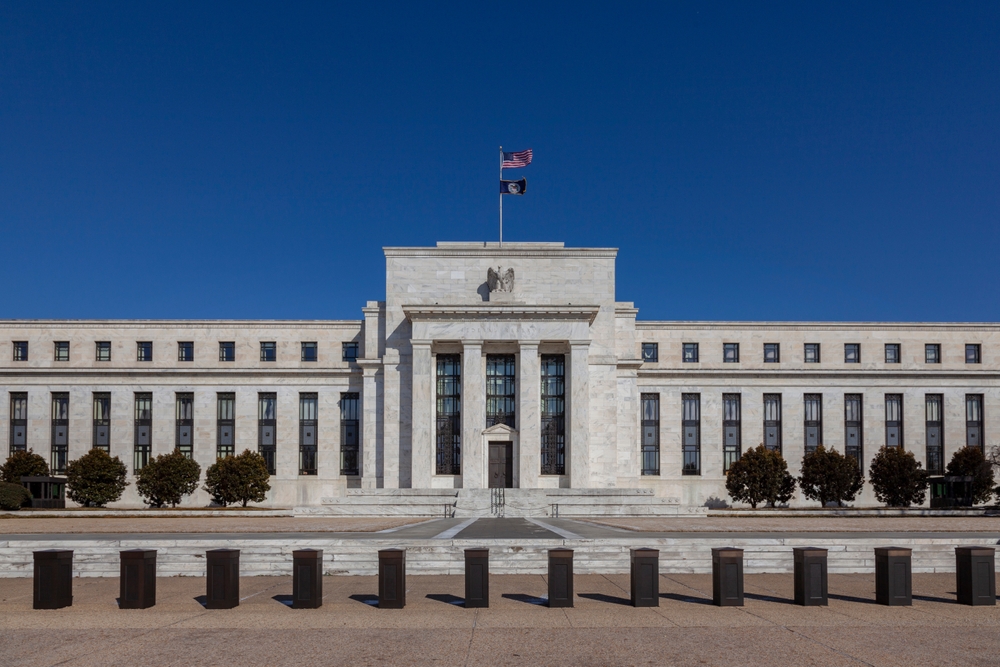
After the Fed's 50-basis-point rate cut, big banks kick off earnings season amid fears that lower rates could hurt the net-interest income that propelled growth the last two years.
With storm clouds forming above equities and fixed income markets, is now the right time for institutions to grab their private credit labeled umbrella?
Supply chain disruptions related to the port workers’ strike loom, the impacts of which we know can be incredibly destructive.
Alpha (α) is a fundamental yet poorly understood concept in finance. Simply put, it is the difference between the return of an investment and that of a risk-adjusted benchmark. In a more advanced definition, alpha is the residual in an asset pricing equation (see Appendix A). Alpha is what active managers strive to achieve and passive managers do not pursue.
Unbundling services and offering them à la carte could appeal to clients who want more control over their financial management. This approach allows clients to tailor the services they receive to their unique needs and preferences.
In the 1989 blockbuster Back to the Future II, time travel enables Michael J. Fox’s nemesis, Biff, to become a gazillionaire by bringing an almanac with sports match outcomes back from the future. We thought it might be instructive, and certainly entertaining, to make a less fanciful version of this dream a reality – for a few lucky people.
We are currently in the “everything market.” It doesn’t matter what you have probably invested in; it is currently increasing in value. However, it isn’t likely for the reasons you think. A recent Marketwatch interview with the always bullish Jim Paulson got his reasoning for the rally.
It’s my birthday week and I have guests and family gathering in the next room, so this will hopefully be a quick letter as well as ending with what will likely be controversial food for thought.
As we approach the final stretch of 2024, much of the nation’s focus is on the upcoming U.S. presidential election. But while the political landscape remains uncertain, the markets are painting a different picture. September, traditionally a sluggish month for global equities, delivered an unexpected surge.
For registered investment advisors and others who provide financial advice, autumn is the start of a season loaded with opportunity.
When looking at the increasingly complex structure of corporate lending in the present day, it can be easy to lose sight of the purpose of private credit and its lasting value to investors.
Ever since Prime Minister Narendra Modi announced his “Make in India” policies shortly after being elected prime minister in 2014, New Delhi has chased the dream of a prosperous manufacturing sector. There have been some successes — when it comes to making mobile phones, for example.
We expect bond yields to trend gradually lower—but it may be a bumpy ride. These seven strategies may help investors take advantage.
On the latest edition of Market Week in Review, Senior Director and Chief Investment Strategist for North America, Paul Eitelman, and Head of AIS Portfolio & Business Consulting, Sophie Antal-Gilbert, discussed the rally in Chinese equities.
I’ve been too pessimistic about the risks of a so-called hard landing for the US economy over the past few years. Although most of my conclusions that led to that view were correct, such an outcome remains very much in doubt.
We think it would be a mistake for investors to let tighter spreads and upcoming maturities deter them from the euro high-yield market.
Because of recent significant investments, economic growth is occurring in long-neglected areas and changing the geography of development.
Storytelling allows you to describe what you do, and whom you do it for, in a way that is transferrable and understandable.
By aligning your event format with the brain’s natural tendencies, you can create more engaging, effective, and enjoyable experiences for your audience.
While new tax proposals are grabbing election headlines, it’s important to remember that campaign rhetoric is not necessarily future policy.
An analysis of Presidential Candidate Trump’s policy proposals recently suggests that tax cuts will increase the deficit. While the raw analysis is correct, as it subtracts the potential for reduced tax collections from the tariff revenue, it ignores the impact on economic growth.
Historically, staying invested has been, in our view, an effective strategy and one to consider when it comes to election years and beyond.
The Northern Trust Economics team shares its outlook for growth, inflation and interest rates in major markets.
Companies and governments around the globe spent the past month streaming into debt markets, seizing on declining interest rates ahead of an uncertain US presidential election that many fear will spur volatility in markets.
Business divorces are often painful, expensive, and damaging – not just to the individuals involved, but to the advisory firm’s reputation and, most importantly, to its clients. However, with some foresight and planning, many of the common triggers for a business split can be avoided.
Expanding outreach to include a well-orchestrated digital lead generation strategy is the most effective and efficient way to grow a client roster and help new generations navigate the Great Wealth Transfer with optimal financial strategies.
As markets grapple with the implications of artificial intelligence, the AI frenzy has meant that the six largest companies accounted for more than half of the U.S. market’s return in 2023 and year-to-date (August 2024) they have accounted for nearly half again.
Despite double-digit dividend yields in many cases and the cushion such high dividends provide, buying agency REITs is not a guaranteed home run in a bull steepener.
A stronger-than-expected pivot to stimulus in the world’s two biggest economies has brightened the market outlook. For economists, the jury is still out.
Last week, the Federal Reserve made a significant move by cutting its overnight lending rate by 50 basis points. This marks the first rate cut since 2020, signaling the Fed is aggressively supporting the economy amid a backdrop of softening economic data. For investors, understanding how similar rate cuts have historically impacted markets and which sectors tend to benefit is key to navigating the months ahead.
After months if not years of investors asking when the Fed would cut rates, we finally got our answer.
Chief executive officers are no longer trying to be all things to all people.
At a finance conference in London this summer, four senior investment bankers set about persuading the room that the $1.7-trillion private credit market isn’t a threat to Wall Street. Barely three months later, two of them have jumped ship to seek their fortunes in the upstart asset class.
In theory, growing a pool of wealth over decades – whether for a family, an endowment, or a pensioner – is a straightforward endeavor.
Chief Investment Officer Sean Taylor provides his insights on how the Fed’s 50 basis point-rate cut may affect emerging economies, particularly in Asia and Latin America, how it impacts portfolio allocations and the sectors he believes are poised for growth amid this shift.
When stock markets rise, the bullish narrative tends to dominate, overlooking the potential impact of market declines. This oversight stems from two main problems: a basic misunderstanding of math and time’s critical role in investing.
A surprising trend has emerged when it comes to discussing inheritance. While very and ultra-high-net-worth clients often engage in these conversations, they tend to occur far less frequently with other segments.
The global market for AI-related products is ballooning and will hit as much as $990 billion in 2027, as the technology’s quick adoption disrupts companies and economies, Bain & Co. said.
Taxes may be the biggest fee your tax-sensitive clients are paying on their investment portfolios. And neither they nor you, their advisor, may be aware of just how big that fee is.
With only one week left in the fiscal year, it looks like the budget deficit for the federal government for Fiscal Year 2024 is going to come in at about $1.9 trillion, which is 6.7% of GDP.
For families seeking to help their children save for higher education, 529 plans continue to gain broader appeal.
Cliff Asness, co-founder of AQR Capital Management, made the news recently with the provocative claim that financial markets are getting less efficient. I worked at AQR for 10 years, but long before that I spent nearly two decades as the only mentee the renowned economist Fischer Black ever had. Fischer had a very different view of market efficiency and would, I think, have reached a different conclusion from Cliff’s data.
At this year's Future Proof, Jeffrey Gundlach took to the main stage and sat down for a candid conversation with CNBC’s Scott Wapner.
In 2021, the stock/bond correlation flipped to positive after remaining negative for a majority of the preceding 20 years.
Since 2020, momentum investing has generated significantly better returns than other strategies. Such is not surprising, given the massive amounts of stimulus injected into the financial system. However, Brett Arends for Marketwatch noted in 2021 that momentum investing can give you an edge.
On this episode of the “ETF of the Week” podcast, VettaFi’s Head of Research Todd Rosenbluth discussed the WisdomTree International Hedged Quality Dividend Growth Fund (IHDG) with Chuck Jaffe of “Money Life.” The pair talked about several topics regarding the fund to give investors a deeper understanding of the ETF overall.
Not surprisingly, Donald Trump and Kamala Harris are floating opposite approaches to modifying the corporate tax code. If enacted, both proposals would significantly impact corporate profits and, thus, share prices. Currently, the plans are only campaign promises
Today, I’m going to share stories about my best and worst investment decisions. Don’t worry, this isn’t just a brag-and-cringe session about making or losing money. These stories are about the valuable lessons learned, and how these adventures in investing helped shape my current approach.
We expect the Fed to cut rates by 25 basis points at each of its remaining meetings in 2024 and to sustain that pace into 2025. This trajectory would get the Fed down to our estimate of the normal or equilibrium rate of interest of 3%-3.25% this time next year.