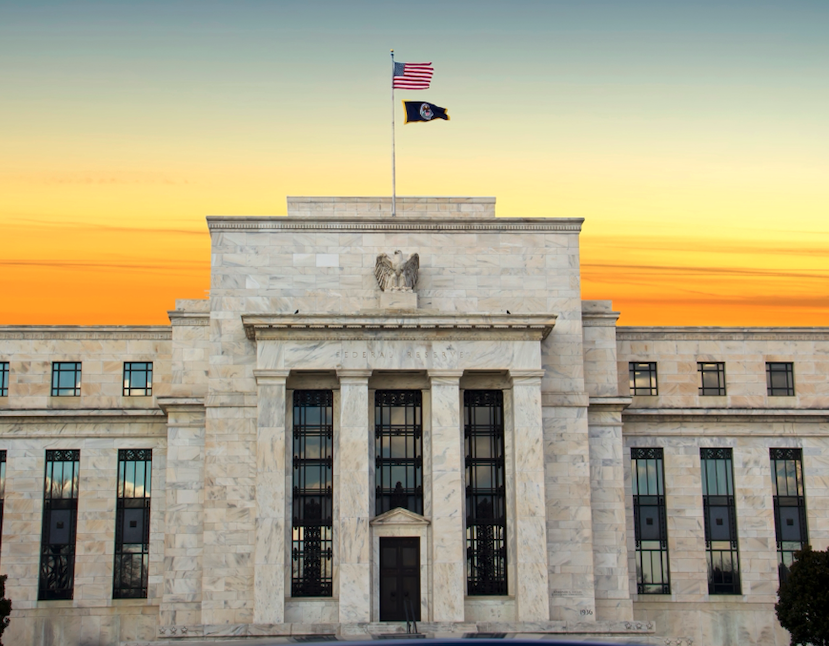
As Kevin Warsh takes over as Federal Reserve chair with his own goals, he may face challenges even beyond rate policy, from inflation to independence to a bulbous balance sheet.
Vanguard research suggests that one practical answer may lie in pairing traditional target-date funds with a modest allocation to deferred-income annuities (DIAs).
The sooner the mass of retail private credit managers realize they are zombies and give up the ghost, the sooner we can burn the whole thing to the ground and conjure a better model from the ashes. But there is no time like a crisis to have conversations about how to make the structure work better for everyone in the future!
You are undoubtedly seeing in the news that high earners are leaving New York, Los Angeles, and other metro areas. This does not begin to address the magnitude of the problem. There are dozens of cities that are trending towards fiscal collapse. Indeed, taxpayers are leaving.
Against this challenging macro backdrop, a stark divergence is expected as major retailers report earnings next week. Discounters are projected to perform well, with Walmart (WMT) expected to outpace Target (TGT) by gaining market share from high-income households trading down for groceries, while Target remains more vulnerable due to its heavier mix of discretionary goods.
U.S. inflation and rates remain elevated. Credit markets continue to show resilience. Opportunities are emerging across securitized and high yield assets
First quarter 2026 earnings were stronger than expected and we think that there might be continued strength in the second quarter, unless there is a major macro shift.
US equities continue to march higher in 2026 despite geopolitical uncertainties, supported by resilient economic data and strong corporate earnings. Much of the market narrative remains focused on mega-cap technology and artificial intelligence (AI).
Emerging markets bonds and the related ETFs are delivering for investors. Meanwhile, other, supposedly more dependable, less risky corners of the bond market are dithering. Market participants can capitalize on that trend with the VanEck Emerging Markets Bond ETF (EMBX), which is coming off an impressive showing last month.
The United States has not felt the greatest costs of the Iran conflict, but challenges are becoming visible. Energy prices have risen, with limited prospects for relief. Inflation measures are poised to spread to other product and service categories. Inventories that helped to blunt the impact are depleting; supply chain distortions are accumulating.
With tensions simmering in the Middle East and the global economy feeling the pinch of high energy prices, high-yield bonds might not be on every investor’s radar. In our view, they should be.
David Mann, our Head of Global Exchange-Traded Funds (ETFs) Product and Capital Markets, explains how meatloaf—the dish, not the singer—serves as a perfect example of how his ETF thinking has evolved over the past decade.
ClearBridge Investments: The ongoing energy crisis is pushing global oil inventories, including many critical product inventories, toward all-time lows, and it may be time to position portfolios given the potential for supply shortages to emerge.
What were the key takeaways from last month’s numbers? Our corporate bond specialists look back at the market’s performance and provide incisive commentary to help you make sense of what drove the market—and what may be on the horizon for fixed income investors.
Investing in emerging markets (EM) used to be synonymous with getting exposure to China. It’s an ideal notion, given that it’s the second largest economy and thus commands a heavy weight in standard EM benchmarks. Challenging that narrative today is a changing geopolitical landscape, which continues as U.S. president Donald Trump visits China in a high-stakes meeting between the two economic superpowers.
High-growth technology stocks still dominate the investment landscape, fueled by the promise of AI. But recent signs of a broadening market are revealing that more industries beyond just tech are positioned to benefit. We think large-cap value stocks are well-poised for this shift, especially since AI can be both a disruptive and driving force in today’s dynamic market.
Yields for preferred securities have generally risen more than corporate bond and long-term Treasury yields over the past few months, making them more attractive to investors.
The most attractive conversion opportunities appear when income temporarily drops. Early retirement before Social Security and RMDs begin is the classic window. Sabbaticals, business transition years, the gap after a company sale, years with unusually low K-1 or bonus income. These are all potential openings.
Today, 529 plans offer flexible, tax-advantaged savings beyond traditional college. Recent updates expand their use to K-12 tuition, vocational training and the option to transfer unused funds to a Roth IRA. Our Bill Cass explains the ways to optimize the benefits of 529 savings plans.
It’s likely not a bubble. Earnings are high. Prices are high because they anticipate future high earnings growth. The historical record shows that growth rate is achievable.
GraniteShares and VettaFi are bringing together the experts to demystify autocallable and barrier ETFs: how they generate superior income, how barrier levels protect against the downside, and exactly how they fit into a modern income strategy.
Addressing common 529 Savings Plan concerns and how recent legislative updates have broadened the 529 scope.
Ford Motor Co. has finally hit upon an electric strategy that shouldn’t lose money. The key element is that it doesn’t involve vehicles — not for now, anyway.
April delivered a constructive backdrop for preferred securities, with the ICE BofA Fixed-Rate Preferred Securities Index rebounding 2.23% and bringing YTD returns back into positive territory at 0.8%.
Artificial intelligence (AI) leadership is no longer a developed-market monopoly. Emerging markets (EM) now have their own AI champions, and productivity gains may follow. For bond investors, we expect the implications to differ by country—driven by industry composition, capital intensity, digital infrastructure and speed to adoption.
Many have drawn the comparison between the current AI buildout with the dotcom period in the late 1990s, when the infrastructure for the internet was built. It’s a sensible comparison to make because of the massive amount of capital deployed to commercialize the buildout of revolutionary and life-changing technology.
Royce Investment Partners: Co-CIO Francis Gannon looks at how recent performance may be subtly announcing a turning point in market leadership.
Typically, an investor’s traditional bond portfolio begins with a cornerstone, or core holding of some sort. From either a strategic or tactical perspective, a core fixed income position provides the investor with some ballast to help anchor any other strategies that may be included.
The logic of balanced investing is straightforward: equities drive long-term growth, bonds provide income and ballast when stocks fall, and the combination delivers a smoother ride than either asset alone. For decades, the 60/40 portfolio has been the default framework for good reason – it has worked, often brilliantly, across multiple market cycles.
Our reading is that this is a meaningful positive at the surface — a real-time confirmation that the most pessimistic recession scripts written in March can be set aside — but it is also a print that fails to alter the structural calculus we have been describing all year. The labor market is steady. The trajectory of fiscal policy, monetary credibility, and dollar reserve status is not.
With inflation persistent and rising due to soaring energy prices, it’s not surprising that advisors and fixed income investors are revisiting Treasury Inflation-Protected Securities (TIPS). In fact, data indicate that inflation-linked bonds have been among the most popular fixed income destinations, dating back to 2022.
The ETF landscape is ever changing, and has grown massively since the ETF rule arrived in 2019. It was the game-changer that streamlined the launch process for new funds, thus allowing asset managers to offer new and innovative strategies in the wrapper.
Goldman Sachs Group, Inc. (GS) executives detailed their artificial intelligence strategy for operational efficiency as new data showed the top 100 registered investment advisor firms now manage more than $1.6 trillion in client assets, double what they controlled just two years ago, according to Padi Raphael, global co-head of third party wealth at the firm.
Fears of hotter-than-expected inflation were realized today. Consumer Price Index (CPI) data revealed that headline CPI rose 0.6% month-over-month in April. This pushed the year-over-year figure to 3.8%, which constitutes the highest reading since May 2023. To beat the CPI heat, three distinct natural resource ETFs offer varying ways to hedge against higher inflation.
Advisors may need to amend their wealth management or financial planning strategy, if many of their clients work in the public sector, or are based in geographic locations unevenly impacted by government cuts or mandates.
The rules haven't changed. The obligation to capture, retain, and supervise communications is exactly what it was in 2021. What changed was the enforcement spotlight — and firms that have mistaken a quieter SEC for a changed regulatory landscape are building exposure that will surface eventually.
Mamdani called the pied-à-terre tax and the change in the unincorporated business tax credit, which would mostly affect affluent taxpayers, “common-sense measures.” He said the city is working with Albany on plans to administer the second-home levy.
Within private credit, attempts to increase liquidity – the ability to buy or sell an asset quickly, in size, and at prices reflecting fundamental values – are welcome developments, in our view. Yet until these efforts address the market’s inherent structural constraints, including a lack of true price discovery, they will only increase the perception of liquidity without truly improving liquidity.
A tariff is a tax on the value of an imported good, paid by the importer at the time the good is taken from an entry port. The tariff is absorbed in some combination of price concessions by the exporter, lower margins for the importer or higher final prices.
Access to private equity, private credit, private infrastructure, and private real estate assets can potentially improve long-term investment outcomes for participants.
Psychology plays a larger role in our investing lives than many of us care to admit. Often, when investing, we would be better off being a bit more robotic and a bit less human. The reason behind this is often our feelings influence our decisions in ways that are not always to our advantage.
Get ready each week with high-conviction insights that go beyond media headlines.
Beneath the surface, however, the story is more complicated. The economy is still advancing, yet it is doing so with a growing bifurcation between households and sectors, while inflation pressures continue to simmer in the background.
Emerging market stocks have rebounded to new highs following their correction at the onset of the Iran war. The recent rally has been concentrated around AI. Can this continue?
Once clients’ taxes are filed, most assume the story is over for another year. For many, filing season ends with relief, frustration, or confusion — a refund that feels arbitrary, a payment that stings, or little clarity about what to do differently next time. That’s where you, as the advisor, can step in.
Setting and working toward a financial goal that represents your own freedom number is well worth doing. I suggest treating that number as a beginning and a continuing journey rather than a destination. Recognize that achieving financial independence alone is no guarantee of happiness and wellbeing.
The nearly $13 trillion market isn’t the flashiest outpost on Wall Street, but it’s the vital plumbing that keeps the money flowing. Through repurchase agreements, or repos, firms exchange Treasuries for cash — typically overnight — providing the short‑term funding that underpins trading, settlement and market‑making across the financial system.
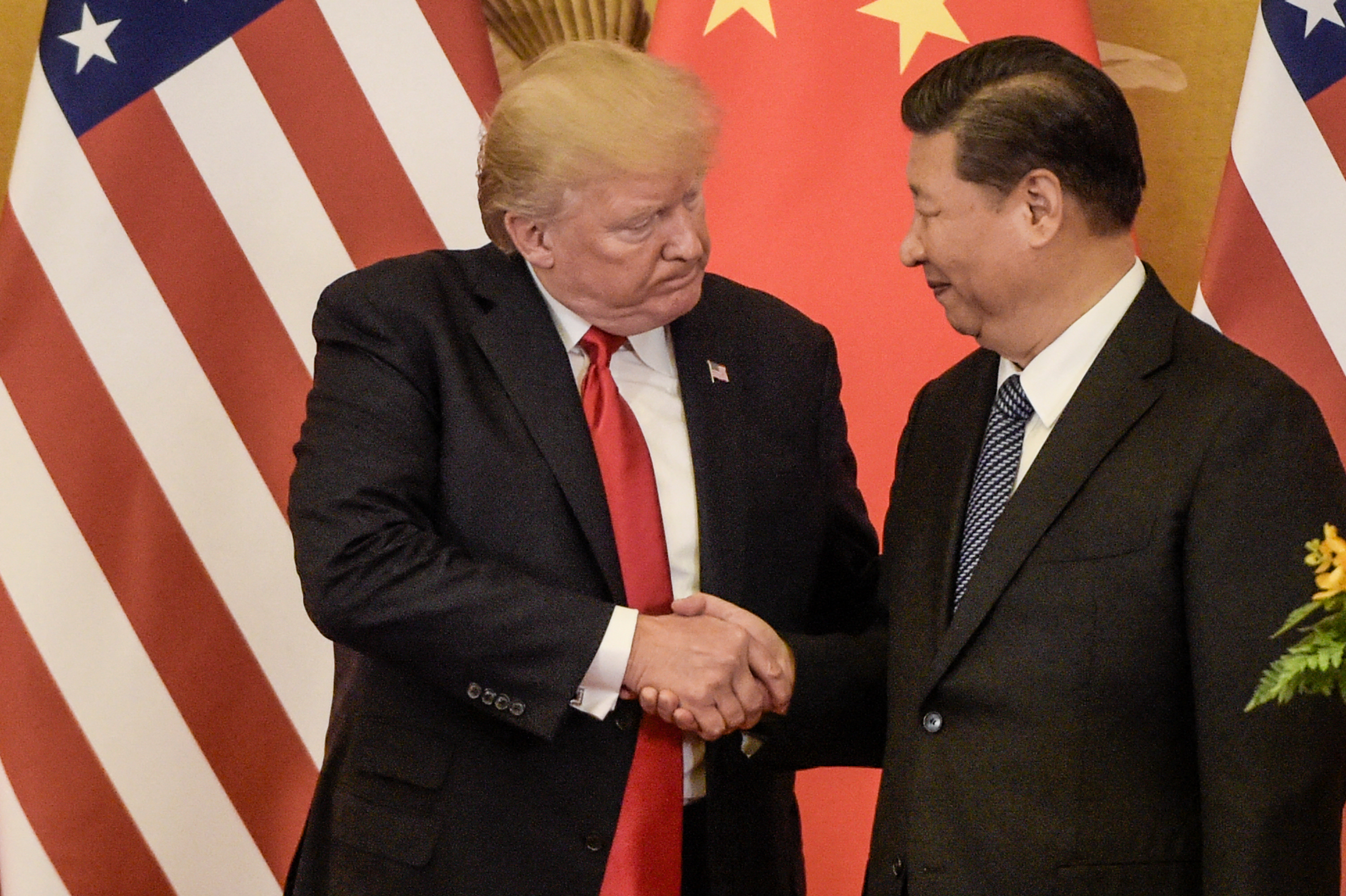
China investors are counting on the summit between Xi Jinping and Donald Trump to deliver just enough to sustain the detente trade underpinning stocks and the yuan.
After going negative in March after the outbreak of hostilities between the U.S. and Iran, flows of gold into ETFs flipped positive again in April, with all regions reporting inflows of metal.
The stock market is on an absolute tear, with the Nasdaq up 5% last week and nearly 13% year-to-date. The proximate causes include a cease-fire somewhat holding with Iran, a 28% surge in S&P 500 corporate profits in the first quarter, and some consensus-beating economic reports, like Friday’s payroll numbers.