Google parent Alphabet Inc.’s municipal-bond market debut was met by a surge of investor interest.
The world is not ending. It is restructuring. But restructuring, as I noted at the outset, comes with an asterisk. What is really happening is a replacement, of assumptions, of guarantees, of the architecture that held everything together for eighty years.
Our broad message for the second half of 2026 is this: Income still matters, but investors should be selective. Despite the recent rise in Treasury yields, we suggest investors favor a below-benchmark average duration with their bond holdings, favoring short- and intermediate-term maturities.
With tech stocks pushing to new highs on enthusiasm around transformational technologies, the real question isn’t just momentum. It’s whether markets are becoming frothy, even bubble‑like, reminiscent of the dot‑com era. We don’t think so.
Trade policy returned to the spotlight this week as the United States announced new tariffs on 60 countries, with rates of either 10% or 12.5% depending on the trading partner.
Confirming that the bar is high for artificial intelligence (AI) semiconductor makers’ earnings reports, shares of Broadcom (AVGO) plunged 12.59% on June 4, a day after the chip giant delivered quarterly results. The results weren’t the problem. It was a lack of a positive update regarding AI semiconductor demand.
In my more than two decades covering index funds, I have never seen anything quite like the frenzy surrounding the SpaceX IPO. The sheer scale and market anticipation of this pending debut this week have done something rare. It has encouraged index providers to re-evaluate how they build and maintain benchmarks that are tracked by trillions of dollars.
For years, the retirement industry has framed the challenge the same way: Participants aren’t engaged enough. Employers need better communication. Advisors need to educate more.
In this episode of the Money Metals Midweek Memo, host Mike Maharrey argues that reports of inflation's demise have been greatly exaggerated. Drawing on both recent economic data and historical parallels, he contends that the United States may be entering a second wave of a broader long-term inflationary cycle reminiscent of the inflationary era of the 1960s and 1970s.
The latest Emerging Markets Insights discusses companies across various sectors that have expressed cautious optimism for the second half of 2026 despite ongoing geopolitical pressures and higher input costs. Templeton Global Investments highlight what they observed at a recently attended summit.
Currencies in the developing world sank after a blowout US jobs report provided the clearest sign yet that the labor market is breaking out of a prolonged period of lackluster hiring, undercutting the case for rate cuts from the Federal Reserve.
The largest ski resort in the US, in a corner of Utah long popular with wealthy travelers and second-home buyers, is expanding — and turning to the municipal bond market to help pay for it.
On June 4, Vanguard launched the Vanguard U.S. High-Yield Corporate Bond Index ETF (VCHY) on the Cboe BZX. VCHY provides ultra-low-cost exposure to higher-yield U.S. corporate bonds. It comes with an expense ratio of just five basis points.
Bond ETFs secured a record $64 billion in monthly inflows, driving total fixed-income ETF assets above $2.5 trillion.
When it comes to systematic investing, numbers tell only part of the story. Traditional quantitative models rely on prices, earnings, and balance sheet data, but words matter too.
There are short duration bonds and corresponding ETFs. For advisors and fixed income investors who really want to minimize interest rate risk, there are ultra-short alternatives. Those products are worth considering this year.
Get ready for an absolute blockbuster of a summer, and then some. While mega-cap tech stocks have been busy hogging the headlines on the corporate event calendar, a quiet transformation has been taking place just off the exchange floors. The IPO market, which spent the better part of the last few years stuck in a defensive crouch, has officially smashed the accelerator to start 2026.
It’s May 2026 and once again civilization and financial markets have made it 5-ish months into a new year without self-combusting like a Spinal Tap drummer. It is important to note that dozens of people and stocks spontaneously combust every year, but despite the increasing universality of AI, it’s “just not really widely reported.”
For weeks now, media reports have been suggesting that Washington and Tehran are moving closer to a memorandum of understanding (MOU). In practical terms, that would extend the current ceasefire by roughly 60 days and create a window to negotiate a more durable peace agreement.
The U.S. economy appears resilient, judging from key economic measures. AI-driven capex continues to power investment, support equity markets, and sustain a wealth effect that has propped up consumption. Real GDP growth remains positive. Private sector balance sheets are in generally good condition and many higher income and wealthy households have benefited from equity markets gains.
Climate change has become a defining force in geopolitics. As governments respond to record heat waves, floods, wildfires and droughts, their policies and economic posturing are reshaping manufacturing, trade and energy security across the capital markets.
The rise in U.S. Treasury (UST) yields, specifically the ten-year note, since late February has captured the attention of global investors in a very visible fashion. Just a couple of weeks ago, headlines were blaring that the UST 10-year yield had reached its highest level since the beginning of 2025, leaving market participants to wonder: What comes next?
The closed-end fund landscape may be seeing a big change as regulations may be shifting at the SEC, per recent announcements.
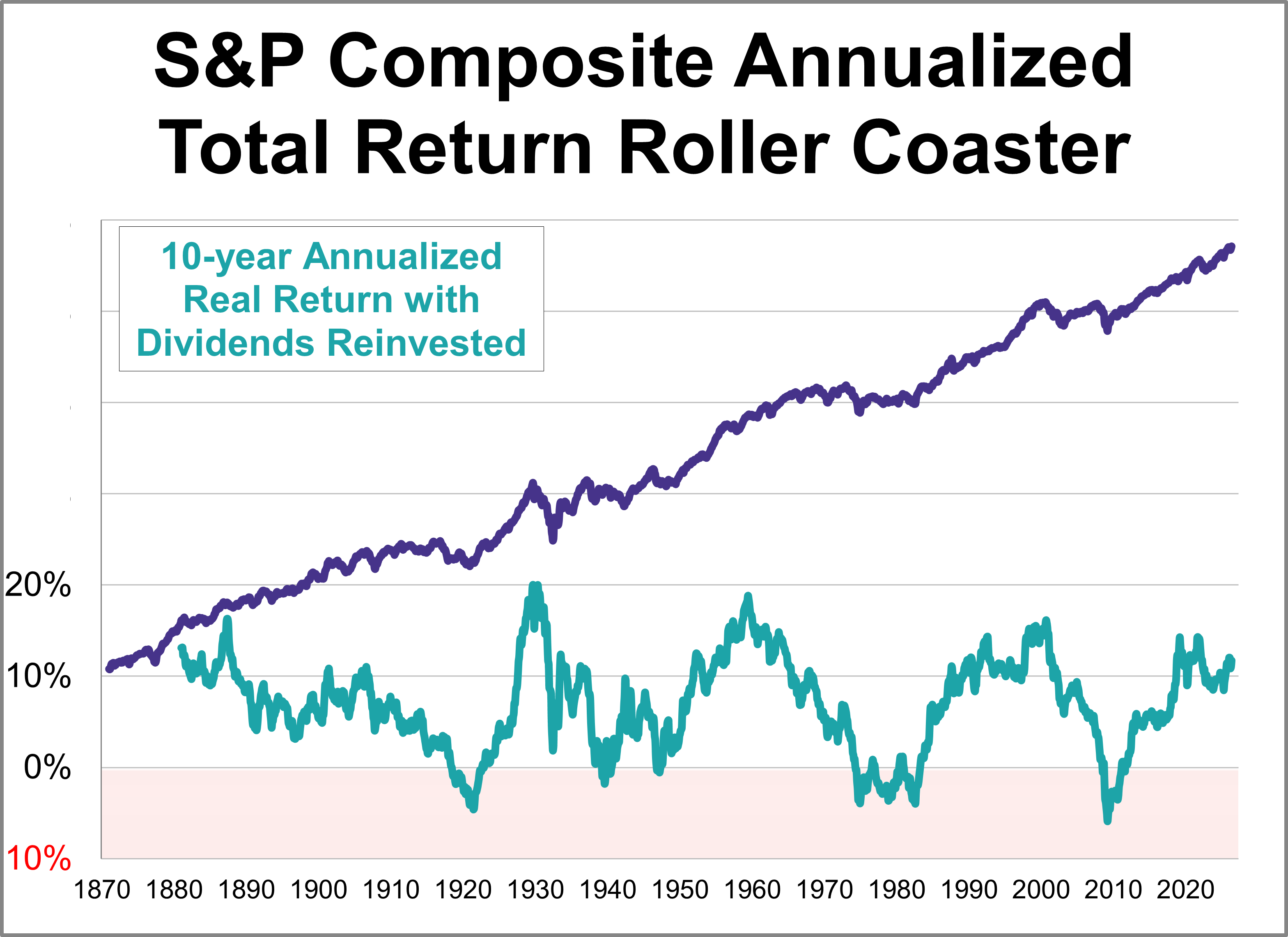
Here's an interesting set of charts that will especially resonate with those of us who follow economic and market cycles. Imagine that five years ago you invested $10,000 in the S&P 500. How much would it be worth today, with dividends reinvested but adjusted for inflation?
On Wednesday, June 3, Wellington Management and The Hartford announced that Wellington will be acquiring Hartford Funds. Once the acquisition is complete, Hartford Funds will operate under Wellington’s brand through the firm’s U.S. Wealth business.
A seemingly endless appetite for buying US stock dips has propelled Vanguard Group’s S&P 500-tracking ETF past $1 trillion in assets, making it the first fund of its kind to reach a milestone once thought unimaginable for the ETF industry.
Cliffwater LLC’s flagship private credit fund capped redemptions at 5% in the second quarter after investors looked to pull about 17% of shares, in a sign of enduring pressure on the $1.8 trillion market.
The IPO market may be entering one of its largest cycles in years, but the next wave may be defined less by breadth than by scale. Instead of hundreds of companies listing, a smaller group of AI and strategic infrastructure leaders could reset the market on their own.
Foreign investors led by the likes of Stanley Druckenmiller and major Wall Street banks are returning to Argentine stocks this year after some had exited ahead of 2025’s volatile midterm election cycle.
Wealth today is more complex than ever. Investments, taxes, estate planning, insurance, and even family dynamics are deeply interconnected, and decisions in one area can have meaningful consequences in another.
Stocks extended their advance for a ninth consecutive week, with the S&P 500 rising more than 5 percent in May on the heels of April’s 10 percent rally. This nine-week run coincides with the market’s March 30 bottom, when early signs of a potential off-ramp or ceasefire in the Middle East began to emerge.
Even if the Middle East war does find a lasting settlement, the specter of inflation appears poised to hang over the markets. Indeed, while employment data had, up until recently, been the primary focus for investors, arguably, inflation reports have now moved into the ‘leaderboard’ position.
Learn what's in store for the remainder of 2026 and the challenges that lie ahead in our mid-year outlook for U.S. stocks and the economy.
A strong business isn’t always a winning stock at every moment, and 2025 was a good reminder of that. Developed market equities finished the year up more than 20%, but quality stocks lagged. That’s why Parametric favors a multifactor approach to capture factor risk premia.
Get ready for a magnificent month, and then some. Mega-cap tech stocks dominate the corporate event calendar in June, already highlighted by NVIDIA (NVDA) CEO Jensen Huang’s keynote address at Computex 2026 in Taiwan earlier this week, one of many major conferences.
Last week, several Fed members signaled the central bank may have to raise interest rates to cool price inflation.
Given its focus, the launch presents a milestone for the asset management community. ASD blends a sophisticated index design with structural corporate philanthropy to create an ETF that resonates with those invested financially and emotionally.
Space ETFs have seen strong inflows coupled with standout performance, capturing significant market attention. For investors, the rapid pace of capital deployment into the space economy underscores a compelling investment opportunity. For this edition of Bull vs Bear, writers Zandile Chiwanza and Elle Caruso Fitzgerald debate the use cases for space ETFs in portfolios.
The top ETF launches of the past decade were the focus on this week’s ETF Prime. Host Nate Geraci and Cynthia Murphy, director of research at VettaFi, counted down the 10 most successful debuts by current assets. Murphy noted that the S&P 500’s roughly 13% annualized gain over that span helped shape many of the performance stories on the list.
More and more Americans are feeling financially behind in 2026. More than eight in 10 have reported having at least one financial regret from 2025, according to a recent survey from Omni Calculator. 28% said making rushed decisions without enough planning were the leading cause of financial mistakes.
A private credit fund jointly managed by Future Standard and KKR & Co. sold $900 million of junk bonds on Monday, according to people familiar with the matter, in a rare high-yield offering by a publicly traded credit fund.
Blackstone Inc. has entered an agreement to provide Nippon Life Insurance Co. with investment services, adding to an increasing number of tie-ups between private investment firms and Japanese insurers.
A key source of demand for corporate bonds may be fading now that managers of company pension funds have more than enough money on hand to pay their retirees.
US equities continued to climb higher in May, with the S&P 500 Index rising 5.1%. Further de-escalation of geopolitical tension in the Middle East has paved the way for the market’s 19.5% advance from the late-March lows.
Private markets have become integral to modern portfolios, with many investors searching for higher returns and diversification, including from public markets. But recent fund redemptions have reinforced that illiquidity isn’t theoretical, raising questions about the benefits of giving up liquidity. We see several—but investors must understand the trade-offs.
For the dollar-denominated investor weighing how to position for the back half of 2026, last week tightened a thesis we have been building all year.
Reducing equity exposure during periods of elevated risk is not the same as market timing. The financial industry has spend decades blurring that distinction.
Would I be better off waiting for the Fed to make its move on rates before investing?” “Should I wait to increase duration because a blocked Strait of Hormuz could push oil prices higher and push rates even higher?” “Should I invest in bonds gradually to reduce the risk of missing the rate peak?
Rising office delinquencies within commercial mortgage-backed securities (CMBS) reflect genuine pressures from shifting work patterns, higher interest rates, and greater refinancing risk.
Taylor Topoussis and Chris Galipeau discuss high-conviction insights that go beyond media headlines.