Stocks rose last week (S&P 500 +4.7%) after falling to a 2.5 year low the week before. The increase was attributable to technical and sentiment reasons, but also Q3 earnings reports coming in less bad than feared.
“Recession Fatigue” is setting in as consumers struggle under rising interest rates, high inflation, and a declining stock market.
Federal Reserve officials are preparing to roll out another super-sized interest-rate increase in early November, when they will also likely debate tactics for completing the most aggressive tightening cycle in four decades.
With mortgage rates more than doubling from ~3% to over 7% today the difference in cost between buying a home twelve months ago compared to today is very big.
Key Takeaways
Macro uncertainties and tightening financial conditions are pressuring the real estate investment market. Tim Wang, Head of Investment Research for Clarion Partners, discusses the challenges and opportunities in this current environment.
Investors today probably feel a bit like the joker and the thief from Dylan’s classic, “All Along the Watchtower” – there’s too much confusion, they can’t get no relief. But our Core Equity team believes there is a way outta here – investing in dominant companies that pay growing dividends.
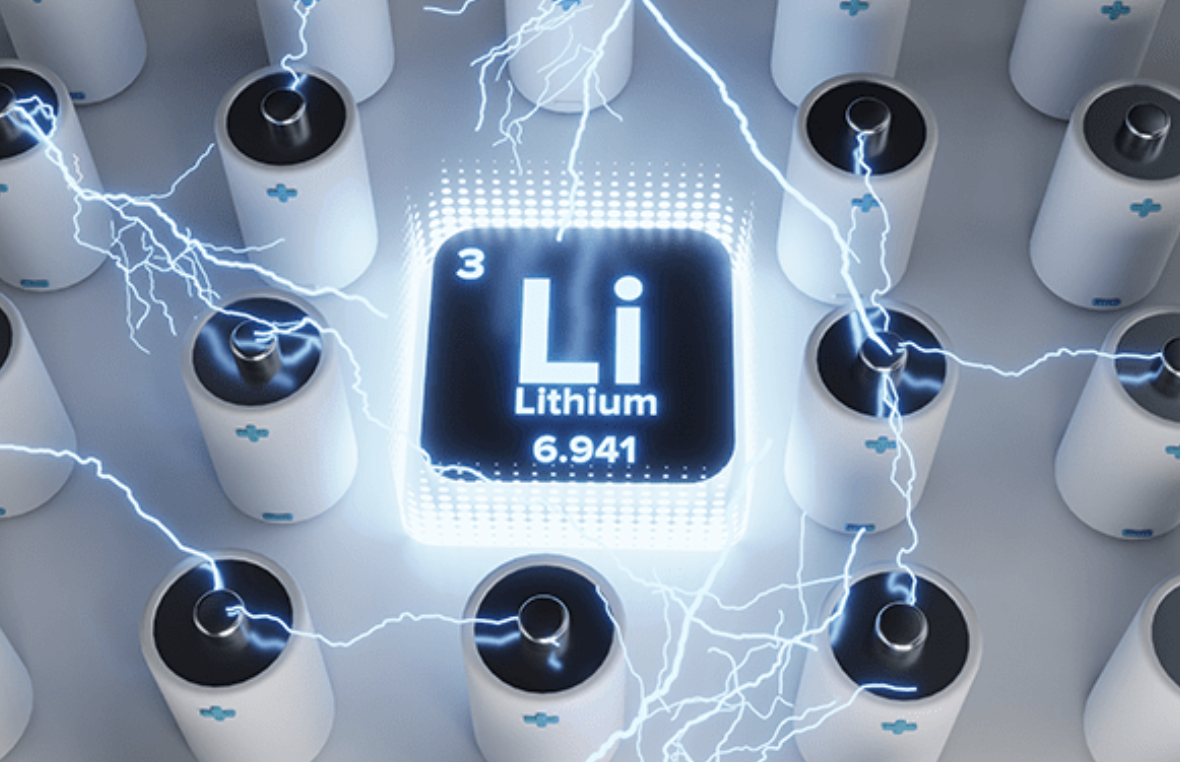
With this week’s announcement that the White House is deploying nearly $3 billion to boost domestic output of EV batteries and the minerals used to make them, it may be time for investors to take notice.
Oil edged higher after a volatile week of trading as concerns over a global economic slowdown continued to dun the market.
The Treasury market was upended Friday by a surge in wagers that circumstances will allow Federal Reserve to slow its pace of rate increases as early as year-end.
The Internal Revenue Service is boosting how much Americans can plow into their 401(k) plans next year by a record amount amid a surge in inflation.
Treasury Inflation-Protected Securities can be a buffer against long-term inflation, but it's possible for TIPS price declines to outpace principal adjustment in the short term.
At the beginning of 2022, our most reliable stock market valuation measures stood at record levels, beyond even their 1929 and 2000 extremes. The 10-year Treasury yield was at 1.5%, the 30-year Treasury bond yield was at 1.9%, and Treasury bill yields were just 0.06%. By our estimates, that combination produced the most negative expected return for a conventional passive investment portfolio in U.S. history.
The battering of bonds this year from inflation and higher rates has made long-term municipal securities so cheap that investors who usually shun them may be buyers.
Overall, Wall Street has made only modest downward adjustments to earnings outlooks this year. For all the recession hysteria, consensus earnings forecasts for 2023 are a meager 2% below where they started the year.
In the context of a rough year so far, it's a good time to review whether this is just a bump in the road or something more serious to prepare for.
After a strong rebound from the pandemic in 2021, it’s been all downhill for the global economy this year. Economic activity is being hindered as policymakers cope with the hottest inflation in decades, impairments from the Ukraine war, and China’s prolonged lockdowns. Recession fears are starting to come true.
Fear and uncertainty in financial markets driven by inflation-fighting central banks, slowing economic growth and geopolitical tensions has driven risk-off investor behavior. While this can be disorienting, the U.S. Value team at Artisan Partners, led by portfolio manager Daniel Kane, views the current market drawdown as a healthy readjustment to the cost of capital. This comes after years of central bank interventions that distorted asset prices and provided a tailwind for growth stocks. It drove less selective managers to pay higher price multiples. He will explain why today’s shifting financial landscape will create more attractive investment opportunities, particularly for disciplined value investors.
Much attention has been paid to the elevated risk (and announcement) of a recession, but investors should instead focus on signals coming from leading economic indicators.
The Federal Reserve’s influential staff judges that under the surface the US economy is running even hotter than they thought, helping to explain why inflation remains at a 40-year high and providing reason to expect even more interest-rate hikes.
A surprise quarterly loss by US economic bellwether and aluminum giant Alcoa Inc. added to jitters over the world economy as the metal used in everything from iPhones to Pepsi cans hits headwinds.
It's no secret that delaying the start of Social Security benefits typically means you'll get more money in retirement. And waiting just got even more worthwhile thanks to the program’s big cost-of-living adjustment set for next year.
Blame the Fed, war and fiscal profligacy all you want. But big trouble was lurking in many widely followed portfolio strategies long before those threats took hold.
While the Fed continues to hike rates to combat high inflation levels aggressively, history shows that deflation will become a more significant threat when something “breaks” in the financial or credit markets.
If the prolonged period of declining and ultra-low interest rates is over, what does that mean future corporate profits, cash flows and dividends?
The Fed remains singularly focused on containing inflation but has made little headway so far.
The investors in the Smead International Value Fund have asked our team at Smead Capital Management what looks attractive today.
Inflation, instability, interference, these are the things that try our souls (to paraphrase American patriot Thomas Paine). They’re also the things that can make one think twice about keeping their wealth in dollars.
We received a creative bit of poetry from one of our Canadian readers that provides a Shakespearean take on market events.
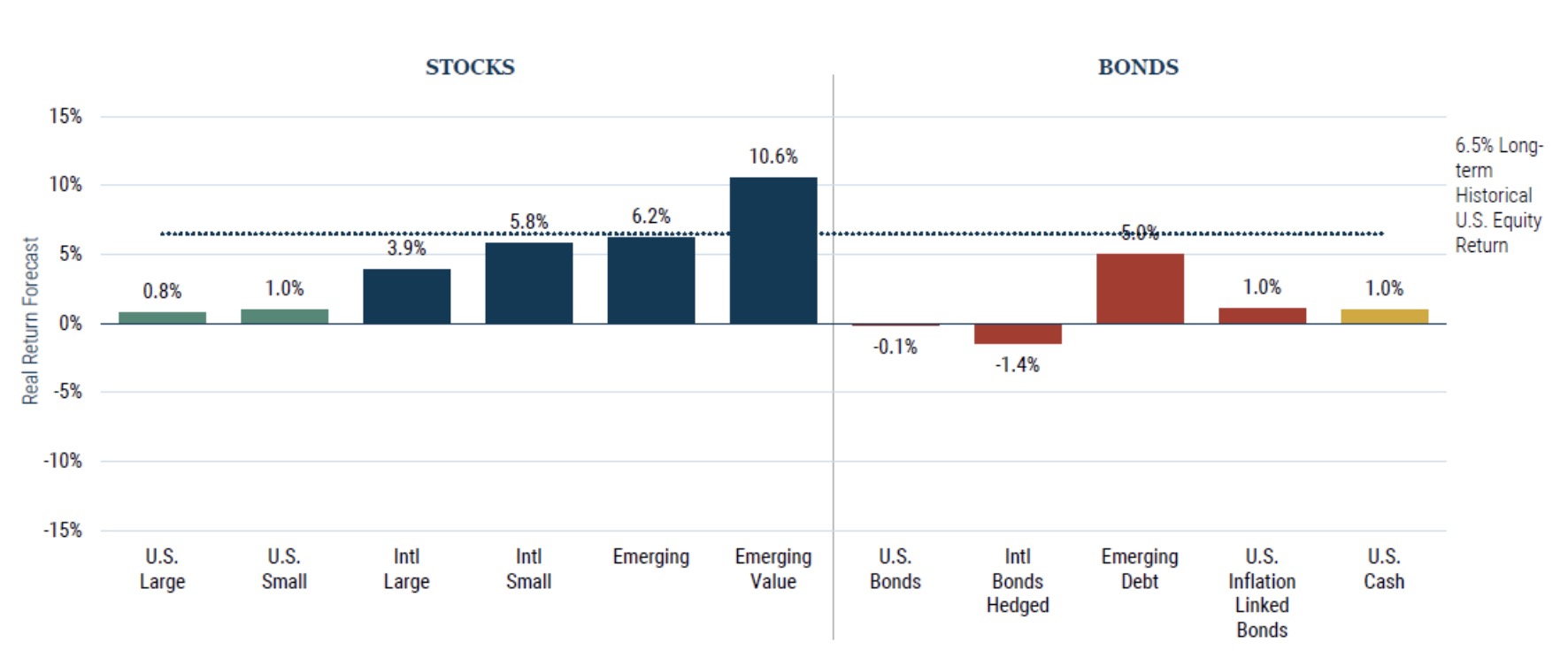
GMO 7-year asset class forecast: 3Q 2022.
The difficult capital markets saga of 2022 continued through the third quarter with few safe harbors as rates rose and growth slowed.
From an investment standpoint, aggressive regime shifts like the current one often create price dislocations as allocators restructure their portfolios, according to K2 Advisors.
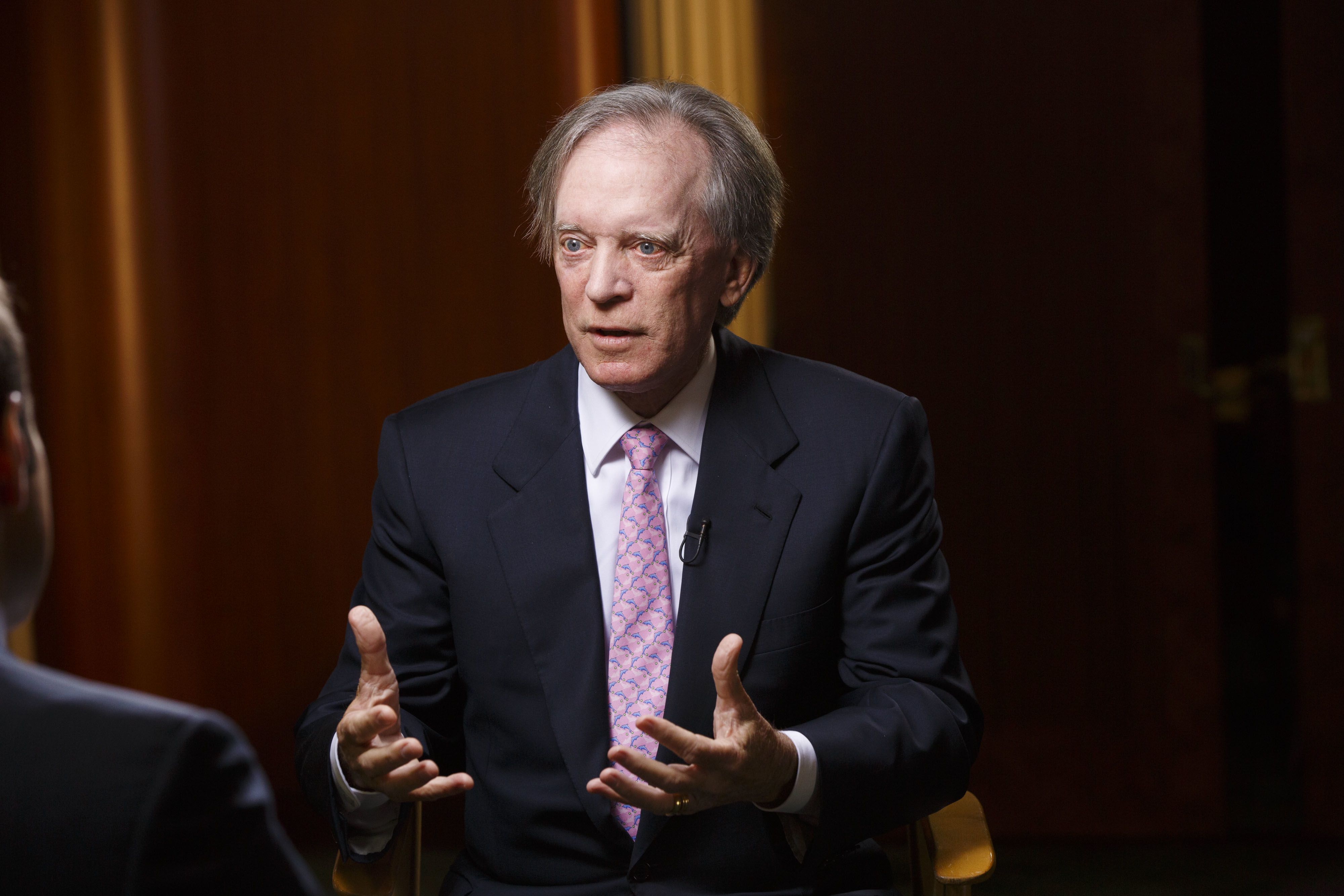
Bill Gross pioneered the “total return” strategy in the 1980s that revolutionized the once-sleepy bond market.
Exchange-traded fund investors are preparing for the possibility that peak bond pain has passed.
The US is planning to auction in December leases for offshore wind farms in California waters, the first off the Pacific Coast, which will require a new, more expensive turbine technology.
The Biden administration is moving toward a release of at least another 10 million to 15 million barrels of oil from the nation’s emergency stockpile in a bid to balance markets and keep gasoline prices from climbing further, according to people familiar with the matter.
Some of the world’s biggest financial firms including BlackRock Inc. and Vanguard Group Inc. have told the UK they have no plans to halt the financing of new fossil-fuel supplies, in response to a list of questions sent by British lawmakers tasked with figuring out how the country can meet its own net-zero obligations.
Many Wall Street economists are holding firm to their bet that US inflation will slow substantially over the next year even as they’re being forced to keep raising their predictions for coming months.
President Joe Biden said 8 million Americans had already applied for “life-changing relief,” as he formally launched the application for loan borrowers to seek forgiveness on their student debt.
The long-simmering idea that the US government should stand ready to buy back Treasury securities from investors to improve market functioning is moving closer to reality.
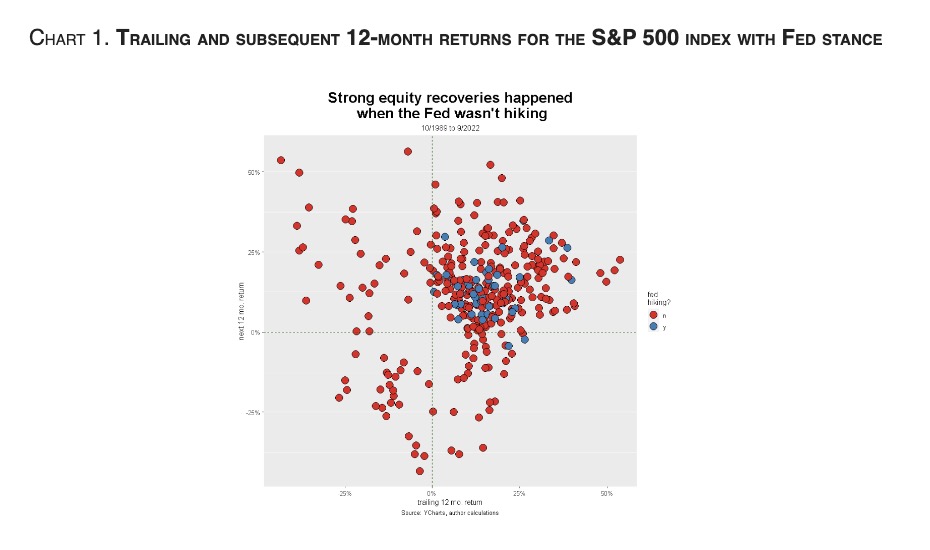
Investors may have to wait until the Fed’s done tightening for equity market fortunes to change. History suggests that next bull market may not start until both inflation and valuations are again low.
The Nobel Prize in Economics was recently awarded to former Federal Reserve Chairman Ben Bernanke, as well as professors Douglas Diamond and Philip Dybvig, for their work on understanding the role banks play in the economy, especially during a financial crisis.
A US recession is effectively certain in the next 12 months in new Bloomberg Economics model projections, a blow to President Joe Biden’s economic messaging ahead of the November midterms.
Citigroup calls it a “head scratcher.” Goldman Sachs terms it “striking resilience.” For Columbia Threadneedle, it’s a “reward for proactiveness.”
A strange thing keeps happening in this nightmare year on Wall Street: Seemingly surefire bets that outsize volatility will engulf equity indexes keep misfiring, even as those riding turmoil in single stocks pay off handsomely.
The world is in a very different macroeconomic position today compared to the prior forty years.
The sleeper hit of 2022 investing is about to lose some of its luster — but it still might be one of the best places to store your cash.
If the Federal Reserve was hoping for some sign that inflation is subsiding, it was cruelly disabused by the latest figures for consumer prices.
Investors are looking beyond a looming global recession and they see one country – and its financial markets – emerging strongest on the other side.
U.S. equities are beginning the new week sharply higher, getting a boost from the U.K.'s decision to abandon nearly all its tax cut plans.