Better than expected inflationary data and corporate earnings reports helped boost S&P 500 to back-to-back rallies for first time since mid-2021.
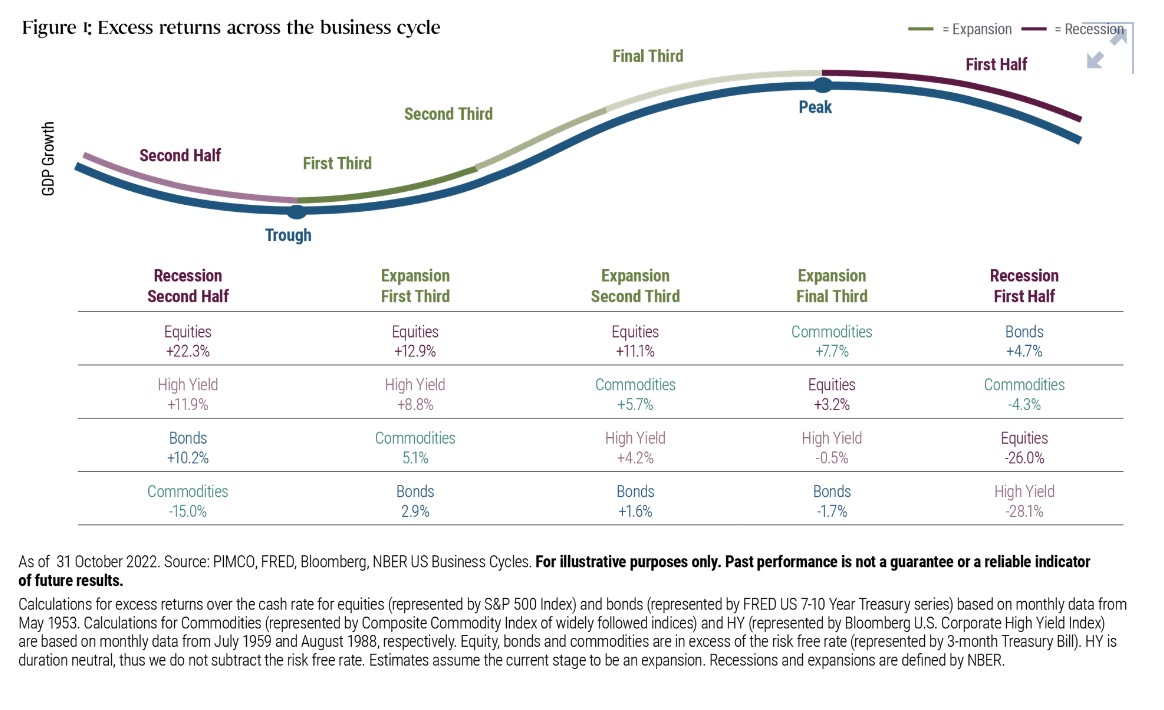
How we’re thinking about investing against a backdrop of inflation uncertainty, geopolitical tension, and likely recession.
Markets surged on Wednesday after Jerome Powell, the Federal Reserve chair, indicated that the world’s most powerful central bank would slow the pace of rate increases this month.
Exchange-traded fund investors took Wednesday’s stock-market surge as an opportunity to offload $8 billion of holdings in two of the biggest equity funds.
There's a new twist in the fast-moving housing market with welcome news for renters: After an 18-month period of red-hot rent growth, the apartment market has turned ice cold over the past few months.
As president of the Federal Reserve Bank of New York and vice chair of the policy-setting Federal Open Market Committee, John Williams is perhaps the second-most influential US central banker behind Fed Chair Jerome Powell.
Ethical debt deals are set to become the majority in Europe’s market for corporate loans for the first time next year.
In August 1979, President Carter appointed Paul Volcker as Chaiman of the Federal Reserve.
Regardless of your long-term view on bonds, Treasuries are beginning to look undervalued from a cyclical perspective.
Chair Jerome Powell signaled the Federal Reserve will slow the pace of interest-rate increases next month, while stressing borrowing costs will need to keep rising and remain restrictive for some time to beat inflation.
Tesla Inc. is getting a strong show of faith from a group that Chief Executive Officer Elon Musk once blasted for doubting the company’s prospects: Wall Street analysts.
Global bonds rebounded in November, adding a record $2.8 trillion in market value, as investors bet that central banks are getting a grip on inflation. But how long the party lasts is another matter.
The past three years have shown us the downsides of depending too much on low interest rates, and how a better balance of fiscal and monetary policy can achieve a stronger economy.
The US Federal Reserve’s pitched battle with rising prices has given rise to widespread concerns about a possible return of stagflation — the combination of high unemployment and high inflation that afflicted the US in the 1970s.
One of the biggest trades this year has lost steam and its outlook for the next year has become much more mixed.
Baillie Gifford Partner Dave Bujnowski explains how he’s thinking about the drivers of growth investment opportunities amid growth stock underperformance.
David Dali, head of portfolio strategy, explains how emerging markets can give investors ballast to navigate macro headwinds and position portfolios for growth.
Whether foreign nations want or need tightening or easing, they are stuck with the monetary policy that the Fed decides America needs.
The top bosses of US oil and gas companies are speaking less and less about climate and carbon emissions, a signal that the industry’s public focus on ESG over the past couple of years may be fading.
November has given a glimpse of the outperformance that emerging markets can deliver in the post-stimulus world as the maturing phase of Federal Reserve tightening focuses investors’ minds on the opportunities beyond.
Global bonds joined US peers in signaling a recession, with a gauge measuring the worldwide yield curve inverting for the first time in at least two decades.
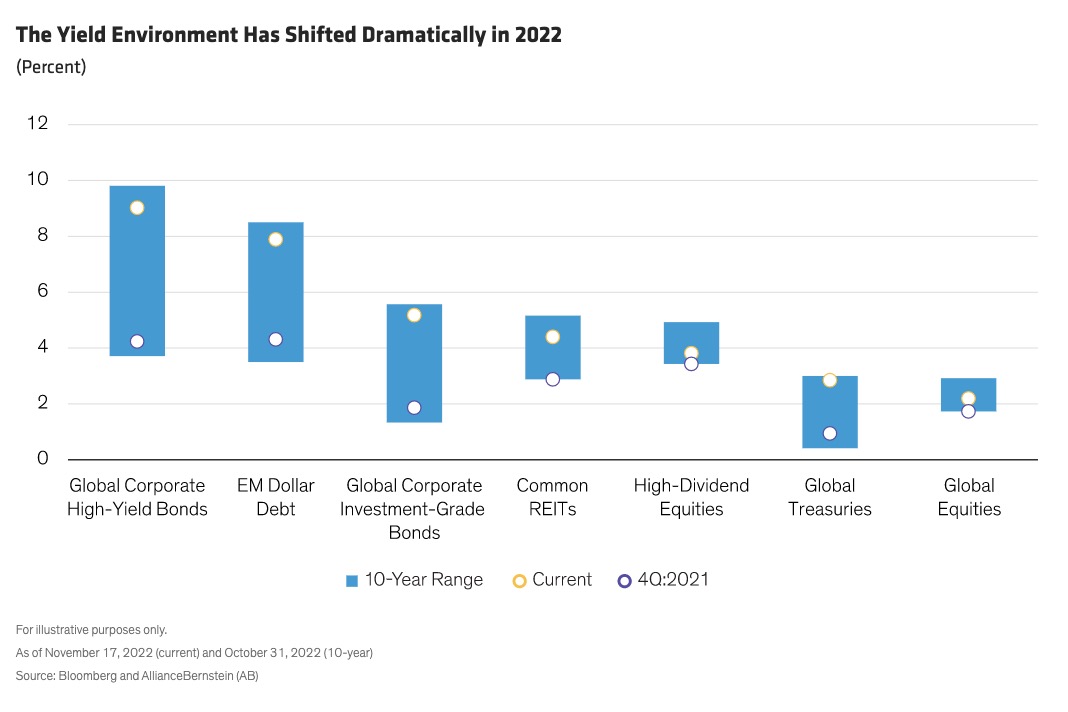
The question most asked by investors late last year, as Treasury bill yields hovered just above zero was “Where can I go for yield?” followed soon after by “What can I do to protect myself from inflation?”
U.S. stocks are choppy in pre-market trading on the heels of yesterday's drop ahead of tomorrow's comments from Fed Chairman Jerome Powell.
Doug Drabik discusses fixed income market conditions and offers insight for bond investors.
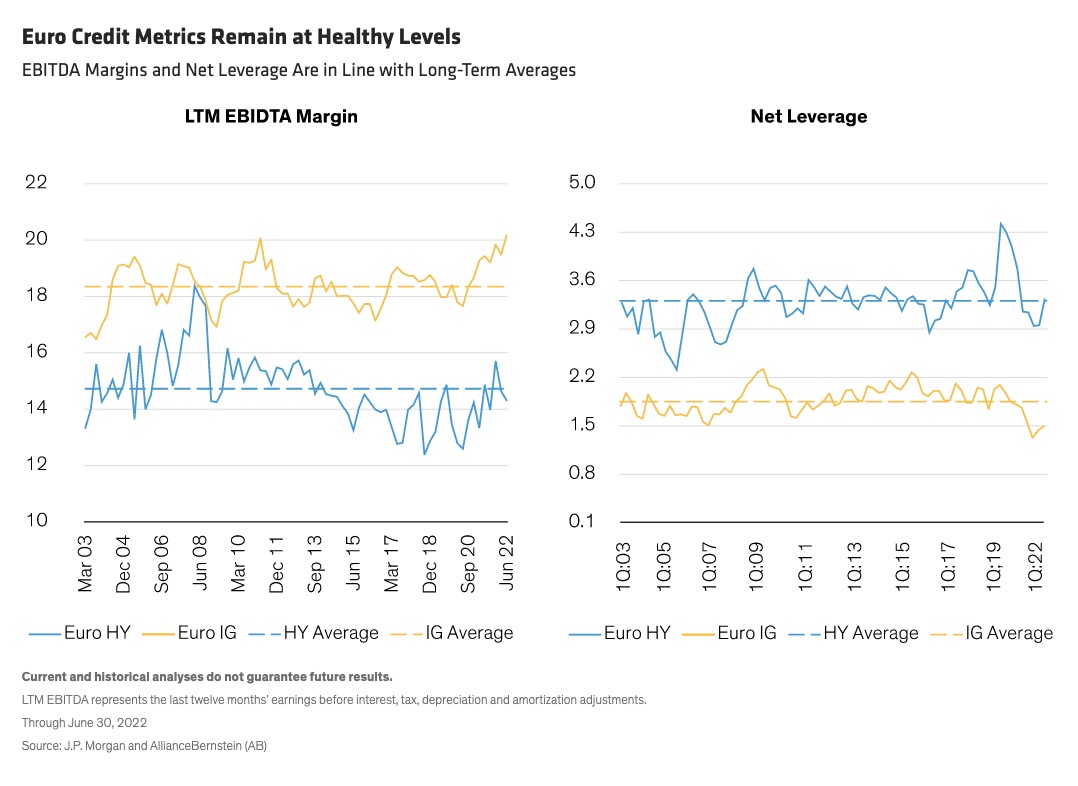
As Europe struggles with war, costly energy, record inflation and slowing growth, it’s no surprise that European corporate credit is out of favor.
There are many ways to decompose the bond market to identify the component pieces to infer what the market is pricing in.
You will lose clients and fail to gain new ones unless you make dramatic changes right now.
Doll’s Deliberations this week summarizes some short-term expectations and some longer-term issues.
President Joe Biden has often described his plan to cancel some federal student-loan debts as a “game changer.” In one sense, this policy has indeed proved transformative — by making a bad system worse.
Some people are suggesting that the Federal Reserve consider a compromise in its battle with rising prices: Instead of imposing the full monetary tightening required to get inflation back down to its 2% target, why not increase the target a bit?
The US housing market is in an uneasy state of equilibrium.
In this year’s global economic crisis, no two regions are having identical experiences. While inflation rages across much of the world, price rises have been more moderate in some countries than others. Similarly, the scale of rate hikes and the degree of recession fears aren’t uniform.
The US Inflation Reduction Act passed in August contains tax and investment incentives for a number of clean-energy technologies, including electric cars, solar panels and wind turbines. But the 750-page document also features a 30% tax credit for a lesser-known player in the push for energy efficiency: dynamic glass.
Stagflation is the key risk for the global economy in 2023, according to investors who said hopes of a rally in markets are premature following this year’s brutal selloff.
Following the weaker-than-expected October inflation report, stocks surged on hopes the Fed will “pivot” sooner than later. As we discussed recently, a “policy pivot” is not necessarily bullish but instead suggests more bearish market action will come first.
MegaThreats, Nouriel Roubini’s latest full-length offering, puts his Olympic-class pessimism on full display.
This article explores the efficacy of PLIBs against a retirement income strategy that does not include an annuity, as well as strategies which allocate to either a SPIA, a DIA, or a GLWB. I used a utility framework for this analysis.
Emerging markets have been rattled by inflation, weakness in China’s growth and the war between Russia and Ukraine. Wave after wave of bad news came in 2022; however, there are reasons for optimism as we approach 2023. Emerging markets are resilient and better positioned than developed markets to face the uncertain environment and lead the global recovery.
All is not lost for equity capital market bankers.
US retailers discounted heavily on Black Friday to clear out bloated inventories but customers responded with only modest traffic, leaving profitability in doubt for many chains.
The global economy’s dire and deteriorating prospects, together with the scale of the climate challenge, have apparently opened world leaders’ eyes to the risks that deglobalization poses. But it remains to be seen whether this realization will be followed by the action needed to reverse course.
Everyone seems to be paying more attention to the cost of goods and services these days. But there is one cost that many investors pay without realizing it – the cost of taxes on their portfolios. Here's why this cost matters and what you can do to help your clients avoid it.
With the year winding down, investors might think they’ve seen it all. But one element of market dysfunction that’s largely flown under the radar is increased friction within the US Treasury market. Treasuries are experiencing a liquidity decline on the back of economic uncertainty and higher volatility, with large blocks of government debt increasingly hard to trade.
This week, around my trip to a far-too-cold Denver, then to Dallas, and ultimately Tulsa to spend the Thanksgiving holiday with family, Keith and I did a 45-minute "interview" via Zoom. Less an interview, perhaps, than the two old friends catching up. I was surprised how many topics Keith and I aligned on perfectly, though our few disagreements about what comes next made for a great debate.
Americans who work remotely, either full-time or part-time, can save between $2,000 and $7,000 in transportation and work-related costs. They can also gain back the equivalent of two to three weeks per year in commuting time.
Presidential administrations never stay the same from beginning to end. Top personnel come and go for various reasons, and we seem to be seeing that now with the Joe Biden administration.
Under the surface of one of the quietest weeks on Wall Street all year, some money managers are renewing speculative bets, hoping against hope that a more friendly -- or at least less-hostile -- Fed, is back in their corner.
U.S. equities are mixed in pre-market trading, but the markets are on track to post weekly gains for the holiday-shortened week.
Vivek Tanneeru, portfolio manager, sees structural and cyclical tailwinds converging for emerging markets equities.
In one of the most challenging years for markets, 2022 brought persistently high inflation, aggressive central bank tightening and heightened geopolitical risks, leaving investors with few places to hide.