Despite the Fed’s aggressive monetary tightening and the regional banking crisis earlier this year, the U.S. economy has been surprisingly resilient. Bond yields continue to rise, with long-term Treasuries at their highest level since October 2007.
Intermission is over. Today we resume my series on the global cycle theories that, probably not by coincidence, all point to major change unfolding in the next few years. Finishing it may take some time since I keep finding new material.
2023’s market rally continues to center itself on the big tech comeback with certain themes exhibiting strength like artificial intelligence (AI) and cloud computing. While these themes can offer traders short-term opportunities, they can also persist in the long term as growth plays.
We hope you enjoy the latest Newsletter from Harold Evensky.
Like any recovering reporter, I like to keep tabs on my old beats, and the marijuana ETF space never disappoints. Or, perhaps more accurately, it never stops disappointing.
In what has been a hugely disruptive year for social media, Zuckerberg seems to be coming out on top — and enjoying it.
Share debuts among technology companies haven’t inspired confidence this year, with two of the largest offerings sliding below their listing prices within the first week. The next big deal may reignite interest in IPOs because of a unique set of traits.
The JPMorgan Asset Management money manager at the helm of the largest active exchange-traded fund in the $7.2 trillion industry is coming to market with another equity strategy geared toward investors bracing for a period of uncertainty.
Russia plans to reduce diesel exports from its key western ports to almost nothing next month after the government banned overseas sales to tame surging prices at home.
Quarterly commentary giving an overview of the markets and the importance of having and implementing a strategy when investing in the markets.
Artificial intelligence (AI) has been at the forefront of the 2023 market rally, offering investors long-term growth opportunity as well as short-term trading opportunities. For the latter, consider a pair of leveraged exchange traded funds (ETFs) from Direxion Investments.
Small-cap stocks and related exchange traded funds are taking a back seat to large-cap counterparts this year. The Russell 2000 Index has shed almost 5% over the past month. However, some market observers remain constructive on smaller stocks.
I’ve been writing financial newsletters for 15 years. I have seen a few cycles. There have been good times and bad times, thrills and spills.
In our latest Quarterly Letter, Ben Inker and John Pease discuss the new economic regime, how investors can prepare for a recession, and the merits of combining high quality and cheap assets in today’s environment.
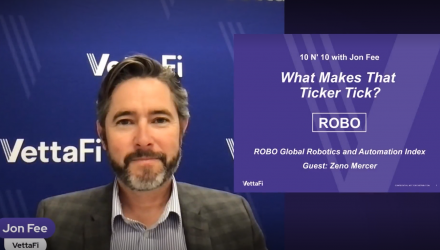
ROBO: Global Robotics and Automation Index Featuring Zeno Mercer and Jon Fee
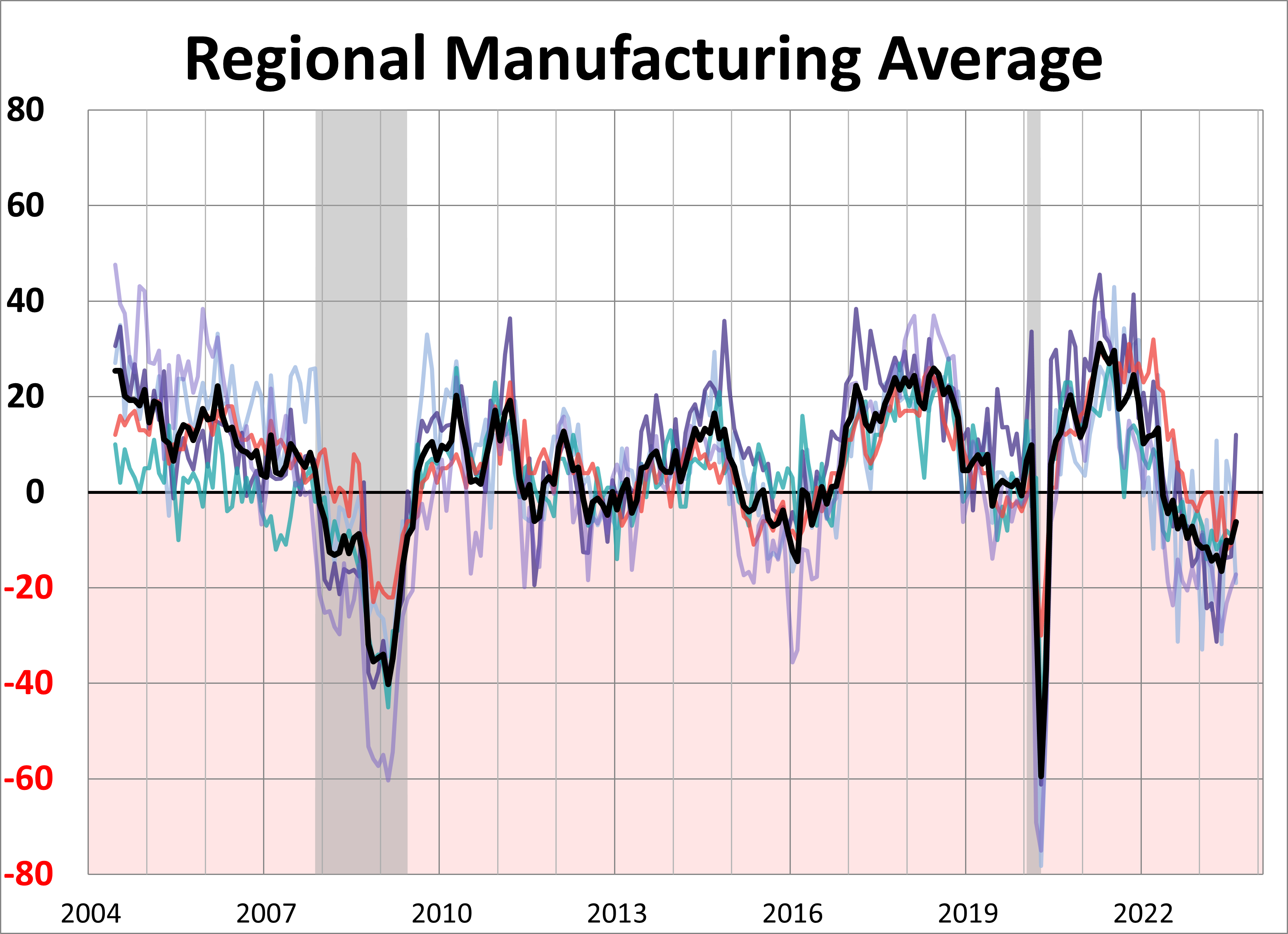
Five out of the 12 Federal Reserve Regional Districts currently publish monthly data on regional manufacturing: Dallas, Kansas City, New York, Richmond, and Philadelphia. The September average of the five districts is -6.5, down from the previous month.
Home prices are once again on the rise following a brief decline.
The two-month selloff in US stocks threatens to intensify as options dealers on Wall Street and fast-money traders both turn against the market.
The increasing prospects of a US federal government shutdown has some Bitcoin advocates predicting a rally similar to one that happened in response to the regional bank crisis earlier this year.
The MOVEit breach affected the clients of every wealth manager in America.
However, the regulators made asset management news with their focus on “truth in advertising.” Despite their well-intentioned efforts, it will remain paramount for investors to do their homework and look inside the portfolio.
Active ETFs have scored more investor interest this year than smart beta ETFs—but does that mean the latter will soon be out of the game completely? David Mann, Head of ETF Product & Capital Markets at Franklin Templeton, opines.
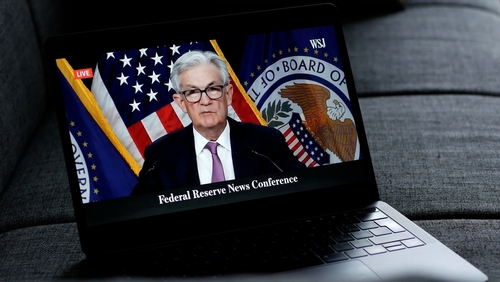
With the Fed pausing rate hikes this month as announced this week, investors now look nervously toward October. While earlier this year markets were even considering the possibility of rate “cuts” this year, now further hikes may be in the cards.
Historically, government shutdowns have not caused a major reaction in the markets. But shutdowns can increase market volatility, and an extended shutdown could have an impact on the overall economy.
EnerSys is a leader in stored energy solutions. Based in Reading, Pennsylvania, this company makes batteries, chargers, and accessories for transportation, aerospace, and defense.
VettaFi’s vice chairman Tom Lydon discussed the MUSQ Global Music Industry ETF (MUSQ) on this week’s “ETF of the Week” podcast with Chuck Jaffe of “Money Life.”
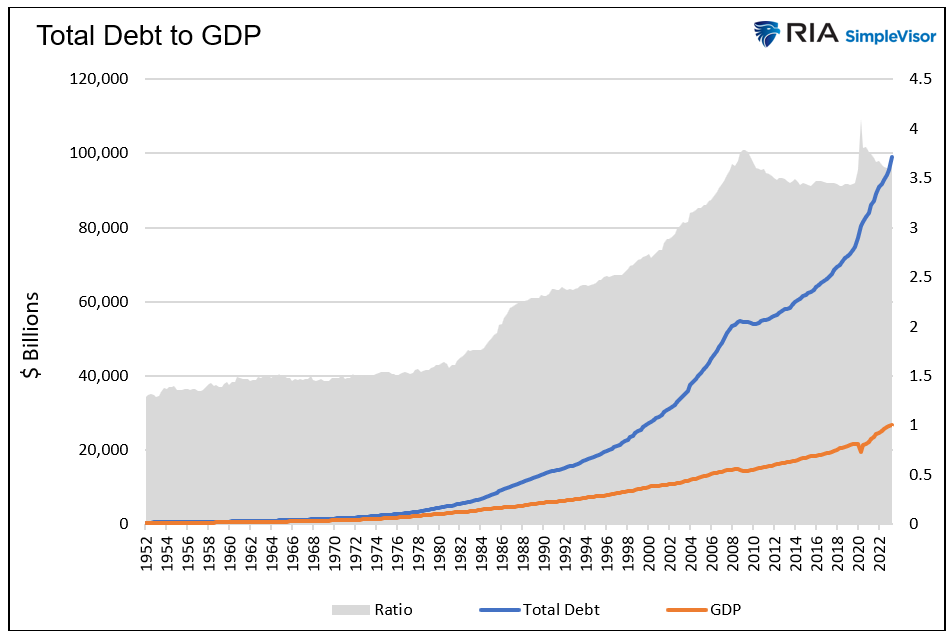
A financial crisis, following the 5.50% hike in Fed funds and similar increases in all bond yields, is virtually inevitable.
The Census Bureau has posted its advance report on new orders for durable goods for August. This series dates from 1992 and is not adjusted for either population growth or inflation. Let's review durable goods data with those two adjustments.
We have been given the mandate to show our capabilities by growing our books of business to “earn the right” to work with clients.
A key measure of how much bond investors are compensated for holding long-term debt turned positive for the first time since June 2021, reflecting steep increases in longer-maturity Treasury yields.
This stock market rally in the first half of 2023 was built on the back of technology stocks, as investors bet on a resilient US consumer and hype surrounding artificial intelligence to keep the shares soaring.
The stock market is buckling under the weight of a simple equation: cash earns more than equities.
China’s goal of self-reliance will certainly rely on innovation. Right now, the second-largest economy sits firmly atop the list of the World Intellectual Property Organization (WIPO) when it comes to innovation on a global scale.
The Fed sent a strong signal that interest rates will remain higher for longer, as our Franklin Templeton Fixed Income CIO Sonal Desai has long predicted. The Fed also started to acknowledge that the natural real rate of interest is higher than it thought.
Generative artificial intelligence (AI) is the form of artificial intelligence that’s generating the most buzz this year. Its applications in media/content generation and video, among other related uses, is making life easier and more efficient for scores of freelancers and gig workers.
Private infrastructure offers unique investment characteristics and potential diversification benefits for portfolio construction.
Even the best scientists in the world cannot reliably forecast drug-test results, so why should investors gamble? Quality businesses are key for healthcare stocks.
You’re not there to make friends. You’re there to create trust by diagnosing their issues.
Here are the 10 best books I read from September 2022 through August 2023.
On Monday, Amazon.com Inc. made a move it hopes can turn around the perception it had fallen behind in the AI arms race.
One of the longer-term consequences of the looming government shutdown isn’t getting the attention it deserves: The youngest potential recruits are receiving yet another reminder of the challenges of public service, and at a time when they are desperately needed.
The chair of the Securities and Exchanges Commission has asked staffers to pore over thousands of messages collected from investment firms as part of its probe into industry use of WhatsApp and other non-official messaging channels, according to Reuters.
Investors that missed out on this year’s dizzying rally in Nvidia Corp. have an attractive entry point this month.
As the cross-asset sell-off engulfed Wall Street last week, hedge funds ramped up their bets against stocks while one measure of their market positioning plunged the most since the March 2020 crash.
To judge by recent history, a US government shutdown won’t be a huge event for the bond market. If anything, it could even provide a little short-term relief, since Treasuries usually rally when investors need somewhere to hide.
It might be hard to believe after the crypto winter of 2022, but monetary tightening by global central banks could be supportive of Bitcoin upside.
Ultra high net worth investors have been using direct indexing to reduce their annual tax bill for years. But thanks to breakthroughs in technology and the ability to buy fractional shares, direct indexing has become more accessible.
Today, in a shock decision, the Bank of England (BoE) left its policy rate at 5.25% by the tightest possible majority vote of 5-4. All but one of 65 economists polled by Reuters had predicted that the BoE would raise the rate to 5.5%.
Energy and Gold Produces Face Increasing Pressures, Crimping Supply.
We started RBA in 2009 primarily because we thought the US stock market was entering one of the biggest bull markets of our careers. However, most investors did not agree with our bullishness. Now, risk aversion seems a thing of the past.