Tax issues are an area most of us focus on once a year. However, if you are heading into retirement and you do not have a solid tax plan in place, you could be paying thousands of dollars in taxes needlessly.
Gold appears to be well-positioned for a strong pump that could carry it to new all-time high prices in 2023—and beyond. As you know, I’ve been following and writing about the precious metal market for a very long time, and I see a number of unique catalysts at the moment that could contribute to higher gold prices.
The pitch for an actively managed bond exchange-traded fund can be compelling, especially when there’s market turmoil and uncertainty
A question has arisen amid all the bank failures. How, with the bond market enduring its worst spasm of volatility in almost four decades, have benchmark-level stocks managed to glide along, oases of calm?
New research confirms the valuable role that short sellers play in correcting the valuations of overpriced stocks.
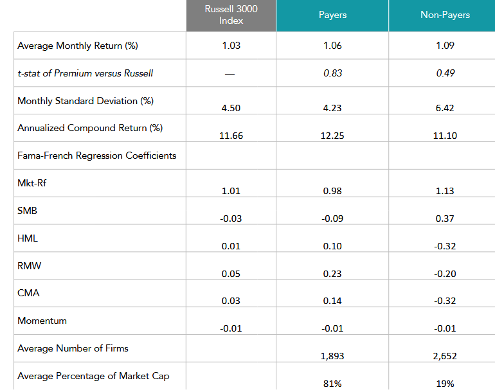
My research confirms what academic theory predicts: There has been no historical alpha among dividend-paying stocks, including those with a history of increasing dividends. Investors are better served by “tilting” allocations to factors that have historically outperformed (e.g., value).
Greg Becker sat in a red armchair at an invite-only conference in Los Angeles last week, legs crossed, one hand cutting through air.
We believe municipal bonds boast several key factors that position them as an attractive asset class in general, but especially so when markets are volatile.
Before making a hedge fund investment, investors and their advisors should consider four key questions.
VettaFi’s Todd Rosenbluth offers his take on five key ETF stories Nate is tracking right now. Morgan Stanley’s Tony Rochte discusses their recent ETF entrance and what comes next. VanEck’s David Schassler explains why inflation is here to stay and spotlights two potential inflation-fighting ETFs.
Here are the top three trends that will affect ETFs in 2023.
Research from Vanguard suggests that investing in commodities is the most powerful way to hedge against unexpected inflation.
Markets are unpredictable, which is one of many reasons it is difficult to consistently deliver alpha over long periods. In their latest commentary, our small cap growth team explains why their approach to managing the trade-off between risk and reward gives them the opportunity to outperform across market cycles.
A gold IRA is one way to diversify your retirement portfolio. It can protect your savings from plummeting in the event of a stock market crash or high inflation.
Janus Henderson Group Plc’s new boss has a plan to revive the struggling money manager, whose clients have yanked about $130 billion since 2017.
Passively managed equity funds are on the cusp of marking a milestone that’s been more than a decade in the making: Globally, net assets in such products are about to exceed those of their actively managed counterparts, according to Societe Generale.
The world of exchange-traded funds — still synonymous with passive investing — is turning into a battleground for Wall Street’s biggest players as they compete for a slice of the active-management industry.
VettaFi’s Tom Hendrickson discusses the latest Bitwise/VettaFi Benchmark Survey of Financial Advisor Attitudes Toward Crypto Assets. Dimensional’s Wes Crill offers perspective on the growth of their ETF business, mutual fund to ETF conversions, value investing, and more. Alpha Architect’s Wes Gray explains their white labeling service and spotlights two recent ETF launches.
Here are some places where the genuinely rich keep their money.
A parade of money managers who converted mutual funds into exchange-traded funds in a bid to ride rampant demand for the newer, easier-to-trade structures are discovering it may not be so simple to tap the ETF boom.
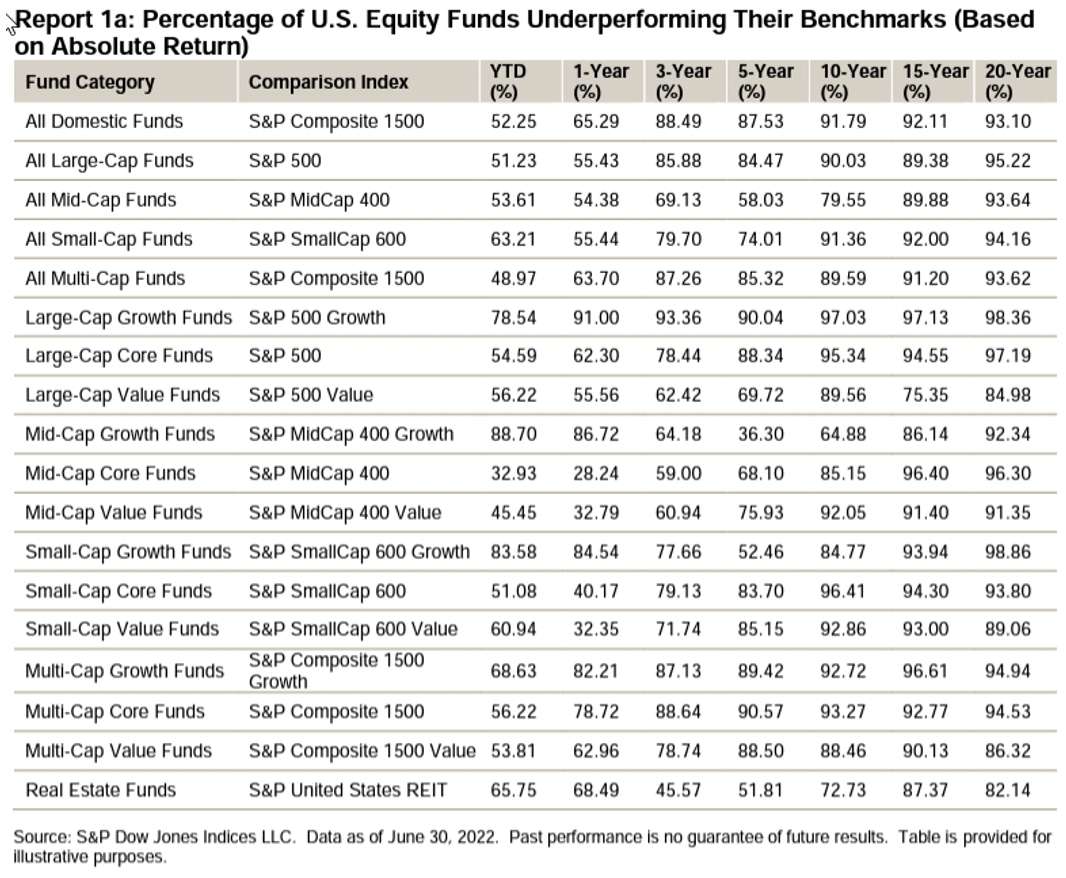
It’s common for a mutual fund to outperform its benchmark over a short time horizon – a few years – as happened with Cathie Wood’s ARKK. But new research shows that mutual funds fail dismally when performance is measured over the long horizons that retirement-focused investors face.
Just weeks after professional stock pickers celebrated their best year since 2017, the wind in the stock market has shifted, upending their fate.
The one-of-a-kind fund structure that helped turn Vanguard Group into the second-largest ETF manager in the world may be about to get a lot less unique.
With the new year in its infancy, it may be too early to think about where to spend Thanksgiving or booking your car’s fall tune-up.
I am often asked by advisors who are RIAs or are considering the model how they should explain that choice to their clients.
Northern Trust Asset Management (NTAM) is a leading global investment manager with $1 trillion in assets under management. It released “The Risk Report” late last year, which is an aggregated analysis of 280 institutional equity portfolios across the globe. The report revealed six common drivers of unintended investment results. As an investment manager that employs a quantitative risk-aware approach, NTAM regularly partners with investors and their consultants to provide them with a distinct analysis of underlying risk components impacting their portfolios’ ability to achieve intended outcomes. Of utmost importance to our Advisor Perspectives listeners and readers, the findings of the research are as applicable to portfolios managed by advisors for individual investors as they are to institutional investors. NTAM does indeed serve individual advisors through a number of offerings, including Northern Mutual Funds, FlexShares ETFs, and Diversified Strategist model portfolios. NTAM’s purpose in conducting the research behind the Risk Report was to help investors make needed adjustments consistent with NTAM’s core philosophy, which is that investors should get paid for the risks they take – in all market environments and in any investment strategy.
Cash flows into US sustainable funds plummeted last year as the broader market took a beating and anti-ESG crusaders targeted money managers including BlackRock Inc. for “woke capitalism.”
ESG proponents sell the idea to investors that they can achieve both altruism and high returns. In the end, they fail at both.
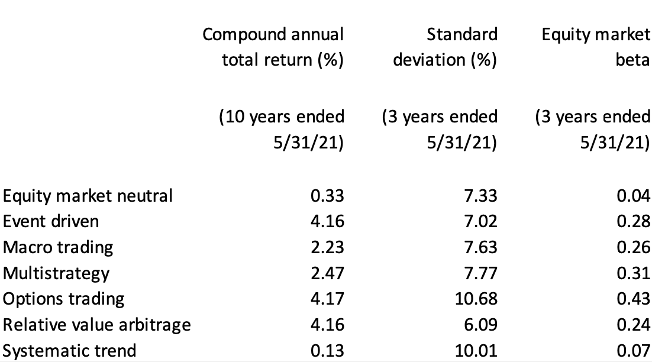
The recent embrace of so-called liquid alternatives by ordinary Americans seeking to fund their retirement is deeply troubling.
Retail demand for bars and coins in the U.S. and Europe hit a new annual record last year in response to stubbornly high inflation and the war in Ukraine. Western investors gobbled up 427 tons (approximately 15 million ounces), the most since 2011.
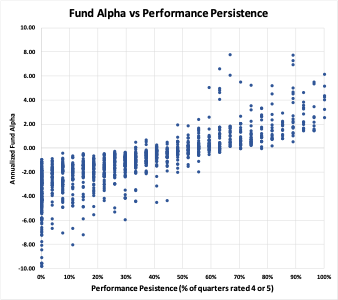
Are persistent outperformance and long-term alpha closely linked or is it possible to deliver alpha without being persistent?
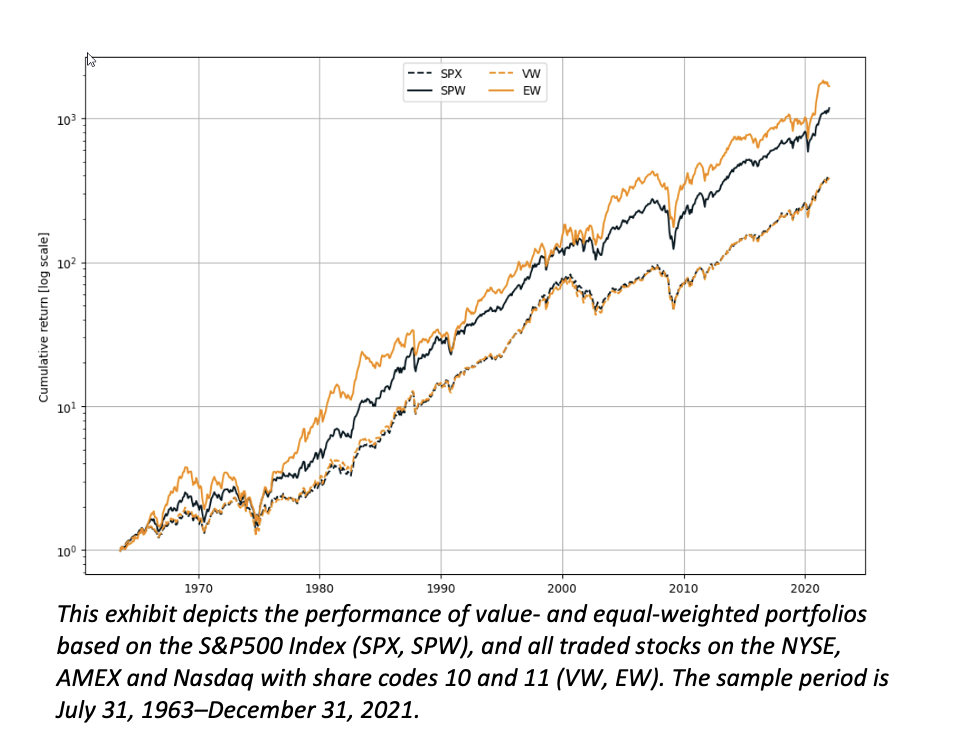
Equal-weighted portfolios have long outperformed cap-weighted funds. Conventional wisdom is that was because of the small-cap factor, but new research shows more is at play.
Investors are still recovering from the municipal market beatdown of 2022, but the current higher absolute yield levels provide an attractive “re-entry” point for municipal market investors.
2022 was a banner year, and not in a good way.
For the 15 years preceding 2022, asset management was a great business, fueled by near-double-digit AUM growth driven by rising equity and bond markets. But that party ended in 2022, with big losses in the stock market and record losses in the bond market. My guest today is here to discuss what that means for asset managers, advisors, and the consumer who ultimately own mutual funds and ETFs.
Dina Ting, our Head of Global Index Portfolio Management, offers her perspective on the allure of multifactor US mid-capitalization strategies for 2023.
The US is headed for yet another standoff over the federal debt limit. House Republicans say they won’t raise the arbitrary cap on total borrowing unless President Joe Biden agrees to budget cuts.
As a financial coach whose mission is to talk fee-only advisors “off the fence” of procrastination, I frequently answer two questions.
Markets provided investors with a dozen lessons in 2022 (and a bonus one in the postscript).
The process by which advisors select a TAMP is the latest illustration of fiduciary failure, and the SEC has responded with ominous rulemaking that will have questionable value to our profession.
The Loomis Sayles Global Credit Sector Team discusses rate volatility, possibly deteriorating credit fundamentals and key technicals at play in the market.
The bond market is much cheaper than the stock market, according to Jeffrey Gundlach. Investors should abandon the traditional 60/40 stock/bond allocation in favor of a 40/60 split.
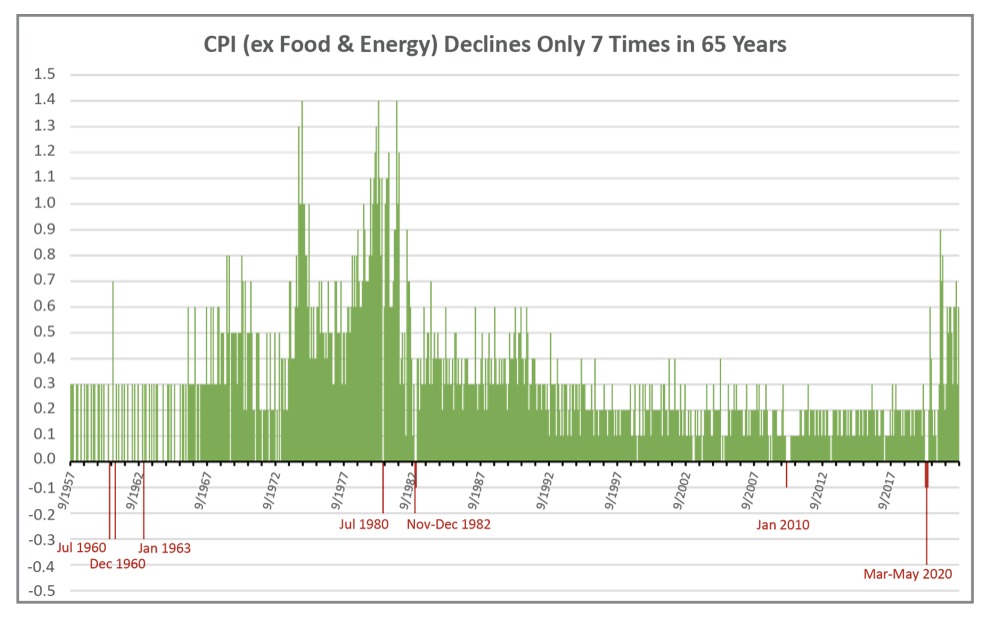
Although inflation appears to have peaked, historical data suggests that prices are unlikely to reverse themselves, which could lead to an extended period of wage inflation.
Commodities may seem like just another one of the bunch, but these products offer a unique way to invest your money in the market.
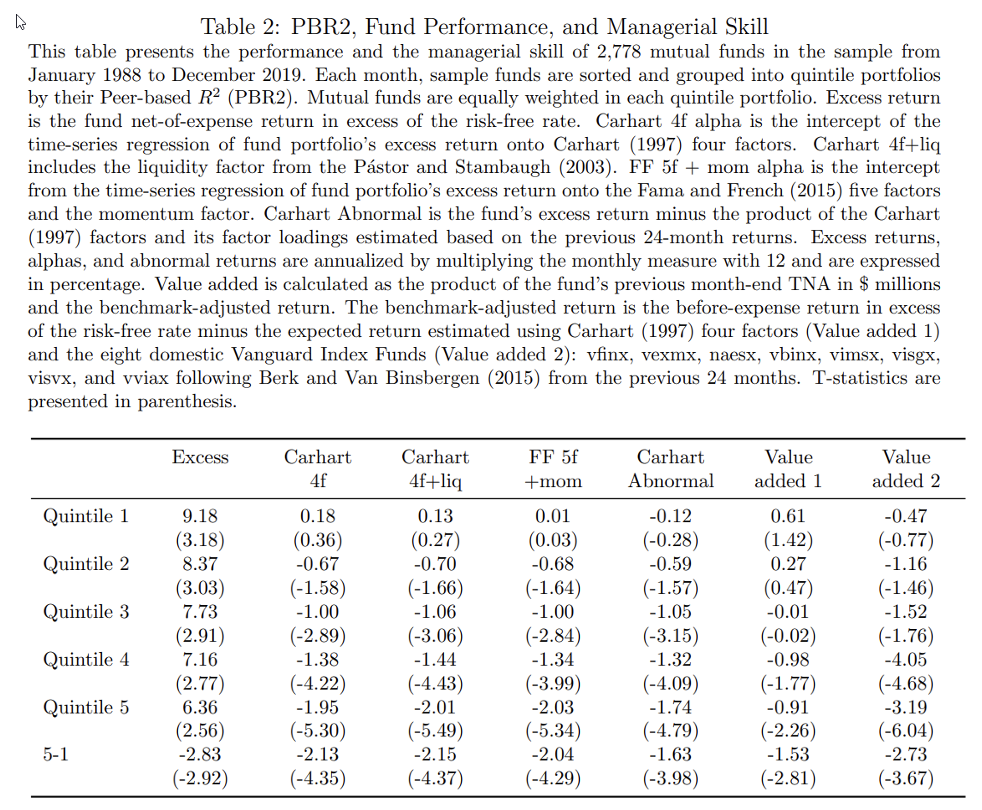
Countless investment practitioners and academics have unsuccessfully searched for the metric that can successfully identify future mutual fund outperformers. What follows is the saga of the latest failed attempt.
Investors who use a 60/40 portfolio had a rough year. In the past, putting 60% in stocks and 40% in bonds has often helped investors hedge against losses in either asset class. But 2022 had other ideas.
Build your ladder with multiple target-maturity ETFs representing different segments of the bond market, with different target years.
In the rough year ahead, bonds might be one of the only bright spots. It would mark a dramatic turnaround from 2022, when bonds fell alongside almost every other asset class, posting their worst year in a generation.
Optimists were still to be found in the world of US exchange-traded funds, where more than 400 new ETFs were launched despite a harsh bear market. Funds took in more than half a trillion dollars as more investors learned to embrace their easier-to-trade and tax-friendly structure.
Municipal Bond Strategist Jim Grabovac shares his views on outflows, trends and opportunities in the municipal sector.