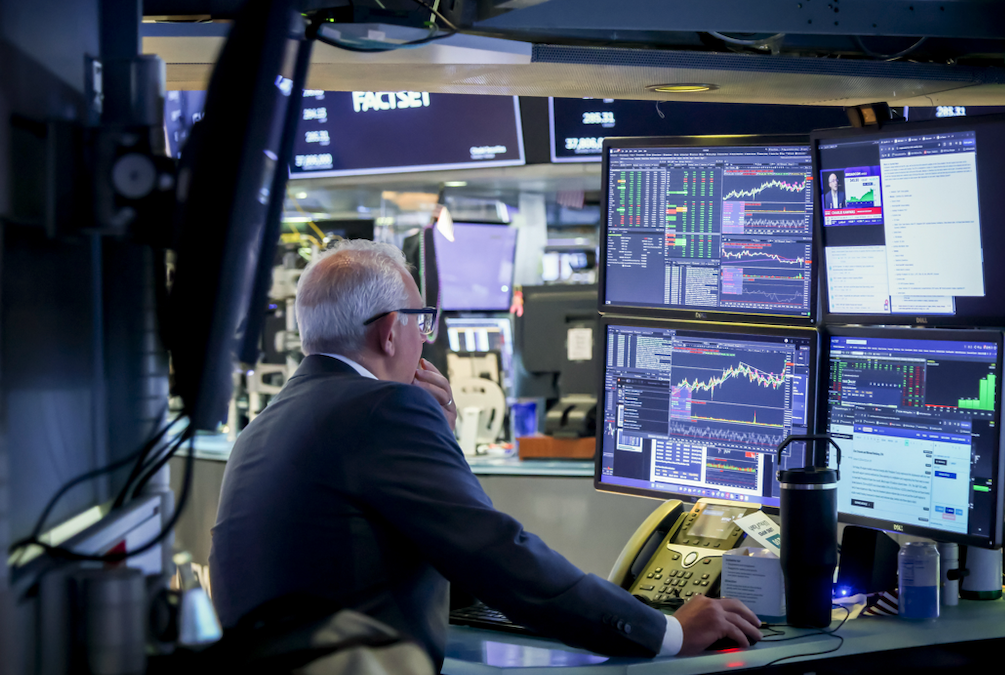
Friday, October 10 was a forgettable day all the way around for risk assets. Those included cryptocurrency and crypto-related equities. The CoinShares Valkyrie Bitcoin Miners ETF (WGMI) wasn’t immune to the broader market pullback.
We believe an OCIO partnership is the stronger choice. With broad access to top-tier managers, scale advantages, deep operational infrastructure and critical resources to oversee risk and capital deployment, OCIOs can often take advantages of opportunities that single-strategy boutiques often cannot.
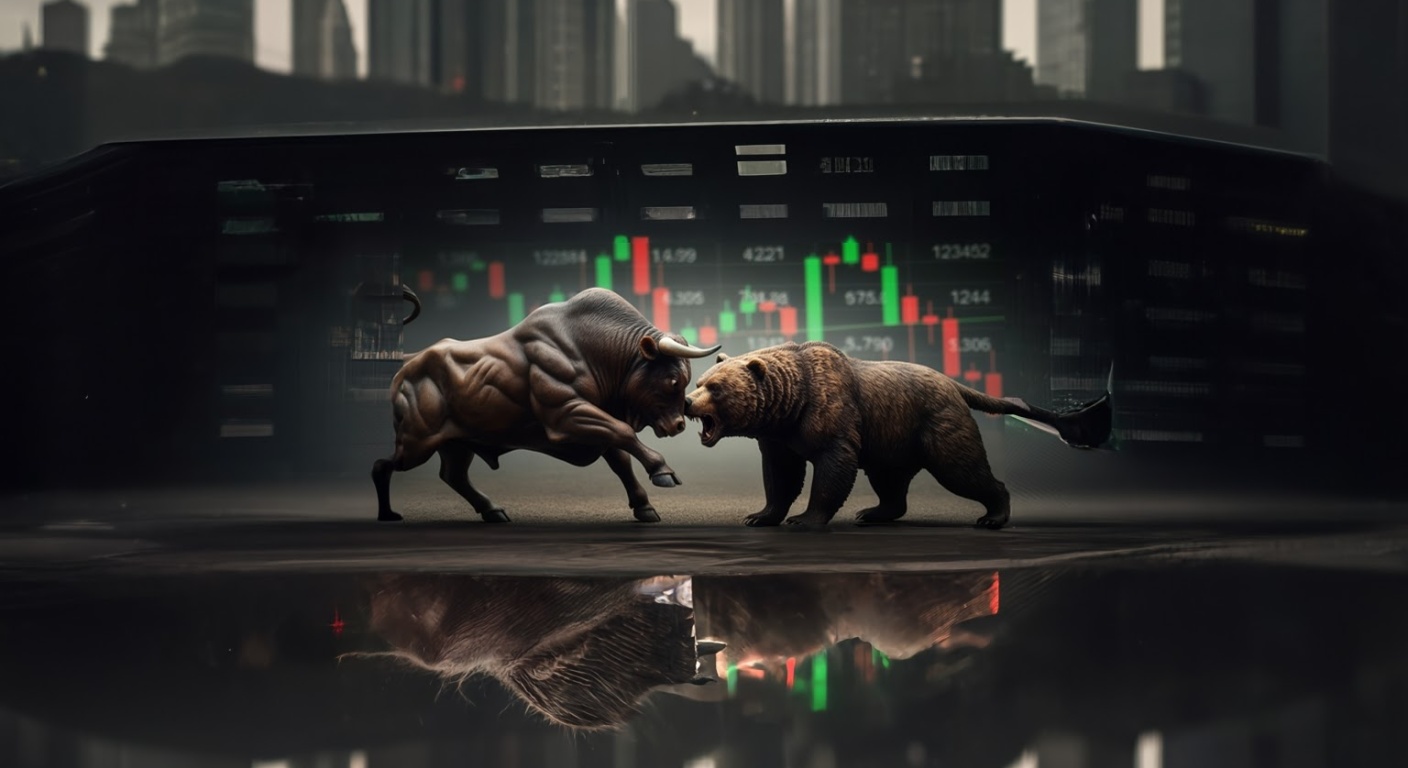
I want to discuss a different approach to portfolio management with you today. Rather, how to think like a “bear,” so you see the risks of the speculative bull run. However, to act like a “bull” to capture the gains while available. But that is a difficult skill to master.
Investors can be forgiven their skepticism towards small caps, despite the current rally. After all, small caps have underperformed the top-heavy, large-cap S&P 500 over the last decade.
As investor adoption of crypto, retail and institutional, continues to grow exponentially, discussions are typically centered around bitcoin and ethereum. The former is lauded for its store of value while the latter carries more functional utility when taking into account its role in the blockchain network.
On a recent episode of the Money Metals podcast, host Mike Maharrey interviewed Greg Weldon. Gold had pushed past $4,300, and silver broke $54 on the day of recording.
In corporate credit markets, early indicators of stress often emerge subtly — not through dramatic dislocations, but through nuanced shifts in borrower behavior and market dynamics.
Today's marketplace demands a new understanding of what it means to stand out — not through revolutionary uniqueness, but through extraordinary execution of fundamental principles that most advisors neglect or execute poorly.
Business Process Management is a systematic approach to making an organization's workflows more effective, efficient, and adaptable. The firms that survive and thrive will be those that recognize the concepts of BPM and BPMN as strategic infrastructure, not optional enhancements.
As the market concerns itself with a potential artificial intelligence (AI) bubble, there is a clearer and more practical approach that can be taken by investing in companies that could potentially benefit as AI technology progresses.
Since the shutdown began, air traffic controllers and TSA agents have been working without pay. Many are calling in sick, leading to longer lines and more flight disruptions.
Head of U.S. Fixed Income Greg Wilensky and Portfolio Manager Jeremiah Buckley discuss how balanced strategies can help investors stay true to their long-term objectives by providing a less volatile option to an all-equity portfolio.
For most investors, energy security probably tends to be an afterthought until an event drives a jump in prices at the pump, as seen with Russia’s invasion of Ukraine. However, energy security is about much more than geopolitics, especially as demand for electricity is poised for growth.
All it took was a classic bout of haven buying to wake up a slumbering Treasuries market and drive benchmark yields to the lowest in months.
Every market cycle eventually changes investor psychology to believe risk has been conquered.
The third quarter demonstrated the market’s ability to focus on powerful, long-term themes like technological productivity and monetary policy, even amidst significant short-term political noise. While large technology companies were once again a driver of headline returns, the positive performance across nearly all global asset classes rewarded a diversified approach.
The stock and bond markets are taking the government shutdown—and lack of data releases—in stride, but how long the calm might last is an open question.
Americans place a premium on elite and exclusive institutions. Many of us want to get into top-tier universities, pledge storied fraternities and, upon graduation, attain membership at Soho House.
As funded status rises, the idea of plan hibernation may become more attractive, enabling strategic use of pension surplus.
We examine the broader implications of China’s threat to expand restrictions on rare-earth exports.
Big banks begin reporting Tuesday and are expected to benefit from a steeper yield curve, strong trading, and investment banking demand. The profit path ahead is less certain.
Issuing new shares is usually considered a recipe for souring sentiment as stockholders get diluted. But in this go-go artificial intelligence-crazed market, that logic has been turned upside down.
Charles Schwab Corp. reported third-quarter earnings that beat estimates as the firm benefited from a surge in retail investing activity.
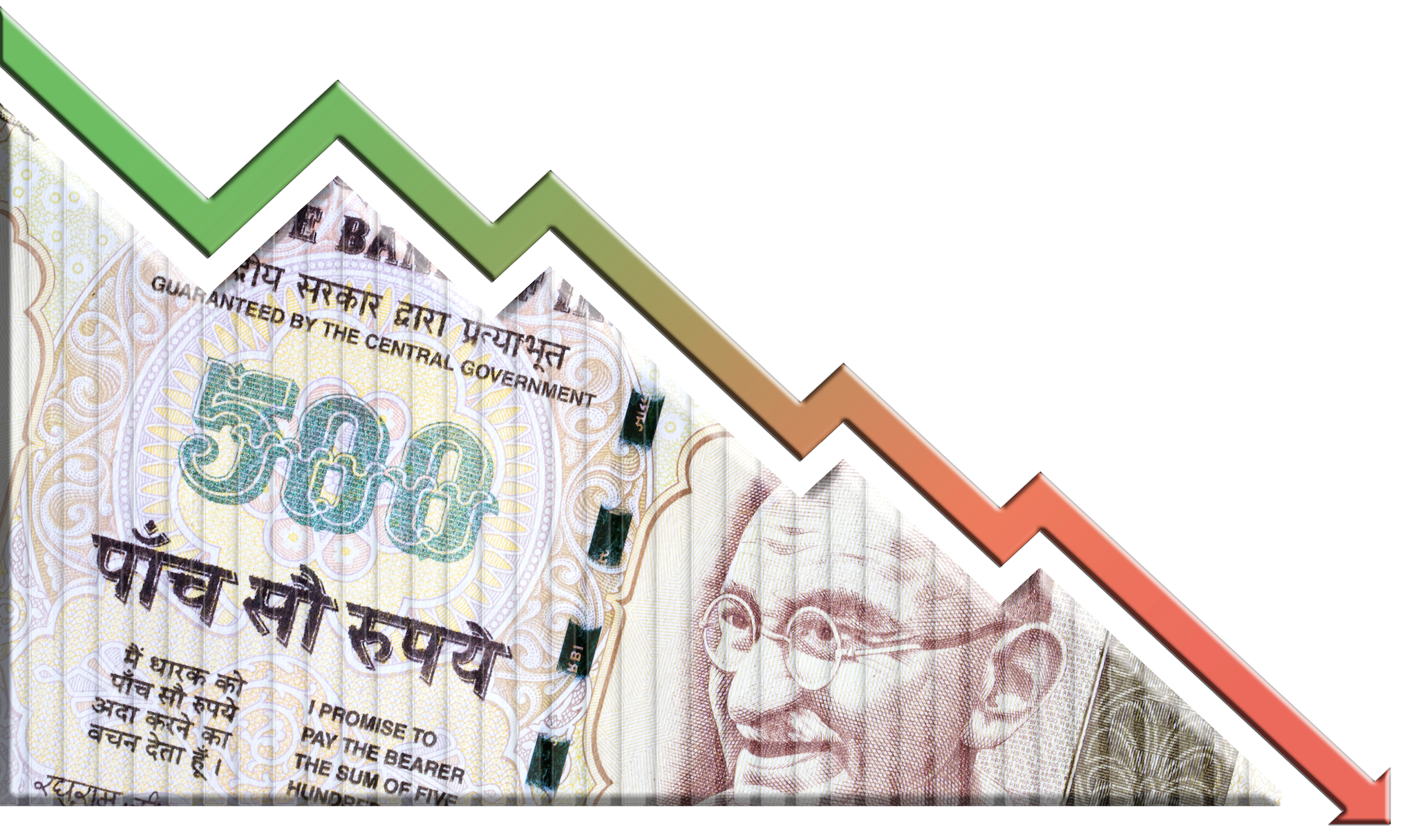
In just two years, India has gone from being the best-loved emerging market to the most sold, and now investors are bracing themselves for yet another quarter of disappointing corporate earnings.
Big banks are flying. Traders and dealmakers at Citigroup Inc., Goldman Sachs Group Inc., JPMorgan Chase & Co. and Wells Fargo & Co. enjoyed a roaring third quarter while lending grew, too.
Last week’s headlines around China tariffs and corresponding weakness in oil prices brought back memories of April and May when oil and energy stocks sold off sharply on the heels of tariff news. The weakness in energy infrastructure has been particularly acute.
Sentiment in the fixed income markets remains bullish and issuance is robust, but spreads are tight so we are staying defensive and investing opportunistically.
If you want to understand where we are in the cycle, skip the noise and follow profits. Corporate profits are the lifeblood of investment, hiring, and market returns.
A lot of people are watching this meteoric US stock market with amazement as it shakes off one worry after another – slowing labor market, sagging consumer sentiment, continuing trade uncertainty, geopolitical tensions and now a US government shutdown – on its way to new record highs.
After joining the World Trade Organization (WTO) in 2001, China’s trade with Latin America grew an average of 31% a year for approximately the next decade. In 2024, bilateral trade between the two regions hit $518 billion, overtaking the U.S. as South America’s top trading partner.
Following Friday’s selloff amid the resurgence of tariff threats on China, I asked ChatGPT a simple question: ”How to Stay Calm In The Stock Market?” In this week’s post, I thought it would be helpful to review ChatGPT’s advice and discuss it in more detail.
President Trump again proposed that companies be required to report twice a year rather than every quarter. What are some pros and cons, and how would it affect investors?
It's odd to consider, but a recession could flip our bullish outlook on bonds to bearish. It's unusual because typically, inflation drops during a recession, leading to lower yields and higher bond prices. However, we believe that if an economic downturn or recession occurs soon, the immediate effect on bonds will be favorable.
Betting against the dollar has been the dominant trade this year in the $9.6 trillion-a-day foreign-exchange market, but the wager is starting to stumble.
Microsoft Corp.’s data-center crunch will continue for longer than the company has previously outlined, underscoring the software giant’s struggles to keep up with cloud demand.
A decade ago, stablecoins were conceived as a bridge for speculators to travel between risky digital assets like Bitcoin and the less turbulent world of fiat money. That is changing fast. In the hands of a crypto-loving Trump administration, these dollar clones are shaping up as a highway that will carry America’s influence around the world.
The full impact of U.S. import tariffs on the broader economy has yet to be felt and may not happen for some time—or even at all. Economic distortions from tariffs are still filtering through the global economy, but so are offsets such as fiscal and monetary stimulus, as well as spending on artificial intelligence (AI).
One obvious tweety bird is the riskiest type of bank debt, known as perpetual additional tier one bonds. These securities allow regulators to wipe out investors if a bank fails, but to compensate they offer the highest yields for lending to financial firms.
All’s fair in love and politics — and international bank capital rules. US financial watchdogs are making mischief with European standards that give lenders relief by treating the euro zone as a single domestic market.
To say the roof hasn’t caved in on the dollar is an understatement. Despite the doomsaying that was pervasive after the White House imposed sweeping tariffs, the greenback is as entrenched in the cogs of global finance as ever. If anything, its use is more pervasive.
In 2006, Andrew Fire and Craig Mello shared the Nobel Prize in Physiology or Medicine for their discovery of RNA interference (RNAi), which they published in 1998. Since then, the potential of a technology capable of silencing disease-causing genes has been a very attractive proposition.
When bear market losses occur, headlines talk in percentages: “The market dropped 20 %.” Investors nod. A 20 % decline sounds manageable, historical, and expected.
Many investors have turned to MLPs over the years for their income, which makes the outlook for distributions a perennial focus for investors. With MLP yields currently elevated relative to long-term averages and a flattish near-term outlook for U.S. energy production, the distribution outlook is particularly topical.
Over the next decade, almost every rich country will have to face fiscal reality. All have expanded their welfare state to serve not only the needy but also the middle class, with expensive pensions, health care and worker benefits.
Some political commentators believe Stephen Miran is a pawn of President Trump, aiming solely to lower interest rates, regardless of whether such action is justified. But, regardless of your political views, set aside your own perspectives for a moment and consider Miran’s views on the economy and monetary policy.
In this article, I will discuss the process financial advisors can follow to help their clients determine how much they should initially set aside for LTC and how to periodically monitor whether the amount their clients have set aside (the reserve) continues to be sufficient in the future.
OpenAI may not be publicly traded, but the world’s most valuable startup is increasingly making waves in the stock market.
Over the past three years, the economic conversation has been a “promised recession.” If you read the headlines, tracked economist surveys, or even listened to Wall Street strategists, you would have assumed a downturn was imminent. And yet, here we are, late into 2025, and the U.S. economy is still standing.
From harvesting pollen for industrial use to commercially available drone delivery to osmotic power plants—Franklin Equity Group’s Matt Moberg highlights some of the most exciting innovations in the latest “Innovation Insights Quarterly.”
Debt is a curse that can also be a blessing, depending on how the borrower uses it. Sadly, human nature seemingly ensures we often use debt unproductively—and not just as individuals. Governments have their own special way of using debt to buy benefits (and votes?) today that future generations will pay for.