Tariffs could upend the U.S. auto and energy sectors.
On this episode of “ETF of the Week” podcast, VettaFi’s Head of Research Todd Rosenbluth joined Chuck Jaffe of Money Life to talk about the Calamos Bitcoin Structured Alt Protection ETF – January (CBOJ).
This is not about China. I applaud the creativity of the DeepSeek developers and especially their ability to drive down costs. I am amazed they made it truly open-source and revealed everything.
Despite continued underperformance in 2024, the biotech sector enters 2025 with a brighter outlook driven by groundbreaking innovations like mRNA cancer vaccines and CRISPR-based therapies.
Deregulation is among President Donald Trump’s most enduring policy themes. In his 2016 campaign, he called for widespread deregulation and made it a central plank in both his economic and energy platforms.
During a rocky fourth quarter, strength in the financials sector was a unifying theme across global markets.
In our view, active investors face opportunities to outperform created by looming policy changes and the macro landscape.
Treasuries rallied on Monday as investors flocked to the safety of US government bonds after equities slumped in a selloff driven by technology shares.
The Second Trump Era has begun. If you are confident about what it will bring (either good or bad), I would like to gently suggest you reconsider. None of us should be sure what is coming.
In mid-2023, the estimated costs to roll S&P 500 futures on a quarterly cycle was roughly 0.40%, or 40 basis points (bps) annualized—a fairly justifiable expense for most investors considering the benefits of the instrument.
The gap between US federal spending and tax revenue is currently bigger, as a share of gross domestic product, than it’s ever been outside of major war or other crisis.
On this episode of the “ETF of the Week” podcast, VettaFi’s head of research, Todd Rosenbluth, discussed the Invesco KBW Bank ETF (KBWB) with Chuck Jaffe of Money Life. The pair discussed several topics related to the fund to give investors a deeper understanding of the ETF overall.
Donald Trump opened his second term as US president with a market-jolting recalibration of his tariff policies, in a sign of turbulence ahead for investors and corporate executives.
On top of the human tragedy they’re still inflicting, the Los Angeles wildfires are exposing a gap between what people thought their homes were worth and what they’ll actually get from insurance companies when those houses have been reduced to ash. Potentially thousands of homeowners are learning it won’t be nearly enough.
Chinese officials are evaluating a potential option that involves Elon Musk acquiring the US operations of TikTok if the company fails to fend off a controversial ban on the short-video app, according to people familiar with the matter.
On the inaugural edition of Market Week in Review for 2025, Senior Director and Chief Investment Strategist for North America, Paul Eitelman, discussed Canadian Prime Minister Justin Trudeau’s resignation as well as the latest batch of U.S. and global economic data.
Rough times are coming, yes, but I think we have at least 12 good months before the worst gets here. Let’s look at some of the reasons why things should be okay and then look at some of the potential problems.
Gold certainly had a great 2024, but 2025 is already shaping up to be an opportune year to build up more exposure through ETFs.
2024 was about as good as it gets in the equity markets – with the BGEP up 31% and the broader market as a whole posting double digit gains. Underneath the surface, we believe that there are three main drivers of the year’s solid returns. We discuss them below in our market review and outlook.
Stocks rallied in 2024, delivering a second consecutive year of gains exceeding 20%, as investors embraced cooling inflation, falling interest rates and the prospect of lower corporate taxes under a second Trump administration.
Change is a catalyst that can drive innovation and help position businesses in all industries for sustained success. The adoption of wealthtech illustrates the transformative power of embracing change.
Gold is heading for one of its biggest annual gains this century, with a 27% advance that’s been fueled by US monetary easing, sustained geopolitical risks, and a wave of purchases by central banks.
Recommend reading that provides a bed of knowledge for the key themes we think will define 2025. Ours differs from other lists you might see elsewhere at this time of year in that we focus on relevance rather than recency, though there are new books here, too.
Happy Holidays! As the page for the new calendar year will soon turn, three cheers for a happy, healthy, and prosperous new year! With 2024 rapidly drawing to a close, we reflect on the year and all that’s transpired—our readers are wonderful, the economy remains in good shape, and market returns have been stellar for those who participate.
If you happen to be a Bitcoin skeptic, you’re not alone. A recent Pew Research survey found that 63% of Americans are not confident in the reliability or safety of cryptocurrencies in general.
Has the U.S. economy diverged from the global economy, or are a lot of economic canaries in coalmines keeling over and warning the U.S. is soon to catch down?
From start to finish, 2024 was a year of change, with a multitude of implications for investors.
Private credit firms want more than corporate lending. The largest are laying the groundwork to finance everything from auto loans and residential mortgages to chip manufacturing and data centers in an effort to swell the size of the market by the trillions.
The range of potential economic outcomes is wide, but a solid starting point suggests resilience.
VettaFi discusses the significant improvement in MLPs over the last decade.
Energy is everything. Or, if Einstein was right, you and I are just energy in material form. Accelerate us to lightspeed squared and we might become something else.
Portfolio managers and market strategists from Payden & Rygel review the opportunities and risks ahead for four bond market sectors: high yield, emerging markets, global bonds and low duration securities.
There are not many attractive opportunities in the US large-cap space. History suggests the market is overdue for a correction.
We decided to see which companies saw the greatest spillover effects from these two revolutionary technologies.
Waiting until 67 or 70 may not feel like the best choice in the moment. Yet the extra income could mean more freedom from financial stress and more ability to enjoy your later years with peace of mind.
December is a big month for stock buybacks, and by month’s end, companies are expected to spend more money repurchasing shares this year than ever before.
Do you recall the famous line from the movie Glengarry Glen Ross? “Always Be Closing.” This may be good advice later in the process of working with a prospective client, but in the first conversation, try this instead: Always Be Curious.
CEO Ali Dibadj highlights the three macro drivers that investors must navigate in 2025 and beyond, as well as the importance of actively positioning for a brighter investment future.
In the port city of Duluth, Minnesota, local activists and Washington-based groups are coalescing to scrutinize — and possibly stall — a $6.2 billion acquisition of a power utility led by Global Infrastructure Partners.
If you thought the detention and subsequent release of Resolute Mining Ltd.’s chief executive by the government of Mali two weeks ago was a one-off, you would have been wrong.
The passive-investing juggernaut is picking up speed — and it’s stirring up fresh angst about the dangers posed by the index-tracking boom across Wall Street.
Assets in money market funds reached an all-time high of $7 trillion this past month. Now that rates are moving lower, money market yields may not be as attractive to many investors and assets may gradually leave money funds.
It’s the anniversary of the first-ever controlled nuclear fission chain reaction. And it’s the day that Enron filed for Chapter 11 bankruptcy in 2001.
International markets are expected to clear the hurdles of uncertain trade policy, tighter fiscal policy and slower than average economic growth to support solid overall returns.
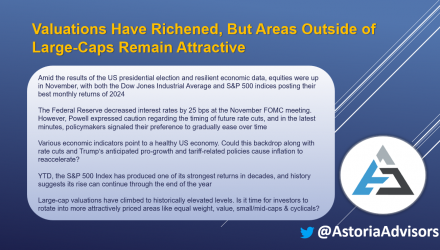
Astoria rounds up its 10 ETFs for 2025, providing unique thought leadership and actionable investment ideas.
he best scandals are those that start when someone, somewhere, decides to say something utterly shocking: the truth! A senior official of the OPEC+ oil cartel has said publicly what many thought privately — the group has been keeping oil prices too high, effectively subsidizing its rivals.
VettaFi spoke recently with Nate Williams, a vice president and ETF specialist with Franklin Templeton, about the growth of its ETF business.
On whole, EM growth has been resilient, while inflation has fallen closer to normal levels.
While space startup Rocket Lab USA Inc. prepares to test-launch its new medium-sized rocket next year, its shares have already blasted into orbit.
What are the key drivers of the gold market? Let’s delve into it.