As 2025 nears its final 100 calendar days, market focus is already beginning to turn forward and attempt to reconcile what market drivers could remain in place, and what could change in the first year of the new half-decade. While not an exhaustive list, here’s some of our early keys to 2026.
On this episode of the “ETF of the Week” podcast, VettaFi’s Head of Research, Todd Rosenbluth, discussed the Invesco S&P MidCap Momentum ETF (XMMO) with Chuck Jaffe of Money Life. The pair discussed several topics related to the fund to give investors a deeper understanding of the ETF.
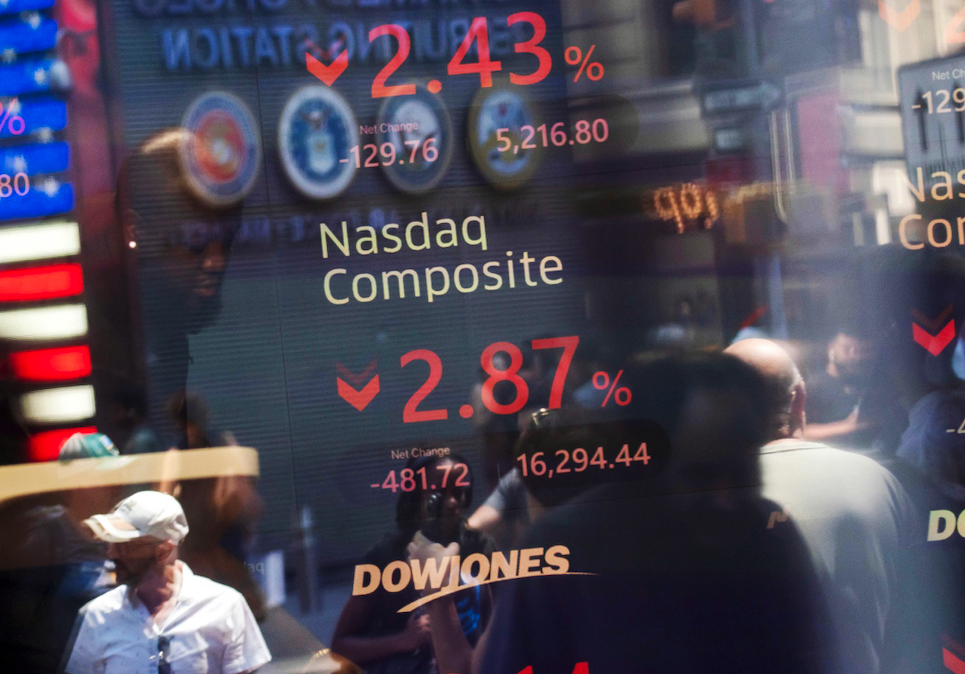
The result is the first sustained selloff for the group since April, with the Nasdaq 100 leading the broader market lower as investors ditch tech winners in favor of more defensive stocks. One of the beneficiaries: companies with juicy dividend payments.
Clearly, policies which boost individual freedom, not government engineering, work best. And as usual, the arguments of one political party are often designed to hide the fact that their policies are the very thing they claim to detest in the other.
Fed policy — not free markets — now plays a crucial role in forecasting how today’s speculative excesses might return to their normal levels. Will it be a pop, a slow leak, or will the Fed keep bubbles afloat at any cost?
Retirement planning shouldn’t be defined by “needs” but by the lifestyle you want to sustain. This piece reframes retirement as a phase for living fully—balancing taxes, inflation, and income sources to enable abundance.
My first experience with a major economic/stock market bubble was the dot-com bubble of 1998-2000. Many investors forget that the Nasdaq and S&P 500 Index bubble that ended March 10, 2000, was the first bubble in a series of three bubbles.
Chinese equities have performed strongly this year amid a general re-rating driven by easing geopolitical tensions, continued government stimulus and the global AI-related buildout. Portfolio Managers Andrew Mattock, CFA, and Winnie Chwang explain the drivers of the rally and the opportunities and challenges ahead.
Now that government workers are back in the office, the data flood is coming. Here are the four reports we’re most excited for, why they matter, and what we last heard from them.
To be sure, it’s not a point for investors to get carried away with. But it is noteworthy in the current environment. RSPF has exposure to the booming prediction markets space. That’s likely an underappreciated factor. And that’s because of the ETF’s status as a home to a slew of old-guard bank st
We discuss Figure’s $1 billion fundraise, XPENG’s (XPEV) humanoid launch, the humanoid market, and how Elon’s $1 trillion pay package fits into this.
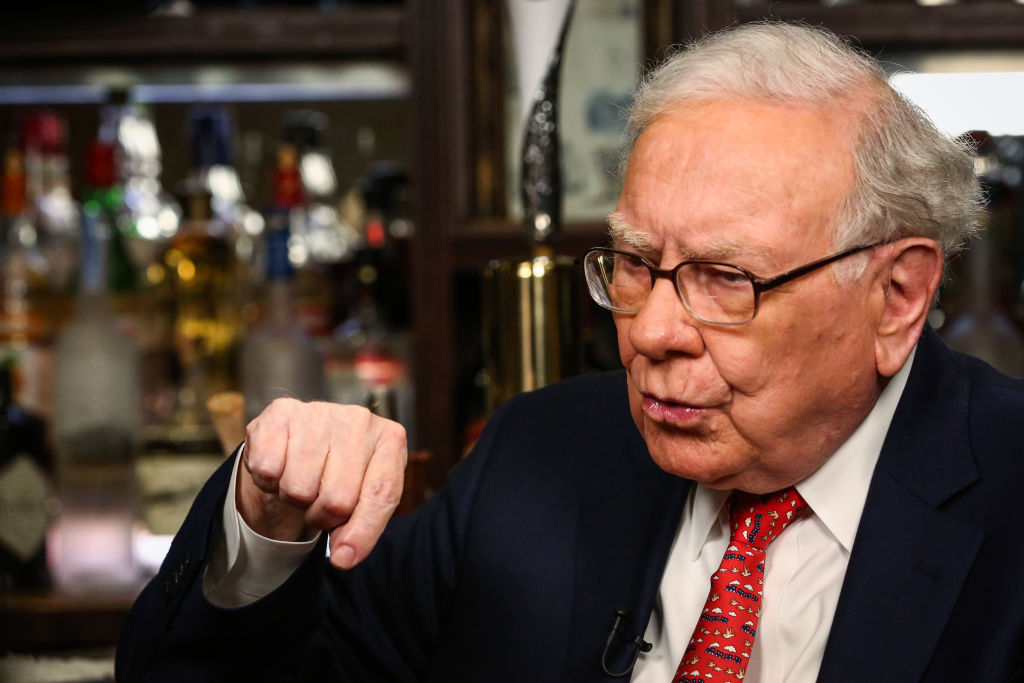
There’s one thing Warren Buffett seems to credit for his success more than anything else: luck. He’s says he’s lucky to have spent most of his life in Omaha, raising a family and building a business smack in the middle of the country.
Taiwan-based insurers are gearing up for a big overhaul in their regulatory framework. The transition to the Taiwan Insurance Capital Standard (TW-ICS) is slated for January 2026, though some provisions will have a lengthy phase-in period.
Are U.S. stocks approaching bubble territory or is the bull run able to press on? Active investor Tony DeSpirito is optimistic but says pockets of bubble-like exuberance could create mispricings ― making it “an exciting time for stock selection.” He suggests three areas that may be ripe for the picking.
When we look at broader multi-asset portfolios that tap into real assets, including digital assets, as well as inflation fighters like income securities and real return strategies, we find that they have delivered strong results to the debasement-trade crowd.
Last week’s economic data sent mixed signals. Consumer sentiment plummeted to a near-record low on economic anxiety, and the manufacturing sector continued its long contraction.
The Federal Reserve cut its Fed Funds rate by 25 bps, the 10-year Treasury yield went up 10 bps, and the S&P 500 ended the month of October up over 2%. Let’s unpack those results.
Investors are increasingly viewing bonds from large corporations like Microsoft and Siemens as safer than the sovereign debt of their home governments, a conclusion driven by a sharp contrast in fiscal management.
While we wait for federal data to come back online, private sector gauges continue to underscore still-weak manufacturing, resilient services, and mediocre job growth.
For decades, these institutional allocators took roughly the same approach to managing the vast piles of cash under their control: They diversified by divvying up the money across asset classes — for example 40% in stocks, 40% bonds and 20% alternatives — then stuck with it by rebalancing now and again when things got out of whack.
On this special episode of the “ETF of the Week” podcast, VettaFi’s Head of Research, Todd Rosenbluth, discussed record ETF inflows with Chuck Jaffe of Money Life. The pair discussed why this might be happening, highlighted some standout funds, and more.
Sports wagering has come a long way since then. Global revenue derived from this activity now exceeds $100 billion, and is expected to grow exponentially in the years ahead.
A recent poll of financial advisors confirms that interest in the “nuclear renaissance” investment case is driven by several distinct tailwinds. When asked what they find most interesting about the sector, the responses revealed enthusiasm for new technology, built upon an appreciation for the fundamental benefits of nuclear power.
Ignoring individual stocks may reduce risk, but it may also reduce engagement, which could lead to reckless decisions. A wise investor can own both index funds and individual stocks, just in the right proportions and for adequate holding periods.
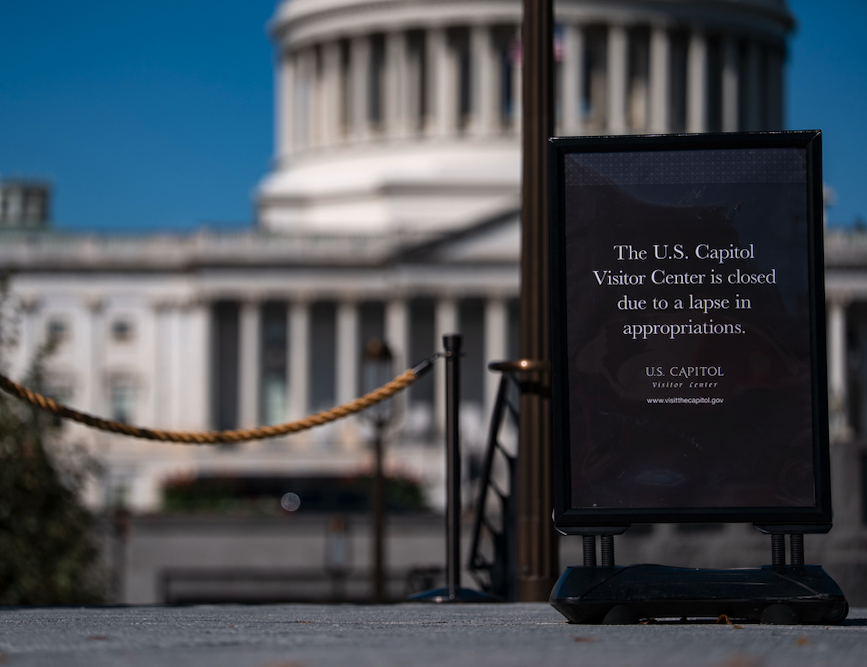
The US government is still days away from reopening as the Senate winds its way through potentially time-consuming procedures and House members travel back to Washington to vote for the first time since Sept. 19.
After the Fed’s latest rate cut, markets are grappling with mixed signals—slowing inflation meets a still-hawkish central bank. Meanwhile, tech’s outsized gains and surging cloud investment highlight a market driven by innovation as much as policy.
A sad chapter in Boeing Co.’s history closed on Thursday when a federal judge approved a non-prosecution agreement with the Department of Justice that drops criminal charges against the company for failures of its aircraft design and manufacturing process that led to two deadly crashes and an inflight accident that by miracle didn’t kill anyone.
The all-ETF portfolio is becoming a reality, as product offerings have evolved into a comprehensive tool kit for total portfolio construction.
Investors’ certainty that the Federal Reserve would follow its recent interest-rate cut with another in December has evaporated.
It’s been a good year for international equity ETFs. As a category, broad exposure funds tapping into both developed and emerging market equities have delivered outsized gains relative to U.S. markets this year, as well as much sought portfolio diversification.
Often framed as rivals, private and liquid credit should instead be viewed as powerful complements for both issuers and investors. We believe these two markets are settling into a symbiotic coexistence, as the distinctions blur between the likes of direct lending and broadly syndicated loans.
In their latest article, Why Hold Expensive Slow-Growing Stocks? An Alternative Framework for Value and Growth Indices, Chris Brightman, Campbell Harvey, Que Nguyen, and Omid Shakernia, argue that traditional style-box construction forces investors to hold stocks that are neither true “value” nor true “growth”—notably, expensive, slow-growing companies that have historically underperformed.
Q3 Earnings growth continues to improve, with 64% of constituents reporting thus far, S&P 500® EPS growth for Q3 2025 accelerated to 10.7%
Every month, TMX VettaFi publishes hundreds of articles across our ETF-focused websites. Reviewing the pieces that capture our readers’ attention provides a clear picture of prevailing advisor and investor sentiment. In October, five articles stood out. They primarily focus on the surging themes of AI, international equities, and alternatives.
RIAs need to use AI effectively in their practices, but they also need to understand how their clients are using it.
The term 'digital gold' is often used by cryptocurrency enthusiasts to describe Bitcoin, Ethereum, and similar assets. However, our latest research shows they behave differently in portfolios. We look at how liquidity and uncertainty drive returns, and why that matters for positioning.
As transition consultants, we read a lot of press releases announcing financial advisors moving to new broker-dealers. You probably don’t torture yourself by doing that, but it’s part of our job.
Global electricity demand is accelerating as AI data centers, electrification, and economic growth drive an unprecedented need for reliable energy. Nuclear power is uniquely positioned to meet this challenge, delivering clean, zero-emission baseload electricity with the highest capacity factor of any major energy source.
One of the most fundamental decisions facing fixed-income investors is determining the optimal maturity for their Treasury holdings.
The three themes we laid out will take a few years to play out, if at all. Our portfolio positioning reflects our belief in the economic strength and momentum of the US Tech / AI trade, and we would want to see more policy clarity and earnings confirmation before we make any large shifts into international.
The Federal Reserve’s October rate cut, to 3.75%–4%, signals a continued “risk management” approach, with December’s policy path tilting toward another cut.
By tackling personalization with automation technology, advisors are no longer forced to trade between offering top-quality portfolio tailoring and putting the effort into scaling their businesses.
If you are not striving in the same direction and the outcome doesn’t matter as much to one as it does to another, the three of you won’t bring about the alignment you seek.
The robotics space is entering earnings season with positive momentum, as solid performance in Q3 has continued into October. This note recaps the key themes and performance drivers from the quarter for investors, while previewing Q3 results.
Growth investors may be feeling the ground shifting beneath them. Traditional factor analysis shows quality and growth still lagging value—an apparent paradox when global growth itself is strengthening. Yet a closer look at what drives the so-called “value” factor reveals how today’s economic revival is rewarding a different kind of growth.
On this episode of the “ETF of the Week” podcast, VettaFi’s Head of Research, Todd Rosenbluth, discussed the Direxion Daily Semiconductor Bull 3x Shares (SOXL) with Chuck Jaffe of Money Life. The pair discussed several topics related to the fund to give investors a deeper understanding of the ETF.
Earlier this week, several of my friends texted me in frustration, letting me know that they couldn’t place trades on Coinbase or Robinhood. The culprit wasn’t market volatility or government regulation, but something far more mundane: a cloud outage.
The question of the moment in markets is whether we are in an AI bubble, as stocks seem awfully expensive amid hopes that artificial intelligence will transform the economy. But there is another curiosity that is far more concerning: low credit spreads. That suggests a low-risk environment — which describes precisely nothing about this market.
Technology stocks have continued to benefit from enthusiasm over the transformative potential of artificial intelligence (AI). Yet many investors are concerned that share prices and valuations may reflect overly exuberant earnings expectations.