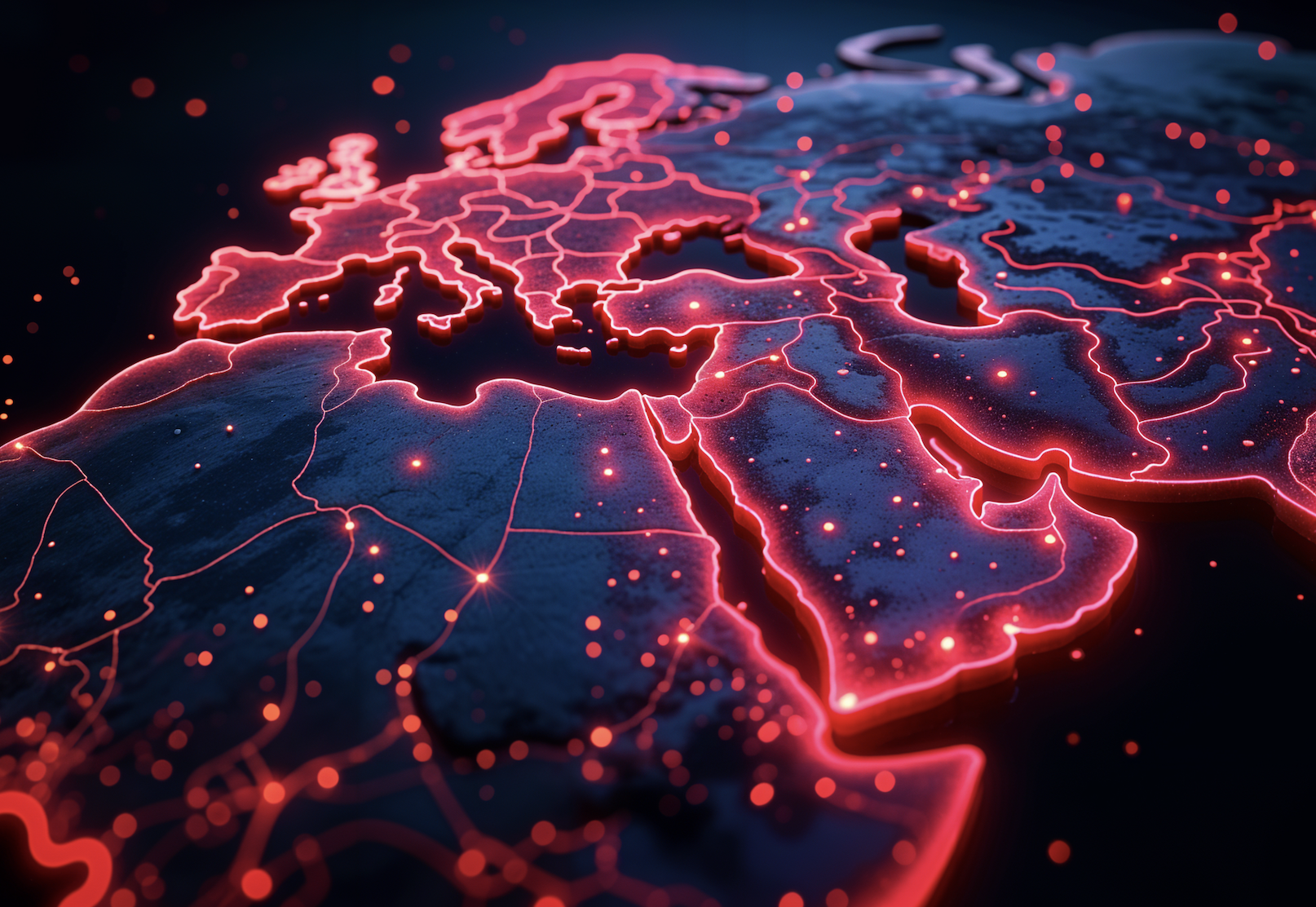
Geopolitical developments in the Middle East drove market attention this week, with reports of energy infrastructure being targeted leading to sharp moves in oil and gas prices.
When you start investing, your advisor builds a portfolio aligned with your personal investment objectives. Your target allocation takes into consideration your goals, risk tolerance and time horizon, among other things. Unless something in your life changes, your portfolio should continue to align with your objectives.
Last week, on March 19th, the S&P 500 closed below its 200-DMA for the first time since May 2025. The first instinct is to panic as media headlines talk about bear markets and financial crisis events. However, as we will explore today, the data says it depends entirely on the type of break: sustained or brief.
he shock to global oil supply this month has already been declared the greatest ever by the International Energy Agency, so it’s natural to draw parallels with the great shocks of the 1970s. But numerous other factors determine how serious the impact of any given hit to supply will be on the global economy.
The simultaneous patent expiry of Ozempic’s active ingredient in China and India on Friday is a watershed moment. Until now, the revolutionary weight-loss drugs have been available largely to people with means.
Public markets give a running commentary on the biggest players in private markets. Over the last year, this has gone from good to bad to worse. The sector’s long-term growth prospects may be more-or-less intact, but the next few years probably won’t feel that way.
Silver had a phenomenal 2025, more than doubling from around $30/oz to above $70 by late December, and the rally continued into the new year.
Economic dislocations create opportunities. While many market watchers are seriously concerned about the microshifts in markets and stocks, others may see the opportunities that emerge when oil prices spike.
Nate Geraci hosted a live ETF Prime episode from the Exchange conference in Las Vegas. The panel featured discussions on active ETFs and industry trends with Dimensional’s Wes Krill, and a roundtable of experts.
The wealth transfer didn’t create a new problem; it exposed one advisors have postponed for decades.
Outsourced chief investment officer (OCIO) relationships have evolved dramatically. What once teed up primarily as a solution for smaller institutions seeking a roadmap to improving their governance, strategy and execution is now being adopted by much larger asset owners.
Five techniques can help human experts tame hallucinations and make models more effective.
Comparing business-cycle-related primary trends of the falling 2-year Treasury yield shows that this is the slowest business cycle since WWII. I argue the slowness of this cycle is evidence of the 6+% average pro-cyclical fiscal deficit over the last three and a half years.
This past weekend, Adam Taggart and I discussed what happens to Treasury bond yields when the United States enters a military conflict. The conventional wisdom is reflexive and tidy.
When geopolitical tensions flare up, the natural assumption is that gold should immediately surge. War breaks out, markets panic… and the metal rallies as investors rush to safety.
Skyrocketing oil prices were accompanied by mixed inflation readings last week. The headline Consumer Price Index (CPI) inflation rate held steady in February at 2.4 percent annually, while core CPI, which excludes more volatile food and energy costs, rose a modest 0.22 percent for the month.
It’s human instinct to want to know what the future holds and to protect and grow our nest egg based on our perceived knowledge of the future. It takes courage to ignore those economic forecasts from brilliant, well-meaning experts with very impressive credentials. Their logic is always compelling, but investing based on that logic can be hazardous to your wealth.
In our recent article, "The Value Rotation Illusion," we explained that in the recent rotation from growth to value. In this follow-up, we take the three-tier earnings valuation framework we introduced in the previous article a step further to uncover true value stocks.
There has been so much data released in the past week it’s hard to know where to begin. Much of the data is inconclusive or not helpful, but it is not as bad as many click-bait pundits suggest as they take each data point and extrapolate it into the future.
The private equity (PE) business is huge. When I say huge, I mean $4.4 trillion huge. However, as we warned then, the risks have come home to roost. The private equity and private credit industry is heading into a gut-wrenching period of consolidation.
Spending on data center projects in the US has exploded, surpassing offices for the first time at the end of last year. It’s a trend Matt Kunz saw early on when Meta Platforms Inc. built a computing hub outside Columbus, Ohio.
As artificial intelligence (AI) infrastructure debt floods bond markets, investors face a new risk landscape shaped by complex financing structures and potential overbuilding across the data center ecosystem.
Corporate pension sponsors don’t enjoy unwelcome surprises, particularly those that create financial strain. Many experienced significant financial stress following the Global Financial Crisis and the prolonged decline in interest rates that followed.
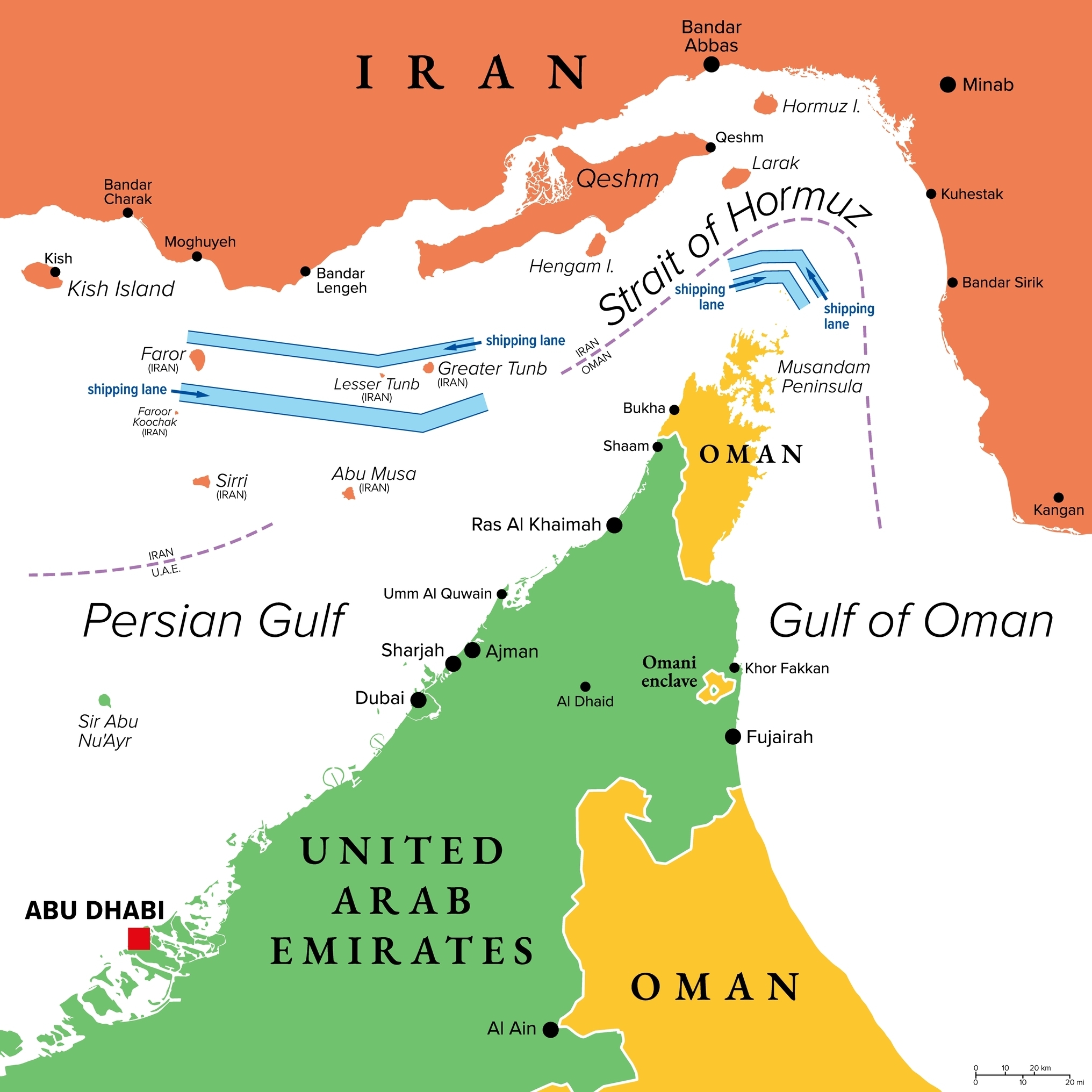
Iran's de facto closing of the Strait of Hormuz precipitated the latest in a series of energy crises. Since the 1970s, some energy spikes were associated with weak stock markets, but some were not.
For the second time in less than a year, the United States is engaged in military conflict in the Middle East. And once again, investors must assess how escalating tensions could affect markets.
Investing is an exercise in decision making under uncertainty. No single signal—no matter how intuitive or well supported by history—captures the full complexity of markets.
In this second installment of our series, Chuck Carnevale, co-founder of FAST Graphs and widely known as Mr. Valuation, takes a deeper dive into the S&P 500 to demonstrate how investors can uncover potential opportunities within an otherwise expensive market.
Sophisticated email marketing requires automation: welcome sequences for new subscribers, nurture campaigns based on content interests, and reengagement sequences for inactive prospects.
Adam Hetts and Oliver Blackbourn discuss where they assess the market implications of sustained conflict with Iran, examining energy shocks, inflation pressures, and what prolonged instability could mean for investors.
The “fiat is dying” argument has become a catchphrase narrative among digital asset bulls, gold bugs, and cryptocurrency advocates. That narrative’s core is that central banks have printed vast amounts of money.
War with Iran is adding a new level of chaos to already uncertain times. What about your retirement savings? Is your investment portfolio safe? Is it time to think about pulling out of the stock market?
Sustainability analysis is most useful when it helps investors and advisors understand how structural economic forces may shape risk and opportunity over time. This includes energy demand, resource constraints, regulation, and physical risk.
Data center developers plan to reduce their reliance on utility grids by investing in onsite power for rapidly scaling facilities. The shift creates opportunities for electrification infrastructure providers as energy independence takes on new urgency.
We have repeatedly highlighted the delicate balance that the U.S. economy and markets remain suspended in as the Federal Reserve treads a thin line between a softening labor market and stubborn inflation that continues to hover above its 2 percent target.
Markets hate uncertainty, and right now there’s plenty to go around. The outbreak of the U.S.-Iran conflict, following by Iranian retaliation against oil infrastructure across the Persian Gulf, has sent crude prices surging and shipping rates soaring to record levels.
Energy markets drove this week’s market volatility, with the conflict in Iran triggering a sharp rise in oil and natural gas prices. Through Thursday’s close, West Texas Intermediate crude oil was up roughly 17% from last Friday, pushing prices close to $80 per barrel.
In this article, we explore how this speculative environment and the aggressive trading in passive ETFs are playing out. We also examine how to identify and capitalize on sector and factor rotations, turning passive investors' aggressive behavior into an opportunity.
Today’s letter will look at something even more important: recent developments in artificial intelligence. The models are advancing at an accelerating pace, with major new capabilities revealed just in the last 2-3 months.
The S&P 500 closed at 6,740 on Friday, its lowest level since mid-December, as technical deterioration, collapsing payrolls, and $100 oil converged on the charts. Every major moving average has broken. Here’s what comes next.
Netflix Inc.’s stock price is staging a dramatic reversal triggered by management’s decision to walk away from its proposed acquisition of Warner Bros. Discovery Inc. late last month.
Software stocks have suffered a rude awakening amid fears that artificial intelligence (AI) will upend the industry. While the outlook is highly uncertain, the indiscriminate market response may be conflating structurally exposed software businesses with more durable companies.
This week I sat down with Eric Fine, who manages emerging market bond portfolios at VanEck. I had a tidy interview all mapped out… and then escalating events in the Middle East reshuffled the deck. That’s okay because it ultimately led us somewhere more interesting than where I’d intended to go.
Managed futures strategies, also known as Commodity Trading Advisors (CTAs) or trend-followers, are designed for environments where macro shifts drive persistent price trends across equity, bond, commodity, and currency markets. As geopolitical risk has spiked due to the conflict with Iran, the current backdrop will present a unique test for investment strategies.
Looking at the energy market with a wide-angle lens, I don’t see anything remotely approaching the pain of 2021-22, when the energy crisis label was appropriate for Europe. There’s nothing matching the contours of the 1990-91 shock, let alone the 1973-74 and 1979 crises.
If the SaaSpocalypse narrative proves to be more panic than prophecy, the critical task becomes identifying which companies will emerge stronger.
The Magnificent 7 stocks have been leading the market for the better part of three years, but time and the evolution of the AI investment cycle are revealing degrees of “magnificence” as fortunes diverge. Active equity investor Ibrahim Kanan is eyeing the race as the baton is passed to the next leg of prospective market leaders.
Stocks were choppier in January, but most areas of the market showed gains. The one laggard was large-cap growth, which was strong in recent years and for most of 2025, but trailed other stock indices.
The public loves to hate short sellers, the investors who profit from declining securities’ values. Their bad reputation is mostly undeserved. In reality, many provide a valuable service, taking the other side of frauds and bubbles, and generally helping drive prices toward a semblance of fair value.
Oil surged for a second day as the US and Israel stepped up their war against Iran, with the sprawling conflict’s impact on energy assets in the Persian Gulf continuing to grow.
By now you’ve likely seen the news that the Department of War (DOW) issued a Friday-evening ultimatum to Anthropic, maker of the Claude AI chatbot, demanding unrestricted military access to its technology.