Investors have flocked to the evolving income ETFs space in recent years. The arrival of the ETF rule in 2019 helped launch countless new and intriguing ETF offerings aimed at adding income to investor portfolios.
Municipal bonds enter 2026 as a compelling option for investors: attractive yields, strong fundamentals, and structural changes that continue to reshape the market. After a volatile 2025, marked by Treasury market dislocations and record muni issuance, the outlook for this year suggests more stability — and opportunity.
With large cap growth companies showing signs of frothy valuations, investors could be looking elsewhere to add that extra shot of growth. Thematic ETFs can do just, focusing on niche sectors that may not get the fanfare on financial news sites.
Vanguard Group Inc. is bringing its decades-long relationship with Wellington Management into the ETF structure. It is launching three active equity ETFs. This marks the indexing giant’s first venture into actively managed equity products in the wrapper.
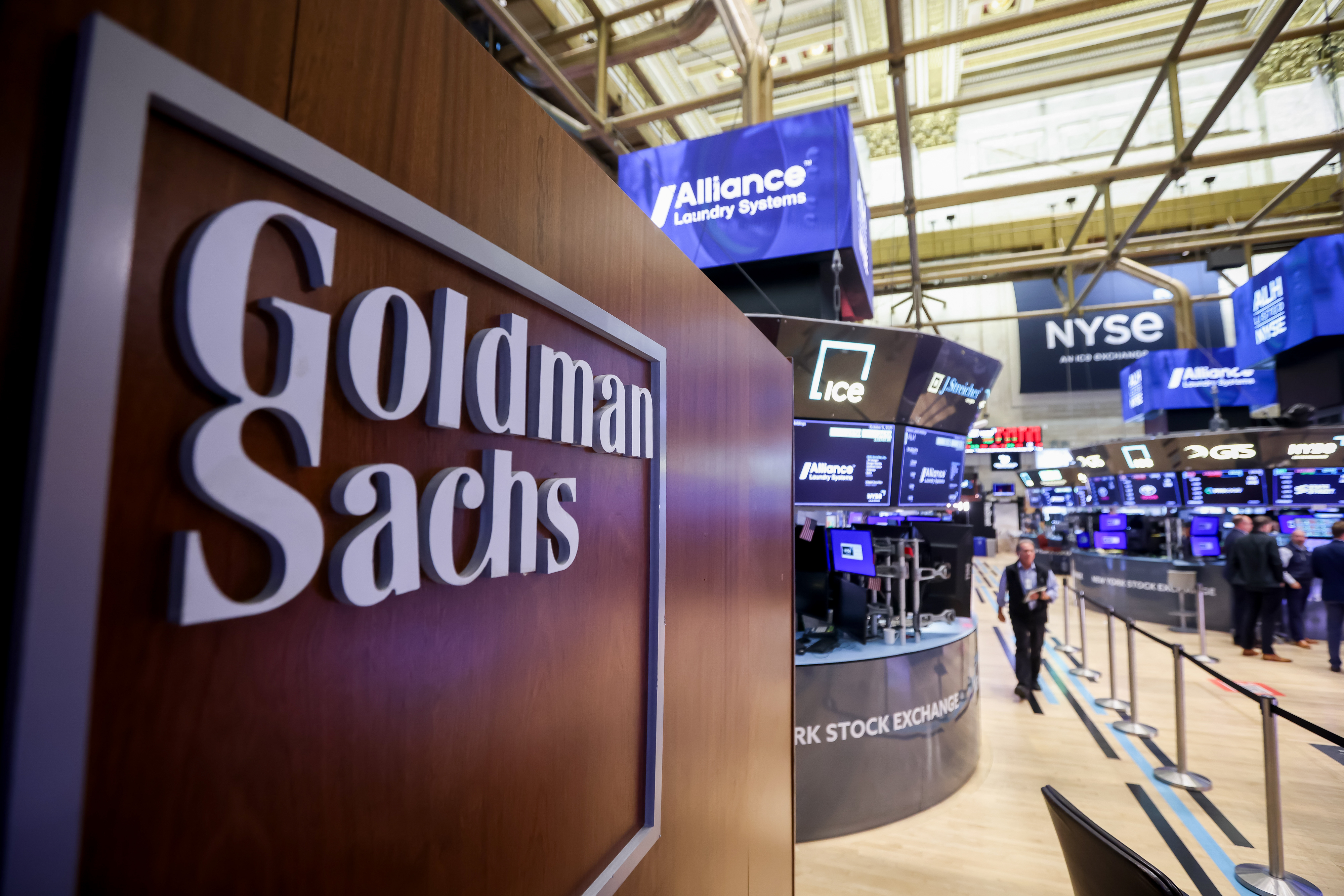
Goldman Sachs Group Inc. blew through expectations for equities-trading revenue, posting an all-time Wall Street record of $4.31 billion in the final three months of last year.
Despite strong U.S. equity returns and continued enthusiasm around AI, 2025 marked a turning point in market leadership. Paul Vella examines the fading dominance of mega-cap tech, the resurgence of international equities, and the role diversification played in delivering more durable outcomes for investors.
Fixed income performed well in 2025, but we are proceeding cautiously, as we believe headwinds in the new year could cause the rally to stall.
At the heart of value investing is the concept of buying an undervalued stock that appears to be mispriced by the market and holding that stock until its intrinsic value is reached. Investors determine intrinsic value in several ways, including analyzing a company’s financial statements, evaluating management, and identifying competitive advantages.
Market experts from the WisdomTree recently discussed how the market is responding to the latest headlines, and where opportunities lie.
DoubleLine CEO/CIO Jeffrey Gundlach looked back at 2025 and ahead in 2026 for opportunities, with charts to support his assertions.
In a year where moderation, not momentum, may define returns, options-enhanced ETFs offer an attractive way to stay invested while monetizing the more limited upside many expect.
The bullish AI narrative that dominated in 2025 is unlikely to continue overshadowing other lingering uncertainties, many of which reflect deeper structural shifts. Traditional factors underlying economic activity will be increasingly sidelined by national-security concerns, geopolitics, and domestic political machinations.
The US economy remains resilient. The gross domestic product (GDP) growth estimate from the Atlanta Federal Reserve (Fed) GDPNow model as of January 8 shows 5.4% real growth for the fourth quarter (Q4) of 2025.
The Wall Street consensus forecast for 2026 earnings growth is strong by historical standards. Analysts are giddy and projecting another year of double-digit growth in S&P 500 earnings per share (EPS).
Nuclear energy has seen a hot start to 2026, benefitting from positive sentiment around artificial intelligence, ongoing support from the US government, and notable nuclear news from Meta (META).
JPMorgan Chase and Delta Air Lines have both posted fascinating Q4 earnings, creating compelling opportunities for crafty advisors.
On this episode of the “ETF of the Week” podcast, VettaFi’s Head of Research, Todd Rosenbluth, discussed the iShares Systematic Alternative Active ETF (IALT) with Chuck Jaffe of Money Life. The pair discussed several topics related to the fund to give investors a deeper understanding of the ETF.
John Davi, Founder & Chief Investment Officer at Astoria Portfolio Advisors, highlights the firm’s 10 ETFs for 2026. Ryan Barksdale, Head of Active Equity Product at Vanguard, and Kim Gailun, Head of Equity Boutiques at Wellington Management, discuss their collaboration in bringing Vanguard’s first active equity ETFs to market.
As the S&P 500 continues its record-breaking ascent into early 2026, financial advisors are prioritizing diversification.
Midstream is unique from the rest of energy in being able to provide EBITDA guidance for the year ahead or multi-year periods without depending on specific commodity prices. Companies provide services for fees under long-term contracts, which results in stable and predictable cash flows.
Oil briefly rose above $65 a barrel for the first time since November after the US escalated pressure on Iran, while tankers were attacked near a vital terminal for Kazakh crude on Russia’s Black Sea coast.
Artificial intelligence infrastructure has been a solid stock market bet over the past year, with many of 2025’s best performers in the S&P 500 Index falling into the category. But the trade is getting volatile as some of the perceived winners start taking hits.
What happened in Venezuela last weekend may turn out to be the most consequential energy and geopolitical event of the decade. In a swift, coordinated operation that stunned the world, U.S. forces captured Venezuela’s longtime socialist dictator, Nicolás Maduro.
“Party like it’s 1999” is a phrase made famous by the musician Prince’s 1982 song, which experienced a renaissance amid Y2K fears and has since entered the lexicon meaning to celebrate intensely because the future is uncertain.
As index investing continues to evolve, it does not have to be towards ever-expanding complexity. Sometimes progress comes from asking simpler questions and answering them consistently.
Last week delivered some of the more surprising macro data I’ve seen in years: very slow job growth, but stable unemployment, and a sudden surge in output that materially lifts the outlook for earnings heading into 2026.
Rising operational costs & complex market conditions are forcing some advisors to reconsider how they deliver investment insights to clients.
The ETF universe continued to expand in 2025, with a growing number of high-income products incorporating options strategies to enhance payouts. However, for many investors and advisors, traditional ETFs that own dividend-paying stocks remain a core component of a well-rounded portfolio.
Instead of offering a forecast, let us consider the potential events and factors that could influence investor sentiment and move markets this year. Inevitably, no matter how many events we and others are considering today, there will be market-moving ones that are not on anyone's radar currently.
The goal isn’t to be perfect; it’s to make fewer mistakes than last year because investing success doesn’t come from reading motivational quotes or watching market TikToks at midnight.
The US economy seems to be in the throes of one of its biggest bursts of productivity in decades, weighing on business labor costs and hastening the disinflation process.
It’s been eight years since Venezuela stopped paying its debt. But traders are making a wager that the ouster of Nicolas Maduro will deliver windfalls to holders of the country’s $59 billion of bonds.
With the Consumer Electronics Show (CES) taking place in Las Vegas, investors’ eyes are on Nvidia (NVDA). A predictable response, but one that underscores the importance of the semiconductor behemoth in the artificial intelligence (AI) space.
Retail traders have extended a buying spree into the new year, following a record-setting performance in 2025, an analysis from JPMorgan Securities’ Arun Jain shows.
The ETF ecosystem grew once more in December with more than 100 new launches joining the fray. Three funds invite a closer look.
A stunning rally in Venezuelan assets after US forces removed president Nicolas Maduro from power has showcased how unprepared the local market is to absorb the new wave of attention.
Bets on artificial intelligence companies have dominated US equity markets for three years, powering a 78% gain. A growing number of investors are now wagering that run, led by the Magnificent Seven, is about to end.
2025 capped off another strong year for fixed income ETFs, as ongoing market uncertainty pushed more investors into the safe confines of bonds. When it came to inflows, it was Vanguard that was well-represented with four funds cracking the top 10.
While stablecoins are a form of tokenization, tokenization is a broader concept than stablecoins. Tokenization is the process of creating and recording a digital representation of traditional assets (e.g., securities, deposits, real estate, commodities, etc.) so ownership and transfer can happen in more automated, accessible ways.
JPAPM forecasts the global fixed income ETF market to grow to $6 trillion by 2030, up from approximately $3.2 trillion today.
Now that 2025 has come to an end, let’s take a look at the top 10 most-read charts of the year.
SpaceX’s dominance of rocket launches and satellite broadband internet service was reaffirmed last month with news of an insider share sale that would value the company at $800 billion. There was even speculation that Elon Musk’s space venture might sell shares to the public this year with a target valuation of almost double that amount.
Midterm election years have a rhythm that fixed income investors should recognize. While at first glance yields may seem unpredictable, a closer look reveals a pattern in how they behave throughout these periods.
There’s a lot of collective wisdom about the challenge of forecasting markets and the economy. Warren Buffet once famously said: “”Forecasts may tell you a great deal about the forecaster; they tell you nothing about the future.”
VanEck’s muni bond ETF kept all 49 holdings intact during its fourth quarter rebalance but executed an internal rotation favoring higher-yielding funds over investment-grade names, according to index data from VettaFi.
ETFs have come on in leaps and bounds since the ETF rule arrived in 2019. Exchange-traded funds are taking a bigger and bigger role in the investment landscape, offering a different route into many strategies compared to mutual funds.
For the third consecutive year – and sixth among the past seven – the S&P 500 tallied double-digit gains – a remarkable run. As the index climbed 16.39% for the year, it also recorded 38 new record highs.
LPL Research reviews 2025 market predictions: key wins, misses, and lessons across equities, fixed income, and the U.S. economy.
Tesla enters 2026 grappling with its loss of the global EV sales title to BYD and a persistent production surplus that has strained profit margins. Despite growth in its energy storage division, the company faces significant underutilization of its manufacturing capacity as premium vehicle sales lag behind previous years.
Our playbook for 2026 aims to address real risks by expanding allocations in new directions.